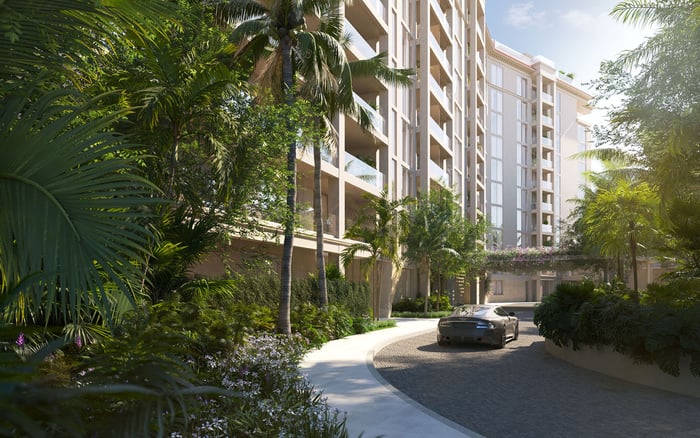
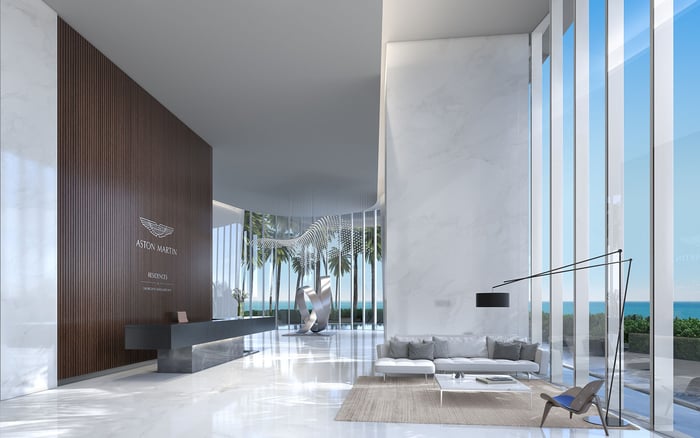
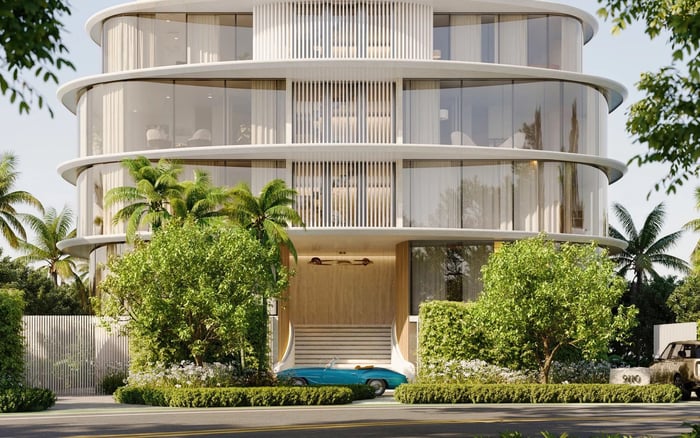
For sophisticated buyers, U.S. luxury real estate remains a core wealth-preservation tool because it can combine scarcity, utility, legal clarity, and long-term inflation sensitivity when underwritten carefully. South Florida sharpens that thesis, where international demand, prime-location scarcity, and enduring waterfront premiums continue to support best-in-class assets.
Wealth preservation is rarely about chasing the highest possible return. For sophisticated buyers, it is more often about holding assets that may withstand inflation, policy shifts, market volatility, and generational transitions without losing strategic relevance. U.S. luxury real estate can meet that standard when the property is genuinely scarce, carefully underwritten, and held with realistic assumptions about liquidity, insurance, taxes, and maintenance.
Its appeal starts with diversification. Private residential assets do not typically move in lockstep with public equities or bonds, which is one reason substantial private portfolios often include real estate. A prime home or branded residence is also a tangible asset with utility. It can be occupied, leased where permitted, improved, financed, or transferred through an appropriate family or ownership structure. That distinction matters in periods when purely financial assets feel abstract or unusually volatile.
Real estate is also commonly viewed as an inflation-aware asset, but the point should be framed carefully. Property values and rents have often risen over long periods, yet not every property protects purchasing power in every cycle. The strongest inflation thesis usually belongs to assets with replacement-cost support, limited competing supply, and a broad future buyer pool. For owners of exceptional residences, that can be paired with a secondary benefit: carrying income through seasonal, furnished, or longer-term rentals where local rules, association documents, and building standards allow.
In markets where the best product is genuinely limited, scarcity does much of the defensive work. Prime U.S. enclaves are difficult to replicate. Land is finite, zoning can be restrictive, and the most desirable parcels are already claimed. That is especially true for waterfront and amenity-rich properties, where views, boating access, privacy, and architectural distinction can support premiums over time. The word “can” is important: resilience depends on entry price, physical condition, carrying cost, financing, and exit demand.
Luxury real estate is not only a lifestyle acquisition. It is also a legal and financial structure. The U.S. remains attractive because ownership is supported by transparent title systems, enforceable contracts, and comparatively strong property-rights protections. For buyers allocating meaningful capital, that level of clarity can reduce friction and information risk.
There is also tax efficiency in the broader real estate framework, although it is never automatic. According to the IRS, Section 1031 treatment applies to qualifying real property held for business or investment use; property held primarily for personal use does not receive the same treatment. Residential rental property is generally depreciated over 27.5 years under the General Depreciation System, but land is not depreciable and personal-use rules can change the result. Real estate may also be held through trusts, LLCs, or family entities, but the right structure depends on residency, use, financing, liability, estate-planning, and cross-border considerations.
That combination of legal stability, planning flexibility, and tangible value explains why high-quality U.S. residential property remains part of many long-duration wealth strategies. The point is not that every property behaves the same. It is that the best residential assets can serve as durable stores of value when the underwriting is disciplined and the risks are priced honestly.
If the national case for wealth preservation begins with scarcity and legal clarity, South Florida adds another layer: demand depth. According to MIAMI Realtors, foreign homebuyers purchased $4.4 billion of South Florida residential property in 2025, up from $3.1 billion in 2024, and global buyers bought 5,300 South Florida properties. MIAMI Realtors also reported that Miami-Dade represented 73% of South Florida foreign-buyer purchases and that about 51% of South Florida international residential transactions were all-cash.
The market should still be described with precision. According to MIAMI Realtors’ March 2026 Miami-Dade release, total residential sales rose 6.6% year over year, $1 million-plus single-family sales rose 19.83%, and $1 million-plus condo sales rose 9.77%. Yet inventory was not uniformly tight: single-family supply stood at 5.7 months, while existing condominium supply stood at 13 months. That split matters. The preservation argument is strongest for prime waterfront homes, best-in-class new construction, and well-capitalized buildings, not for every expensive listing in the county.
Miami has also benefited from global-buyer appeal, business formation, and lifestyle migration, but the migration story should not be overstated. The U.S. Census Bureau reported in January 2026 that Florida’s net domestic migration slowed sharply in 2025 compared with 2022 and 2023. That does not weaken South Florida’s appeal at the top of the market; it simply means buyers should focus on verifiable demand, international liquidity, and micro-market fundamentals rather than broad migration headlines.
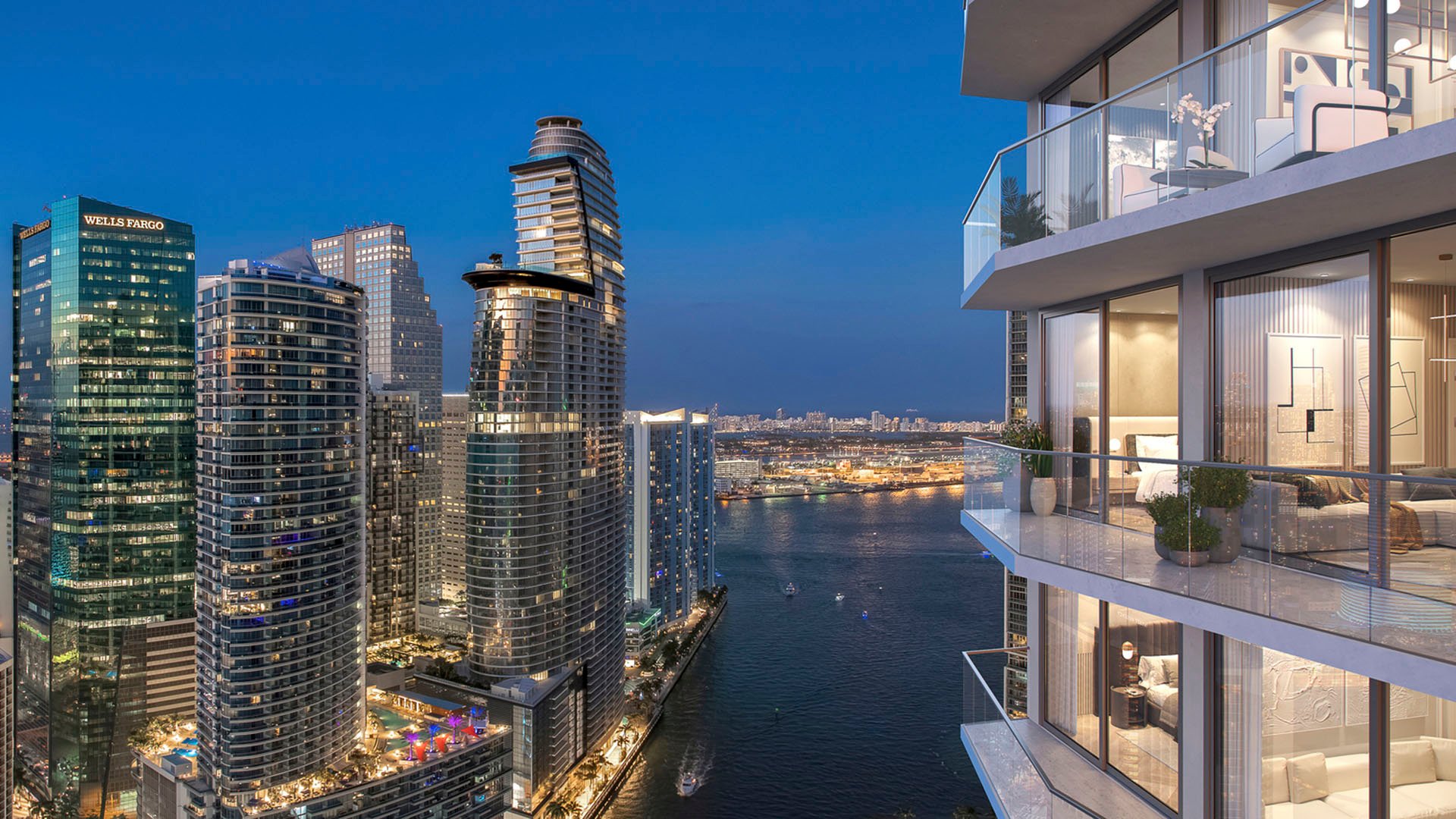
That dynamic is visible across several submarkets. In Brickell, branded and design-forward projects such as 888 Brickell by Dolce & Gabbana and The Residences at 1428 Brickell reflect how global-buyer appeal, new construction, and limited premier inventory can converge. Farther north, Rivage Bal Harbour speaks to the enduring premium attached to prime coastal enclaves. In Palm Beach County, Alba West Palm Beach reflects the same preference for limited, high-quality inventory in a market with growing prestige.
For buyers focused on South Florida’s rarest trophy and luxury residences, public inventory is only part of the search. MILLION is built as a discreet real estate solution for identifying scarce opportunities across premier waterfront, branded, and low-density settings, including on-market listings, new-development allocations, and select inventory that may be quietly circulated rather than broadly exposed. Its role is not to replace tax, legal, or investment advice; it is to make the property search more precise, private, and aligned with how preservation-quality assets are actually sourced.
The phrase wealth preservation can sound conservative, but in luxury real estate it often means preserving optionality. An owner is not simply locking money into walls and glass. They are holding a dollar-denominated hard asset, often in a globally recognized market, with the ability to use it personally, finance against it, lease it where permitted, improve it, or transfer it strategically.
That is particularly relevant for international buyers. U.S. residential property can serve as currency diversification as well as a practical foothold in a transparent legal system. For domestic buyers, the appeal is often simpler: they want part of their net worth in something tangible, scarce, and understandable.
The best South Florida assets embody that logic well. Waterfront homes and premier condominiums are not interchangeable commodities. Their value is often tied to irreplaceable location, service levels, privacy, architecture, and the simple fact that no future cycle can create endless new shoreline. In a world where many assets can be rapidly repriced, that permanence carries weight.
Not every expensive property is a preservation asset. Buyers focused on durability should look for qualities that hold relevance beyond a single cycle. Scarcity comes first. A truly prime location with enduring physical constraints tends to protect value better than abundant supply in a fashionable but easily repeatable area.
Second is buyer depth. Markets that attract both U.S. and international purchasers usually have stronger structural support than markets dependent on one narrow demand base. Third is usability. A residence with strong floor plans, privacy, services, and rental appeal has more strategic pathways than a property defined only by trend.
Fourth is physical and financial risk. According to Florida DBPR, many condominium and cooperative buildings of three or more habitable stories are subject to milestone-inspection and structural-integrity reserve-study requirements. According to the Florida Office of Insurance Regulation’s July 2025 Property Insurance Stability Report, South Florida remains an important insurance-cost market even as statewide rate trends show signs of stabilization. Miami-Dade County’s own sea-level-rise materials also make clear that flood exposure, elevation, storm hardening, and adaptation planning should be part of coastal underwriting.
Finally, there is replacement logic. Best-in-class new construction in premier locations can be costly and difficult to reproduce, especially where land is limited and entitlements are complex. That replacement barrier can help preserve pricing power for exceptional assets over time.
For many owners, this is the central reason luxury residential property still matters. It can function as a home, a hedge, an income-producing asset, a planning tool, and a generational store of value. Very few assets can credibly do all five, but each role should be verified property by property with legal, tax, insurance, and investment advisors. This article is general editorial information, not tax, legal, or investment advice.
Why is luxury real estate considered a wealth-preservation asset? It can combine scarcity, utility, and long-term demand with the potential to hold value differently from stocks and bonds.
Does luxury property help with portfolio diversification? It can. Private real assets often behave differently from public markets, but the benefit depends on price, leverage, liquidity, and holding period.
Can luxury real estate hedge inflation? Often, but not automatically. The strongest inflation case usually belongs to scarce assets with replacement-cost support and durable rental or resale demand.
Why does South Florida stand out in this conversation? The region combines lifestyle appeal, international demand, and limited prime waterfront supply, while current data also shows important differences between single-family and condo inventory.
Are waterfront homes better for preservation than inland luxury homes? They can be, because waterfront scarcity, views, and boating access often support durable premiums. Flood, insurance, and resilience analysis remain essential.
Does rental potential matter for luxury owners? Yes. Seasonal, furnished, or longer-term leasing can add carrying income where local rules, association documents, and tax treatment support it.
How does legal structure influence preservation? Strong property rights, transparent title systems, and enforceable contracts make ownership more predictable, while trusts or entities may support planning goals when structured correctly.
Can real estate support estate planning goals? Yes, but structure, ownership, residency, and tax treatment should be coordinated with qualified advisors before acquisition.
What makes a trophy asset more resilient than commodity housing? Trophy properties typically rely on rarity, location, buyer depth, and replacement difficulty rather than price alone.
Is South Florida still relevant for long-term luxury buyers? Yes, particularly for best-in-class assets, but buyers should underwrite micro-market supply, insurance, reserves, and exit liquidity rather than rely on broad market narratives.
For buyers seeking the best real estate solution for South Florida’s scarce trophy and luxury inventory, connect with MILLION for a discreet shortlist, tailored guidance, and access to select residences not broadly circulated.
If branded residences are on your mind — as a home or as an allocation — we would be glad to share what we are seeing, privately.
Begin a quiet conversation