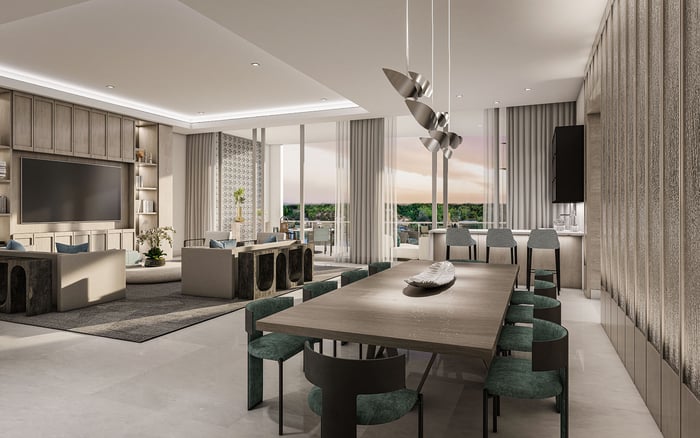
In a luxury residence, operational discipline shapes privacy, convenience, and the quality of daily life. Serious buyers should examine staff entry, package custody, vendor controls, and maintenance protocols as closely as the interiors.

A beautifully finished residence makes an immediate impression. Stone, millwork, lighting, and appliances are visible, tactile, and easy to compare. Yet the lasting quality of ownership often depends on systems that reveal themselves only after closing: how household staff enter, where packages wait, who admits vendors, and how maintenance is scheduled.
For serious West Palm Beach buyers, these are not minor management details. They determine whether a residence feels calm or administratively demanding, private or porous, effortless or interrupted. Finishes can be replaced. A building’s operating culture, physical service routes, and access protocols are far harder to change from within a single apartment.
Buyers who employ housekeepers, assistants, caregivers, chefs, or regular contractors should understand the full arrival sequence. Ask whether each person can receive an individual credential, whether access can be limited by day or time, and how permissions are changed or revoked. A shared key or recurring verbal instruction may be convenient, but it offers less control and a weaker record of entry.
The route matters as much as the authorization. Determine where staff arrive, which elevators they use, how they reach the residence, and whether building personnel must intervene each time. The best arrangement is not necessarily the most elaborate. It is the one that balances discretion, accountability, and predictable movement without creating unnecessary friction for the household.
When comparing residences such as Alba West Palm Beach and Forté on Flagler West Palm Beach, buyers can use the same operational questionnaire at every presentation. A consistent approach makes differences easier to identify without relying on broad service language.
Package volume can reveal the gap between an attractive lobby and a disciplined residential operation. A buyer should trace each delivery from arrival to collection. Who receives it? Is acceptance recorded? Where is it held? How is the resident notified? Can household staff collect it, and what authorization is required?
Different deliveries warrant different questions. Groceries, flowers, clothing, oversized objects, and temperature-sensitive items may not follow the same path. Buyers should ask what happens after hours, during travel, or when a residence remains unoccupied for an extended period. A polished package room is useful, but clear custody and escalation procedures matter more than appearance.
This is especially relevant for a second-home owner who may be away when an item arrives. The desired protocol should be documented before purchase, including who may retrieve, inspect, forward, or place an item inside the residence.
Maintenance is unavoidable. The luxury distinction lies in how access is requested, approved, supervised, and closed out. Ask whether routine visits are grouped into windows, how much notice is customary, and whether residents may decline or reschedule non-urgent work. Clarify the separate protocol for emergencies.
Buyers should also distinguish among building personnel, association vendors, and resident-appointed contractors. Each may have different insurance, identification, elevator, and supervision requirements. If the owner is absent, determine whether management can provide access, whether a household representative must attend, and what completion record is supplied afterward.
At Mr. C Residences West Palm Beach or The Ritz-Carlton Residences® West Palm Beach, operational questions belong alongside those about design and amenities. A brand, view, or presentation should not substitute for examining the procedures that will govern entry into the home.
A private tour should encompass more than the residence and amenity level. Request a clear explanation of loading access, service elevators, delivery staging, contractor parking, move procedures, and the route used for refuse or bulky items. The objective is not to find a building without operational movement. It is to understand whether that movement is separated, orderly, and compatible with the owner’s expectations.
In a waterfront residence, weather and seasonal occupancy can complicate deliveries and vendor demand. Rather than assume a building will adapt, ask how exceptions are handled and who has authority to make decisions. For new-construction purchases, review the proposed protocols and physical plans while recognizing that actual service quality will depend on implementation after opening.
Before committing, request written answers or governing materials covering access permissions, package acceptance, vendor entry, maintenance notice, emergency access, and extended absences. Then test those answers against realistic household scenarios.
Imagine a housekeeper arriving before the owner, an appliance technician requiring a two-hour appointment, a valuable delivery appearing during travel, or urgent building work requiring entry. Ask who acts, who approves, who receives notice, and what record remains. The clearer the sequence, the easier it is to judge whether the property supports the intended lifestyle.
Operational quality is ultimately about control without constant owner involvement. The right residence should allow a household to delegate confidently while preserving privacy and oversight. That standard may be less photogenic than a book-matched stone wall, but it is often more consequential to daily satisfaction.
Why can operations matter more than finishes? Operations affect privacy, access, and convenience every day, while many interior finishes can be changed after purchase.
What should buyers ask about household staff access? Ask about individual credentials, permitted hours, entry routes, revocation procedures, and whether staff require repeated front-desk approval.
Should staff and vendors use the same access process? Not automatically. Buyers should determine how the building distinguishes recurring household staff from occasional contractors and service providers.
What makes package handling secure? A clear chain of custody, recorded acceptance, controlled storage, prompt notification, and defined collection authority are central considerations.
How should valuable deliveries be addressed? Ask whether special authorization, identity checks, signatures, or direct resident coordination can be arranged before delivery.
What matters most in maintenance scheduling? Notice, resident approval, practical appointment windows, supervised access, and a clear distinction between routine and emergency work all matter.
Can management enter when an owner is away? Policies vary, so buyers should clarify advance consent, emergency authority, notification, supervision, and documentation before closing.
What should a second-home buyer prioritize? Focus on remote authorization, package instructions, trusted-user permissions, absence protocols, and reliable communication from building management.
How can a buyer compare buildings fairly? Present the same household scenarios to each property and compare the specificity, documentation, and practicality of the answers.
When should operational due diligence begin? Begin during the first serious evaluation, then verify the relevant procedures and governing materials before committing to the purchase.
For a discreet conversation and a curated building-by-building shortlist, connect with MILLION.
If branded residences are on your mind — as a home or as an allocation — we would be glad to share what we are seeing, privately.
Begin a quiet conversation