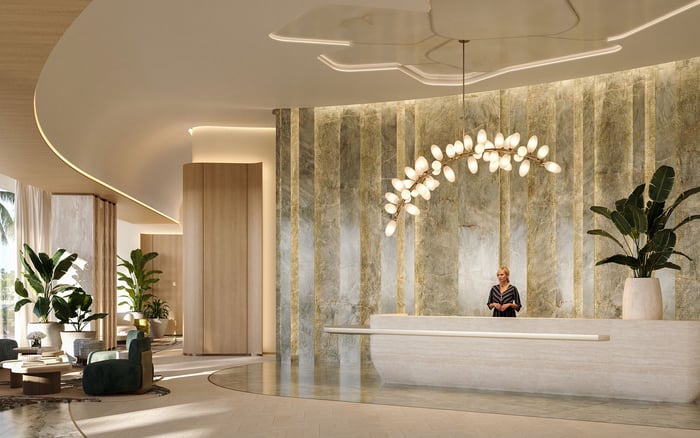
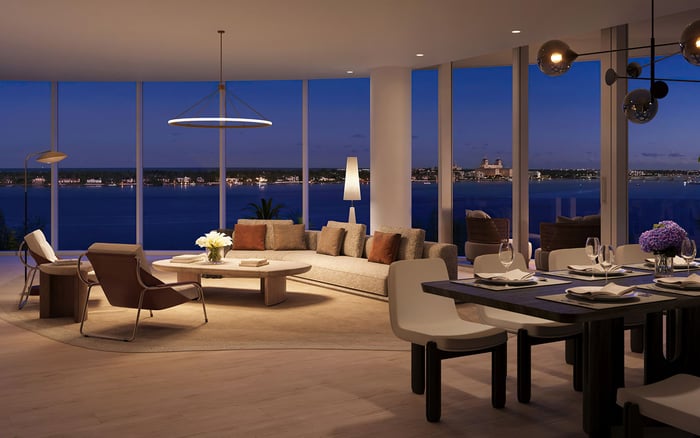
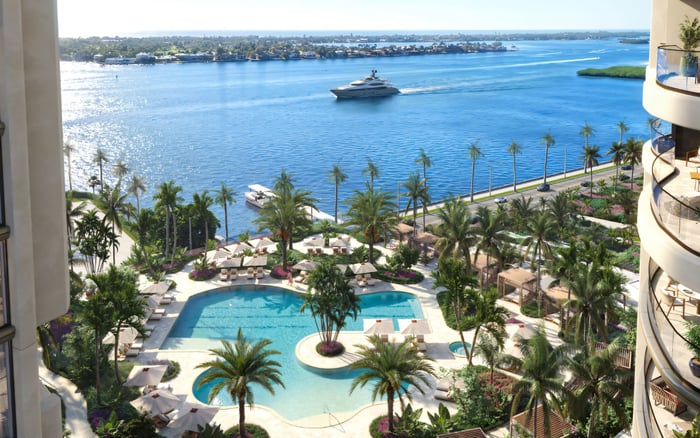
South Flagler can suit family buyers when building operations are assessed with the same rigor as floor plans, finishes and views. The key is not simply location, but how arrival, security, elevators, amenities and service protocols support the school-week rhythm.
For buyers with school-age children, South Flagler is often evaluated through the wrong lens. The conversation can become too focused on architecture, finishes, water outlooks, parking ratios and prestige. Those elements matter, but they do not determine whether a household with uniforms, backpacks, tutors, sports gear, caregivers and grandparents will function gracefully from Monday morning through Sunday evening.
The more useful question is operational. Can the building absorb the rhythm of family life without making it feel public, chaotic or overmanaged? Can a child come home from practice while a parent receives guests, a tutor arrives, groceries are delivered and a dog walker checks in, all without friction at the lobby, elevator or residence entry? When that choreography works, South Flagler can feel less like a compromise between city convenience and family calm, and more like a refined residential platform.
This is why families looking at South Flagler House West Palm Beach should examine more than the residence itself. The private home begins at the door, but daily family life begins at the curb.
A school-age household creates predictable pressure points. Morning departure is one. Afternoon return is another. Add rainy weather, visiting grandparents, a playdate, a late bus, a driver waiting downstairs and a parent trying to reach a meeting, and the quality of building operations becomes visible immediately.
The best buildings for families do not simply look staffed. They operate with judgment. Valet flow should feel calm, not theatrical. Front desk protocols should be secure without forcing residents to repeat themselves. Elevators should support privacy and movement without long pauses at precisely the moments when children are least patient. Package handling should be practical enough for uniforms, supplies and recurring deliveries. Service access should be clear enough that household help, tutors and maintenance providers are not left to improvise through the main social spaces.
In West Palm Beach searches, this is the distinction sophisticated buyers increasingly make: a luxury building can photograph beautifully, yet still be inconvenient for family logistics if its daily systems are not disciplined.
For families, privacy is not only about discretion at dinner parties. It is about children feeling known by the staff without feeling watched by the building. It is about parents knowing who can access the residence level, how guests are announced, how vendors are managed and how after-school movement is handled.
A well-run building gives families a secure rhythm. Children can mature into age-appropriate independence because the environment has structure. Parents can rely on consistent protocols rather than reinventing instructions every week. That matters in high-service residences, where the line between attentive and intrusive can become thin.
Buyers comparing Maison D'Or South Flagler with other West Palm Beach options should ask operational questions early. How does the lobby manage overlapping arrivals? How are recurring guests documented? Where do children wait if a parent is delayed? What happens when a caregiver arrives before a resident? These are not minor details. They are the infrastructure of family ease.
Amenities can support school-age households, but only when scheduling and etiquette are managed well. A pool can be a daily release after school, or it can become a source of tension if rules are unclear, supervision expectations are vague or peak-hour use feels unmanaged. Fitness rooms, lounges and terraces also require thoughtful guidelines, especially as children grow into teenagers and begin using shared spaces with friends.
The issue is not whether a building has amenities. The issue is whether those amenities have a culture. Families should ask how reservations are handled, whether private events affect resident access, how noise is managed and how staff responds when children and adults use the same spaces at the same time. In a truly family-compatible luxury building, rules do not feel punitive. They feel like the invisible structure that allows everyone to relax.
That is why a residence such as Forté on Flagler West Palm Beach belongs in a broader operational comparison, not just a design comparison. A family should understand the lived cadence of the building before assuming the amenity sheet tells the full story.
Inside the home, families need zones. Not necessarily more rooms for the sake of room count, but more intelligent transitions. A gracious entry should receive bags and shoes without collapsing into clutter. Secondary bedrooms should support study as well as sleep. Terraces should be evaluated for how the household will actually use them, not only how they appear during a showing. Storage should be tested against real life: sports equipment, seasonal clothing, bulk household items, luggage, beach gear and school projects.
Private-school planning can also shape the residence brief. Some families need a dedicated homework room. Others need a flexible den for tutoring, music lessons or therapy. Some need a staff-friendly service path. Others prioritize a split plan so older children have privacy while parents retain quiet space for work and entertaining.
The right South Flagler residence should feel elegant at 8 p.m. after dinner, but also resilient at 7:15 a.m. when everyone is leaving at once.
Family buyers often understate the number of people and routines attached to the household. Pets create their own daily circulation. Caregivers need access that is secure but not awkward. Grandparents may visit for long stretches. Friends may arrive after school. A building that works for a couple may not work equally well for a multi-generational household.
Pets, in particular, test building etiquette. The question is not only whether pets are allowed. It is where they move, how elevators are shared, how staff handles recurring walkers and whether the building culture accommodates animals without compromising the experience of residents who prefer distance.
For families comparing Shorecrest Flagler Drive West Palm Beach with other residences, these practical patterns deserve as much attention as the primary suite. Luxury becomes meaningful when the household can move through the day with fewer points of negotiation.
A polished sales presentation will not reveal everything. Families should tour at practical times when possible. Morning, late afternoon and early evening can show how the building breathes under pressure. Observe the curb. Watch the elevator cadence. Notice whether staff members appear calm and informed. Ask how children, tutors, drivers, vendors and household employees are handled in real scenarios.
The best questions are specific. Where does a child wait if pickup is delayed? How are playdates announced? Can a recurring tutor be pre-cleared? What is the protocol for food delivery during peak hours? How does the building respond to a forgotten item that needs to be brought downstairs quickly? These questions may seem mundane, but they reveal whether service is merely courteous or genuinely capable.
Buyers considering Mr. C Residences West Palm Beach should apply the same discipline. The brand, architecture and address may attract attention, but a family decision should rest on the building’s ability to make daily life feel composed.
South Flagler can work for buyers with school-age children when the building is treated as an operating environment rather than a beautiful container. The strongest fit pairs a residence with enough flexibility, a staff culture with enough discretion and common areas with enough structure. It should protect adult sophistication without making children feel like guests in their own home.
For the right household, that balance is powerful. Parents retain the ease of a serviced building. Children gain routine, security and access to a more urban style of living. The result is not the suburban model translated vertically. It is a different form of family luxury, defined by precision, privacy and rhythm.
Can South Flagler work for families with school-age children? Yes, if the building’s operations support school schedules, arrivals, deliveries, guests and household staff without daily friction.
What should parents evaluate first? Start with arrival flow, elevator performance, security protocols and how the building handles recurring visitors such as tutors or caregivers.
Are amenities enough to make a building family-friendly? No. Amenities matter, but rules, scheduling, supervision expectations and staff judgment determine whether they work for families.
Should children join a property tour? Sometimes. A child’s reaction to elevators, common areas and transitions can reveal practical issues adults may overlook.
How important is storage? Very important. School-age households often need storage for sports gear, luggage, supplies, uniforms and seasonal items.
What questions should buyers ask about guests? Ask how playdates, tutors, drivers, family members and vendors are registered, announced and managed during busy periods.
Do pet policies matter for families? Yes. Pets affect elevator use, staff coordination, daily schedules and the overall etiquette of shared residential spaces.
Is a larger residence always better for a family? Not necessarily. Layout, transition zones, privacy and flexible rooms can matter more than raw size.
When is the best time to tour? Tour during real-life pressure points when possible, especially morning departure or late afternoon return periods.
What is the core test for a family buyer? The building should make ordinary school-week routines feel calm, secure and predictable rather than complicated.
To compare the best-fit options with clarity, connect with MILLION.
If branded residences are on your mind — as a home or as an allocation — we would be glad to share what we are seeing, privately.
Begin a quiet conversation