A discreet buyer’s guide to acoustic privacy for private aviation users negotiating South Florida luxury real estate, from FBO lounges and aircraft cabins to residence selection and signing-day protocol.

For South Florida’s most mobile buyers, the path to a residence often begins well before the first private elevator opens. It may start in an aircraft cabin, a fixed-base operator lounge, a chauffeured car, or a quiet seating area where a family office principal takes one more call before signing. In those moments, acoustic privacy is not a technical footnote. It is a material component of discretion.
Private aviation creates an atmosphere of control, but control should not be mistaken for confidentiality. A cabin can feel insulated while voices still carry within a compact shared environment. An FBO lounge can feel exclusive while placing principals, pilots, crew, guests, assistants, advisors, and other travelers in close proximity. A seemingly harmless conversation about price, timing, financing, entity structure, inspection concerns, or negotiating posture can reveal more than intended.
For buyers considering Brickell, Miami Beach, Sunny Isles Beach, Fisher Island, Palm Beach, and other high-value corridors, the lesson is straightforward: do not wait until closing to think about privacy. Treat acoustic exposure with the same discipline that governs legal review, wealth planning, security, and access control.
Real estate negotiations are rarely compromised by one dramatic disclosure. More often, risk builds in fragments. A name overheard. A number repeated. A building referenced. A shift in urgency noticed by someone outside the trusted circle. In an ultra-premium market, even partial context can matter.
This is especially relevant when a buyer moves between airport, property tour, private dinner, hotel suite, and counsel call within a compressed window. The more efficient the itinerary, the more likely sensitive conversations are to occur in transitional spaces. Those spaces are often the least controlled acoustically.
A principal may discuss counteroffers in the cabin while a guest is seated nearby. An assistant may repeat wiring instructions in a terminal seating area. An advisor may summarize contract terms in a car with multiple occupants. None of these moments feels unusual, yet each can dilute privacy. For high-stakes purchases, the right question is not whether anyone is intentionally listening. It is whether sensitive information is being spoken in an environment not designed for confidential negotiation.
Acoustic privacy should be evaluated across the full travel chain. The aircraft cabin is only one setting. The ramp arrival, greeting area, FBO reception, conference room, catering handoff, baggage transfer, rideshare zone, security desk, and residence lobby can all become part of the conversation environment.
Buyers should establish a simple protocol before arrival. Decide which topics are not discussed in open spaces. Assign one person to manage calls with counsel, brokers, lenders, or family office staff. Use written summaries for highly sensitive points rather than voice discussions in public or semi-public settings. Keep deal names, entity names, and numbers out of casual conversation. If a call must happen, step away from mixed-company settings and assume the room is less private than it appears.
This is not paranoia. It is the same discretion buyers already apply to identity, asset protection, and security. Acoustic discipline is simply the auditory version of not leaving documents on a table.
Before signing any major South Florida contract, private aviation users should ask a few practical questions. Where will the final negotiation call occur? Who will be physically present? Can the buyer take the call in a room with controlled access? Is the aircraft cabin being used as a mobile boardroom, or are conversations being reserved for counsel’s office and secure private settings? Are family members, guests, crew, or vendors hearing details they do not need to hear?
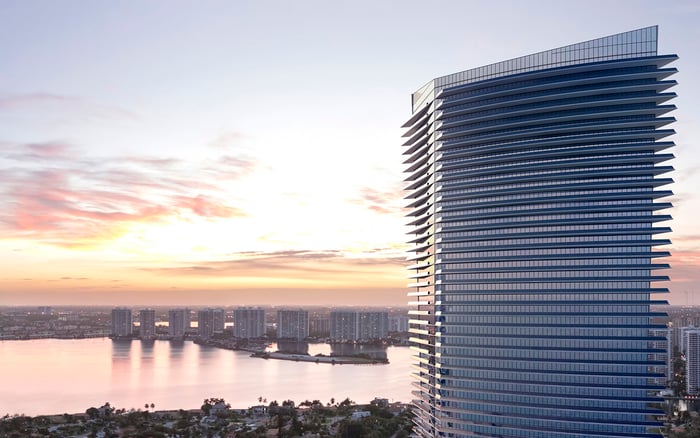
The same approach applies to property tours. In a vertical market such as Brickell, where residences like St. Regis® Residences Brickell appeal to buyers accustomed to layered service and privacy, negotiation-sensitive conversations should be separated from amenity tours, lobby transitions, and elevator rides. The more prominent the address, the more disciplined the communication should be.
On Miami Beach, privacy has a different rhythm. Oceanfront living blends arrival choreography, wellness routines, beach access, dining, and social movement. A buyer touring The Perigon Miami Beach may be focused on architecture, views, and lifestyle, yet the same buyer should avoid discussing leverage, timing, or alternative offers while moving through shared areas. The best discretion is invisible because it is planned in advance.
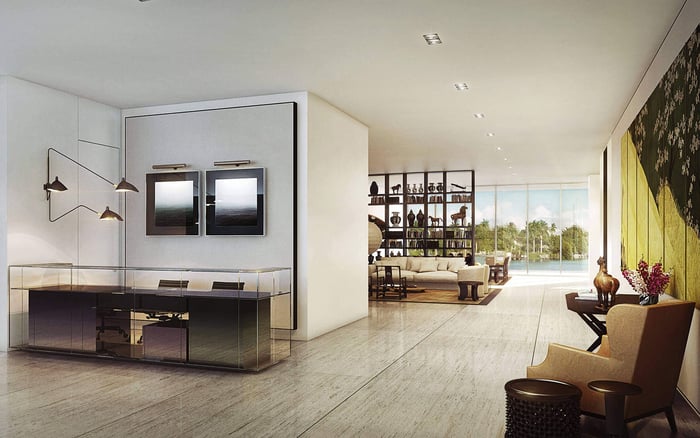
Acoustic privacy does not stop once a buyer lands. The residence itself becomes the long-term setting for calls, board meetings, philanthropic planning, family discussions, and sensitive travel coordination. Buyers should evaluate layouts with sound in mind. Where is the office relative to bedrooms, staff areas, elevators, terraces, and entertaining spaces? Can a principal take a call without crossing a public path? Does the floor plan support separation between formal hosting and confidential work?
In Sunny Isles Beach, where towers often emphasize views, vertical arrival, and resort-style living, the question is how the residence performs when family, staff, advisors, and guests are all present. At Bentley Residences Sunny Isles, a buyer may be drawn to the branded environment and coastal setting, but the due diligence lens should also include how daily life supports privacy without friction.
Fisher Island raises another version of the question. The appeal of separation is obvious, but separation is not the same as acoustic control. For buyers considering The Residences at Six Fisher Island, the conversation should include not only arrival and access, but also where confidential calls, board discussions, and family office interactions can occur within the residence.
Palm Beach buyers often think in terms of legacy, permanence, and household rhythm. That makes acoustic planning especially relevant. A residence connected to family governance, philanthropy, art, or multigenerational planning should include dedicated spaces where sensitive conversations can occur without intersecting with service corridors, entertaining zones, or guest circulation. Projects such as The Ritz-Carlton Residences® West Palm Beach belong in a broader discussion about how privacy, convenience, and daily service coexist.
Recording and consent questions are not an area for casual assumptions. Rules can depend on context, participants, location, and the nature of the communication. Buyers should consult qualified legal counsel before relying on any belief that a conversation is protected, recordable, or off the record.
The practical solution is to reduce exposure before it becomes a legal question. Avoid discussing sensitive deal terms in ambiguous environments. Keep negotiations within controlled channels. Make sure aviation staff, household staff, brokers, assistants, and advisors understand communication boundaries. If a meeting or call matters, schedule it in a setting designed for confidentiality rather than convenience.
The most effective signing-day protocol is simple. First, define the trusted circle. Second, identify topics that are not to be discussed in aircraft cabins, lounges, elevators, restaurants, lobbies, or cars. Third, schedule counsel calls in private rooms rather than transitional spaces. Fourth, use neutral language when logistics must be discussed around others. Fifth, pause before repeating numbers, names, or timing in any shared environment.
This protocol is as much lifestyle discipline as legal caution. Ultra-private buyers already understand that discretion is a form of service. The best residences, advisors, and aviation teams support that expectation without making it theatrical. When everyone knows the standard, the experience remains calm, elegant, and efficient.
Why does acoustic privacy matter for private aviation users buying real estate? Private aviation often compresses travel, calls, tours, and signing decisions into one itinerary. That efficiency can place sensitive conversations in spaces that are not fully controlled.
Is an aircraft cabin always private enough for negotiations? Not necessarily. A cabin may feel private, but it can include guests, crew, advisors, or others who do not need to hear deal details.
What conversations should be avoided in FBO lounges? Avoid discussing price, timing, entity names, financing, legal strategy, inspection concerns, or competing properties in any shared or semi-shared setting.
Should buyers involve legal counsel in privacy planning? Yes. Counsel can help define communication boundaries, especially where recording, consent, and sensitive document handling may be involved.
How can a buyer prepare before landing in South Florida? Establish who may discuss deal terms, where calls will occur, and which topics are reserved for controlled private settings.
Does acoustic privacy affect residence selection? Yes. Floor plans, office placement, staff circulation, elevator access, and entertaining areas can all influence day-to-day discretion.
Is this only relevant for celebrity or public buyers? No. Executives, founders, investors, family offices, and multigenerational families can all benefit from disciplined communication.
Can a luxury building guarantee complete acoustic privacy? No residence should be treated as a guarantee. Buyers should evaluate layouts, procedures, and personal protocols together.
What is the biggest mistake buyers make? They assume exclusivity equals confidentiality. The more refined approach is to plan private communication before sensitive moments arise.
When should acoustic privacy be discussed with advisors? It should be discussed before tours, offers, counteroffers, and signing, especially when private aviation is part of the schedule.
To compare the best-fit options with clarity, connect with MILLION.
If branded residences are on your mind — as a home or as an allocation — we would be glad to share what we are seeing, privately.
Begin a quiet conversation