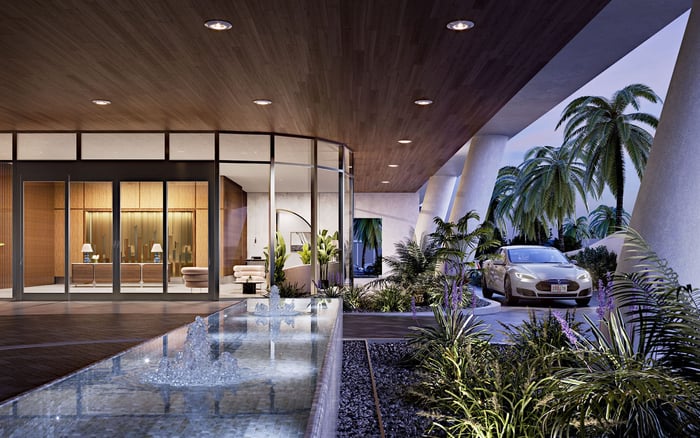
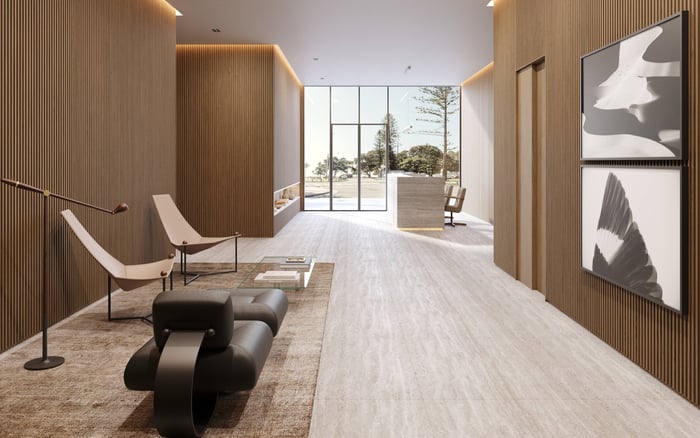
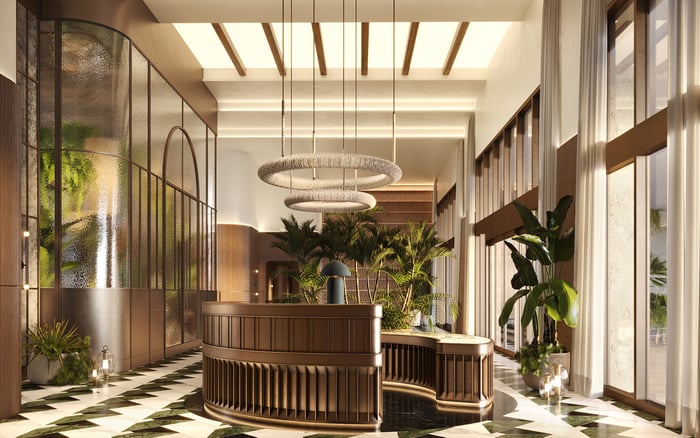
Mr. C Tigertail offers documented residence layouts, terraces and hospitality spaces for entertaining, while Opus brings a private-home proposition centered on large-format residences, terraces and shared amenities.
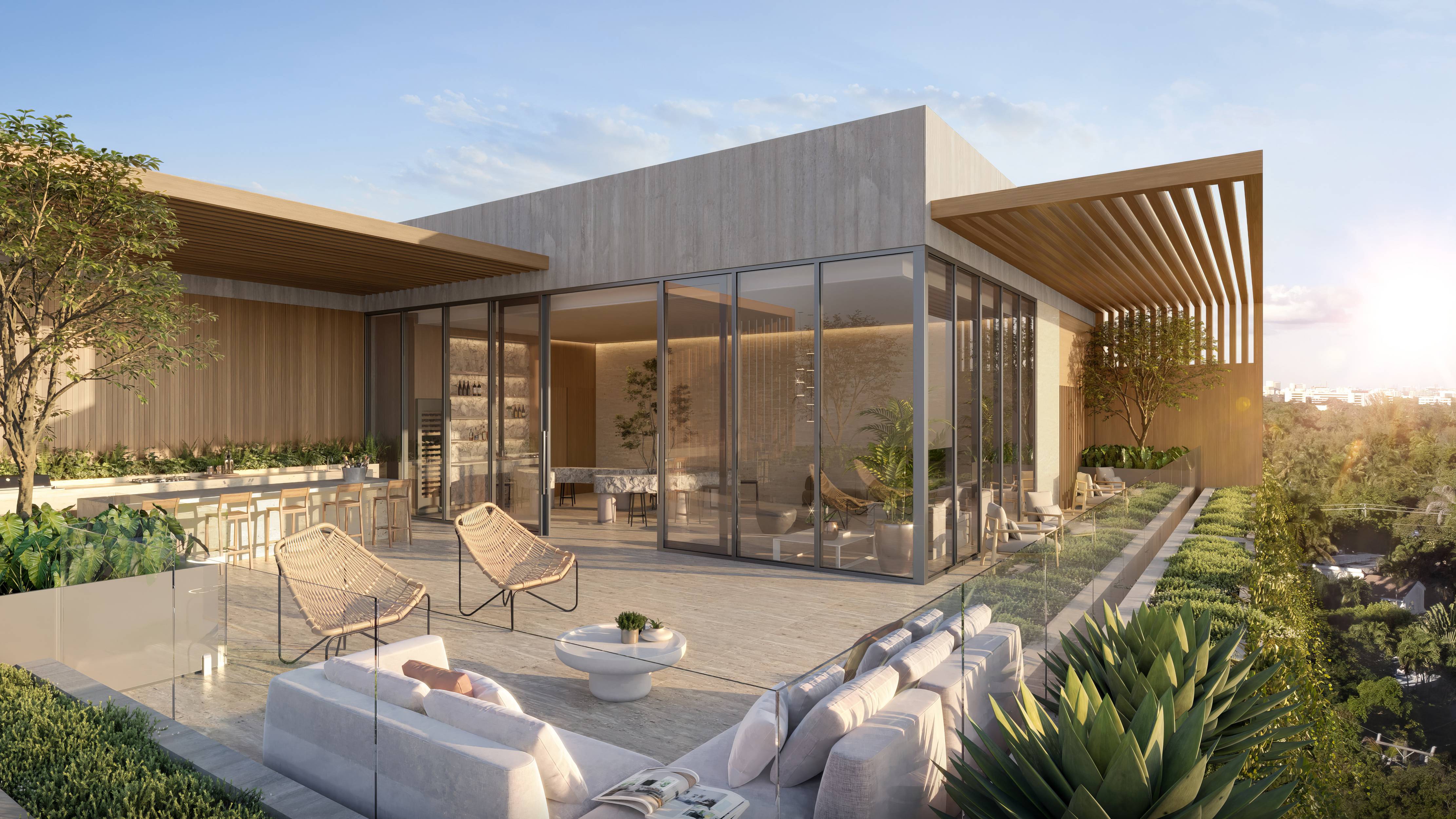
For buyers who host often, the useful question is not simply how large a residence is, but whether its plan can accommodate the full choreography of an evening: arrivals, drinks, dining, service, conversation and a graceful transition outdoors. Ceiling height, room separation, pantry capacity and terrace proportions can matter as much as headline interior area.
That lens brings Mr. C Tigertail Coconut Grove and Opus Coconut Grove into the same conversation, though for different reasons. Mr. C presents the more extensively documented hospitality proposition, spanning private residences and event-oriented settings. Opus is relevant for buyers drawn to large-format homes, terraces and a substantial shared amenity program, with greater emphasis on entertaining within the residential environment.
At 2678 Tigertail Avenue, Mr. C Tigertail offers one- to four-bedroom configurations spanning approximately 648 to 3,555 square feet. That range allows buyers to calibrate entertaining capacity rather than assume every host needs a conventional penthouse.
The clearest large-scale example is a four-bedroom, 4.5-bath penthouse with 3,555 interior square feet and 873 square feet of wraparound terraces. Its gourmet kitchen and distinct great room, dining area and family room create useful separation among formal hosting, relaxed conversation and food preparation. Another four-bedroom residence offers a different expression of volume, with more than 3,000 interior square feet, a 640-square-foot wraparound terrace and 13-foot ceilings.
The middle of the range can be equally persuasive. A three-bedroom-plus-den residence offers 2,058 interior square feet, an expansive wraparound terrace and a walk-in pantry. For frequent hosts, that pantry is not incidental: it can keep serving pieces, provisions and preparation activity away from the principal social spaces.
One reconfigured floor plan opened the third bedroom to create a larger dining area specifically intended for entertaining. That choice underscores an important lesson for buyers: bedroom count may be less valuable than a room sequence tailored to actual use. Terrace planning, dining dimensions and service circulation deserve to be considered together.
Mr. C’s broader Coconut Grove property includes indoor and outdoor meeting and event options for gatherings of 10 to 500 guests. The 2,520-square-foot Starlight Ballroom can be divided into smaller spaces and accommodates configurations of roughly 20 to 280 guests. A covered, 15,000-square-foot Porte-Cochere accommodates outdoor events of up to 500.
Those figures give Mr. C the stronger documented case for organized gatherings beyond the residence itself. They should not, however, be interpreted as an automatic resident entitlement. Buyers should confirm which venues residents can reserve, along with guest limits, fees, catering rules, lead times and access protocols.
The residential amenity program includes a rooftop pool, bar and lounge, as well as a garden-level lap pool with a private Bellini Bar, cabanas, business lounge, library and billiards room. Together, these settings offer multiple ways to extend a gathering without requiring the private residence to perform every function.
Planned for 3131 Oak Avenue, Opus is positioned as a luxury high-rise centered on large residences and an extensive amenity program. Its relevance to an entertainment-led search comes from its combination of large-format homes, terraces and shared amenities, particularly for buyers who prioritize private-residence hosting over commercial-scale event capacity.
The distinction is important. No comparable venue-by-venue capacity schedule supports a numerical contest with Mr. C. Opus should instead be assessed through its residence plans, the relationship between interior rooms and terraces, and the operating rules governing shared spaces. For the right host, a well-composed private setting may carry more value than access to the largest possible function venue.
Entertaining preferences vary sharply. One buyer may envision seated dinners for twelve; another may want fluid indoor-outdoor weekends; a third may need occasional access to a professionally organized venue. The appropriate shortlist should begin with those scenarios, not a generic amenity count.
Alongside the two principal candidates, Park Grove Coconut Grove and Four Seasons Residences Coconut Grove can serve as additional neighborhood comparison points. Including them on a tour can help buyers determine what they value most in circulation, privacy, service and the transition between home and shared space.
A productive review should measure the dining zone, identify furniture paths, inspect kitchen staging capacity and test how guests reach a powder room without crossing private quarters. It should also examine elevator access, deliveries, valet procedures, music restrictions and reservation policies. These operational details often determine whether an impressive plan supports an effortless lifestyle.
Mr. C is compelling when flexibility and documented hospitality infrastructure lead the brief. Its broad residence range, demonstrated large-format plans, wraparound terraces and documented event settings support hosting from intimate dinners to much larger organized occasions, subject to access terms.
Opus belongs in the conversation for a more residence-centered reason. Its proposition of substantial homes, terraces and shared amenities speaks to buyers who want entertaining capacity embedded primarily in daily living. The decision is therefore less about declaring a universal winner than matching the scale, frequency and formality of gatherings to the right private and communal framework.
Which project has the stronger documented case for large organized events? Mr. C does, with indoor and outdoor settings designed for gatherings of 10 to 500 guests.
Can residents automatically reserve every Mr. C event venue? That should not be assumed. Buyers need to confirm eligibility, fees, timing, catering terms and guest rules.
What is the largest documented Mr. C residence size? The documented range reaches approximately 3,555 square feet, represented by a four-bedroom, 4.5-bath penthouse listing.
How much outdoor space does that penthouse include? It includes 873 square feet of wraparound terraces, expanding the potential flow of a private gathering.
Are smaller Mr. C homes relevant to frequent hosts? Yes. A 2,058-square-foot three-bedroom-plus-den example combines a wraparound terrace with a walk-in pantry.
Why does a walk-in pantry matter for entertaining? It can support storage, preparation and service while keeping operational clutter away from guest areas.
What makes Opus relevant without documented event capacities? Its large-format residences, terraces and shared amenities make it pertinent to buyers focused on private-home entertaining.
Can Mr. C and Opus be compared by guest capacity alone? No. The available details do not support an exact venue-by-venue capacity comparison between the two projects.
What should buyers inspect on a floor plan? Review dining dimensions, kitchen staging, terrace access, guest circulation, powder-room placement and separation from bedrooms.
What building rules deserve attention before purchasing? Confirm reservation procedures, guest limits, deliveries, valet operations, music restrictions, fees and event lead times.
For a confidential assessment and a building-by-building shortlist, connect with MILLION.
If branded residences are on your mind — as a home or as an allocation — we would be glad to share what we are seeing, privately.
Begin a quiet conversation