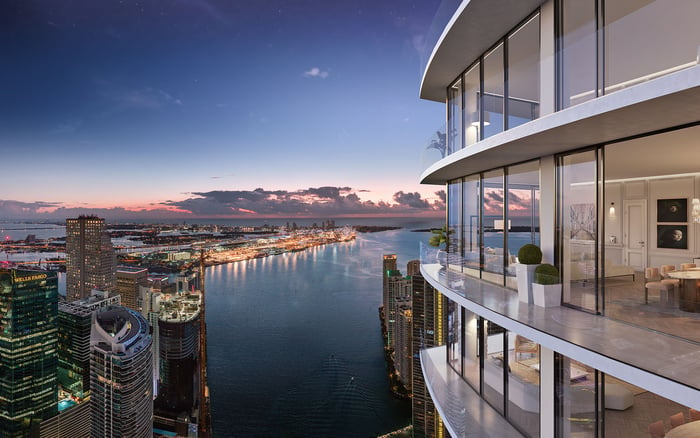
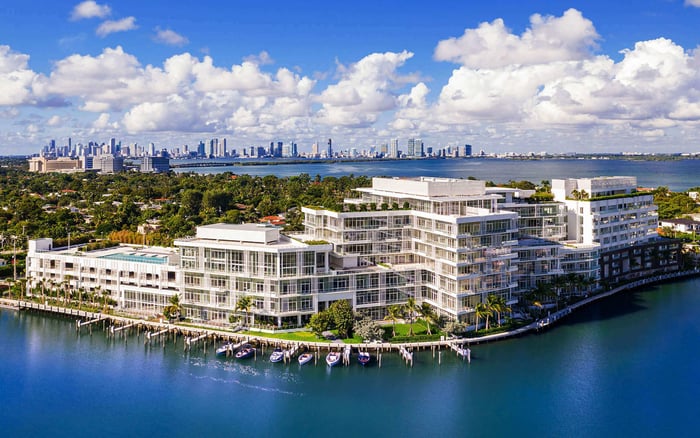
For yacht-owning Brickell buyers, the more consequential comparison can lie beyond the residence itself: vessel compatibility, enforceable berth rights, recurring dockage costs, bridge access, and the daily practicality of moving owner and crew between home and water.
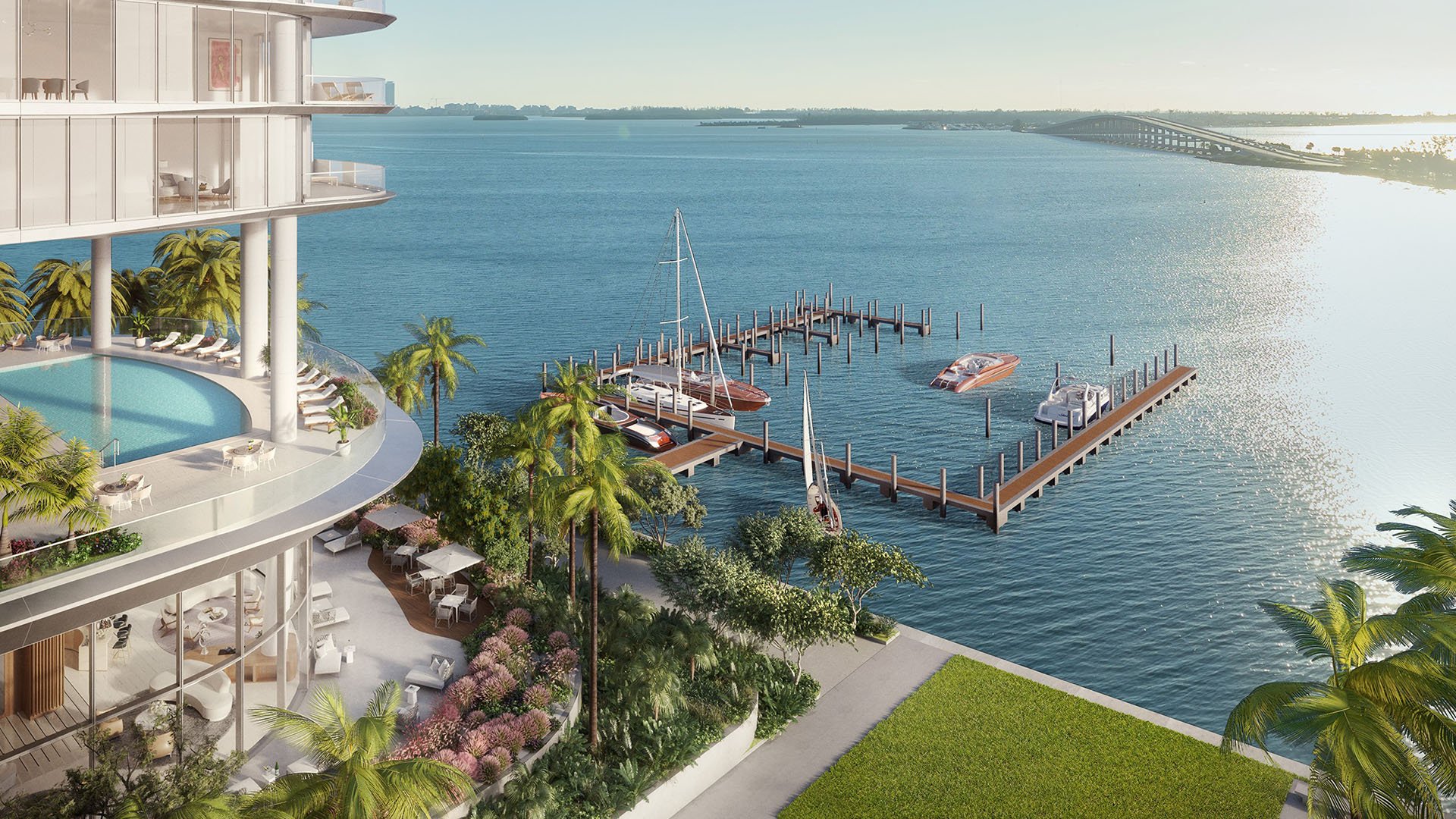
In Brickell, a waterfront residence and a workable yachting base are two separate purchases, even when presented as a single lifestyle. The apartment may satisfy every architectural preference, yet the available berth may not accept the vessel, the access route may disrupt departure plans, or the dockage agreement may offer less certainty than the buyer expects.
For an owner who intends to use a yacht frequently, those differences can matter more than a negotiated reduction in the asking price. That does not mean marina costs invariably outweigh residential price differences. The issue is utility: ownership feels different when the boat cannot operate as intended.
Begin with a vessel brief covering length overall, beam, air draft, water draft, and intended use. Distinguish permanent berthing from occasional pickup, weekend stays, or charter activity. Each requires a different combination of physical compatibility, contractual permission, and availability.
A private marina, a yacht reservation service, and a dedicated berth are not interchangeable amenities. Before assigning value to any of them, establish precisely what accompanies the residence and what requires a separate agreement.
At Baccarat Residences Brickell, advertised features include more than 300 linear feet of private-marina dockage, a resident yacht reservation service, and private water-taxi service. Those features alone do not establish an individual purchaser's right to keep a particular vessel there. Linear dockage is not a count of berths available to buyers.
For St. Regis® Residences Brickell, buyers should distinguish marina pickup and drop-off access from permanent storage. Do not assume that a resident slip can be purchased or rented, or that ownership guarantees a berth.
Request written confirmation of availability for the intended occupancy date, the ownership or license structure, the agreement term, renewal provisions, transferability, and commercial-use restrictions. Where inventory combines long-term and transient berths, access advertised today does not establish availability at closing. Have counsel review the documents before treating marina access as part of the residence's value.
Local slip specifications illustrate why vessel screening comes first. One Brickell slip offering sets an 80-foot maximum length overall and a 6-foot maximum draft. Another advertised marina configuration describes approximately 36 slips, roughly 9 feet of dockside depth, and vessels up to about 80 feet. Its operating status and acceptance of the specific vessel require confirmation.
These figures answer different questions. Dockside depth does not establish allowable vessel draft. An overall-length ceiling does not establish adequate beam clearance or acceptance of every yacht below that length. Obtain confirmation for the actual vessel, not merely its nominal model designation.
Ask the captain and marina operator to review the approach, berth dimensions, relevant water levels, and operating limits. An advertised route to Biscayne Bay and Government Cut without fixed bridges also requires careful interpretation: it does not prove that every intended journey is free of movable-bridge opening requirements.
The objective is a written compatibility decision, not a reassuring description of waterfront access.
Brickell Avenue Bridge, at Miami River mile 0.1, has approximately 23 feet of closed vertical clearance and 90 feet of horizontal clearance in the center span. For a vessel that cannot clear the closed bridge, the opening schedule becomes part of the ownership experience.
Weekday restrictions include scheduled daytime openings and rush-period closures. An upriver berth can therefore demand more planning than its distance from open water suggests. Farther upriver, the route may involve multiple movable bridges, each requiring its own clearance and opening checks.
Compare the proposed berth with the owner's actual departure habits. An occasional planned outing and a spontaneous afternoon departure place different demands on the same location. Ask the captain to assess the complete route, not just the bridge nearest the residence.
These dimensions are screening information, not navigation instructions. Current restrictions, water levels, and vessel clearance requirements must be verified before passage.
A dockage budget should begin with the intended stay pattern. A nightly quotation is not evidence of a long-term berthing commitment, and a monthly benchmark is not a current offer for a suitable Brickell slip.
Historical Miami-Dade recreational wet-slip pricing for FY 2022-23 was approximately $23-$26 per boat foot monthly, depending on vessel length. At $26 per foot per month, an 80-foot yacht yields an illustrative annual base dockage cost of $24,960: 80 multiplied by $26 multiplied by 12. That calculation excludes additional charges and does not establish current availability or pricing.
For the same historical period, monthly transient pricing was roughly $37-$40 per foot, while daily transient pricing was approximately $2.45-$2.75 per foot. These are distinct booking categories, not interchangeable ways to quote the same commitment.
Local short-stay offerings include pricing from $450 nightly and private dockage advertised at $2-$7 per foot nightly. Some Brickell operators apply a 30-foot minimum billing length, so a shorter boat can still incur the minimum charge.
Request a dated, vessel-specific proposal showing the billing length, agreement duration, recurring marina dues, and every additional charge. Ask whether utilities and services are included or billed separately. Compare like-for-like annual commitments before allowing an attractive headline rate to influence a residential decision.
Proximity is valuable only when the route works. For a buyer considering Una Residences Brickell alongside a separately arranged berth, the practical test is the residence-to-vessel journey. A Brickell address alone does not resolve access, and this comparison does not imply a marina entitlement at the residence.
Walk the route as an owner, then assess it with the captain. Where can crew park? How is security access arranged? Can provisions reach the vessel conveniently? What permissions govern maintenance access, and where can guests be picked up?
These are due-diligence questions, not confirmed benefits of every local marina. A pleasant walk for the owner does not necessarily accommodate the movement of supplies or service personnel. Establish those arrangements before treating nearby dockage as seamless daily access.
The most useful shortlist pairs each residence with an identified berth, a vessel acceptance decision, a workable route, and a documented annual budget. Keep unresolved items visible rather than letting a marina amenity description stand in for an agreement.
A lower asking price can remain attractive. For a committed yacht owner, however, reliable access and secure slip rights may be the deciding advantages. The right comparison is not simply apartment against apartment; it is one complete ownership arrangement against another.
For a considered approach to Brickell residences and the boating arrangements that support them, connect with MILLION.
If branded residences are on your mind — as a home or as an allocation — we would be glad to share what we are seeing, privately.
Begin a quiet conversationFor frequent yacht users, vessel compatibility, reliable access, and secure berth rights can determine whether a residence supports their intended lifestyle. This does not mean dockage costs always outweigh differences in purchase price.
Confirm length overall, beam, air draft, and water draft. The marina and captain should assess the actual vessel, intended berth, and complete access route.
No; marina access, pickup services, and yacht reservations do not by themselves establish a purchaser's permanent berth rights.
It should clarify availability, ownership or license structure, term, renewal, transferability, and commercial-use restrictions. Confirm that the agreement accommodates the intended vessel and occupancy date.
Its closed vertical clearance is approximately 23 feet, with about 90 feet of horizontal clearance in the center span. Verify current conditions and vessel requirements before passage.
Vessels unable to clear the closed bridge must account for scheduled openings and weekday rush-period closures. Berths farther upriver may require passage through additional movable bridges.
Not necessarily. Dockside depth is not an allowable-draft specification; the operator and captain must confirm vessel suitability, approach conditions, and relevant water levels.
No; it is an illustrative base calculation using a historical FY 2022–23 benchmark of $26 per foot monthly, before additional charges and without confirming availability.
A boat shorter than 30 feet can still be charged using 30 feet as the billing length. Confirm the minimum and booking structure in a dated proposal.
Review walking routes, parking, security permissions, provisioning, maintenance access, and guest pickup arrangements. Nearby dockage does not automatically establish convenient access for crew and supplies.