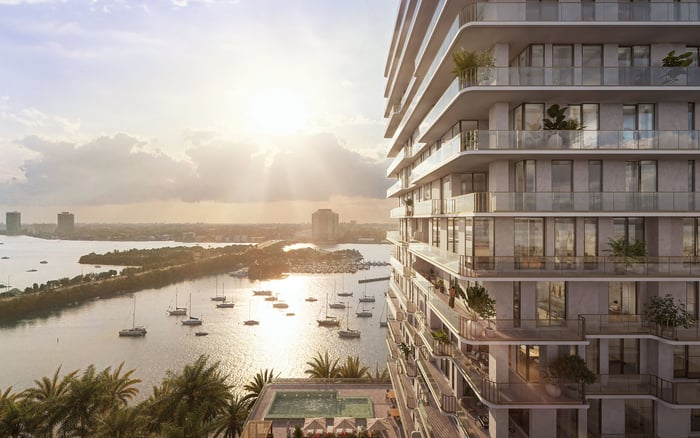
In North Bay Village, comparing condominium residences requires more than reviewing asking prices. Line position, solar exposure, wind, balcony geometry, circulation, elevator dependence, privacy, and the durability of sightlines can all affect daily usability.

In North Bay Village, residences with similar interior areas and bedroom counts can still offer different daily experiences. The distinction often begins with the line: a unit's fixed position within the floor plate and its relationship to orientation, nearby circulation, service areas, neighboring parcels, and outdoor exposure.
A complete floor plate can help a buyer identify corner positions, proximity to elevators, terrace placement, and the relationship between a residence and its surroundings. Asking price remains relevant, but it cannot measure comfort, privacy, or convenience on its own.
Each line deserves an individual assessment. Buyers can request a floor plate marked with north, elevator cores, service rooms, amenity areas, access points, and neighboring parcels. They can then compare window orientation, corner position, potential privacy, nearby noise sources, and the route from arrival to the residence.
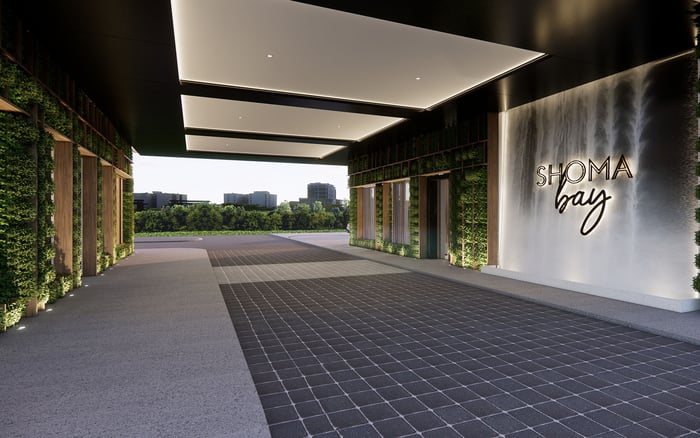
When reviewing North Bay Village options such as Shoma Bay North Bay Village, Continuum Club & Residences North Bay Village, and Tula Residences North Bay Village, the useful comparison is not branding alone. It is how each shortlisted residence may function throughout an ordinary day.
Large windows and open outlooks can be appealing, but exposure can influence when an interior or terrace feels comfortable. A buyer should consider visiting during the hours when the residence would normally be occupied rather than relying on a single tour at a convenient time.
Practical questions include how much direct sun reaches the principal living area, how much of the balcony remains covered, and whether the overhang protects the intended seating area. Headline outdoor square footage may be less informative than usable depth, dependable cover, and a layout that accommodates furniture without obstructing circulation.
An outlook should therefore be evaluated from both inside and outside. Glare, shade, privacy, and comfort can affect how often the space is actually used.
Wind conditions can vary by orientation, position, and elevation. Buyers should assess how the terrace feels, whether exterior doors are manageable, and whether the intended furniture arrangement appears practical.
A higher floor may offer separation and a broader outlook, but elevation alone does not establish superior usability. The more useful question is whether the outdoor area can function as an extension of the interior during the times its owner expects to use it.
For an upper-floor residence, the premium for height should be considered alongside elevator arrangements, service circulation, backup-power coverage, outage procedures, and the emergency stair route. These items should be verified through the appropriate building or project documents rather than assumed.
Elevator dependence also affects ordinary convenience. Buyers can trace the route from parking or loading areas to the residential core, ask how deliveries and move-ins are handled, and consider whether the selected line sits near busy circulation or service areas.
A view observed during a tour is a current condition, not necessarily a permanent guarantee. Buyers should review the relationship between the selected line and neighboring parcels while distinguishing an existing outlook from a protected view corridor.
A less dramatic exposure may prove more suitable if it offers stronger privacy, better shade, or a more comfortable terrace. View quality should be judged together with usability rather than treated as a separate premium.
Before assigning a premium to a North Bay Village residence, compare shortlisted lines according to daily use. Review solar exposure, wind, privacy, nearby noise, balcony dimensions, vertical circulation, arrival route, and surrounding parcels. Visit at relevant times and study the complete floor plate rather than only the individual residence plan.
Price per square foot can be a useful filter, but it is not a substitute for understanding how a specific residence may live.
What is a condominium line? It is a residence's recurring vertical position within a building's floor plate, sometimes described as a stack.
Why compare lines with the same bedroom count? Similar plans can differ in orientation, privacy, circulation, nearby noise, and outlook.
When should a buyer assess solar exposure? The residence should be visited during the hours when its interior and balcony would typically be used.
Is total balcony area enough to judge usability? No. Depth, cover, furniture placement, privacy, sun exposure, and wind all deserve review.
Does a higher floor always offer better value? Not necessarily. Elevation should be balanced against terrace comfort, vertical circulation, and elevator dependence.
Which elevator details should a buyer verify? Review elevator and service arrangements, backup-power coverage, outage procedures, and emergency access through the appropriate documents.
How should a buyer evaluate a view? Consider its direction, privacy, surrounding parcels, and whether any claimed protection is documented.
Why does the arrival route matter? The path from parking or loading areas to the front door can affect convenience, privacy, and exposure to shared circulation.
What should a complete floor plate reveal? It should help identify orientation, line positions, elevator cores, service areas, access points, and nearby shared spaces.
How should two similarly priced residences be compared? Compare the combined quality of light, shade, privacy, outdoor comfort, circulation, and outlook rather than relying on price alone.
For a discreet conversation and a curated building-by-building shortlist, connect with MILLION.
If branded residences are on your mind — as a home or as an allocation — we would be glad to share what we are seeing, privately.
Begin a quiet conversation