A discreet due diligence guide for Latin American buyers evaluating neighboring development risk before committing to a South Florida luxury residence.
For Latin American buyers considering South Florida, even the most elegant residence should never be evaluated in isolation. The tower, villa, or boutique condominium may be the visible acquisition, but the surrounding land is often the quieter variable shaping privacy, light, view permanence, construction disruption, and future resale confidence.
Neighboring development risk is not a reason to hesitate. It is a reason to investigate with discipline. A buyer who understands what can happen next door is better positioned to negotiate, select the right line, structure contingencies, and avoid overpaying for a view or sense of seclusion that is not fully protected.
This matters across the region, from Brickell to Miami Beach, Sunny Isles Beach, Bay Harbor Islands, Fort Lauderdale, Boca Raton, and Palm Beach. South Florida’s luxury market rewards buyers who look beyond the model residence and study the context around it. For a cross-border purchaser, that context should be reviewed before signing, not after the deposit becomes emotionally difficult to revisit.
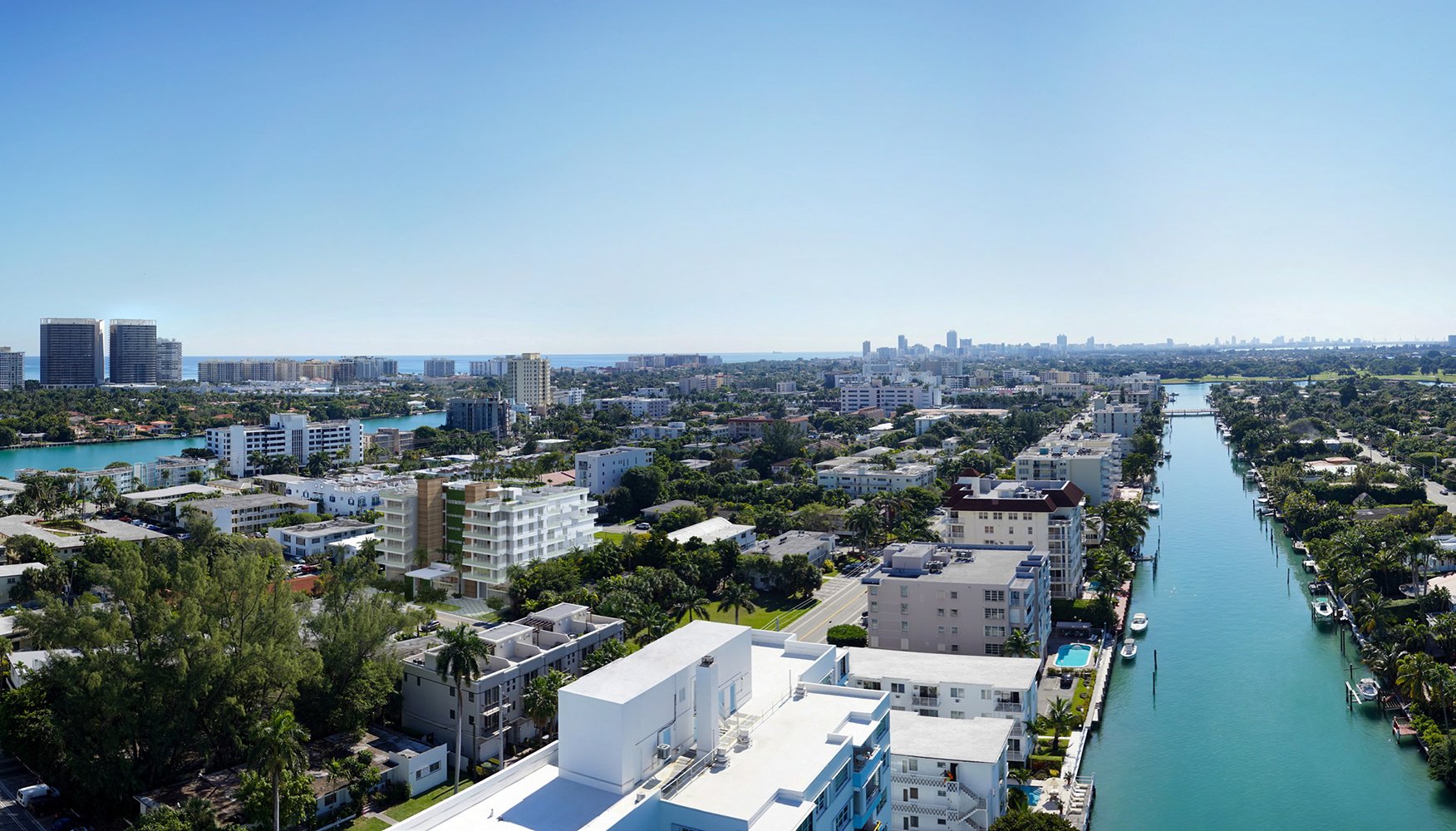
Many Latin American buyers approach South Florida with a sophisticated understanding of capital preservation, family mobility, education planning, lifestyle access, and currency diversification. Yet development risk can be less familiar because it is intensely local. Two buildings on the same waterfront may carry very different exposure depending on adjacent parcels, street frontage, zoning permissions, setbacks, easements, and the direction of future construction.
Distance also matters. A buyer living abroad may tour during a brief visit, fall in love with a terrace, and sign quickly to secure preferred inventory. That urgency can be reasonable in a competitive luxury environment, but it should not replace due diligence. The question is not only whether the current view is beautiful. The sharper question is what could legally, practically, and economically be built nearby.
For an investment purchase, neighboring development can influence rentability, future buyer perception, and the premium attached to views. For a family residence, it can affect noise, privacy, traffic patterns, and the experience of daily life. In both cases, the risk is rarely binary. It is a spectrum, and the goal is to price it intelligently.
Neighboring development risk is broader than a tower blocking a bay or ocean view. It can include future height near a low-rise building, a hotel use beside a residential setting, construction access close to a lobby, changes in pedestrian flow, new retail loading zones, garage entrances, lighting, rooftop activity, or mechanical equipment placed within sight lines.
It can also be subtle. A residence may retain its wide water view but lose a sense of openness on one side. A primary suite may remain bright yet become more exposed to a neighboring balcony. A terrace that feels private during the sales presentation may feel different after an adjacent parcel is activated.
New-construction buyers should be especially careful because they are often purchasing a future lifestyle from plans, renderings, and sales gallery materials. Those materials can be useful, but they do not replace independent review of the surrounding parcels. In a polished sales environment, the most important question may be the one not illustrated: what happens outside the frame?
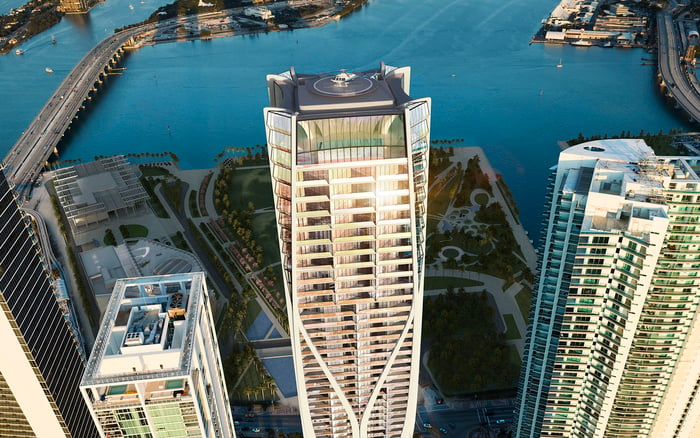
In Brickell, buyers are often purchasing a vertical urban lifestyle, where water, skyline, and city views can vary dramatically by line and elevation. A residence at Baccarat Residences Brickell may attract a buyer who values branded service, centrality, and bay-oriented living, but the adjacent and nearby development landscape should still be considered part of the acquisition thesis.
Miami Beach requires a different lens. Here, privacy, scale, streetscape, and proximity to hospitality energy can matter as much as view direction. Buyers considering The Perigon Miami Beach should think carefully about how neighboring parcels, access routes, and the relationship between beach, street, and residence affect long-term enjoyment.
Sunny Isles Beach is another distinct case. The oceanfront tower experience can be exceptional, but the value of a particular line may depend on its exposure to neighboring sites, future redevelopment possibilities, and the spacing between buildings. At Bentley Residences Sunny Isles, as with any high-end coastal purchase, buyers should distinguish between an impressive product and the broader corridor in which that product sits.
Bay Harbor Islands offers a more intimate scale, often attractive to buyers seeking a quieter residential atmosphere near Bal Harbour and Miami Beach. Yet intimacy does not eliminate development questions. A boutique setting such as Bay Harbor Towers still deserves review of nearby lots, streets, waterfront edges, and potential future activity.
A prudent buyer should request a clear explanation of what is owned, what is controlled, and what is merely enjoyed. Views are frequently marketed as part of the lifestyle, but unless there is legal protection, they may not be guaranteed. The buyer’s team should review applicable zoning, available site plans, recorded easements, condominium documents, surveys, setbacks, neighboring lot conditions, and any visible redevelopment cues.
This review should not be treated as adversarial. It is simply the standard of care expected at the top of the market. A luxury acquisition may involve exceptional finishes, architecture, amenities, and service, but the land around it remains governed by municipal rules and private property rights. The buyer who understands those rules is not pessimistic. The buyer is prepared.
Contract timing also matters. Before waiving key rights or becoming deeply committed, the buyer should know whether any concerning adjacent parcel issues exist. If questions remain unresolved, the buyer can seek clarification, adjust expectations, or focus on a different line, stack, elevation, or neighborhood.
View evaluation should be specific. A phrase like “water view” is too broad. Buyers should understand whether the view is direct, oblique, protected, partial, seasonal in feeling, or dependent on a neighboring low-rise condition. A view from the living room may differ from the view from the primary bedroom or terrace.
The most valuable exercise is to stand in the residence, or study the exact anticipated elevation, and identify what lies in every direction. What is across the street? What is on the adjacent lot? Is the building beside it older, underbuilt, vacant, recently improved, or strategically positioned for future change? Are there parking lots, low-rise structures, or assemblage possibilities nearby?
No buyer can eliminate every future uncertainty. South Florida is dynamic by nature. But a buyer can avoid confusing today’s open sky with a permanent asset. In luxury real estate, the premium should attach to what is durable, not merely what is present during a sales appointment.
Latin American buyers should assemble a team that understands both the emotional and technical dimensions of the purchase. A broker can compare lines and neighborhoods. A real estate attorney can review contract language and recorded documents. An architect or planning consultant can help interpret massing, setbacks, and likely visual impact. A tax and structuring advisor may also be relevant for ownership planning.
The key is coordination. Development risk is not solved by one document or one conversation. It is understood through multiple layers that together form a clearer picture. When the purchase is significant, the cost of review is modest compared with the cost of disappointment.
Discretion is also important. Many families prefer privacy while evaluating residences, especially when capital is moving across borders. A strong advisory process protects confidentiality while still asking direct questions. The best buyer representation is elegant, firm, and thorough.
When a neighboring risk is identified, the answer is not always to walk away. Sometimes the correct response is to negotiate price, select a higher floor, choose a different exposure, request additional information, or redirect the search to a more stable setting. In other cases, the risk may be fully acceptable because the buyer values location, amenities, service, or design more than a particular view corridor.
The discipline is to make the trade-off consciously. A buyer should never discover after closing that the property’s most seductive feature was also its least secure. In South Florida luxury real estate, beauty and caution can coexist. The most refined acquisitions are often the ones where the buyer understood not only what was being purchased, but what could happen around it.
What is neighboring development risk? It is the possibility that nearby parcels may be built, redeveloped, or used in ways that affect privacy, views, light, access, noise, or resale perception.
Is a beautiful view ever guaranteed? Not automatically. A view should be treated as protected only if the buyer’s advisors can identify legal or physical reasons that make it durable.
Should Latin American buyers review zoning before signing? Yes. Zoning and surrounding parcel conditions should be reviewed early, especially when the buyer is relying on a view, privacy, or quiet setting.
Does this issue matter more for condos or single-family homes? It matters for both. Condos may face adjacent tower or street activity, while homes may be affected by nearby redevelopment, scale changes, or privacy shifts.
Can a buyer negotiate if neighboring risk is discovered? Often, yes. The buyer may negotiate value, request clarification, change residence lines, adjust contingencies, or select another property.
Are higher floors always safer from development risk? Not always. Higher floors may improve exposure, but future height, distance, and angle still require careful review.
Should renderings be relied upon for view analysis? Renderings are useful for orientation, but buyers should not rely on them alone. Independent review of neighboring conditions is essential.
Who should help evaluate adjacent parcels? A knowledgeable broker, real estate attorney, and when appropriate, an architect or planning consultant can provide a stronger assessment.
Is development risk a reason to avoid South Florida? No. It is a reason to buy with precision. The region offers exceptional residences, but context should be part of the decision.
What is the best way to shortlist comparable options for touring? Start with location fit, delivery status, and daily lifestyle priorities, then compare stacks and elevations to validate views and privacy.
To compare the best-fit options with clarity, connect with MILLION.
If branded residences are on your mind — as a home or as an allocation — we would be glad to share what we are seeing, privately.
Begin a quiet conversation