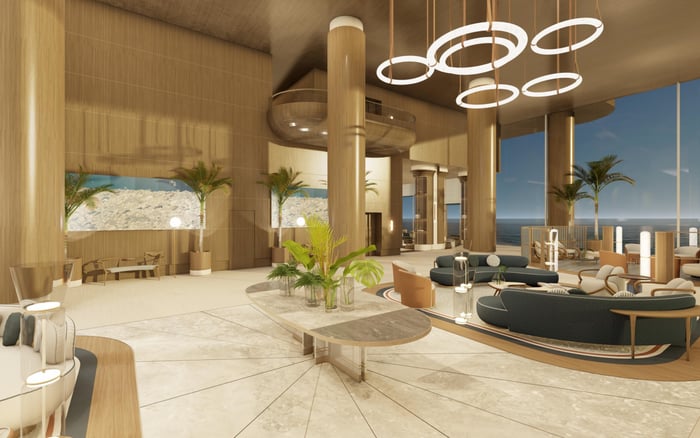
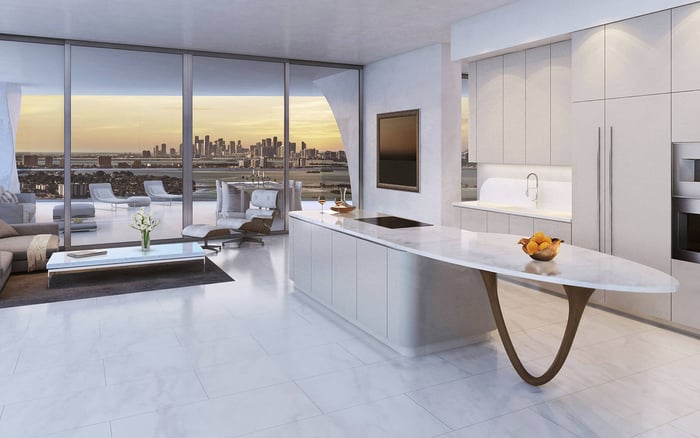
Guest-suite strategy can reshape the practical cost of ownership by changing how much private sleeping space a buyer truly needs, how often guests stay, and whether the building itself can absorb visiting family without requiring a larger residence.
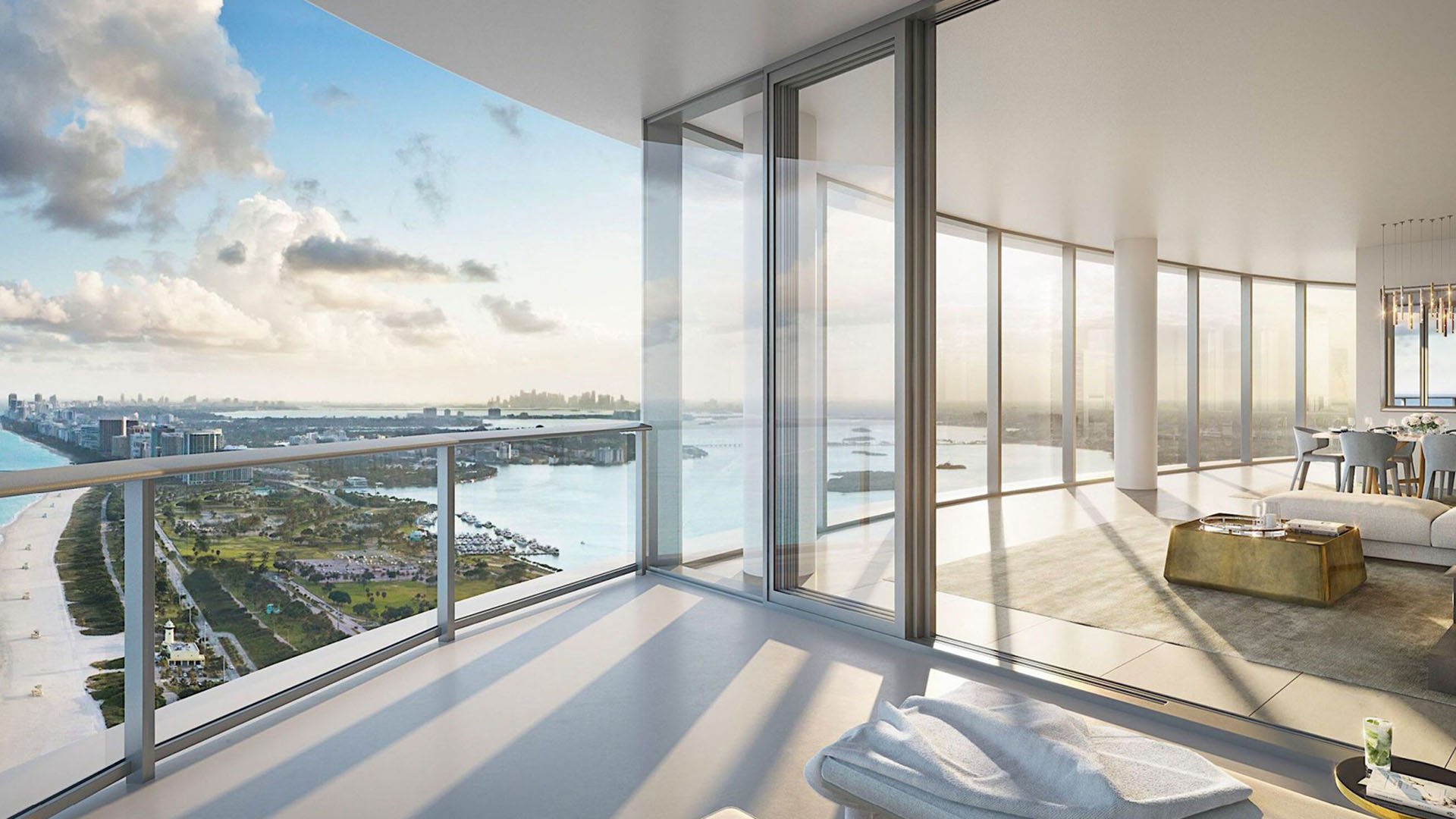
In South Florida’s waterfront condominium market, the most expensive room in a residence is often the one used least. A guest bedroom can feel essential during the search, especially for buyers envisioning holidays, family visits, long weekends, and winter stays. In practice, however, many owners find that a second or third guest room sits idle for much of the year, while still shaping purchase price, monthly carrying cost, furnishing budget, and long-term maintenance.
That is where guest-suite strategy becomes more than a convenience. It becomes a disciplined way to evaluate the real cost of ownership. The question is not simply whether a residence has enough bedrooms. The sharper question is how often each bedroom will be used, who truly needs to stay inside the private residence, and whether the building, neighborhood, or nearby hospitality ecosystem can support overflow guests without pushing the buyer into a larger floor plan.
For a waterfront buyer comparing Miami Beach, Brickell, Sunny Isles Beach, Bal Harbour, Fort Lauderdale, or West Palm Beach, that distinction can be meaningful. A larger residence may deliver comfort and flexibility, but a more efficient layout paired with a thoughtful guest plan can preserve capital for view, elevation, outdoor space, finishes, parking, storage, or simply liquidity.
Luxury buyers often evaluate bedrooms emotionally. They picture adult children visiting, grandchildren waking early, friends arriving for major South Florida events, or parents staying for a month. Those scenarios matter. The mistake is assuming every scenario requires permanent private square footage inside the unit.
A guest-suite strategy separates primary living requirements from occasional hosting requirements. Primary requirements are non-negotiable: the owner’s suite, everyday work space, the kitchen and entertaining core, storage, privacy, and the view experience. Occasional hosting requirements are different. They may be satisfied by a flexible den, a secondary bedroom, a building guest suite if available, a nearby hotel, or a second residence within the same family portfolio.
This is especially relevant for second-home ownership. A second home is often used intensely during specific windows, then lightly for long stretches. If the residence is sized only for peak guest demand, the owner may be carrying peak-season capacity year-round. A more deliberate approach asks whether that capacity should be owned permanently, accessed occasionally, or avoided altogether.
Buyers looking at projects such as The Perigon Miami Beach are often drawn to the lifestyle promise of the coastline. In that context, the choice between one more bedroom and the right view line or terrace proportion can become a defining financial and lifestyle decision.
There are three practical approaches to guest accommodation.
The first is to own the capacity. This means purchasing the larger floor plan and accepting that guest bedrooms are part of the permanent residence. It suits buyers with frequent overnight family, multigenerational use, live-in help, or a strong preference for privacy within the home. It also suits owners who do not want to coordinate outside accommodations.
The second is to borrow the capacity. This may mean using a building guest suite where available, booking nearby hospitality, or coordinating a second unit within the same building or neighborhood. This approach can be elegant when guests are frequent enough to matter but not constant enough to justify additional private square footage.
The third is to plan around the capacity. This means designing a residence with convertible space, such as a den that can close, a media room with discreet sleeping capability, or a secondary bedroom that also functions as an office. The goal is not to compromise the home. It is to avoid dedicating prime waterfront square footage to a function that may occur only occasionally.
In Brickell, where buyers may prioritize urban access, dining, offices, and bay orientation, the trade-off can be especially sharp. A purchaser comparing layouts at St. Regis® Residences Brickell may think differently about guest capacity than a buyer whose household uses the property every school holiday.
The real cost of a South Florida waterfront condo is not only the purchase price. It is the sum of acquisition, carrying expense, fit-out, furniture, insurance considerations, association obligations, opportunity cost, and the friction of owning space that does not serve daily life. A guest bedroom touches nearly all of those categories.
First, a larger plan typically means more interior area to finish, furnish, cool, clean, and maintain. Even without assigning a specific number, the direction is clear: more space carries more responsibility. Second, additional bedrooms may move a buyer into a different tier of inventory, especially in buildings where larger residences have different exposures, higher floors, or more expansive terraces. Third, buying a larger unit can reduce flexibility. Capital placed into unused guest capacity is capital not placed into another investment, another property, or a stronger primary residence.
The investment lens does not mean treating a home as a spreadsheet alone. It means recognizing that lifestyle and efficiency can coexist. A residence should support the owner’s rituals first. If guests are occasional, the smartest strategy may be hospitality access rather than permanent bedroom count.
Guest suites are not only about cost. They are also about boundaries. In waterfront condominiums, privacy is a luxury equal to view. A guest staying inside the unit shares morning routines, elevator timing, kitchen use, terraces, service interactions, and sometimes remote-work zones. That can be wonderful for close family and uncomfortable for everyone else.
A well-planned guest strategy asks who should be inside the residence and who should be nearby. Adult children with spouses may prefer independence. Friends may enjoy proximity without full integration. Parents or young grandchildren may need to be within the residence. The answer changes the floor plan.
In Sunny Isles Beach, where many buyers focus on tower living, ocean outlooks, and family visits, residences such as Bentley Residences Sunny Isles illustrate the broader point: the prestige of an address does not eliminate the need to study how people will actually sleep, gather, arrive, and leave.
Before relying on any guest-suite strategy, buyers should understand the building’s rules and operating culture. Can unrelated guests occupy a residence without the owner present? How are visitors registered? Are building guest suites available, and if so, how are they reserved? Are there limits on length of stay? What are the procedures for deliveries, parking, beach access, marina access, or service staff? If the owner expects frequent overnight visitors, these details are not minor.
Short-term rentals should be treated separately from personal guest use. A residence that works beautifully for family overflow may not be appropriate, permitted, or desirable as a rental asset. Luxury buildings often protect residential character through rules that deserve careful review before contract execution.
The same caution applies in smaller waterfront settings. In Bay Harbor Islands and Bal Harbour, the appeal may be quieter scale and access to Miami Beach without the same intensity. Buyers reviewing Rivage Bal Harbour, for example, should consider not only the residence but the social choreography around guests: arrival, parking, privacy, and how often the owner wants the home to feel like a family compound.
Start with a calendar. Mark the weeks you expect to occupy the residence, then mark the weeks you expect overnight guests. Separate family from friends, adults from children, and planned visits from aspirational visits. The gap between imagined usage and likely usage is where real cost hides.
Next, rank what cannot be recreated elsewhere. A protected view, a terrace that supports daily life, a primary suite with quiet separation, strong storage, and a building culture that fits your rhythm may be harder to replicate than an extra sleeping room. Then identify what can be outsourced without diminishing the experience. A visiting couple may be happier in a nearby suite than in a secondary bedroom next to your office.
Finally, price the emotional value of ease. Some owners want everyone under one roof, regardless of utilization. Others want closeness without constant togetherness. Neither answer is wrong. The mistake is failing to decide before buying.
West Palm Beach buyers may face a similar calculus, with waterfront living, seasonal occupancy, and family visits shaping the decision. Projects such as Alba West Palm Beach can prompt a useful question: should the premium go toward more bedrooms, or toward the daily experience of the rooms the owner will use most?
The most sophisticated South Florida buyers are not always the ones buying the largest residence. They are often the ones buying the most intentional residence. They know whether guests are central to their lifestyle or occasional additions to it. They understand when a larger floor plan creates ease and when it merely flatters a hypothetical future.
Guest-suite strategy is ultimately about control. It controls capital, privacy, household rhythm, and the way a waterfront home lives across seasons. In a market where views, service, and scarcity command attention, the quiet decision about where guests sleep may be one of the most important financial decisions in the entire purchase.
What is guest-suite strategy in a waterfront condo purchase? It is the process of deciding whether guest capacity should be owned inside the residence, accessed through the building or nearby hospitality, or handled through flexible interior planning.
Can guest-suite strategy reduce the effective cost of ownership? It can, if it prevents a buyer from purchasing seldom-used bedrooms and redirects capital toward features used daily.
Is a larger floor plan always better for a second-home buyer? Not always. A second-home owner should compare peak-season guest needs with the cost of carrying unused space throughout the year.
Should I rely on a building guest suite before buying fewer bedrooms? Only after understanding the building’s reservation rules, availability, guest policies, and practical convenience.
How should families think about guest rooms? Families should distinguish between guests who need to be inside the residence and guests who may prefer nearby privacy.
Are short-term rentals the same as personal guest use? No. Personal guest use and rental use are different issues and should be reviewed through building rules and ownership goals.
What matters most besides bedroom count? View, terrace usability, storage, privacy, service flow, and everyday comfort may matter more than an extra bedroom used occasionally.
Does this strategy apply in Miami Beach and Brickell? Yes. Miami Beach buyers may prioritize resort-like coastal living, while Brickell buyers may weigh urban access and bayfront convenience.
Can a den replace a guest bedroom? It can for occasional visitors if it closes well, supports privacy, and does not compromise the owner’s daily work or living routine.
When is it worth owning the extra bedroom? It is worth it when guests are frequent, privacy inside the residence is essential, or multigenerational use is part of the core lifestyle.
When you're ready to tour or underwrite the options, connect with MILLION.
If branded residences are on your mind — as a home or as an allocation — we would be glad to share what we are seeing, privately.
Begin a quiet conversation