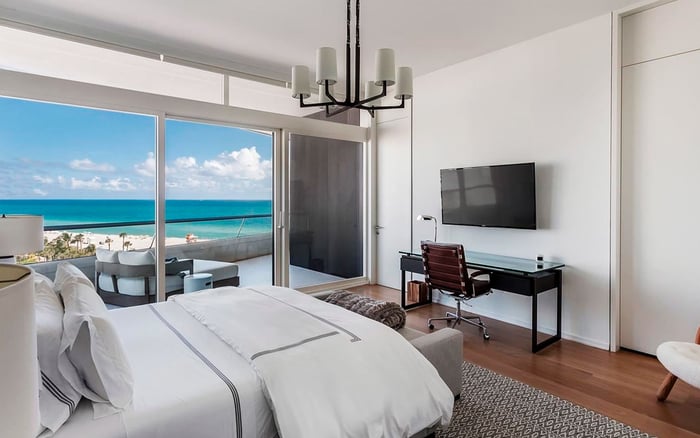
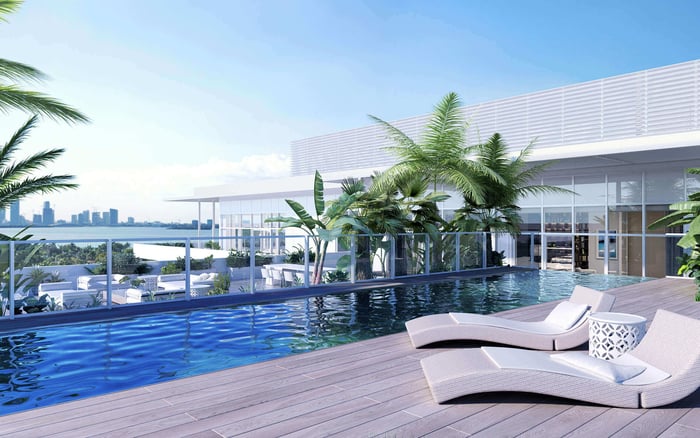
A buyer-focused look at how The Well Coconut Grove fits seasonal ownership, with emphasis on privacy, maintenance simplicity, wellness-minded living, and the practical rhythm of returning to Miami without managing a full-time house.

For seasonal owners, the most valuable luxury is often not spectacle. It is continuity. A residence should be able to sit quietly while its owner is in New York, London, Toronto, São Paulo, or Palm Beach, then feel composed the moment the door opens again. That is the central appeal of The Well Coconut Grove for buyers who want Miami to be part of a larger life, not their only address.
The phrase lock-and-leave is often reduced to convenience, but in the upper tier of South Florida real estate it means something more precise. It means ownership with fewer exposed edges. It means a home that does not require the daily oversight of a single-family property, yet still preserves the privacy, design intention, and neighborhood identity discerning buyers expect. In that sense, The Well Coconut Grove is less about escaping responsibility than refining it.
Coconut Grove gives the concept particular credibility. The neighborhood has long appealed to buyers who prefer a quieter Miami, where shade, texture, dining, boating access, and village-like routines carry as much weight as skyline views. For a second-home owner, that atmosphere matters. The residence is not simply a place to sleep between reservations. It is where the Miami season begins, settles, and resets.
Seasonal ownership has changed. Many buyers are no longer purchasing a winter pied-à-terre as a purely occasional retreat. They may arrive for long weekends, school breaks, art fairs, business meetings, wellness stays, or extended family time. Their Miami home must be ready for irregular use without requiring constant personal management.
That shift has made the practical side of ownership more important. Elevators, access control, building staffing, package handling, secure parking, amenity maintenance, and the reliability of common areas can shape the ownership experience as much as finishes or views. A lock-and-leave residence should reduce friction at the exact moments when a seasonal owner has the least patience for it: arrival day, departure day, and the week before guests come into town.
This is where a condominium setting can outperform a standalone home for the right buyer. A house in Coconut Grove may offer land and autonomy, but it also brings landscaping, storm preparation, exterior upkeep, pool management, vendor coordination, and the quiet anxiety of an empty property. A well-run residence is not maintenance-free, but the responsibilities are organized differently. For owners who value time, that distinction is meaningful.
The best lock-and-leave properties also understand discretion. They do not make every arrival feel theatrical. They protect the owner’s rhythm, whether that means an early flight, a late dinner, or a quiet morning before the city starts moving.
Coconut Grove is not interchangeable with Brickell, Miami Beach, or Sunny Isles. Its appeal is slower and more residential. For seasonal owners, the neighborhood’s value lies in the ability to feel anchored without feeling removed. Buyers can participate in Miami when they choose, then return to a softer environment that reads less like a resort corridor and more like a true neighborhood.
That is a useful lens for understanding The Well Coconut Grove. The project sits within a broader Grove conversation that includes established and emerging residences, each appealing to a slightly different version of the luxury buyer. Someone considering Four Seasons Residences Coconut Grove may be drawn to brand familiarity and service expectations, while a buyer studying Mr. C Tigertail Coconut Grove may be weighing hospitality energy within the same neighborhood orbit. The Well Coconut Grove enters that discussion with a wellness-oriented identity and a strong claim on lifestyle practicality.
For seasonal owners, the Grove’s daily conveniences are not incidental. The ability to move between home, dining, the waterfront, fitness routines, family visits, and airport transfers with relatively low drama is part of the calculus. Buyers are not only purchasing interior space. They are purchasing a repeatable seasonal pattern.
Wellness can be an overused word in luxury real estate, but for seasonal ownership it has a practical side. A home that supports rest, routine, and recovery is easier to use well. Owners who split time across cities often arrive carrying travel fatigue, business obligations, family logistics, and compressed calendars. The residence should help normalize the week rather than add another layer of scheduling.
The Well Coconut Grove is positioned for buyers who want that everyday wellness idea embedded in the living environment. The more important question is not whether wellness is present as a theme, but whether it supports the owner’s actual life. Can the home accommodate quiet mornings, guest visits, remote work, light entertaining, and time away without feeling delicate or over-programmed? Can the building’s atmosphere remain composed in season, when friends, family, and social obligations multiply?
That is why lock-and-leave buyers should evaluate wellness features with a pragmatic eye. A dramatic amenity is less valuable than one that becomes part of a routine. A beautiful shared space matters most when it is easy to use. A residence feels more luxurious when the owner does not need to plan excessively around it.
Without relying on spectacle, the strongest seasonal residences tend to share certain planning priorities. They provide a clean arrival sequence, adequate storage, simple circulation, and spaces that can shift between private use and hosting. A secondary bedroom may function as guest space, a work area, or a family overflow room, depending on the month. A terrace can become the emotional center of the home if it is comfortable enough to use regularly.
The lock-and-leave buyer should pay close attention to what happens between visits. Is there enough closet space for duplicate wardrobes, linens, owner supplies, and seasonal items? Does the kitchen support real use without requiring the scale of a full-time family home? Can the residence be prepared quickly before departure? These are not minor questions. They determine whether the home becomes a pleasure or a project.
In the Grove, some buyers will compare this logic with more design-forward or intimate options such as Arbor Coconut Grove, Opus Coconut Grove, or Ziggurat Coconut Grove. The point is not that one model suits everyone. It is that Coconut Grove offers several ways to pursue privacy, scale, and neighborhood connection, and The Well Coconut Grove is most compelling when judged through the owner’s real pattern of use.
The lock-and-leave promise depends on what happens when the owner is not present. Seasonal buyers should ask direct questions about building operations, access procedures, vendor policies, delivery handling, guest permissions, maintenance communication, and storm protocols. These details rarely appear glamorous, but they are often where satisfaction is won or lost.
For a boutique residence, the balance can be especially important. Smaller or more curated buildings may offer a sense of privacy and familiarity that appeals to owners who dislike anonymity. At the same time, buyers should understand how staffing, service expectations, and common-area upkeep are structured. The goal is a building that feels personal without becoming dependent on constant owner intervention.
This is also where new-construction buyers need discipline. Newness can be seductive, but the real measure is operational clarity. A residence may have beautiful materials and a compelling identity, yet the seasonal owner still needs confidence that the building will function smoothly during peak periods and quiet months alike.
The Well Coconut Grove should be considered first as a lifestyle purchase. That does not mean investment value is irrelevant. It means the strongest reason to buy is alignment between the residence and the owner’s pattern of living. In South Florida’s upper market, the best long-term ownership experiences often begin with that clarity.
Coconut Grove has a distinct buyer pool, and not every Miami luxury purchaser wants the same thing. Some want oceanfront drama. Some want branded verticality. Others want a village setting with access to the city but distance from its harder edges. The Well Coconut Grove belongs in that last conversation, especially for owners who want their Miami address to feel restorative rather than performative.
For the seasonal buyer, practicality is not a compromise. It is the luxury that protects every other luxury. A residence that is easy to close, easy to reopen, easy to share, and easy to leave behind allows the owner to enjoy Miami without managing Miami. That is the real promise of lock-and-leave living in Coconut Grove.
Is The Well Coconut Grove a good fit for seasonal owners? It can be, especially for buyers who value a Coconut Grove setting, wellness-minded living, and a residence designed to be easier to manage between visits.
What does lock-and-leave mean in this context? It refers to a home that can be used intermittently with less day-to-day oversight than a standalone property, supported by building systems and services.
Why choose Coconut Grove over Miami Beach or Brickell? Coconut Grove offers a quieter, more residential atmosphere while still keeping owners connected to Miami’s dining, waterfront, and cultural life.
Should buyers compare The Well Coconut Grove with other Grove residences? Yes. Comparing nearby options helps clarify priorities around service, scale, design personality, privacy, and neighborhood feel.
What should a seasonal buyer ask before purchasing? Ask about access procedures, maintenance communication, guest policies, delivery handling, storage, parking, and storm preparedness.
Is wellness a practical benefit or just a branding idea? It is practical when it supports daily routines, rest, fitness, and ease of use rather than existing only as a marketing theme.
Does a condo eliminate maintenance for seasonal owners? No. It reorganizes maintenance responsibilities and may reduce many of the burdens associated with owning a single-family home.
How important is storage for a lock-and-leave residence? Very important. Seasonal owners often need space for duplicate wardrobes, owner supplies, guest linens, and items left between visits.
Is The Well Coconut Grove mainly for full-time residents or part-time owners? It may appeal to both, but the lock-and-leave concept is especially relevant for owners who split time among several homes.
What is the key takeaway for buyers? The best purchase is not simply the most dramatic residence, but the one that makes seasonal life in Miami feel calm, secure, and repeatable.
To compare the best-fit options with clarity, connect with MILLION.
If branded residences are on your mind — as a home or as an allocation — we would be glad to share what we are seeing, privately.
Begin a quiet conversation