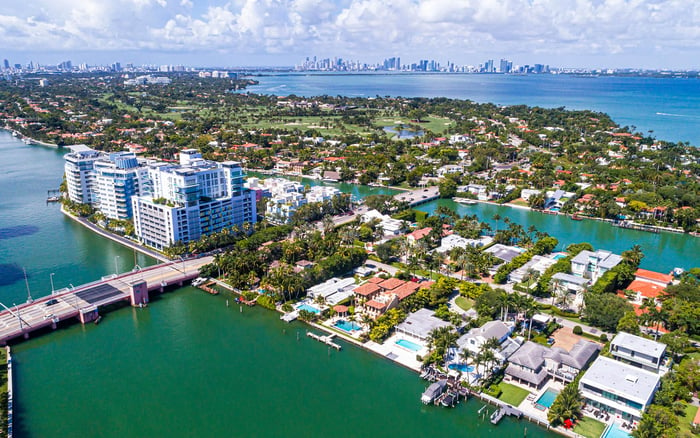
For Hong Kong executives, a Fisher Island purchase is best assessed as an operating platform for Florida life, not simply a luxury acquisition. Privacy, ferry access, club obligations, carrying costs, and documented patterns of use all belong in the decision.

For a Hong Kong executive considering a Florida base, Fisher Island offers something rarer than a waterfront address: controlled separation from mainland Miami. Set off Miami Beach, the private island is accessible by ferry, and guests must be cleared through an invitation or resident sponsor. That structure can support privacy and confidentiality, but it also shapes every commute, delivery, meeting, and household routine.
The island had a population of 684 in 2024 and contains roughly 800 residences. Its limited scale and established appeal among executives, celebrities, and other affluent residents give the market an unusually contained character. Sempra CEO Jeff Martin's publicly disclosed $11 million condo purchase in 2022 illustrates its relevance to senior corporate buyers.
For readers of MILLION Buyer's Guides, the opportunity sits at the intersection of Investment, Second-home planning, and Gated-community living. Yet the right question is not simply which residence offers the most compelling finish package. It is whether Fisher Island can serve as a credible, repeatable base for the buyer's intended Florida life.
Purchasing a Fisher Island condominium does not automatically establish Florida domicile or determine tax residency. Those conclusions depend on broader facts, documentation, and patterns of use that independent legal and tax advisers must evaluate in every relevant jurisdiction.
The property search should therefore follow a coordinated plan. Before selecting a residence, an executive should define anticipated occupancy, family use, business travel, records management, household staffing, and the home's practical role. An impressive residence that is operationally inconvenient may undermine consistent use.
Newer choices such as The Residences at Six Fisher Island can be assessed within that broader framework. Architecture and amenities matter, but so do arrival procedures, privacy, storage, service access, and the ease of maintaining the home during extended travel.
Fisher Island includes condominiums, private residences, townhomes, and villas, offering buyers different balances of space and complexity. Begin with building age, renovation condition, view corridor, assessments, insurance, and total carrying cost. Then examine the details that determine whether a residence can support daily executive life.
A condominium at Palazzo del Sol may suit a buyer who prioritizes a managed residential format. Palazzo della Luna offers another island-specific point of comparison, while The Links Estates at Fisher Island prompts a different discussion about space and household operations. These are not interchangeable products. Each deserves review against the buyer's schedule, staffing model, privacy expectations, and appetite for maintenance.
The inspection should extend beyond finishes. Confirm storage, parking and vehicle procedures, staff entry, guest authorization, delivery protocols, security practices, and any rules governing renovations or extended absences. For an international executive, these practical systems can matter more than decorative specifications.
Ferry-only access is both Fisher Island's defining advantage and its central constraint. It filters arrivals and supports discretion, yet it may be less convenient for owners who require frictionless access to mainland meetings and services.
A serious buyer should conduct a weekday trial rather than rely solely on a private showing. Test an early departure, an evening return, a guest arrival, a vehicle movement, and a household delivery. Consider how assistants, domestic staff, advisers, and family members would navigate clearance procedures. Ask how the routine changes when several obligations converge on the same day.
This exercise turns privacy from an abstract luxury into a measurable operating choice. The right buyer will regard the controlled threshold as an asset. The wrong fit may experience it as recurring friction, regardless of the residence's quality.
Condo ownership should be evaluated alongside Fisher Island Club requirements and costs. The club's managed ecosystem includes a beach club, the Vanderbilt Mansion, marinas, tennis facilities, and other amenities. Its recreational infrastructure encompasses 18 tennis courts, four pickleball courts, and a nine-hole golf course.
Club figures have varied by date. The initial contribution has been placed near $250,000, while 2024 figures cited a $350,000 initiation fee and annual dues of $23,005. Buyers should not underwrite a purchase from either figure alone. During due diligence, request the current fee schedule, membership rules, annual budget, assessment history, usage charges, and ferry procedures.
The ownership budget should combine the purchase price, condominium expenses, club initiation, annual dues, assessments, insurance, and applicable usage charges. Comparing residences on price alone can obscure the recurring cost of operating the full island lifestyle.
The strongest search process builds a decision file for advisers before emotional preference takes over. It should include the intended-use calendar, ownership budget, travel tests, building documents, club materials, insurance review, and a written comparison of household logistics.
That discipline does not make the purchase less aspirational. It protects what Fisher Island is meant to provide: privacy, continuity, and a residential environment that operates quietly in the background. For a Hong Kong executive, the best condo is the one that aligns property, operations, and independently advised residency planning.
Does buying a Fisher Island condo establish Florida domicile? No. Ownership alone is not determinative. Independent legal and tax advisers should evaluate the buyer's complete facts and pattern of use.
How is Fisher Island accessed? The island has ferry-only access, while guests generally require advance clearance through an invitation or resident sponsor.
Why does access matter to an executive buyer? Controlled entry can enhance privacy, but it also affects meetings, deliveries, staff movements, guests, and everyday scheduling.
How limited is Fisher Island housing supply? The island comprises roughly 800 residences across condominiums, private residences, townhomes, and villas.
Should buyers test the ferry routine? Yes. A weekday trial should include commuting, guest arrival, vehicle movement, delivery handling, and an evening return.
Is club membership part of the purchase analysis? Yes. Buyers should evaluate current membership requirements, initiation costs, annual dues, usage charges, and club rules alongside the condo.
What club costs should be used in a budget? Figures have varied, so buyers should obtain the current schedule rather than rely on historical amounts.
Which building factors deserve early review? Examine age, renovation condition, view corridor, assessments, insurance, rules, and total carrying cost before prioritizing interiors.
What operational questions are most important? Focus on staff access, guest clearance, storage, deliveries, security procedures, parking, and management during extended travel.
Who should advise on a cross-border residency plan? Engage independent legal and tax advisers familiar with the buyer's complete circumstances and every relevant jurisdiction.
For a confidential assessment and a building-by-building shortlist, connect with MILLION.
If branded residences are on your mind — as a home or as an allocation — we would be glad to share what we are seeing, privately.
Begin a quiet conversation