A Fisher Island acquisition should be planned as a property purchase, an access and club decision, and a post-close treasury event. This guide frames due diligence, closing liquidity, Florida domicile and reserve capital for a Chicago family office.
Moving a family office from Chicago to Fisher Island is not simply a change of primary residence. It is a coordinated decision encompassing a high-value real-estate acquisition, private-island access and club arrangements, and the recapitalization of the family balance sheet after closing.
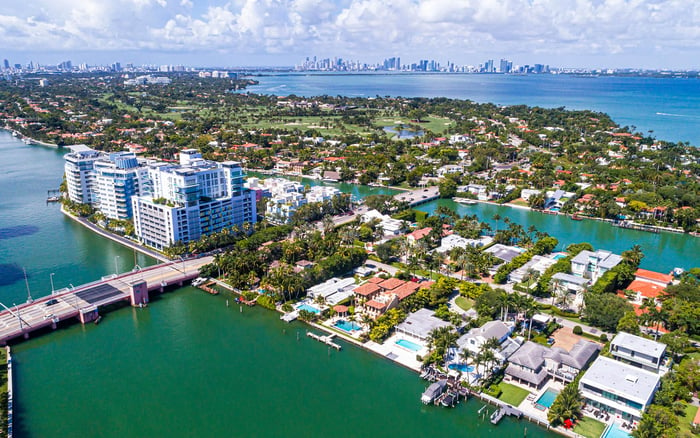
The destination is unusually self-contained. Fisher Island spans 216 acres in ZIP code 33109, just off the southern tip of Miami Beach, with no bridge to the mainland. Access is by yacht or private 24-hour passenger ferry. That exclusivity is central to the island’s appeal, but it also makes transportation, guest clearance, staffing and vehicle movements recurring operational considerations.
For a Chicago principal, the disciplined sequence is to define the desired residence, establish the full cost of ownership, reserve closing capital and then test whether the remaining liquid portfolio can absorb taxes, lifestyle spending and private-market commitments without forced sales.
The purchase price is only one claim on liquidity during a family-office relocation.
Thin ultra-luxury inventory makes headline medians less useful than residence-specific underwriting. In August 2026, active inventory ranged from 38 to 41 homes, with five properties pending in one count. The median asking price was estimated near $9.78 million and the median closed price at $7.4 million. A separate market measure put the median listing price at $8.4 million, or roughly $2,700 per square foot, with a median 165 days on market.
These figures are directional rather than interchangeable. A small number of exceptional listings can materially shift island statistics. In August 2026, for example, a five-bedroom, 7,600-square-foot residence at Palazzo del Sol was listed at $36.25 million. Three under-construction single-family homes were marketed at approximately $34 million each, while only three mansions remained available in June 2026, with pricing beginning at $34 million.
A family office should therefore compare the actual residence, not a generalized island average. Candidates may include Palazzo della Luna for condominium consideration, The Links Estates at Fisher Island for an estate-oriented search, or The Residences at Six Fisher Island as another island option. Each should be evaluated through its own contract, governing documents, delivery status, assessments and rights.
Ownership alone does not answer every question about club amenities. Before signing or closing, counsel should verify the membership rights and obligations attached to the chosen residence, including transfer mechanics, recurring charges and approval requirements.
A one-time Fisher Island Club equity initiation fee of $350,000 requires direct confirmation of both amount and terms. The operating budget should account separately for association charges, club costs, insurance, property taxes, household payroll, maintenance and transportation. Golf, racquet sports, private beach facilities, dining, spa services, family programming and marina facilities may be meaningful to the household, but their financial and access terms should not be assumed.
Owners, members and their permittees require approved identification for automatic ferry access. A relocation plan should consequently address guest authorization, domestic staff, advisers, deliveries, drivers, vehicles and emergency contingencies. For a gated-community lifestyle without a bridge, logistics are part of service design, not an afterthought.
The closing account should be treated as a dedicated transaction bucket. It may need to cover the purchase price, contractual deposits, verified closing requirements, club-related funding and immediately foreseeable residence costs. Exact amounts should be confirmed for the specific property rather than estimated from another transaction.
Reserve capital serves a different purpose: protecting the family after the keys change hands. If both functions sit in one cash pool, an apparently comfortable balance can prove inadequate when taxes, capital calls and annual expenses arrive together.
A practical treasury structure can span three horizons. The first holds closing funds and imminent obligations. The second covers near-term family spending, property taxes, association and club costs, residence operations, philanthropy and known commitments. The third supports portfolio rebalancing and liabilities expected beyond the immediate period. Duration should correspond to each liability horizon, with credit and interest-rate risk added only prudently.
For many multigenerational families, 12 to 24 months of lifestyle expenses, tax obligations and known capital commitments represents a conservative working reserve. Families with elevated spending, concentrated investment exposure or substantial private-market commitments may prefer 18 to 36 months in assets available within roughly five business days. The correct figure emerges from a liability model, not a generic percentage of net worth.
The acquisition may increase the family’s concentration in residential real estate while reducing cash and marketable securities. The investment committee should review the post-close allocation using the property’s full capital requirement, not merely its contract price.
Private-market exposure deserves particular attention. Capital calls and distributions can arrive on uncertain schedules, so expected distributions should not be treated as equivalent to cash on hand. A family office funding the residence through opportunistic asset sales must also consider whether those sales alter diversification, tax posture or the ability to meet future commitments.
Stress testing can be straightforward: assume higher carrying costs than planned, delayed private distributions, overlapping capital calls and a significant tax payment. Then measure reserves in months of covered liabilities. This reveals more than an absolute cash balance and helps establish a post-close replenishment policy.
Florida domicile requires both abandoning the former Illinois domicile and demonstrating the intent to make Florida the permanent home. Common evidence includes sustained physical presence, a Florida declaration of domicile, voter registration, a Florida driver’s license, updated estate documents, and consistent tax and financial records.
Address changes should extend across banking, insurance, postal records, credit cards, vehicles, voting and other official accounts. The residence, personal documentation and daily conduct should tell the same story.
Illinois considerations do not automatically disappear. Illinois income, estate, transfer, property-tax and residency questions should receive a separate review from Illinois legal and tax advisers. The domicile of family members, the location and governance of entities, and the family office’s operating footprint may require distinct analyses.
Before closing, assign ownership across four workstreams: residence diligence, access and club verification, treasury execution, and domicile coordination. After closing, schedule reviews of actual carrying costs, tax accruals, reserve coverage, private-fund commitments and portfolio concentration.
Tax planning should use current annual taxable values and millage rates for the specific residence rather than the seller’s historical bill. Association assessments, insurance and club charges should likewise be refreshed as verified amounts change.
Within MILLION Buyer's Guides, the central principle is consistent: discretion is strongest when supported by preparation. A Fisher Island home can deliver privacy, waterfront living and rare amenities, but the family office should preserve enough liquidity to enjoy the acquisition without allowing it to dictate the wider portfolio.
For confidential guidance on Fisher Island and South Florida’s exceptional residences, connect with MILLION.
If branded residences are on your mind — as a home or as an allocation — we would be glad to share what we are seeing, privately.
Begin a quiet conversationThe residence, club and access terms, and post-close portfolio liquidity each create distinct obligations. They should be evaluated together but documented and funded separately.
The island has no mainland bridge and is accessible by yacht or private 24-hour passenger ferry. Identification, visitor clearance and vehicle logistics should be planned in advance.
Not necessarily. Buyers should verify the membership rights, transfer terms, charges and obligations attached to the specific residence before closing.
A one-time equity initiation fee of $350,000 has been cited in current buyer-facing materials. The club should confirm the amount, timing and applicable terms directly.
Inventory is thin, snapshots can be taken on different dates, and individual ultra-luxury listings can materially shift medians and averages.
A conservative working range is 12 to 24 months of lifestyle expenses, taxes and known commitments. Families with substantial illiquid exposure may consider 18 to 36 months.
No. Ring-fencing closing funds helps prevent the acquisition from consuming capital intended for taxes, carrying costs, philanthropy or capital calls.
Measure reserves by months of covered liabilities, including family spending, property costs, taxes, philanthropy and committed private-market capital.
Evidence may include sustained Florida presence, a declaration of domicile, voter registration, a Florida driver’s license, updated estate documents and consistent records.
No. Illinois income, estate, transfer, property-tax and residency exposure should still be reviewed with qualified Illinois legal and tax advisers.