A practical guide for Manhattan buyers weighing Fisher Island ownership, from Florida tax planning and layered carrying costs to access, privacy, and long-term lifestyle fit.

For a Manhattan buyer, Fisher Island can serve several ambitions at once: a warmer primary base, a discreet second home, an investment in scarce waterfront property, or a setting for multigenerational family time. The first task is to determine which purpose takes priority. That answer should guide the choice of residence, ownership structure, annual budget, and level of club participation.
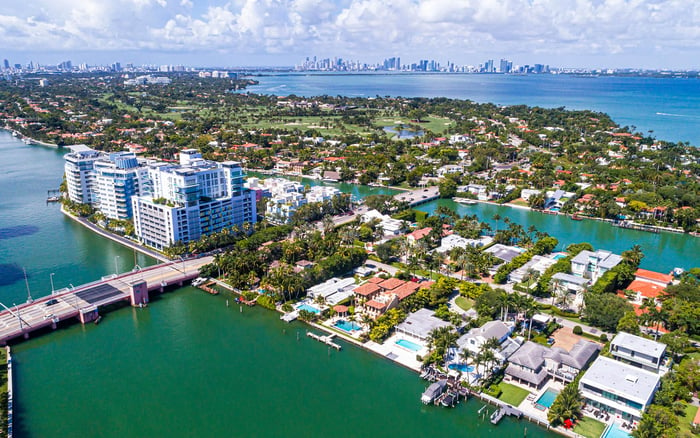
This is not simply Miami Beach living with an added layer of privacy. Fisher Island sits in Miami-Dade County and is accessible only by private ferry, yacht, or helicopter. That separation is central to its appeal, but it also makes transportation part of daily planning. A buyer who values controlled access may view that friction as a feature. Someone expecting spontaneous, street-level urbanity may not.
Among the island's residential options, Palazzo del Sol and Palazzo della Luna offer useful reference points for buyers comparing established luxury condominium living. The right decision begins with patterns of use, not simply views or interior scale.
Florida ownership can carry significant tax implications, but purchasing a home does not by itself establish Florida domicile. Buyers pursuing a tax-driven relocation should coordinate legal, tax, and estate advice around their specific circumstances, including time spent in each state, documented ties, family arrangements, and the location of business interests.
Fisher Island properties fall under the City of Miami Beach millage structure within Miami-Dade County. For planning purposes, effective property taxes may range from roughly 1.8% to 2.2% of assessed value, depending on exemptions and local adjustments. At that range, a $5 million condominium could generate approximately $90,000 to $110,000 in annual property taxes before exemptions. This is a planning illustration, not a substitute for a parcel-specific projection.
Ownership should also be considered within the buyer's broader estate plan. Trusts, entity structures, valuation strategies, and liquidity planning may be relevant to multigenerational wealth transfers. International purchasers require additional cross-border advice regarding FIRPTA exposure, ownership structure, and coordination between U.S. and home-country rules.
The most common budgeting error is treating every recurring charge as a single HOA number. Fisher Island ownership can involve building-level fees, Fisher Island Community Association assessments, Fisher Island Club dues, property taxes, insurance, utilities, maintenance, and residence-specific capital work.
FICA's master assessment supports ferry operations and island services. It is separate from both condominium charges and Fisher Island Club costs. An annual FICA figure of $53,378.36 can be used for planning, but the current assessment must be confirmed before contracting. Club initiation is estimated at $250,000, with annual dues of approximately $19,260 to $25,520. Membership terms, dues, and eligibility should all be verified directly.
Building expenses can vary materially with residence size, services, reserves, and planned projects. Buyers considering The Residences at Six Fisher Island should examine the applicable offering and association materials rather than applying costs from another island property.
Total annual ownership costs may range from roughly $215,000 to nearly $1 million, depending on property tier, taxes, dues, insurance, and maintenance. The range is wide because the residences are not interchangeable. A disciplined model should include both a base case and a higher-cost scenario for insurance, assessments, repairs, staffing, and personal use.
Florida closing costs can include documentary stamp tax on deeds and mortgages, nonrecurring intangible tax on mortgages, title charges, and recording fees. Miami-Dade also has special deed-tax rules and a surtax that may apply to certain transfers. Financing can introduce additional mortgage-related tax costs.
Request a property-specific estimate from the title company early enough to inform contract negotiations. Compare cash and financed scenarios side by side while the tax adviser and estate counsel review how title will be held. Changing ownership after closing may create avoidable cost or complexity.
For buyers evaluating a more estate-like format, The Links Estates at Fisher Island can frame a different set of questions around maintenance, household operations, insurance, and long-term stewardship. The purchase price is only the opening entry in the ledger.
Fisher Island offers privacy, club amenities, a resort-style environment, and restricted access. These qualities favor owners who will use the island enough to justify substantial recurring costs. They also reward advance planning for staff, guests, airport transfers, medical appointments, school schedules, and evenings elsewhere in Miami Beach.
A practical trial should replicate ordinary life rather than a holiday weekend. Observe ferry logistics during the hours that matter to the household. Consider how often family members expect to leave the island, whether a yacht or helicopter is genuinely part of the plan, and how visiting guests will be managed.
This is where a buyer's guide must move beyond financial arithmetic. Investment discipline matters, but lifestyle compatibility determines whether the residence becomes a valued home or an expensive convenience. For the right owner, the controlled arrival is part of the luxury. For another, it may feel like an obligation.
Request the current FICA assessment, the building's fee schedule, reserve information, insurance details, anticipated projects, and applicable club terms. Add a tax projection, title estimate, financing comparison, utility allowance, maintenance budget, and contingency for capital work.
Then align those figures with the intended occupancy calendar. A residence used for several concentrated months may require different staffing and maintenance assumptions than a primary home. The final decision should reconcile legal structure, annual cash flow, access routines, and family priorities within one integrated ownership plan.
Does buying on Fisher Island establish Florida domicile? No. A purchase alone is not sufficient proof of domicile, so individualized legal and tax planning is essential.
How is Fisher Island accessed? The island is accessible only by private ferry, yacht, or helicopter, making transportation planning part of everyday ownership.
Are FICA charges included in condominium fees? No. The FICA master assessment is separate from building-level fees and Fisher Island Club charges.
What does the FICA assessment support? It supports ferry operations and island services. Buyers should confirm the current amount before contracting.
How much should a buyer budget for property taxes? A planning range is roughly 1.8% to 2.2% of assessed value, subject to exemptions and local adjustments.
Is Fisher Island Club membership another cost? Yes. Initiation, annual dues, membership terms, and eligibility should be verified separately from property expenses.
What closing charges may apply? Charges can include documentary stamp taxes, mortgage-related taxes, title costs, recording fees, and certain Miami-Dade surtaxes.
Should cash and financing be modeled separately? Yes. Financing can add mortgage-related tax costs, so an early title estimate can clarify the difference.
What should international buyers consider? They should obtain cross-border advice on FIRPTA exposure, ownership structure, and coordination between relevant tax systems.
Who is the island best suited to? It favors buyers who value privacy, club-oriented amenities, and restricted access enough to support the recurring cost and logistics.
If you'd like a private walkthrough and a curated shortlist, connect with MILLION.
If branded residences are on your mind — as a home or as an allocation — we would be glad to share what we are seeing, privately.
Begin a quiet conversation