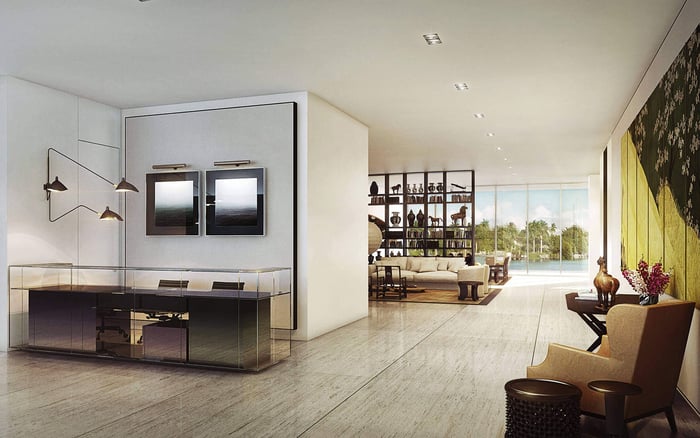
Healthy kitchen ventilation is becoming a defining detail in South Florida luxury homes, where wellness expectations, open-plan entertaining, humidity awareness, and quieter design are making air movement a practical part of premium living.

In South Florida’s high-end residential market, the most persuasive luxuries are often the least theatrical: a silent door close, shaded glass, a well-proportioned terrace, a kitchen that performs beautifully during a dinner party without announcing its machinery. Healthy kitchen ventilation belongs in that category. It is not a trophy feature in the traditional sense. It is a practical luxury standard, measured by comfort, quiet, cleanliness, and how a home feels after real life has unfolded inside it.
For years, kitchen ventilation was treated as a technical afterthought, something hidden above a range or folded into a ceiling detail. That is changing. Buyers evaluating residences in Brickell, Downtown, Edgewater, Aventura, Miami Beach, and other premium enclaves are asking more refined questions about everyday wellness. They want kitchens that support cooking, entertaining, and family routines without leaving odors, moisture, or visual clutter behind.
The shift is especially relevant in South Florida because luxury homes here are designed around ease. Doors open to terraces, kitchens flow into living rooms, and entertaining often moves between interior and exterior space. In that setting, ventilation is not only about removing cooking byproducts. It is about preserving the mood of the residence.
South Florida living rewards openness, yet the climate asks for discipline. Homes may be closed for heat, rain, travel, security, or storm preparation. Air conditioning is central to comfort. Humidity is part of the daily design equation. When a kitchen is used frequently in an open-plan residence, the air strategy matters.
A beautifully designed kitchen can lose its elegance quickly if smoke, steam, oil mist, or lingering food aromas drift into upholstered seating, closets, elevator vestibules, or bedroom corridors. The issue is not simply whether a hood turns on. It is whether the system was planned as part of the architecture, with the right balance of capture, ducting, air replacement, noise control, and maintenance access.
For oceanfront residences, the conversation also includes exposure and durability. Salt air, seasonal moisture, and the desire to maximize views can complicate mechanical decisions. A shallow, decorative insert may look clean in renderings, but discerning buyers increasingly understand that luxury is not only what photographs well. It is what functions gracefully over time.
The South Florida kitchen is rarely isolated. In many premium homes, it is the social anchor, connected to dining, lounge seating, terraces, wine display, and family rooms. That makes ventilation more visible as a lifestyle feature. A system that is too loud interrupts conversation. A system that is underpowered leaves traces of cooking in the room. A system that is poorly integrated can compromise cabinetry, lighting, and ceiling proportions.
The best approach is holistic. The cooktop location, hood geometry, ceiling height, cabinetry depth, and air path should work together. Island cooking can be glamorous, but it often requires more careful capture planning than a wall installation. A concealed hood may suit a minimalist interior, but only if performance is not sacrificed for the line of the millwork. Downdraft solutions can be discreet, but they are not universally appropriate for every cooking style or layout.
This is where buyer sophistication is rising. Ventilation is no longer judged by whether a brand name is visible. It is judged by whether the kitchen can host breakfast, private-chef preparation, and a late dinner without the entire residence absorbing the event.
Wellness in luxury real estate once centered on gyms, spas, pools, and treatment rooms. Now it extends into the service spaces that shape daily comfort. Kitchens, laundry rooms, mudrooms, wine rooms, and secondary prep areas are being evaluated for how they manage air, moisture, sound, and maintenance.
Healthy kitchen ventilation fits this broader movement because it supports the invisible quality of the home. The buyer may not see the duct run, fan specification, or makeup air strategy during a showing, but they will feel the results. The residence smells cleaner. The finishes age more gracefully. The living room remains suitable for art, textiles, and entertaining. The kitchen becomes more usable, not merely more photogenic.
For families and seasonal owners alike, this kind of design has practical value. A second-home owner may close a property for stretches of time. A full-time resident may cook daily. A host may rely on staff, chefs, or catered service. Each scenario benefits from ventilation that is easy to operate, quiet enough to use, and accessible enough to maintain.
A serious kitchen review should go beyond stone slabs and appliance panels. Buyers should ask whether the ventilation exhausts to the exterior or recirculates through filters. They should understand where the air travels, how the system is controlled, and how filters or components are serviced. In condominium settings, it is also important to understand what the building allows and how the system interfaces with shared infrastructure.
Noise deserves equal attention. A powerful system that homeowners avoid using because it is intrusive may not deliver the intended benefit. Remote fans, thoughtful duct design, and well-placed controls can make a major difference in the user experience. Luxury buyers should treat acoustics as part of the specification, not a secondary concern.
Makeup air is another quiet but important concept. When air is exhausted from a tightly sealed home, replacement air must come from somewhere. Poor planning can create drafts, pressure imbalances, or less comfortable operation. A well-conceived system considers the full envelope of the residence, including doors, windows, air conditioning, and adjacent rooms.
Maintenance is the final test. Grease filters, concealed panels, ceiling inserts, and duct access should be manageable. If servicing the system is inconvenient, it may be delayed. True luxury reduces friction, including after move-in.
The most successful kitchens do not force a choice between beauty and performance. They make ventilation part of the composition. A sculptural hood can become an architectural focal point. A concealed system can disappear into paneling. A secondary prep kitchen can carry heavier cooking functions while the main kitchen remains pristine for entertaining. In larger homes, layered ventilation may be used across multiple cooking zones.
Material selection also matters. Natural stone, plaster, lacquer, bronze, and tailored woodwork all respond differently to heat, moisture, and cleaning routines. Ventilation helps protect these investments by reducing residue and supporting a calmer interior environment. In a luxury home, the kitchen is not only a functional room. It is a showroom for craftsmanship that must withstand daily life.
The practical standard is simple: the system should be used often because it is effective, quiet, intuitive, and visually resolved. When those conditions are met, ventilation stops feeling mechanical and starts feeling like hospitality.
South Florida buyers are increasingly attuned to lifestyle performance. They compare floor plans not just by square footage, but by how rooms behave. Does the kitchen support private entertaining? Can the living room remain serene during active cooking? Are odors and humidity managed before they become noticeable? Does the home feel fresh after it has been closed for several days?
These questions point to a more mature definition of luxury. The next generation of premium residences will not rely only on dramatic views, branded finishes, or amenity decks. It will also be judged by systems that make daily life smoother. Kitchen ventilation is a clear example because it connects architecture, engineering, wellness, and hospitality in one highly used space.
For buyers, the opportunity is to look more closely. For sellers and developers, the message is equally direct: a high-performing kitchen is no longer just an appliance package. It is an air-quality decision, a design decision, and a long-term livability decision.
Why is kitchen ventilation becoming more important in South Florida luxury homes? Open-plan layouts, frequent entertaining, humidity awareness, and wellness-focused buying habits are making air management a more visible part of premium living.
Is a beautiful range hood enough? Not always. The hood should be evaluated for capture, ducting, noise, controls, serviceability, and how well it fits the full kitchen design.
Should buyers prefer exterior exhaust over recirculating systems? Exterior exhaust is often preferred when feasible, but the right answer depends on the property type, building rules, layout, and system design.
Why does noise matter so much? If a system is too loud, residents may avoid using it. Quiet performance is essential in open kitchens connected to dining and living areas.
What is makeup air? Makeup air is replacement air introduced when a ventilation system removes air from the home. It helps the residence operate more comfortably.
Are island cooktops harder to ventilate? They can be more demanding because the cooking surface is more exposed. The ventilation design should be planned carefully around the layout.
Do condominium kitchens have special limitations? They may. Buyers should understand building allowances, exhaust paths, shared systems, and any restrictions before assuming a kitchen can be modified.
Can ventilation affect interior finishes? Good ventilation can help reduce lingering residue and moisture around cabinetry, stone, fabrics, and nearby living spaces.
Is ventilation relevant for second-home owners? Yes. Homes that are closed for periods of time benefit from systems that support freshness, comfort, and easy maintenance when owners return.
What should buyers ask during a showing? Ask how the system exhausts, how loud it is, where components are serviced, and whether the design supports the way you actually cook.
For a confidential assessment and a building-by-building shortlist, connect with MILLION.
If branded residences are on your mind — as a home or as an allocation — we would be glad to share what we are seeing, privately.
Begin a quiet conversation