Guest suites can quietly outperform another amenity lounge because they solve a practical luxury problem: how to host family, friends, and extended visitors without surrendering privacy inside the residence.
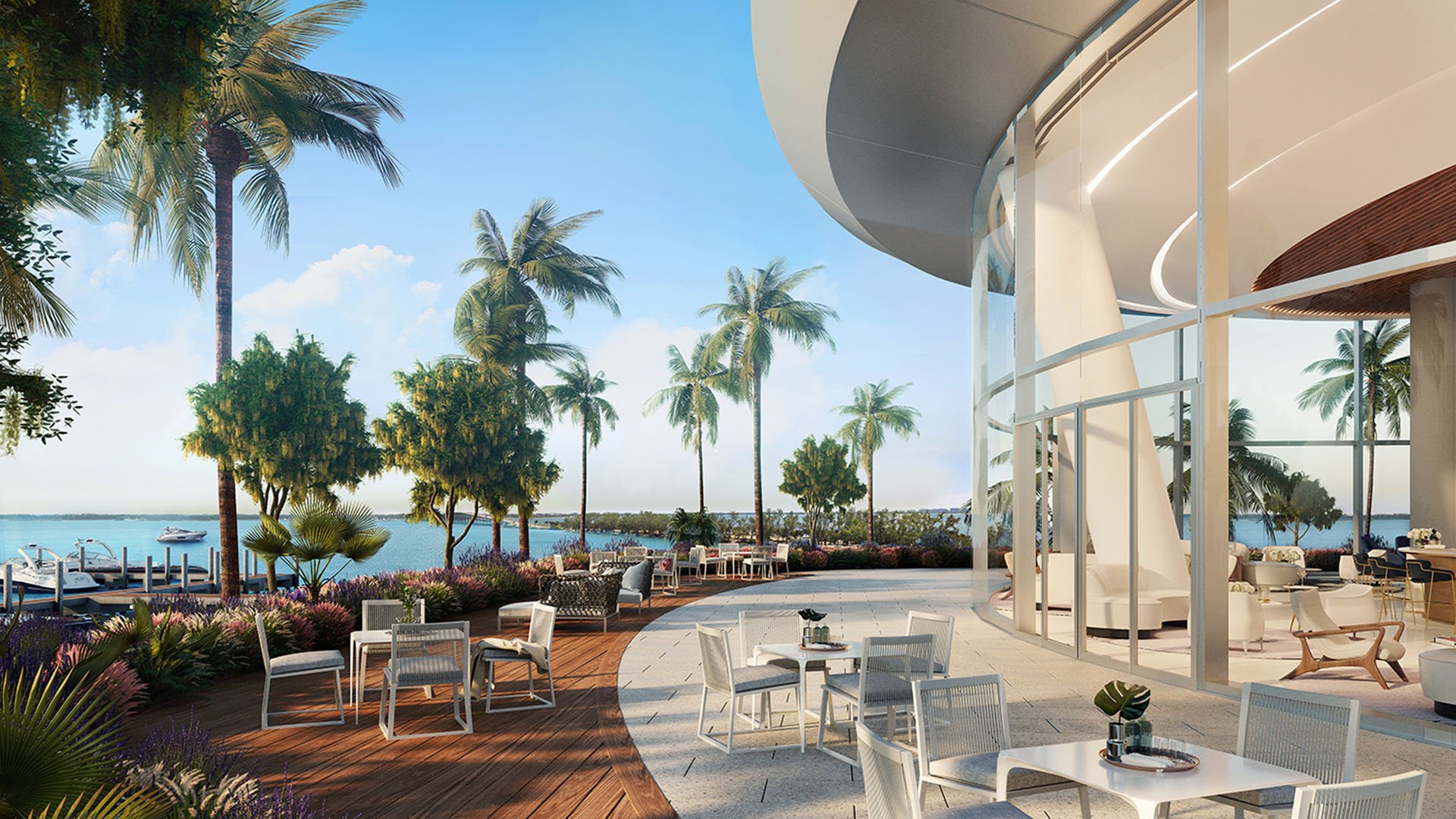
In South Florida luxury real estate, the most persuasive amenities are not always the most photogenic. A dramatic lounge photographs beautifully. A club room with sculptural seating can give a sales gallery instant atmosphere. Yet for many owners, especially those who host family across seasons, a guest suite may prove more valuable in daily use.
The distinction is straightforward. An amenity lounge supports occasional social life. A guest suite supports real life. It absorbs the visiting adult child, the in-laws arriving for a long weekend, the friend flying in for Art Week, or the caretaker who needs proximity during a recovery period. It gives hospitality a proper place to land without turning the primary residence into a hotel room.
This is why buyers evaluating new-construction residences increasingly look beyond the amenity diagram and ask a more practical question: which spaces will still matter after the opening season? The answer often favors privacy, flexibility, and the ability to host without compromise.
Amenity lounges have their place. They create gathering space, frame views, and signal the social character of a building. In the right tower, a lounge can be elegant and useful. But when a building already offers multiple places to sit, meet, sip, and celebrate, one more lounge may add more redundancy than value.
Luxury buyers are sensitive to this. They understand that every square foot of shared space has a purpose, a maintenance profile, and an opportunity cost. If the building already has a residents’ salon, a dining room, a screening area, and outdoor terraces, an additional lounge can start to feel like a variation on the same theme.
A guest suite is different because it does not merely provide ambiance. It solves a capacity problem. It allows owners to welcome people into their lives while preserving the sanctity of their own bedroom wing, closets, bath routines, and morning rituals. In a market where many residences are used seasonally, that distinction matters.
The value of a guest suite is not simply that someone can sleep there. The deeper value is separation. A well-conceived guest arrangement lets visitors feel cared for while allowing the owner to maintain the quiet architecture of daily life.
This is especially relevant in vertical living. In a single-family estate, a guest house or detached casita can create distance. In a condominium, that distance has to be designed through floor plan, service, and shared amenities. A building guest suite, or a residence with a thoughtfully placed guest room, can recreate some of that estate logic in a more efficient form.
For a Brickell buyer comparing urban residences such as 2200 Brickell, the question is not simply how many amenity rooms exist. It is how the building supports a polished life when guests arrive, schedules overlap, and privacy becomes more valuable than spectacle.
Second-home ownership changes the amenity calculation. When a South Florida residence is used as a winter base, a holiday gathering point, or a family escape, visitors often arrive in waves. Children, grandchildren, friends, and business guests may not come for one evening. They may stay for several nights.
In that setting, a lounge can host a cocktail hour, but it cannot host a person. A guest suite can reduce the pressure to maintain a larger residence solely for occasional visitors. It can also help owners avoid the awkwardness of asking guests to find nearby accommodations during peak periods.
The result is subtle but meaningful: the residence can remain appropriately sized for the owner’s everyday life, while the building or plan provides overflow capacity when needed. That is a sophisticated form of efficiency, particularly in waterfront and coastal markets where every interior foot carries weight.
South Florida owners often entertain generously, but the best hospitality is not intrusive. It gives guests comfort without forcing the host to surrender the private rhythm of the home.
Consider the difference between a dinner in a residents’ dining room and a weekend visit. The first needs a table, a view, and service. The second needs sleep, luggage space, bathroom privacy, climate control, and a sense of autonomy. A lounge cannot provide that. A guest suite can.
In Miami Beach, buyers looking at refined coastal addresses such as The Perigon Miami Beach often think about lifestyle in layered terms: beach days, dinners, visiting family, and quiet recovery from a highly social calendar. The most valuable amenities are those that support all of those modes without friction.
Resale value is shaped by more than finishes and views. It is also shaped by how easily a future buyer can imagine living in the home. Guest capacity expands that imagination.
A buyer may love a two-bedroom residence but hesitate if family visits often. A buyer may admire a club lounge but know they will rarely use it. Guest accommodations, by contrast, answer a direct objection: where will people stay? When that question has an elegant answer, the residence can feel more complete.
This does not mean every building needs the same solution. Some buyers prefer larger in-unit guest rooms. Others value shared guest suites that can be reserved when needed. Others want nearby hospitality services. The point is not the format. The point is that overnight flexibility has become a serious component of perceived luxury.
The strongest amenity programs feel curated. They do not try to impress through volume alone. Instead, they consider how owners actually live: wellness in the morning, work during the day, hosting in the evening, privacy at night, and family visits across the season.
In Sunny Isles, for example, a buyer considering oceanfront living at St. Regis® Residences Sunny Isles may see value in amenities that support both resort-style living and domestic calm. In Bay Harbor, a boutique-minded buyer looking at Bay Harbor Towers may prioritize intimacy, convenience, and the ability to host without overbuilding the private residence.
This is where another lounge can feel less compelling than a guest suite. The lounge is a social gesture. The suite is a residential tool. In the ultra-premium market, tools that protect time, privacy, and ease often age better than decorative abundance.
When comparing buildings, buyers should ask how often each amenity will be used, who will use it, and whether it solves a problem that cannot be solved inside the residence. A lounge may be valuable if the building lacks gracious shared gathering space. But if the amenity package already includes several social rooms, the incremental benefit may be limited.
Guest accommodations deserve a different lens. Ask whether visiting family is part of your life. Ask whether your residence is sized for daily living or occasional hosting. Ask whether privacy matters more as your calendar becomes fuller. Ask whether guests would feel welcomed without feeling embedded in your private space.
The most elegant answer is rarely the loudest amenity. It is the one that makes ownership feel effortless.
Why can a guest suite be more valuable than an amenity lounge? A guest suite solves an overnight hosting need, while another lounge often duplicates existing social space.
Does every luxury condo need guest suites? No. The value depends on the building, the residence mix, and how often owners host overnight visitors.
Are guest suites mainly useful for seasonal owners? They are especially useful for seasonal owners, but full-time residents also benefit when family or friends visit.
Can a guest suite replace buying a larger residence? In some cases, it can reduce the need for extra bedrooms that are used only occasionally.
Do amenity lounges still matter? Yes. A well-designed lounge can be valuable, but multiple similar lounges may offer diminishing practical benefit.
What should buyers ask about guest accommodations? Buyers should ask about access, reservation rules, privacy, service standards, and how the space is maintained.
Is a private in-unit guest room better than a shared guest suite? It depends on lifestyle. In-unit rooms offer control, while shared suites can provide flexibility without adding private square footage.
Why is privacy so important in South Florida luxury living? Many owners host frequently, and privacy helps preserve the residence as a calm personal retreat.
Can guest accommodations help resale appeal? They can broaden buyer interest by answering a common concern about visiting family and overnight guests.
What is the best way to shortlist comparable options for touring? Start with location fit, delivery status, and daily lifestyle priorities, then compare stacks and elevations to validate views and privacy.
For a tailored shortlist and next-step guidance, connect with MILLION.
If branded residences are on your mind — as a home or as an allocation — we would be glad to share what we are seeing, privately.
Begin a quiet conversation