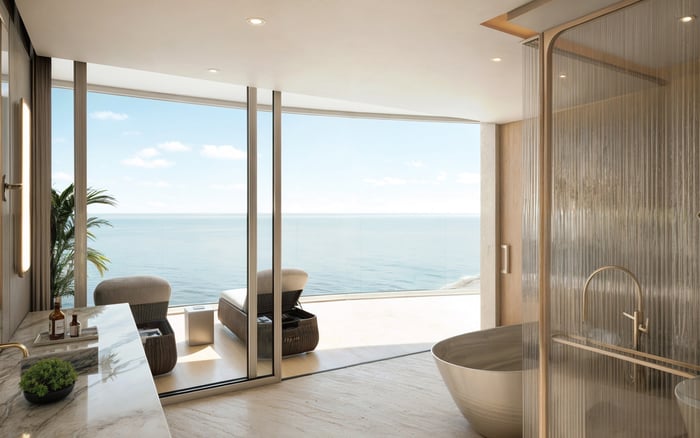
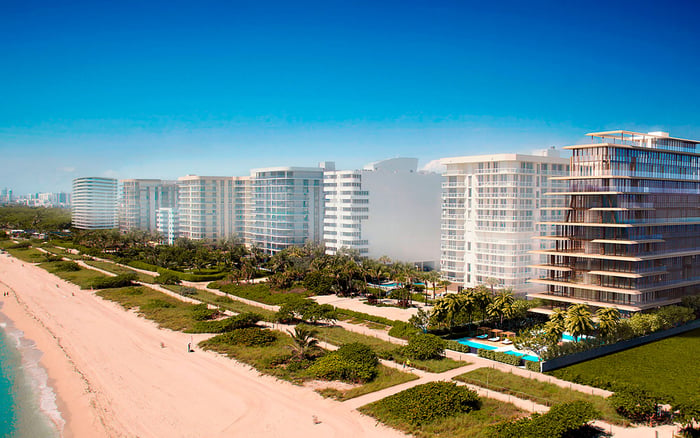
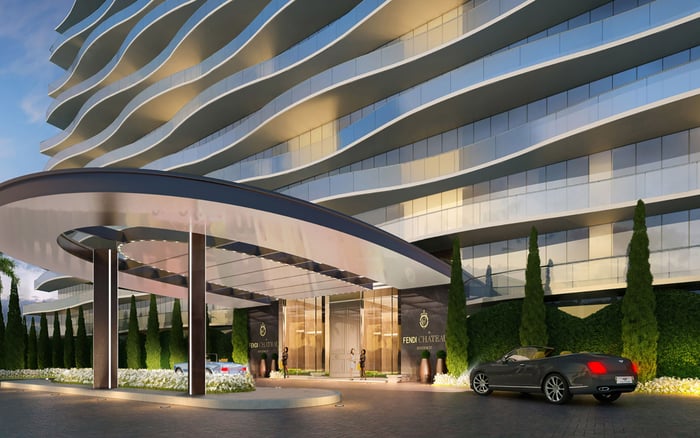
Fendi Château Residences Surfside stands out for buyers who treat ocean views as both a daily luxury and a long-term asset consideration. Its beachfront position, Surfside setting, and buyer-facing view-corridor logic make it a relevant comparison point for purchasers focused on durable Atlantic sightlines.
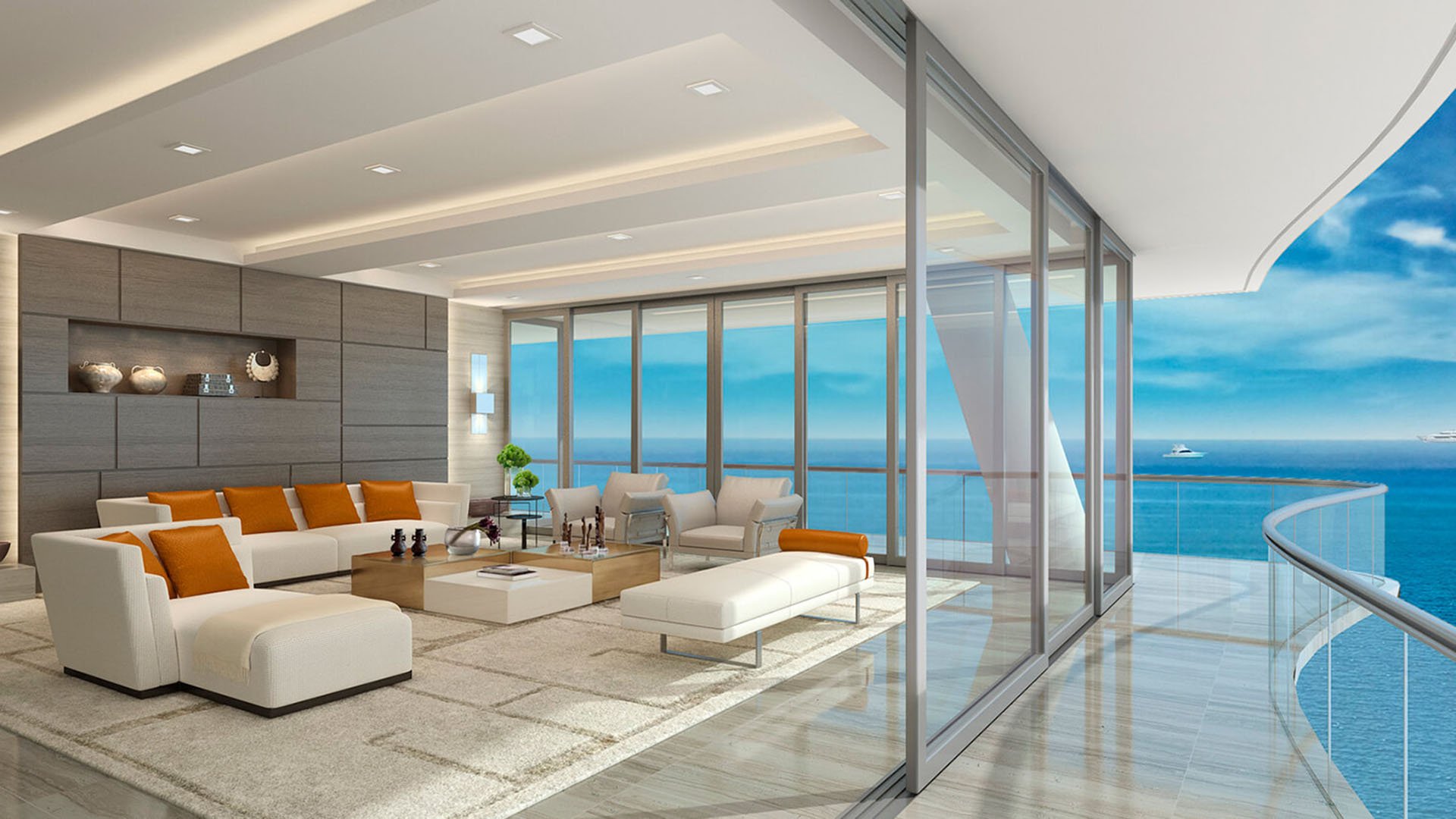
For many South Florida luxury buyers, the conversation once began with finishes, service model, and arrival sequence. Those elements still matter. But the more sophisticated question now arrives earlier: what will this residence see today, and what is it likely to see years from now?
That is the lens through which Fendi Château Residences Surfside deserves attention. The building’s oceanfront setting places the Atlantic at the center of the ownership experience, but its relevance is not merely scenic. For buyers prioritizing protected view corridors, the more important issue is how the site, surroundings, zoning context, and building design may reduce the risk of future obstruction.
This is not the same as saying a private owner holds a guaranteed legal right to a view. In South Florida, that distinction matters. The stronger argument is a de facto one: certain locations, orientations, setbacks, and surrounding patterns can make a view feel more durable than it might in a denser redevelopment corridor.
For an oceanfront residence, the most valuable view corridor is usually the direct east-facing exposure to the Atlantic Ocean. It is the view buyers imagine before they walk into the sales gallery, and the one that shapes daily life after closing: morning light, weather moving over water, and the horizon line that makes a coastal residence feel fundamentally different from a city condominium.
Fendi Château’s appeal begins with this direct coastal sightline. In a water-view purchase at this level, buyers are not simply evaluating whether a residence has a pleasant outlook. They are evaluating the depth, width, and perceived permanence of the visual field. The east-facing corridor is the anchor because the ocean is not a future construction site. It establishes the baseline against which every other exposure should be judged.
That is why the view conversation should happen inside the residence, not from a balcony photograph alone. A buyer should stand where life actually unfolds: the principal bedroom, the main living area, the terrace edge, and the dining zone. The question is not only whether the Atlantic is visible, but whether the composition feels expansive, balanced, and worth preserving.
Surfside is central to the story. The market is characterized by a more constrained oceanfront context than areas associated with taller, denser high-rise redevelopment. For a buyer comparing oceanfront addresses across Miami Beach, Sunny Isles, Bal Harbour, and the broader coastline, that distinction can influence perceived long-term view quality.
The operative word is perceived. Protected view corridors are not simply a function of being on the sand. They depend on surrounding building patterns, setbacks, neighboring parcels, and the way a structure is positioned on its site. A residence may be beachfront and still feel visually compressed if adjacent conditions narrow the experience. Conversely, a residence can feel more secure when the surrounding fabric reduces the likelihood of dramatic obstruction.
This is where Surfside’s quieter scale becomes part of the buyer’s calculus. Alongside established and emerging neighbors such as The Surf Club Four Seasons Surfside and The Delmore Surfside, Fendi Château participates in a market where the luxury is not only architectural presence, but also restraint. For certain buyers, that restraint is precisely the point.
The Atlantic view may be the headline, but secondary corridors often determine how a residence lives. Diagonal shoreline views can create a more cinematic sense of place. North-south coastal panoramas can make a terrace feel longer and more connected to the beach. West-facing city or sunset views can add evening drama, particularly in flow-through homes where the day begins over the ocean and ends over the skyline.
These secondary corridors deserve careful attention because they are often more vulnerable to surrounding conditions. A buyer should ask how the residence is angled, how neighboring buildings sit in relation to the view, and whether the principal rooms benefit from more than a single exposure. This is especially important for purchasers choosing between high-floor drama and lower-floor intimacy.
In nearby comparisons, Eighty Seven Park Surfside also appeals to buyers who want a coastal setting where architecture and landscape participate in the view experience. Farther south, 57 Ocean Miami Beach may enter the conversation for those who prefer a Miami Beach address with a direct relationship to sand and sea. The exercise is not to declare one coastline superior. It is to understand which view corridors matter most to the buyer’s way of living.
In the ultra-luxury segment, a view is both a lifestyle benefit and an asset-preservation consideration. A residence with a more durable ocean outlook can feel less exposed to the uncertainty that sometimes accompanies nearby redevelopment. That does not eliminate market risk, but it can strengthen confidence in the asset’s long-term desirability.
This is one reason Fendi Château belongs in serious buyer guides for view-sensitive purchasers. Buyers at this level are often deciding among excellent buildings, each with compelling design language and service promises. The differentiator becomes more subtle: which home offers the most convincing combination of present beauty and probable future stability?
The answer should be tested, not assumed. A buyer should examine the direct east view first, then the diagonal and north-south corridors, then the west-facing exposure if applicable. The strongest purchase case is not merely a spectacular view on day one. It is a view that feels structurally supported by the site and its context.
A practical evaluation should begin with three questions. First, what is the primary view corridor, and is it central to the rooms where the owner will spend the most time? Second, what nearby conditions could influence secondary views over time? Third, does the building’s design maximize the available sightlines through terrace placement, glazing, and residence orientation?
Fendi Château’s shortlist argument is strongest for buyers who place visual durability near the top of the decision matrix. That buyer may be less interested in the loudest skyline statement and more interested in the quiet confidence of an oceanfront home whose view thesis is easy to understand. In Surfside, the combination of beachfront position and comparatively constrained context makes that thesis especially relevant.
This is also why the residence should not be evaluated in isolation. It should be walked, studied, and compared with the same discipline one would apply to art, architecture, or a family office asset. Views are emotional, but the best buying decisions make them analytical as well.
Fendi Château Residences Surfside belongs on the shortlist because it addresses a specific concern among high-net-worth buyers: the fear that today’s beautiful view could become tomorrow’s compromised outlook. Its oceanfront setting supports the most important corridor, the direct east-facing Atlantic view. Its Surfside context supports a de facto view-protection argument. Its buyer relevance lies in the intersection of lifestyle pleasure and asset discipline.
The best buyers will still ask hard questions. They will separate guaranteed rights from practical probabilities. They will distinguish a postcard view from a livable view. Most importantly, they will recognize that in South Florida, the most enduring luxury may not be the view itself, but the confidence that the view has room to remain.
Does Fendi Château Residences Surfside offer legally guaranteed protected views? The stronger framing is de facto view protection, not a guaranteed private legal right. Buyers should evaluate site context, neighboring patterns, and residence orientation.
What is the most important view corridor for an oceanfront residence? The primary corridor is typically the direct east-facing view toward the Atlantic Ocean. It anchors both daily lifestyle and long-term desirability.
Why does Surfside matter for view-sensitive buyers? Surfside is viewed as a more constrained oceanfront market than areas with taller, denser redevelopment. That context can support a more durable view thesis.
Are secondary views important at Fendi Château? Yes. Diagonal shoreline views, north-south coastal panoramas, and west-facing sunset outlooks can materially affect how a residence lives.
Should buyers focus only on high floors? Not necessarily. High floors can enhance openness, but orientation, neighboring conditions, and room placement may matter just as much.
How should a buyer compare Fendi Château with Miami Beach condos? Compare the direct ocean view, side corridors, surrounding building patterns, and the likely stability of each sightline over time.
Is an oceanfront site automatically protected from obstruction? No. The ocean side is naturally stable, but side and rear views can still be influenced by surrounding conditions.
Why are protected view corridors an asset consideration? Durable views can support long-term desirability because they are difficult to replicate. In luxury real estate, scarcity often strengthens appeal.
What should buyers inspect during a residence tour? Stand in the main living area, principal bedroom, terrace, and dining space. Each vantage point should be assessed for width, depth, and balance.
Who is the ideal buyer for this view thesis? The ideal buyer values discretion, oceanfront living, and confidence in the probable stability of the visual experience.
For a discreet conversation and a curated building-by-building shortlist, connect with MILLION.
If branded residences are on your mind — as a home or as an allocation — we would be glad to share what we are seeing, privately.
Begin a quiet conversation