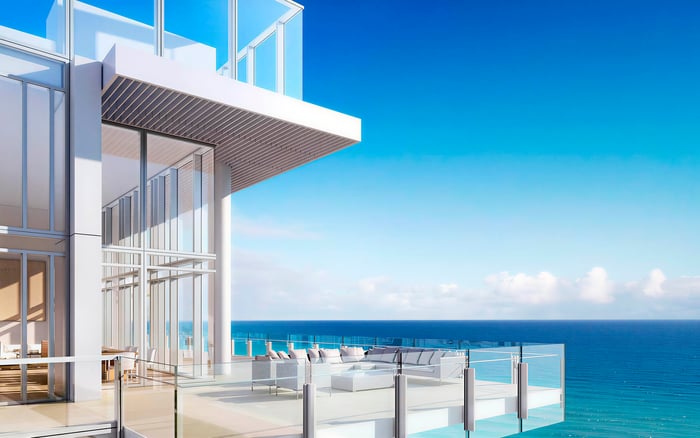
A disciplined waterfront review separates flood mapping from storm surge, tests shoreline responsibility, and examines the elevations and capital plans behind an exceptional view.
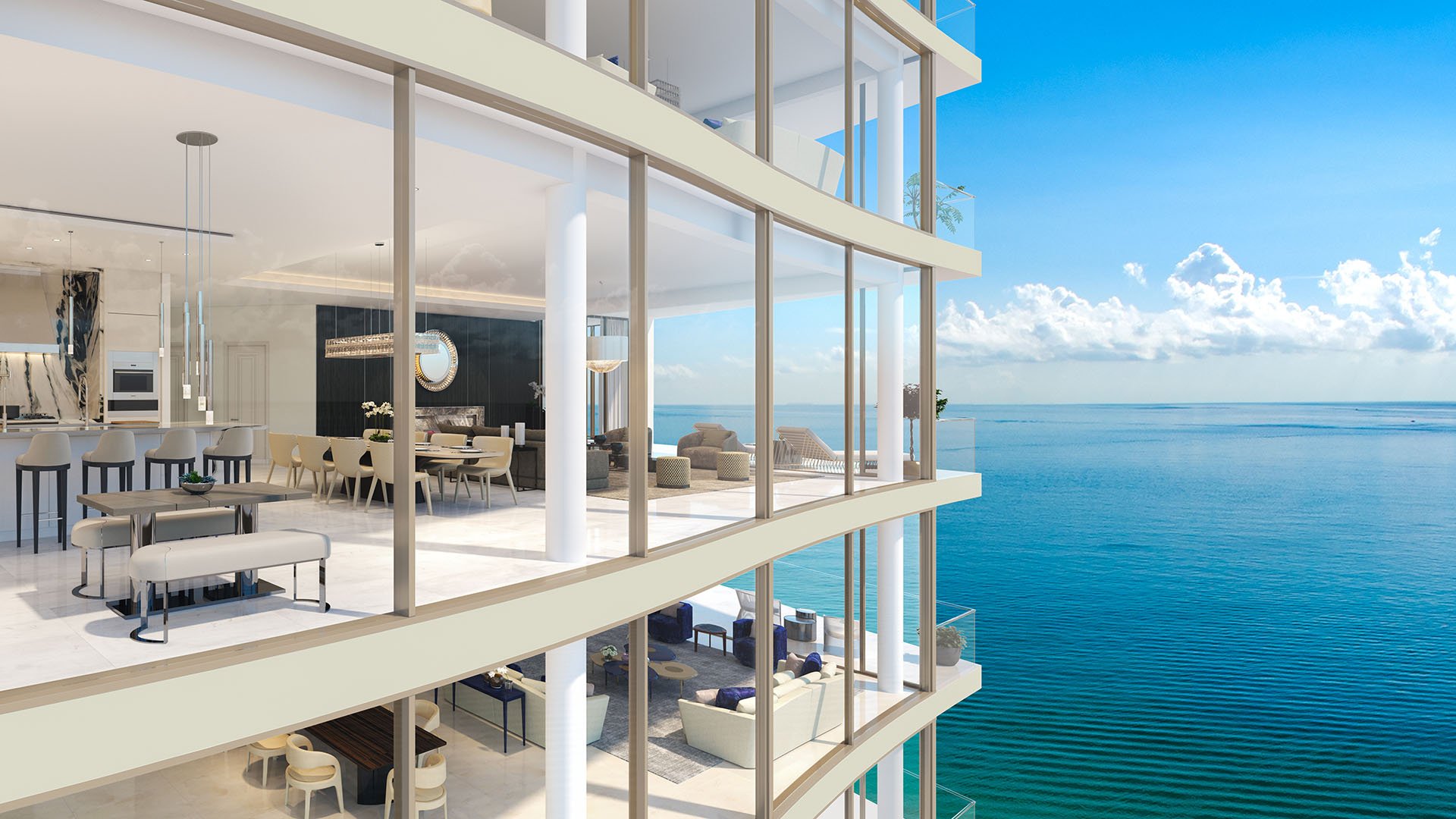
For a buyer considering The Estates at Acqualina Sunny Isles, the Atlantic horizon is central to the appeal. Yet informed waterfront ownership requires a second perspective-one focused on the building edge, access points, critical systems and severe-weather planning.
Sunny Isles Beach occupies a barrier-island setting. The entire city lies within Storm Surge Planning Zone B and Evacuation Zone B. Those designations do not diminish the lifestyle proposition. They establish the context for precise due diligence, regardless of a tower’s age, stature or construction quality.
Within MILLION's Buyer's Guides, the central principle is simple: flood-zone status, storm-surge planning and evacuation orders describe distinct dimensions of risk. None substitutes for the others.
The 777 Tower at The Estates at Acqualina has been identified as being in FEMA Flood Zone X. That is a useful starting point, not a final parcel determination. Buyers should retrieve the exact parcel’s current federal flood map and available elevation information, then interpret the findings alongside the association’s documents and insurance terms.
Storm-surge zones address the potential movement of water during major coastal events. Evacuation zones guide public-safety decisions. A flood-zone label is primarily a mapping and insurance reference. A residence can therefore carry a comparatively favorable flood-map designation while remaining subject to storm-surge planning and evacuation instructions.
The same framework is valuable when comparing nearby oceanfront choices such as Bentley Residences Sunny Isles and The Ritz-Carlton Residences® Sunny Isles. The question is not which name sounds most protected, but which property can provide the clearest parcel, elevation, engineering and financial record.
“Does the building have a seawall?” is often too broad a question. Oceanfront and Intracoastal shorelines may face different physical conditions and regulatory treatment, particularly in relation to Florida’s Coastal Construction Control Line. A buyer should first establish whether the relevant edge is a seawall, bulkhead, dune system, flood barrier, landscape transition or another form of protection.
For every applicable structure, request its as-built elevation in NAVD88, age, inspection history, engineering reports, maintenance schedule and evidence of repairs. Confirm who owns it and who pays for it. Responsibility may rest with the condominium, another parcel or a public entity; visual proximity does not establish legal control.
Future adaptability matters as much as present height. Regional approaches increasingly contemplate shoreline structures that can be raised later. Ask an engineer whether the existing foundation and design can accommodate additional height, which permits could be required, and whether adjacent elevations would create low points even after an upgrade.
South Florida offers revealing benchmarks. Proposed Miami Beach provisions contemplated 5.7 feet NAVD88, or 4.0 feet where a structure could later be raised to 5.7 feet. Draft City of Miami revisions used at least 6.0 feet for certain new shoreline protections, while a Surfside study recommended moving from 3.5 to 6.0 feet NAVD88. Another municipal ordinance in Miami-Dade uses a 5.0-foot minimum for newly constructed seawalls.
These figures are not automatically requirements in Sunny Isles Beach. They indicate the direction of regional resiliency thinking and help buyers formulate sharper questions. Parcel-specific city, county, environmental and coastal rules must be confirmed before any benchmark is treated as applicable.
A high seawall does not answer what happens at the garage ramp, loading area, lobby or service entrance. Request NAVD88 elevations for each point and compare them with the parcel’s base flood elevation. Height and elevation should never be discussed without identifying the datum and reference point.
The systems review should encompass generators, electrical rooms, pumps, elevators, fire systems and water-service components. Ask how each is protected from surge and saltwater intrusion, whether temporary barriers require manual deployment, who is trained to install them, and how long backup operations are intended to function.
At Turnberry Ocean Club Sunny Isles or any peer considered in an investment comparison, consistent questions yield more useful answers than superficial amenity comparisons. Buyers are evaluating not only a private residence, but the continuity of an entire vertical community.
Engineering capability and financial readiness belong in the same conversation. Review budgets, reserves, insurance terms, claims history where disclosed, pending assessments and board discussions related to drainage, flood barriers, pumps, shoreline work and resiliency.
A strong file should clarify inspection cycles, anticipated projects, cost allocation and decision authority. It should also establish whether different parcels or associations share infrastructure. The most reassuring answer is rarely a single elevation number. It is a coherent record connecting physical conditions, governance, funding and emergency operations.
The appropriate standard is not absolute immunity from coastal conditions. It is informed ownership. Confirm the parcel map, reconcile elevations in NAVD88, identify every vulnerable opening, understand shoreline responsibility, test future raising capacity and determine whether reserves align with the stated plan.
This approach preserves what makes Sunny Isles Beach compelling while replacing assumptions with documented questions. The view remains emotional. The acquisition decision should be exacting.
Is Flood Zone X the same as no flood risk? No. It is a flood-map designation and does not replace storm-surge, evacuation or building-specific analysis.
Is all of Sunny Isles Beach in a storm-surge planning zone? Yes. The entire city is designated Storm Surge Planning Zone B.
Does a newer luxury tower eliminate the need for evacuation planning? No. Sunny Isles Beach is in Evacuation Zone B, regardless of a building’s age or perceived quality.
What seawall elevation should a buyer request? Request the as-built top elevation in NAVD88, then compare it with applicable rules and parcel elevations.
Do Miami Beach or Surfside seawall standards govern Sunny Isles Beach? Not automatically. They are regional benchmarks, and locally applicable requirements need parcel-specific confirmation.
Why does future seawall raising capacity matter? A structure designed for later elevation may offer flexibility as standards and coastal conditions evolve.
Which building elevations deserve attention? Review the lobby, garage ramp, loading area, service entrances and all spaces containing critical equipment.
Who might be responsible for shoreline protection? Responsibility may belong to the condominium, another parcel or a public entity, so ownership documents matter.
Which financial records are most relevant? Examine reserves, insurance, assessments, budgets and planned spending for drainage, barriers, pumps and shoreline work.
Should buyers rely on a building profile’s flood-zone label? No. Confirm the exact parcel’s current designation and available elevation information before drawing conclusions.
To compare the best-fit options with clarity, connect with MILLION.
If branded residences are on your mind — as a home or as an allocation — we would be glad to share what we are seeing, privately.
Begin a quiet conversation