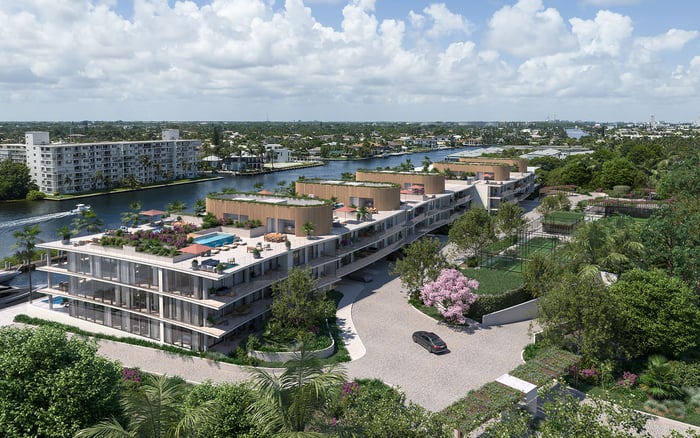
A governance-first look at Casamar for South Florida buyers who value disciplined operations, transparent oversight, and long-term building stewardship as much as design and setting.

In South Florida’s highest-end condominium market, buyers still respond to architecture, water views, service, privacy, and arrival sequence. Yet the quietest luxury question is increasingly the most consequential: how will the building be governed after closing? For affluent buyers evaluating Casamar, the answer should not be reduced to a sales phrase or a single amenity. It should be tested through documents, operating philosophy, rules, financial planning, insurance posture, and the rigor of day-to-day oversight.
That is why Casamar belongs on the shortlist for buyers prioritizing strong building governance. Not as a substitute for due diligence, but as a project to examine through a governance lens early, before emotions around residence selection, view corridors, and finish packages narrow the conversation. A disciplined buyer does not ask only, “Do I love it?” The better question is, “Will this building be managed in a way that protects the living experience I am buying?”
Strong governance is not simply a polished front desk or a well-worded set of house rules. It is the infrastructure behind a calm building: clear authority, consistent enforcement, prudent budgeting, credible reserve planning, thoughtful vendor management, and a culture that treats common areas as shared capital rather than decorative background.
For a new-construction buyer, the governance conversation begins before the association is fully seasoned. The early years can shape everything from maintenance rhythms to staffing expectations and resident norms. Buyers should review how the transition from developer control to owner control is expected to work, what rights and responsibilities are set out in the condominium documents, how assessments may be handled, and whether the rules support the lifestyle they expect.
In practical terms, governance is where a luxury building either matures gracefully or becomes expensive, inconsistent, and politically noisy. The most elegant lobby cannot compensate for weak controls. The best view cannot overcome chronic uncertainty about budgets, insurance, or resident use policies.
Casamar is relevant to governance-minded buyers because the purchase decision is not merely about an individual residence. It is about entering a shared ownership structure in which private value is linked to collective discipline. That matters in Pompano Beach, where coastal condominium buyers often compare lifestyle, water orientation, services, and long-term ownership costs across a growing set of options.
A buyer looking at Casamar should place governance alongside floor plan, exposure, parking, privacy, and finish quality. The inquiry should feel almost institutional. What are the operating assumptions? How are common areas protected? How are guest policies written? How is noise managed? What is the approach to leasing, pets, deliveries, renovations, insurance, and capital needs? These questions are not unglamorous. They are the foundation of a refined building experience.
The same governance lens can be used when comparing Casamar with other Pompano Beach residences such as The Ritz-Carlton Residences® Pompano Beach or Waldorf Astoria Residences Pompano Beach. The point is not to assume one answer is superior before review. The point is to ask the same hard questions across the field and see which building framework best matches the buyer’s standards.
A serious buyer should review the condominium declaration, association bylaws, budget materials, rules and regulations, insurance information, reserve approach, and any available transition materials with qualified counsel and advisory support. The goal is not to read for legal form only. It is to understand how the building will actually behave.
Look for clarity. Ambiguity tends to become friction. Are use restrictions precise? Are leasing rules aligned with the buyer’s expectations? Are architectural and renovation controls reasonable? Are board powers clear? Is there a credible path for maintaining amenities and shared spaces without constant surprise costs? Are reserves treated as a strategic necessity rather than a future inconvenience?
For an oceanfront or waterfront condominium, the governance burden can feel especially important because exposure, exterior maintenance, insurance, mechanical systems, and amenity upkeep are central to ownership comfort. A beautiful residence can be undermined if the building does not have a disciplined plan for maintaining what residents share.
In the ultra-premium market, buyers sometimes resist rules until they understand their purpose. Rules are not merely restrictions. In a well-governed building, they are protections. They preserve quiet enjoyment, manage guest flow, define service expectations, reduce conflict, and maintain the tone of the property.
The right rules should feel firm, fair, and predictable. They should not be improvised from dispute to dispute. A buyer considering Casamar should pay attention to whether the written policies support the way they intend to live. If the residence will be a primary home, second home, or long-hold investment, the buyer should know how the association framework treats occupancy, rentals, vendors, pets, events, deliveries, and alterations.
This is where comparisons become useful. Buyers may also study governance considerations at nearby or coastal projects such as W Pompano Beach Hotel & Residences and Ocean 580 Pompano Beach to understand how different buildings frame service, use, and resident control. The most attractive choice will be the one whose documents and culture match the buyer’s tolerance for flexibility, privacy, and oversight.
Luxury buyers often focus on visible amenities: pools, wellness spaces, lounges, entries, and private terraces. Governance-first buyers also look at the less visible amenity: financial discipline. A condominium with prudent budgeting can create a more stable ownership experience. A building that underprices operations may feel appealing at first but can invite assessments, deferred maintenance, or difficult board decisions later.
Buyers should ask how the projected operating budget supports the promised service level. Staffing, security, maintenance, utilities, management, insurance, cleaning, landscaping, and amenity care all require realistic funding. If the building presents itself as high-touch, the budget should reflect the labor and systems required to sustain that promise.
For Casamar, the governance conversation should therefore include a careful review of recurring costs, future capital needs, and the relationship between monthly expenses and expected service. Lower carrying costs are not automatically better. Higher costs are not automatically justified. The essential question is whether the budget appears coherent for the lifestyle being sold.
Casamar is especially relevant for buyers who see condominium ownership as a long-term position rather than a short seasonal indulgence. These buyers care about liquidity, resale perception, building reputation, and the daily ease of residence life. They want a building that feels composed, not reactive.
This includes primary residents seeking consistency, second-home owners who need reliable oversight while away, and investors who understand that governance can influence the quality of future demand. It also includes families, frequent travelers, and privacy-focused buyers who want rules that are not merely polite, but enforceable.
For buyers using structured guidance, the governance test should sit beside the usual luxury filters. A shortlist that ignores governance is incomplete. The best residence is not only the one with the most compelling view. It is the one in a building that can preserve its standard over time.
Begin with the assumption that beauty and governance must both earn their place. Tour the building or sales presentation for feeling, proportion, and lifestyle fit, then review the documents for structure. Ask direct questions and expect precise answers. A sophisticated buyer should be comfortable slowing the process until the operational picture is clear.
The most useful exercise is to imagine ownership five years after closing. How will the building handle repairs? How will residents resolve conflicts? How will rules be enforced when convenience and standards collide? How will the association communicate? How will it plan for capital needs? These are the questions that separate attractive real estate from enduring real estate.
Casamar belongs on the shortlist because governance-first buyers should not wait until contract review to ask them. They should make them central from the beginning.
Why does governance matter when buying at Casamar? Governance shapes budgets, rules, maintenance, resident conduct, and the long-term quality of the building experience.
Should buyers rely only on marketing materials? No. Marketing can frame the lifestyle, but buyers should review governing documents, budgets, rules, and legal materials.
What is the first document to request? Buyers typically begin with the condominium declaration, bylaws, rules and regulations, and budget materials.
Is a lower monthly fee always better? Not necessarily. The better question is whether the fee realistically supports the service level and maintenance obligations.
How do rules affect luxury living? Well-written rules protect privacy, quiet enjoyment, amenity access, guest behavior, and the overall tone of the property.
Should second-home buyers focus more on governance? Yes. Owners who are away for long periods benefit from clear oversight, reliable management, and consistent communication.
Can governance influence resale perception? It can. Buyers often respond favorably to buildings that appear disciplined, well maintained, and financially organized.
What should investors review most carefully? Investors should study leasing rules, use restrictions, budgets, reserve planning, and any policies affecting future occupancy.
Is Casamar only for governance-focused buyers? No. Governance is one lens, but it is a valuable one for any buyer seeking durable quality in South Florida.
Who should help review the documents? Qualified legal, financial, and real estate advisors should review the materials before a buyer makes a final decision.
If you'd like a private walkthrough and a curated shortlist, connect with MILLION.
If branded residences are on your mind — as a home or as an allocation — we would be glad to share what we are seeing, privately.
Begin a quiet conversation