A focused editorial guide for luxury buyers on why lobby volume, arrival choreography, privacy, staffing, and daily circulation deserve a dedicated review before committing to a South Florida residence.
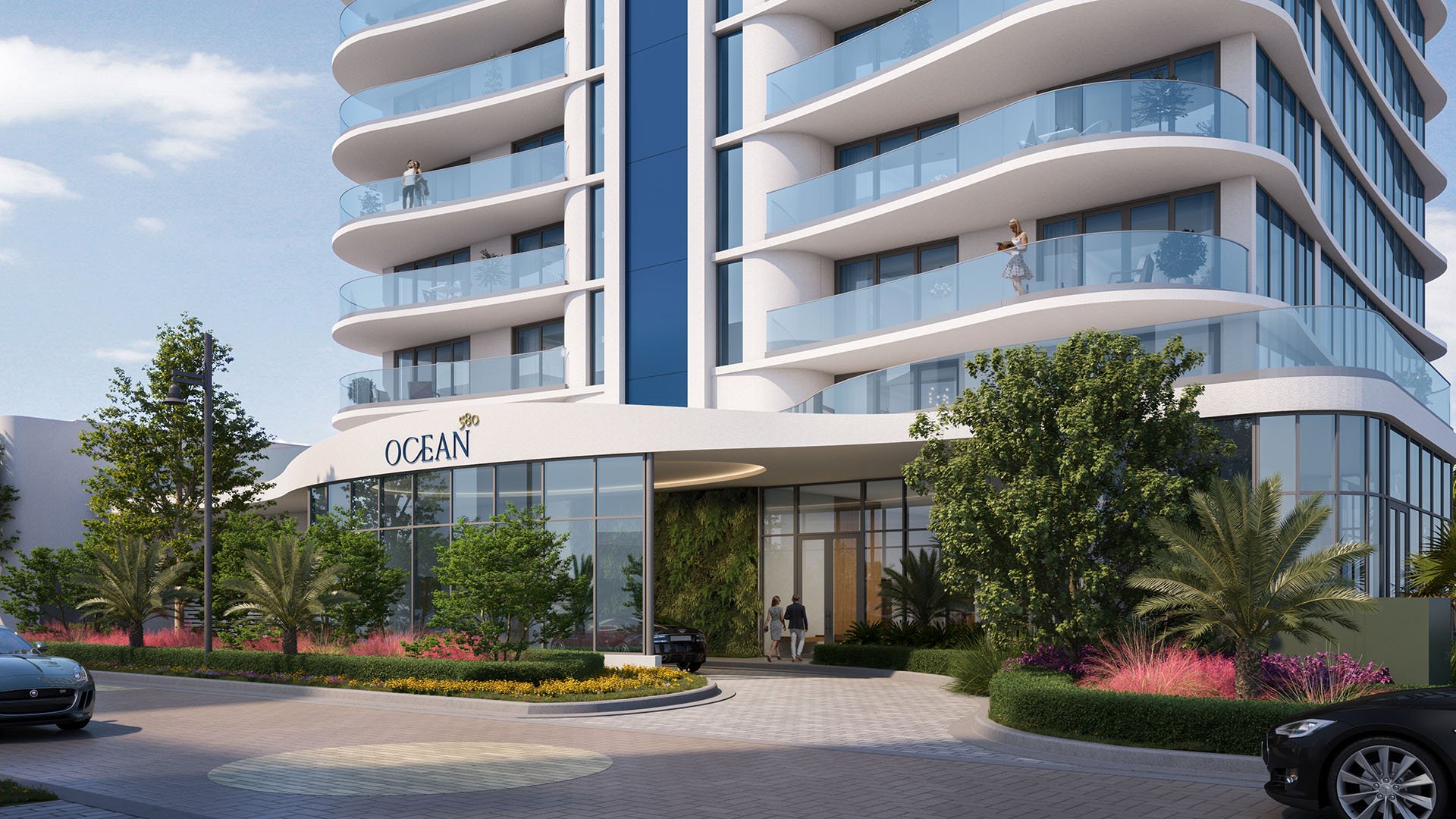
In South Florida luxury real estate, buyers often reserve their deepest due diligence for floor plans, views, finishes, assessments, and neighborhood reputation. The lobby, by contrast, can be treated as a beautiful backdrop: admired during a tour, remembered as an impression, then quickly subordinated to the residence itself.
That is a mistake. Lobby volume should be reviewed in a separate due-diligence conversation because it governs how a building feels in daily use. It affects privacy, arrival rhythm, staff interaction, guest handling, package movement, ride-share flow, valet cadence, and the subtle question of whether a residence feels serene or busy before the elevator doors even open.
For buyers comparing Brickell, Miami Beach, Sunny Isles, Bal Harbour, Coconut Grove, and investment residences, the lobby is a practical lens. It reveals whether a building is calibrated for quiet ownership, hotel-style energy, seasonal intensity, family circulation, social visibility, or a more discreet private-club atmosphere.
Lobby volume is not simply the size of the lobby. It is the relationship among residents, guests, staff, vendors, vehicles, deliveries, pets, service providers, and amenity users moving through the arrival sequence throughout the day.
A grand lobby can feel crowded if too many functions converge in one place. A more compact lobby can feel composed if circulation is well separated and staffing is disciplined. The question is not whether the lobby is dramatic. The question is whether its scale, staffing, and choreography support the life the buyer expects to lead.
Luxury buyers should think of the lobby as an operating system. It determines how smoothly the building receives people and absorbs friction. A residence may offer exceptional views, generous terraces, and refined interiors, but if the entry experience feels congested at the wrong moments, that friction becomes part of ownership.
Lobby volume deserves its own discussion because it cuts across disciplines. It is not only an architectural issue, a security issue, or a hospitality issue. It is all of them at once.
During a standard showing, the lobby is experienced under controlled conditions. The timing may be quiet. The staff may be prepared. The arrival sequence may feel polished because the visit is planned. A separate due-diligence conversation gives the buyer room to ask how the lobby performs on ordinary mornings, weekend evenings, holiday periods, school pickup windows, move-in days, delivery peaks, and storm preparation periods.
This is especially important for buyers who value discretion. A busy entrance can make a luxury building feel public, even when the residence itself is private. A calm lobby, by contrast, reinforces the psychological transition from city to sanctuary.
Privacy in a luxury building begins before the front door. It begins at the curb, the porte cochere, the valet stand, the reception desk, the seating area, and the elevator threshold.
A buyer should ask whether residents, guests, vendors, and service personnel share the same arrival path. The answer will shape the building’s mood. Separate service circulation can reduce friction, but the quality of that separation matters. A plan that appears efficient on paper may still create crossover moments if procedures are loose.
The buyer should also consider sightlines. Can someone waiting in the lobby observe every arriving resident? Is the elevator bank visible from the public seating area? Does the lobby encourage lingering, or does it quietly move people through? None of these details is inherently good or bad. They need to match the buyer’s comfort level.
For a high-profile owner, a family seeking low-key routines, or a seasonal resident who values anonymity, the lobby may be as consequential as the exposure of the primary bedroom.
South Florida’s most desirable residential buildings increasingly borrow from private hospitality: attentive arrival, polished staff, refined materials, and a sense of ceremony. Yet hospitality should not be confused with activity.
A lobby can be warm without becoming social theater. It can be staffed without feeling watched. It can welcome guests without turning every resident arrival into a public moment. The balance is delicate, and it should be tested through questions rather than assumed from design renderings or a single visit.
Buyers should ask how many staff members are typically present, where they are positioned, how visitors are announced, how vendors are checked in, and how packages are managed. The best buildings make these processes feel invisible. Less refined buildings allow operational tasks to spill into the resident experience.
Lobby volume does not begin inside the lobby. It begins at the point of arrival. In many South Florida buildings, the driveway, valet area, and covered drop-off are as important as the reception space itself.
Buyers should consider whether the arrival court can comfortably handle simultaneous vehicles, ride-share pickups, visiting drivers, luggage, children, pets, and staff movements. If the curb sequence feels tight, the lobby may inherit the pressure. Delays at the valet stand can turn an otherwise elegant arrival into an operational bottleneck.
This matters for both full-time residents and seasonal owners. A building that functions beautifully on a quiet weekday may feel different during peak social periods. A separate conversation allows the buyer to ask not only what the arrival sequence looks like, but how it behaves when demand rises.
The most revealing questions about lobby volume are often the least glamorous. Where do deliveries go? How are large items handled? Do pets pass through the main lobby? How are dog walkers, housekeepers, trainers, chefs, nurses, and contractors received?
These details influence the daily texture of ownership. A building with many services, frequent deliveries, and active households can still feel composed if the back-of-house systems are strong. Conversely, even a beautifully designed lobby can feel unsettled if every function passes through the same visible space.
Pet circulation deserves particular attention. Many luxury buyers own dogs, and pet movement can change the rhythm of elevators, corridors, and lobby seating areas. The issue is not whether pets are present. The issue is whether the building has anticipated their presence gracefully.
The best way to review lobby volume is to separate aesthetics from operations. First, assess the design: scale, materials, seating, lighting, ceiling height, sightlines, and elevator placement. Then move to function: traffic, staff protocol, service routes, guest procedures, deliveries, pets, and vehicle flow.
Buyers should ask for a candid description of normal patterns rather than relying on impressions from a staged tour. They should visit, when possible, at more than one time of day. They should also compare the lobby experience with their own household routines. A buyer who entertains often will have different priorities than a buyer who rarely receives guests. A buyer with young children may read lobby volume differently from a buyer seeking a quiet lock-and-leave retreat.
The goal is not to find a silent lobby. It is to find a lobby whose energy aligns with the residence being purchased.
A calm lobby often signals more than good design. It can suggest disciplined management, thoughtful staffing, clear resident protocols, and architecture that separates public presence from private circulation.
For luxury buyers, that calm has value. It protects the emotional quality of arrival. It reduces small daily irritations. It supports discretion. It can also strengthen the perception of the building as a refined residential environment rather than a high-traffic amenity hub.
In a market where many residences compete on views, amenities, and branded interiors, the lobby remains one of the most honest tests of livability. It is where the building reveals whether it understands the resident’s day, not just the buyer’s tour.
Why should lobby volume be discussed separately? Because it affects privacy, circulation, service, and the daily feeling of arrival in ways that are easy to overlook during a standard showing.
Is a larger lobby always better? No. A smaller lobby can function beautifully if circulation is clear, staffing is strong, and service routes are well managed.
What should buyers observe during a lobby visit? Watch how residents, guests, staff, pets, packages, and vehicles move through the arrival sequence.
Does lobby volume matter more in certain neighborhoods? It matters anywhere demand, density, seasonal use, or social activity can influence the building’s daily rhythm.
How does lobby volume affect privacy? Shared sightlines, visible elevator banks, and crowded reception areas can make arrivals feel more public than expected.
Should buyers ask about valet flow? Yes. Vehicle handling is often the first part of the lobby experience and can shape the entire arrival mood.
Are deliveries part of lobby due diligence? Yes. Package handling, food deliveries, and service providers can materially affect how composed the lobby feels.
Do pets influence lobby volume? They can. Pet routes, elevator use, and outdoor access should be understood before purchase.
Can a busy lobby still feel luxurious? Yes, if the activity is well choreographed and does not compromise privacy, comfort, or resident priority.
What is the main buyer takeaway? Treat the lobby as part of the residence’s lived experience, not merely as a design feature.
When you're ready to tour or underwrite the options, connect with MILLION.
If branded residences are on your mind — as a home or as an allocation — we would be glad to share what we are seeing, privately.
Begin a quiet conversation