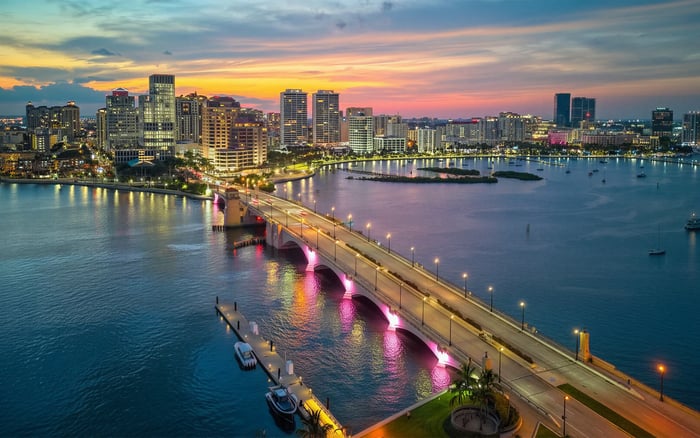
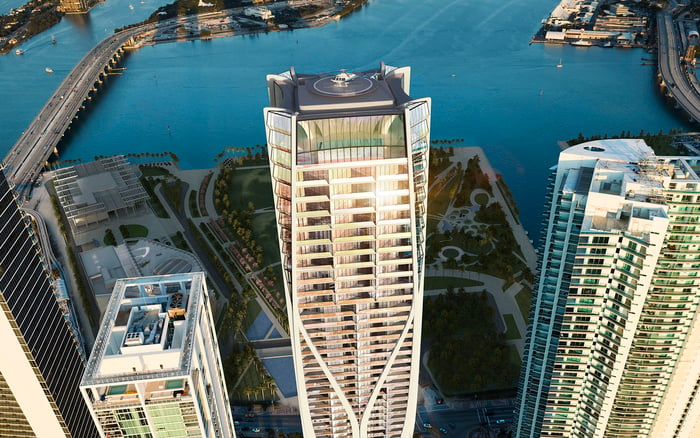
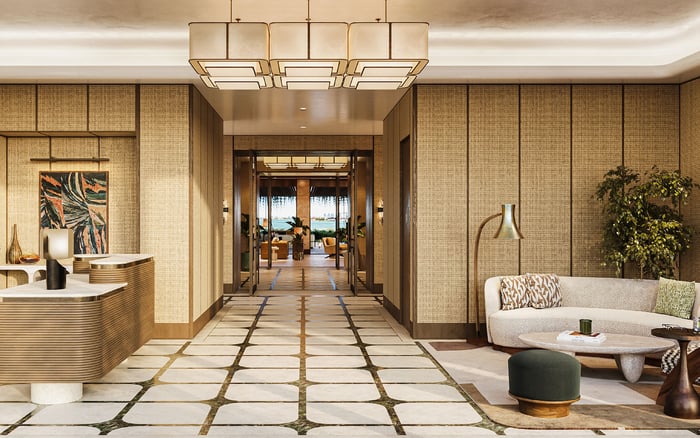
For buyers making South Florida their Florida domicile, hotel traffic management is more than an operational footnote. It can affect privacy, arrival rhythm, valet timing, service access, and the everyday serenity of a luxury residence.
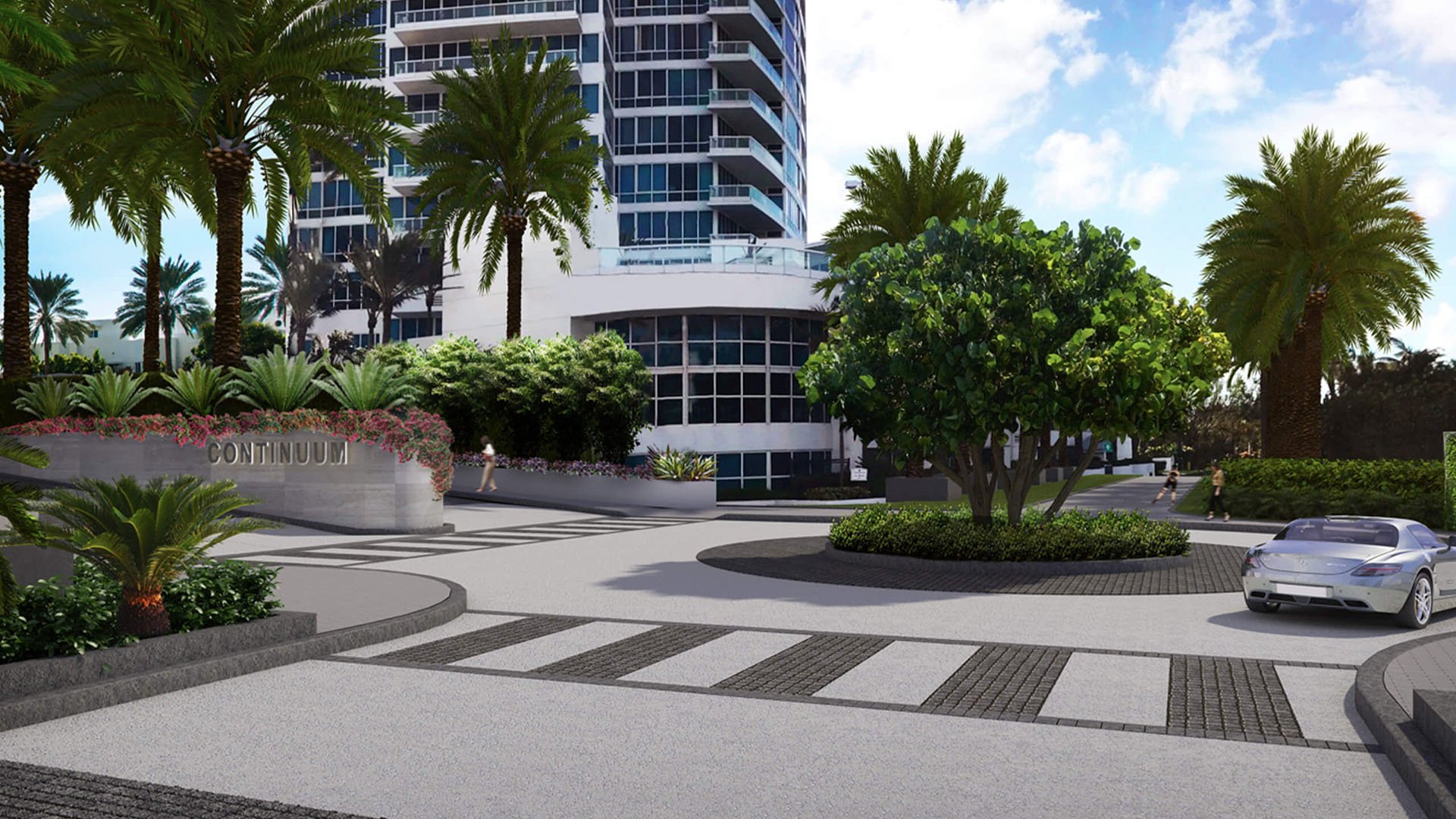
For buyers planning Florida domicile, the residence is not merely a seasonal address. It becomes the practical center of life: where cars are kept, guests arrive, advisors visit, household staff coordinate, deliveries land, and daily routines settle into a reliable rhythm. In South Florida, that rhythm can be shaped not only by how a home lives, but by how a building manages hotel traffic.
This is especially relevant in districts where private residences sit near hotels, branded hospitality, restaurants, beach clubs, marinas, event venues, or mixed-use arrivals. A tower may feel serene from the sales gallery, yet the true test comes at 7:30 on a Friday evening, during a holiday weekend, after a waterfront event, or when multiple valet, rideshare, delivery, and resident vehicles converge at once.
For the ultra-premium buyer, the question is not whether a building is busy. South Florida is a kinetic market by nature. The sharper question is whether the building has intelligent separation of movement: residents, hotel guests, service providers, restaurant patrons, rideshare drivers, and event traffic should each have a defined path that protects privacy and preserves ease.
Luxury begins before the elevator opens. It begins at the curb, with the first security interaction, the ability to enter without hesitation, clear valet staging, and no confusion between resident arrivals and public-facing hospitality uses.
A domicile-minded buyer should ask how the arrival court functions at peak times. Is there a dedicated resident lane? Is valet storage sufficient for resident demand as well as guest demand? Are rideshare pickups placed away from the private entrance? Can household staff arrive without crossing the primary social lobby? These are not cosmetic questions. They shape everyday discretion.
In Brickell, where density and hospitality energy are part of the district’s appeal, buyers looking at residences such as 888 Brickell by Dolce & Gabbana should think carefully about arrival choreography. The prestige of a branded environment is strongest when operational planning supports the residential experience, rather than asking residents to adapt to hotel-like movement.
A second-home buyer may tolerate occasional friction. A domicile buyer is less likely to accept it. When the residence becomes the home base for driver logistics, family schedules, medical appointments, business meetings, entertaining, and everyday errands, traffic management becomes a quality-of-life issue.
This is why buyers should look beyond finishes and amenities. A gorgeous lobby is meaningful, but a well-managed loading bay may matter more over a decade of ownership. A glamorous restaurant can enhance a building’s social value, but not if its valet demand overwhelms the private entrance each evening. A hotel component can bring service culture and brand cachet, but the operating plan must protect the residential hierarchy.
The most refined buildings treat privacy as an infrastructure decision. That means controlled access, thoughtful elevator separation, screened service movement, clear guest procedures, and staff who can distinguish residents from transient visitors without making either experience feel strained.
Before contract, buyers should request a precise explanation of how people and vehicles move through the property. The most useful conversations are specific. Ask where resident vehicles enter, where hotel guests enter, how valet overflow is handled, whether events can alter normal circulation, and how deliveries are scheduled.
Ask about the difference between a normal weekday, a high-season weekend, and a major social evening. Ask whether restaurant traffic shares the same curb cut. Ask if beach club, spa, marina, or banquet users have their own arrival sequence. Ask how security handles guests who arrive without clear instructions. Ask whether the residential association has any influence over operational standards if hospitality uses are part of the property.
The key is not to assume that branded service automatically equals quiet living. Branded Residences can be superb when brand discipline extends into operations. They require the same due diligence as any private building, with added attention to how hospitality energy is contained.
A Condo-hotel or hotel-adjacent residential setting can work beautifully for the right buyer. It may offer service depth, flexible hospitality programming, dining access, spa culture, and a more animated social environment. But the buyer planning domicile should understand the daily interface between private life and transient use.
The concerns are practical. How often do non-residents enter shared zones? Are amenities private, shared, or layered by membership and reservation? Is there a separate residential lobby? Do elevators require controlled credentials? Can hotel guests see into resident arrival areas? Are luggage carts, housekeeping routes, catering teams, and delivery vendors kept away from primary residential circulation?
In Fort Lauderdale, where waterfront, beach, marina, and hospitality uses often overlap, projects such as St. Regis® Residences Bahia Mar Fort Lauderdale invite buyers to study not only the lifestyle promise, but also the traffic ecosystem around arrival, service, and event movement. The same principle applies farther up the coast at W Pompano Beach Hotel & Residences, where the relationship between residence and hospitality should be evaluated through the lens of daily ownership.
Each South Florida submarket has its own traffic personality. Brickell is urban, vertical, and business-oriented, with significant evening dining demand. Miami Beach blends resort movement, resident privacy, event traffic, and visitor intensity. Fort Lauderdale often combines beach access, yachting, hospitality, and residential life. West Palm Beach and Boca Raton can present different rhythms, often tied to cultural, dining, or seasonal patterns.
A buyer comparing The Ritz-Carlton Residences® South Beach with a more inward-facing residential enclave should not evaluate only architecture and view corridors. The more revealing comparison may be the arrival sequence at peak demand, the degree of separation from public energy, and the predictability of building staffing.
Similarly, a buyer considering Baccarat Residences Brickell should see the urban setting as part of the value proposition, while still insisting on a clear understanding of valet, guest access, deliveries, and resident-only movement. In high-density luxury markets, operational elegance is a form of design.
Before signing, domicile-minded buyers should align legal, financial, and lifestyle planning. Florida domicile is a personal and advisory matter, and the residence should support the reality of that decision. If the home will anchor daily life, the buyer should know how the property performs when the neighborhood is at its busiest.
A disciplined checklist should include resident-only arrival routes, valet capacity philosophy, guest registration process, service and delivery access, elevator separation, event management rules, association governance, pet and household staff procedures, rideshare staging, and after-hours security. Buyers should also understand whether operational rules are fixed in governing documents or dependent on management discretion.
The quietest luxury in South Florida is often not silence. It is predictability. It is knowing that a dinner reservation downstairs will not compromise a private arrival upstairs, that a holiday weekend will not turn the porte cochere into a guessing game, and that the building’s staff has the tools to protect residents from avoidable friction.
Why does hotel traffic matter to Florida domicile buyers? A domicile residence is used consistently, so arrival, valet, service, and guest movement affect daily comfort rather than occasional convenience.
Is hotel traffic always a negative for luxury residences? No. Hospitality can add service and energy when resident circulation, security, and private access are carefully managed.
What is the first question to ask about traffic management? Ask whether residents have a clearly separated arrival sequence from hotel guests, diners, event attendees, and rideshare users.
Should buyers visit at a specific time before signing? Yes. A weekday tour is useful, but buyers should also understand how the property operates during evenings, weekends, and high-demand periods.
What makes a Condo-hotel different from a traditional condominium? A Condo-hotel may involve more transient guest movement, so buyers should review lobby access, elevators, amenities, and service routes carefully.
Do Branded Residences automatically solve these issues? Not automatically. Brand standards can help, but the building’s physical layout and management protocols remain essential.
How does Miami Beach differ from Brickell for traffic planning? Miami Beach often involves resort and visitor patterns, while Brickell typically adds urban, dining, office, and nightlife movement.
What documents should buyers review? Buyers should review governing documents, management rules, valet policies, amenity access terms, and any hospitality-related operating provisions.
Can traffic management affect resale appeal? Yes. Buyers often value buildings where privacy, arrival ease, and service circulation feel composed over time.
Who should help evaluate these issues? A buyer should coordinate with qualified legal, tax, and real estate advisors, especially when domicile planning is part of the purchase.
When you're ready to tour or underwrite the options, connect with MILLION.
If branded residences are on your mind — as a home or as an allocation — we would be glad to share what we are seeing, privately.
Begin a quiet conversation