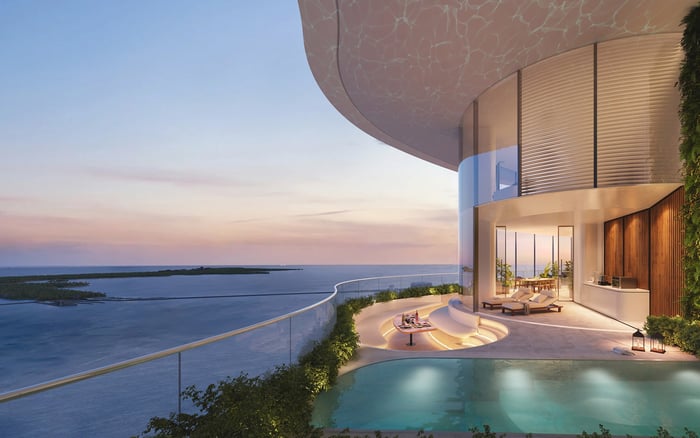
In Miami’s luxury condo market, the pool deck can matter as much as the view. For many buyers, the decisive amenity is not only what they see from upstairs, but how comfortably they live downstairs.
In a Miami condo search, the view has long been treated as the opening argument. Ocean, bay, skyline, and sunset exposures still carry emotional weight, particularly in the upper tiers of the market. Yet for discerning buyers, another question now sits beside the view: where will I actually spend my time?
That is where pool seating begins to matter. A beautiful outlook from the residence can define the mood of a home, but a well-designed pool environment can shape the rhythm of daily life. It is where morning coffee becomes a ritual, where visiting family gathers without crowding the living room, and where a second-home owner can feel immediately settled after arrival.
For luxury buyers, this is not a choice between a chaise and a panorama. It is a recognition that the most valuable amenity is often the one that invites repeated use. A remarkable view may be admired every day, but a comfortable pool deck can be lived in.
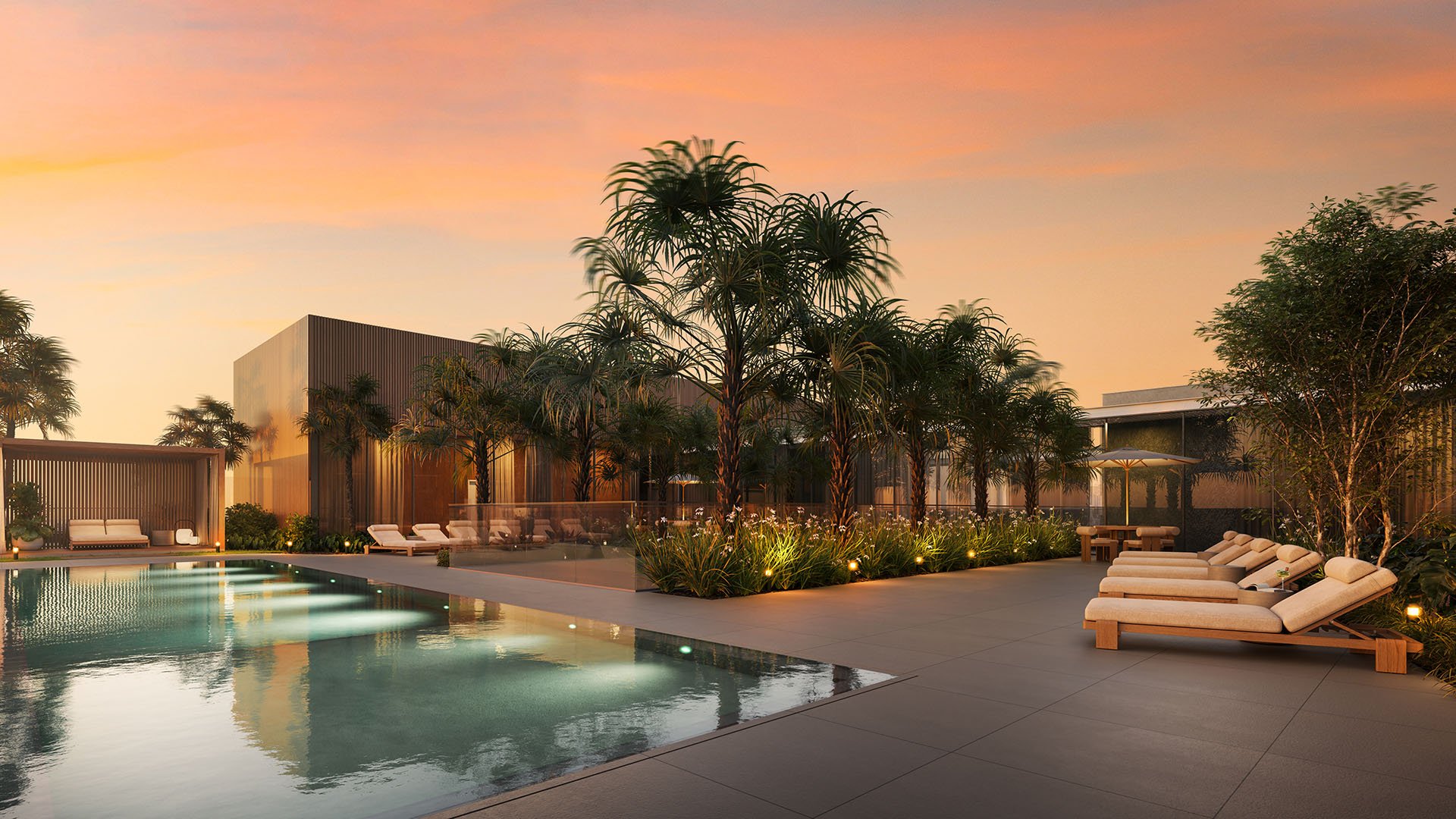
Pool seating is one of the clearest indicators of how a building understands hospitality. The difference between a photogenic pool and a genuinely usable one is rarely the water itself. It is the spacing between loungers, the availability of shade, the ease of moving between sun and shelter, the distance from foot traffic, and the sense that residents are not competing for comfort.
A buyer may tour two otherwise compelling buildings and respond more strongly to the one with better seating, even if the other has the more dramatic view. That response is practical. Seating determines whether the pool feels like an extension of the residence or a decorative amenity designed for marketing photography.
This is especially true for owners who entertain. A generous pool terrace can absorb guests in a way that a private living room cannot. It allows the owner to host casually, preserve privacy upstairs, and still enjoy the social energy many Miami buyers seek. The amenity becomes part of the home’s entertaining program, not merely a shared facility.
A Miami condo is often evaluated through three lenses: private space, building experience, and location. The pool deck sits at the intersection of all three. It is private enough to feel residential, social enough to support community, and outdoor enough to express why the buyer chose Miami in the first place.
This is why buyers should look beyond the headline view. A residence with a strong balcony, a comfortable terrace, and a pleasing waterview may still feel incomplete if the building’s outdoor amenity areas are congested or poorly arranged. Conversely, a unit with a less iconic exposure can become more compelling when paired with an elegant pool environment that works beautifully at different times of day.
The language of a search should reflect this balance. Terms such as pool, balcony, terrace, waterview, Miami Beach, and Brickell may appear simple, but each points to a different version of how the home will be used. A buyer focused only on the view may miss the building that actually supports the life they intend to lead.
The best pool areas have a sense of order without feeling rigid. Seating should feel intentional, with enough variation to support solitude, conversation, family use, and quiet reading. A long row of exposed loungers may look clean in a rendering, but a more nuanced arrangement often proves more desirable in daily use.
Shade is central. In South Florida, comfort depends not only on sunlight but on the ability to manage it. Buyers often respond to cabanas, covered seating, umbrellas, planted edges, and transitional areas that let them remain outdoors without feeling exposed.
Privacy is equally important. A pool deck that feels overlooked from too many angles can diminish the sense of retreat. Buyers should pay attention to sightlines from neighboring towers, adjacent amenity areas, fitness spaces, restaurants, and public walkways. Luxury is not only beauty. It is the ability to relax without feeling observed.
Service is the final layer. Even when buyers do not require constant attention, they appreciate environments that feel maintained, composed, and easy. Towel access, clean circulation, discreet staffing, and clear separation between active and quiet zones can influence perception as much as the architecture itself.
None of this diminishes the enduring appeal of a commanding view. In Miami, outlook can shape value, identity, and emotional attachment. The first moment inside a residence often belongs to the glass line. Buyers remember the sweep of water, the glow of the city, or the softness of a sunset.
The question is whether that view is enough. Some buyers discover that a dramatic exposure is less meaningful if the building experience below feels strained. Others find that a slightly quieter view becomes acceptable, even preferable, when the amenity program is calm, beautiful, and easy to use.
This is where a seasoned search becomes more architectural than emotional. The buyer is not simply asking, “What can I see?” The sharper question is, “How does this building allow me to live?”
A serious buyer should visit the pool deck with the same discipline used inside the residence. Notice whether the seating feels abundant or merely adequate. Observe whether there are quiet corners, shaded options, and enough separation between families, couples, and solo residents.
If possible, evaluate the pool at more than one time of day. Morning calm can be very different from afternoon activity. A deck that feels serene during a weekday tour may feel more animated when residents are using the building fully. The goal is not to avoid activity, but to understand whether the space retains comfort under normal use.
Also consider the path from residence to pool. Elevators, corridors, changing areas, and service points affect how often owners will use the amenity. If reaching the pool feels effortless, it becomes part of daily life. If it feels awkward, even a beautiful deck may be used less often than expected.
From a resale perspective, views remain easy to describe and easy to understand. Pool seating is more subtle, but it can be highly persuasive during showings because it is experiential. A buyer can stand on a well-planned deck and immediately imagine a Saturday morning, a visiting friend, or a quiet hour after work.
This type of amenity quality is not always captured in a simple search filter. It is felt during the tour. That is why buildings with thoughtful outdoor environments can create a stronger emotional impression than their specifications alone suggest.
For sellers, this means the pool experience should not be treated as a secondary detail. For buyers, it means the most desirable home may not always be the one with the most theatrical view. It may be the one where the entire building feels more livable.
Should I prioritize pool seating over a better view? Prioritize the feature you will use most often. For many Miami buyers, a comfortable pool environment can influence daily satisfaction as much as the view.
Does a great pool deck help resale appeal? It can. Buyers often respond strongly to amenity spaces that feel calm, well arranged, and genuinely usable.
What makes pool seating feel luxurious? Space, shade, privacy, service, and thoughtful circulation matter more than sheer size. The best decks feel composed rather than crowded.
Is an ocean or bay view still important? Yes. Views remain a major emotional and lifestyle factor, but they should be weighed alongside how the building functions day to day.
How can I judge whether a pool deck is overcrowded? Visit at different times if possible and observe spacing, noise, towel areas, shaded seats, and whether residents seem relaxed.
Do private terraces replace the need for a pool deck? Not always. A private terrace offers seclusion, while a pool deck adds hospitality, social energy, and resort-style convenience.
Should second-home buyers care more about amenities? Often, yes. When visits are concentrated, easy access to comfortable shared spaces can make each stay feel more complete.
What should families look for around the pool? Families should look for visibility, seating variety, shaded areas, and enough separation from quiet adult zones.
Can a lower-floor condo be more appealing if amenities are strong? It can be, especially when the buyer values convenience, outdoor living, and building experience over a higher vantage point.
What is the best way to compare two similar condos? Compare how each building supports your actual routines, including mornings, guests, workouts, pool use, and quiet time outdoors.
When you're ready to tour or underwrite the options, connect with MILLION.
If branded residences are on your mind — as a home or as an allocation — we would be glad to share what we are seeing, privately.
Begin a quiet conversation