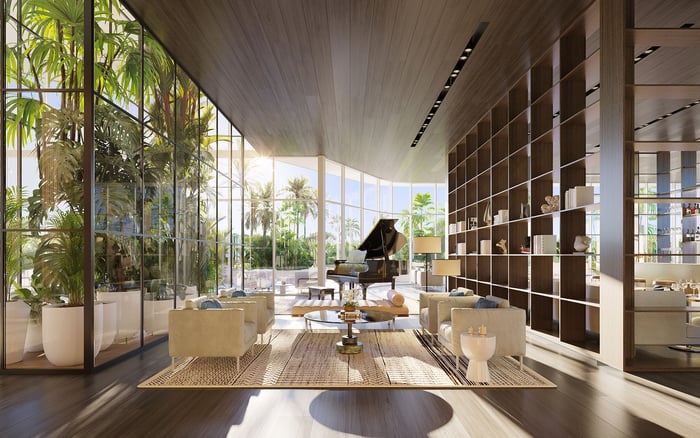
W and Waldorf Astoria present different residential models in Pompano Beach. For buyers, the meaningful privacy comparison begins with arrival routes, elevator access, amenity permissions and the documents governing everyday life.
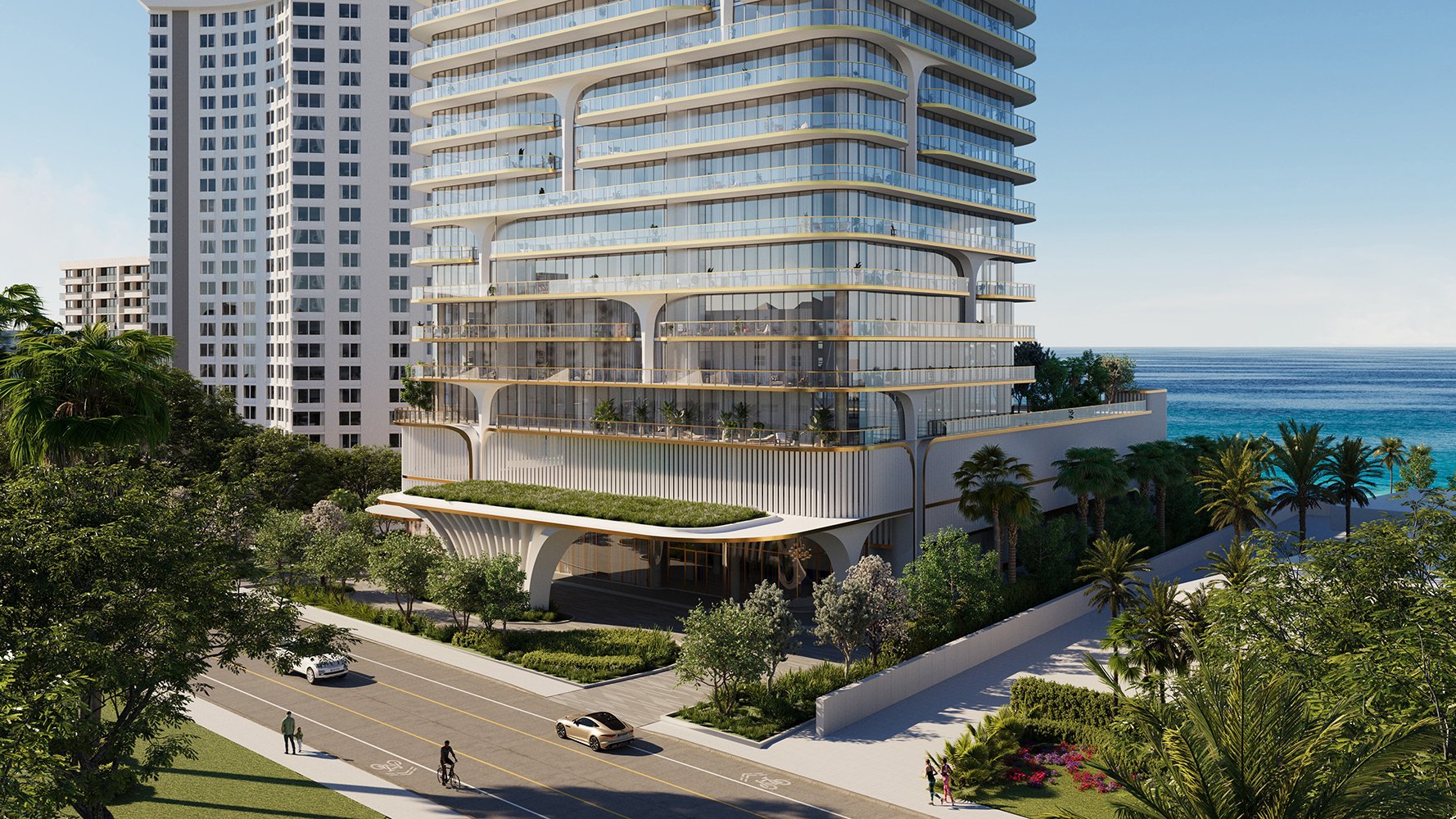
For a waterfront buyer, privacy is more than the moment an elevator opens into a residence. It encompasses the full journey from vehicle arrival to front door, and from a quiet morning at home to the amenities below. The question is not whether a building promises discretion, but how its design and rules are intended to deliver it.
That distinction matters when comparing W Pompano Beach Hotel & Residences with Waldorf Astoria Residences Pompano Beach. W combines residences and hotel suites. Waldorf Astoria is planned as a standalone residential development rather than a hotel-and-residence project. These are different starting points for evaluating circulation, not evidence that either will necessarily offer greater privacy.
The features discussed here are advertised or planned. They do not confirm current operations, completed access controls or established day-to-day procedures.
W's planned offering includes fully furnished, fully finished hotel suites ranging from 580 to 1,860 square feet. The hotel accommodation mix includes studios, one- and two-bedroom suites, and three WOW Suites. For a residence buyer, these details make the hotel component relevant to the privacy review, but do not reveal where guests and owners might cross paths.
Begin with a circulation plan. Ask the sales team to trace an owner's arrival from vehicle drop-off through the lobby, elevator bank and residence entry. Repeat the exercise for a hotel guest, a resident's visitor and a service delivery. Every intersection deserves explanation, particularly where access depends on staff intervention rather than a physical boundary.
Review whether valet queues, pedestrian entrances and elevator waiting areas are separate or shared. Request the intended access permissions for each amenity and any public-facing space. The goal is not to eliminate hospitality activity, but to understand whether it fits the way you intend to live.
The planned offering at Waldorf Astoria Residences Pompano Beach comprises 92 residences. Its standalone residential model changes the inquiry: hotel guest circulation is not the appropriate assumption for this project.
Instead, focus on the people a residential building must accommodate. Ask how overnight visitors are registered, where vendors check in, how household staff enter and whether deliveries reach a residence through a service route. Establish who authorizes access and how permissions are withdrawn when a visit or service appointment ends.
A residential-only model does not, by itself, resolve every question about outside access. The planned beachside cafe warrants a specific review of patron eligibility and arrival routes. Its public-access policy is not established here, so buyers should neither assume it welcomes outside diners nor treat it as exclusively resident-only.
W's planned offering includes private elevator entry to each residence. Waldorf Astoria's includes a private elevator and entry foyer for each residence. Both are meaningful design features, but neither description alone establishes a dedicated elevator cab, a separate ground-floor arrival or complete separation from hotel and service traffic.
Ask for a diagram identifying the cabs serving the selected residence, their stopping permissions and the points where credentials are required. Clarify whether visitor access requires owner approval, how staff access is controlled and what happens when an elevator is unavailable.
A private threshold and the journey to it are distinct considerations. A beautifully appointed foyer can offer a discreet arrival at the apartment while leaving questions about the lobby or elevator ride unanswered. Review both before treating private entry as a complete privacy solution.
An amenity's atmosphere depends partly on who may enter. For each project, request a written schedule identifying resident-only spaces, shared spaces and any areas where outside access may be permitted. Do not infer those categories from renderings or branding.
For W, distinguish among residence owners, hotel guests, owners' visitors and any outside patrons. For Waldorf Astoria, focus on residents, invited guests, staff, vendors and any permitted cafe patrons. These are categories to investigate, not assertions that every group has access.
Ask whether reservations, guest limits or private functions can alter ordinary access. Determine who can amend the rules and whether permissions described during a presentation appear in the governing documents. A quiet viewing appointment cannot establish how a space will function under different access permissions.
Waldorf Astoria's planned offering includes direct, private access to 200 linear feet of beachfront. That describes access, not exclusive ownership or use of the beach itself.
Have the intended route marked on a plan, including the transition between residential amenities and beachfront access. Ask where credentials are checked and how guests return to the building. Assess the cafe route alongside the beach route without assuming they overlap.
If the search also includes The Ritz-Carlton Residences® Pompano Beach, apply the same document-led questions rather than carrying assumptions from one branded address to another. Compare written access rights and circulation plans, not the apparent exclusivity of a name.
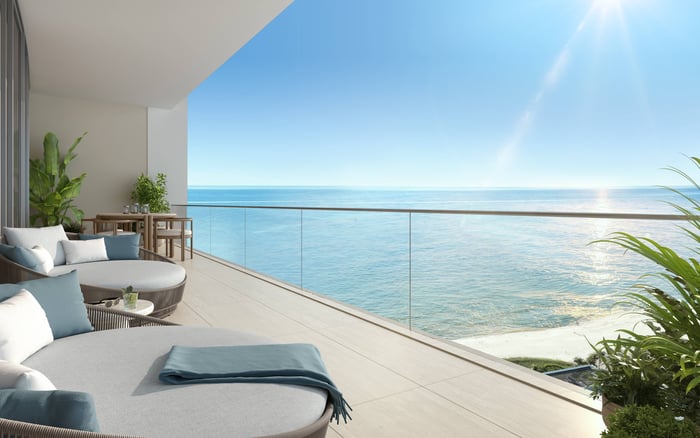
W's planned private outdoor balconies are up to 8.5 feet deep. Waldorf Astoria's planned offering includes private balconies for all residences, up to 10 feet deep. Those dimensions describe outdoor depth, not visual or acoustic seclusion. Do not assume the maximum applies to every residence.
For a specific home, review balcony dimensions, orientation and the relationship to neighboring terraces and planned activity areas. Request drawings that clarify sightlines rather than assuming an ocean-facing position removes every exposure. Outdoor comfort and protected arrival are complementary concerns, but one does not establish the other.
Before committing, request current condominium documents, circulation drawings, amenity rules, valet procedures and guest-registration policies. Ask the project team to distinguish proposed procedures from provisions already included in the documents, and have counsel review the access rights relevant to your purchase.
At W, do not rely on oral representations as accurately stating the developer's representations. For either project, reassuring explanations should lead to documentary confirmation, not replace it.
The strongest choice is the residence whose intended circulation and enforceable permissions align with your expectations. For one buyer, that may mean accepting hospitality activity within clearly defined boundaries; for another, prioritizing a residential setting with carefully controlled visitor access. Neither preference should rest on the brand alone.
For a discreet perspective on your South Florida residential search, explore MILLION.
If branded residences are on your mind — as a home or as an allocation — we would be glad to share what we are seeing, privately.
Begin a quiet conversationW combines residences and hotel suites. Waldorf Astoria Residences Pompano Beach is presented as a standalone residential development rather than a hotel-and-residence project.
No. Private elevator entry alone does not establish a dedicated cab, a separate ground-floor arrival or complete separation from hotel and service traffic.
Request plans showing resident and hotel entrances, valet routes, elevator assignments and access boundaries for amenities and public-facing areas. Ask the team to trace owner, hotel guest, visitor and delivery journeys.
Focus on visitor registration, staff and vendor routes, delivery procedures and amenity permissions. Clarify whether outside patrons may access the planned beachside cafe.
The planned residential offering comprises 92 residences. That count alone does not establish how visitor access or common areas will be managed.
No. Waldorf Astoria's planned direct, private access to 200 linear feet of beachfront should not be interpreted as exclusive beach ownership or use.
Its public-access policy is not established here. Buyers should request written confirmation of patron eligibility and intended access routes.
W advertises private outdoor balconies up to 8.5 feet deep, while Waldorf Astoria advertises private balconies up to 10 feet deep. Confirm the dimensions and sightlines of the specific residence under consideration.
Review current condominium documents, circulation plans, amenity rules, valet procedures and guest-registration policies. Ask counsel to assess the access rights relevant to the purchase.
No. The features are advertised or planned and do not establish current operating status or completed access-control procedures.