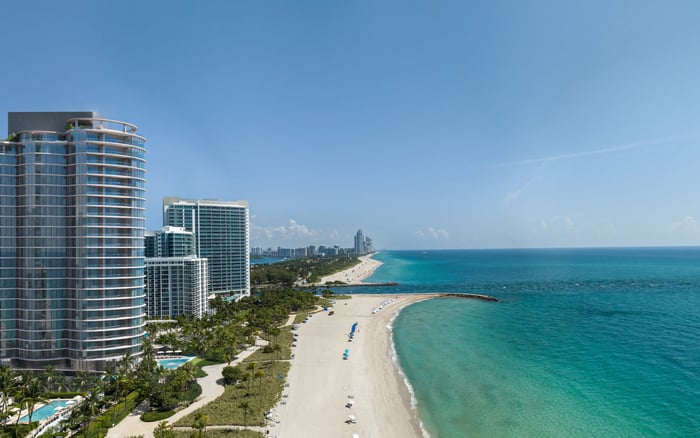
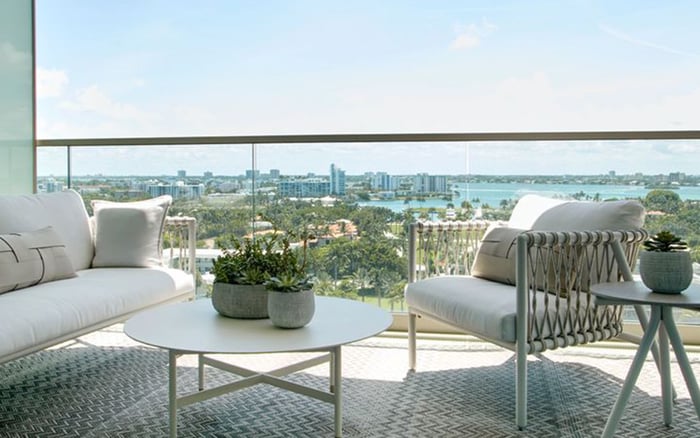
At Oceana Bal Harbour, certificate-of-occupancy due diligence is about verifying the right records early, not assuming a resale requires a new certificate. A disciplined review separates municipal documentation, lender approval, insurance coverage, and move-in arrangements.

At Oceana Bal Harbour, ownership due diligence should be as carefully considered as the residence itself. For a buyer arranging financing, insurance, and a first arrival, the certificate of occupancy belongs in the transaction file early. It provides documentary clarity-not a basis for assuming that an established condominium must obtain a new building certificate for every resale.
The distinction matters: a year-built entry, a completion milestone, and an occupancy certificate answer different questions. The property's chronology includes both a 2016 year-built designation and a 2017 completion date. Neither substitutes for the actual certificate or establishes its issuance date.
For buyers, timing has two dimensions: when the relevant certificate was issued and when the transaction team obtains and reviews it. The goal is to resolve documentary questions before they compete with financing decisions, coverage arrangements, or travel plans.
Oceana's addresses are 10201 and 10203 Collins Avenue, Bal Harbour, Florida 33154. With two 28-story towers and approximately 240 residences, precise identification is more useful than a request bearing only the development name.
Ask the municipal building department for the occupancy documentation applicable to the specific tower and residence. Have your attorney confirm which records are relevant to the purchase, what each document covers, and whether further clarification is needed. Include the exact address and unit identifier in the request; documentation for one address should not be assumed to answer every question about the other.
The association's public-documents section offers a starting point for association inquiries, not assurance that an occupancy certificate or current insurance certificate is publicly posted. Request the necessary records directly and keep association materials distinct from municipal documentation.
Buyers also considering Rivage Bal Harbour should maintain separate files for each property. An address-specific review is more reliable than transferring assumptions between residences in the same village.
Bal Harbour's permit-finalization process requires approval of all inspections and submission of additional required documents, such as a final survey. Once those requirements are satisfied, the permit status changes to “Final,” and a certificate of occupancy is issued “where applicable” under Florida Building Code Section 111.
These are distinct steps. A final permit status is not shorthand for a particular certificate's issuance date, scope, or contents. Request the certificate itself where applicable, rather than relying on a permit summary to answer a different question.
If a temporary certificate of occupancy, or TCO, appears in the records supplied for review, ask counsel to examine its applicability, dates, and any stated conditions. This is a conditional review instruction-not a suggestion that Oceana currently operates under a TCO or awaits a final CO. Nor should differences in completion dates be interpreted as evidence of occupancy-related closing problems.
For a financed purchase, include the occupancy documentation in the lender's broader condominium review. Potential review materials include association budgets, reserves, insurance information, litigation information, and a condominium questionnaire. A certificate neither replaces those materials nor establishes mortgage eligibility on its own.
Ask the lender which documents it requires for this residence, who must supply them, and when they should be submitted. Seek written clarification of any unresolved condition before treating a proposed closing date as settled. One lender's treatment of a document does not necessarily predict another's.
Do not build the transaction calendar around an assumed universal sequence of certificate issuance, loan funding, insurance binding, and move-in. Instead, ask each participant to identify the requirements within their responsibility. If questions arise about a TCO, obtain a transaction-specific answer rather than assuming acceptance or rejection.
The same discipline applies when comparing Oceana with Fendi Château Residences Surfside. For a Surfside alternative, request that property's own municipal and association records. Comparison shopping does not make underwriting conclusions interchangeable.
Review insurance separately, alongside the municipal and lending work. Examine the association's master policy and deductibles before closing. Do not assume that building coverage satisfies every owner requirement or every condition imposed by the lender.
Ask your insurance adviser to explain the relationship between the master policy and an HO-6 unit-owner policy. The aim is to understand the protection being arranged for your ownership, not to treat proof of association insurance as the end of the discussion. Obtain written confirmation of the coverage being offered and its effective date.
Flood insurance is separate from most homeowners policies. Check the applicable flood-zone information and confirm whether the mortgage creates a flood-insurance requirement. Wind and hurricane deductibles also warrant explicit attention in a coastal Bal Harbour purchase, including how they relate to the association's coverage.
Occupancy documentation and insurance documentation answer different questions. Ask the insurer whether it needs municipal records for this transaction. Do not assume that a certificate automatically establishes insurability or determines when coverage can begin.
A planned arrival is a personal deadline, not confirmation that every transaction requirement has been satisfied. Before committing to deliveries or travel, ask management to confirm the applicable move-in arrangements and any association steps relevant to the purchase. Coordinate those answers with counsel, the lender if applicable, and the insurance adviser.
For buyers considering leasing between visits, confirm current restrictions directly with the association. Check the stated maximum of two leases per calendar year and six-month minimum term against the current governing documents. Lease restrictions alone do not establish financing eligibility.
Keep three questions separate: whether the municipal records address the relevant occupancy inquiry, whether the purchase is ready to close, and whether management has confirmed the intended move-in arrangements. Separate confirmations help prevent one reassuring document from becoming an answer it cannot provide.
A disciplined purchase file should bring together the correct address, relevant occupancy records, association materials, lender requirements, and insurance confirmations. Assign responsibility for unanswered questions and obtain clear responses before making commitments that depend on them.
The point is not to presume an issue at Oceana. It is to ensure that ownership decisions rest on documents applicable to the residence, not on a marketing date or a generalized expectation. For a carefully planned acquisition, that clarity is part of the luxury.
For a discreet perspective on South Florida ownership and property selection, explore MILLION.
If branded residences are on your mind — as a home or as an allocation — we would be glad to share what we are seeing, privately.
Begin a quiet conversationUse the applicable tower address, 10201 or 10203 Collins Avenue, Bal Harbour, Florida 33154, together with the residence's unit identifier.
No. A year-built designation and a certificate-of-occupancy issuance date are different facts; obtain the actual certificate for the relevant date.
Do not assume a resale requires a newly issued building certificate. Have counsel identify the occupancy documentation applicable to the transaction.
Bal Harbour treats permit finalization and certificate issuance as distinct steps. After required inspections and documents are approved, a CO is issued where applicable.
No. A recommendation to review any temporary certificate appearing in a transaction file is not a statement about Oceana's current occupancy status.
Potential materials include association budgets, reserves, insurance information, litigation information, and a condominium questionnaire. Ask the lender for its transaction-specific requirements.
Do not assume it does. Review the master policy and deductibles with an insurance adviser and arrange appropriate HO-6 unit-owner coverage.
Review wind and hurricane deductibles, applicable flood-zone information, and any mortgage-related flood-insurance requirement. Flood coverage is separate from most homeowners policies.
Building information describes a maximum of two leases per calendar year and a six-month minimum lease term. Confirm the current restrictions with the association before relying on them.
Obtain separate confirmations from the transaction team, insurance adviser, and management about their respective requirements. Do not treat occupancy paperwork alone as confirmation that financing, coverage, and arrival arrangements are complete.