Hotel-brand service does not necessarily mean hotel-guest traffic. For buyers comparing Banyan Tree in West Palm Beach with Waldorf Astoria in Pompano Beach, the more revealing review follows entrances, elevators, amenity permissions and service routes.
For a luxury buyer, privacy is more than the absence of a hotel reception desk. It means knowing who can enter the building, where they may go and which spaces remain reserved for residential life. An elegant arrival matters, but so do the permissions behind the elevator call button.
That distinction is essential when comparing Banyan Tree Residences West Palm Beach with Waldorf Astoria Residences Pompano Beach. This is not an established hotel-versus-no-hotel comparison. Banyan Tree is presented as a luxury residential development with hotel-caliber wellness and service, rather than a conventional hotel tower. Waldorf Astoria Pompano Beach is planned as a standalone residential project, without an attached hotel or hotel guest inventory.
The more useful comparison examines public-facing uses, amenity eligibility, residential access and the routes used by staff, deliveries and invited guests. Hotel guest circulation is a question to resolve at the outset, not a condition to assume at either property.
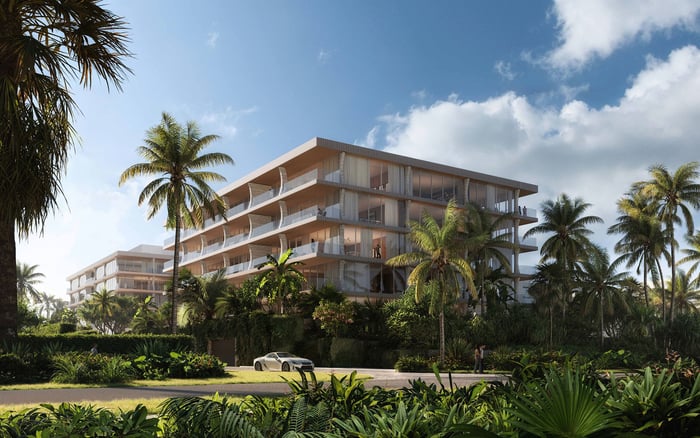
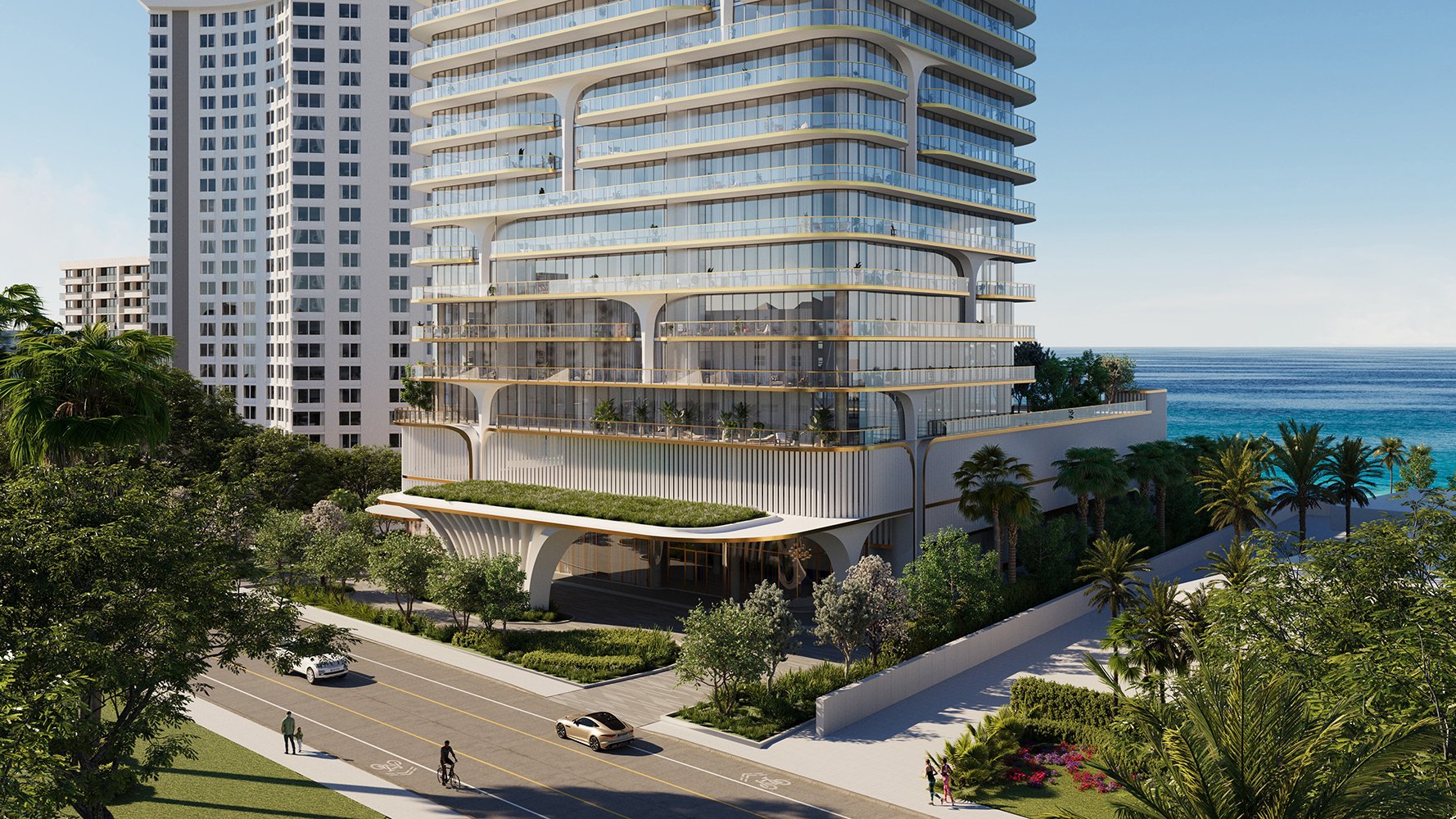
At 400 Hibiscus Street in Downtown West Palm Beach, Banyan Tree’s planned private porte cochère and 24/7 concierge establish the intended residential arrival. Its approximately 6,400 square feet of ground-floor retail introduce a separate, public-facing use that warrants close review of the plans.
Retail does not establish that customers will enter the owners’ lobby or use residential elevators. Ask where retail entrances sit relative to the porte cochère, whether parking routes intersect and how access-controlled doors separate the uses. Review retail deliveries and servicing as carefully as customer entry.
A private arrival is not the same as a fully separated circulation system. A porte cochère identifies an arrival space; it does not, on its own, resolve access beyond it. Ask the sales team to trace the route from vehicle drop-off to the specific residence under consideration.
Banyan Tree’s direct elevator entry is specified for most residences, not all. Confirm the selected unit’s configuration rather than extrapolating from a general description. Apply the same review to Mr. C Residences West Palm Beach, without assuming that different projects share entrance arrangements or operating rules.
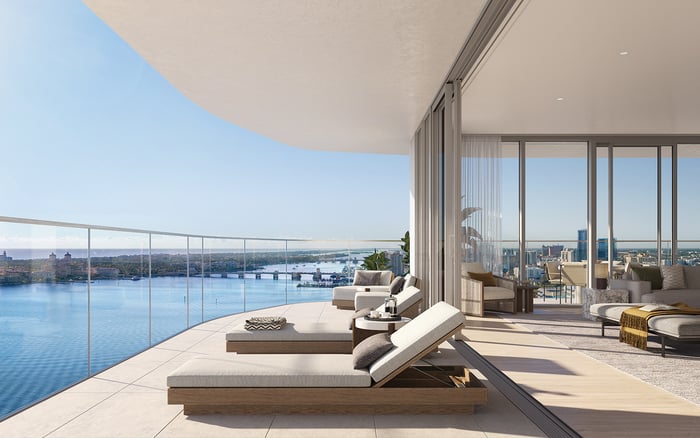
Banyan Tree’s planned wellbeing floor, anchored by a full-service spa and an expansive reflection and meditation garden, is central to its residential offering. Planned facilities include a hammam, steam room, sauna, soaking baths, cold plunge, cryotherapy and an indoor/outdoor fitness pavilion. Social spaces include a pool with cabanas, a garden bar and lounge, and an open-air cinema.
The breadth of that program does not establish public access. Outside spa memberships, day passes and public events should not be assumed. Nor should amenity descriptions alone be treated as a complete statement of owner exclusivity.
Request written clarification of who may book treatments, whether invited guests must be accompanied and how any permitted nonresident visitors would reach the spa. If event use is contemplated, ask about capacity, access hours and separation from residential areas. These are questions to confirm, not assertions about the proposed operation.
Sanctuary Club benefits across Banyan Group’s wider hotel, resort and spa network are a separate consideration. Access to a global hospitality network does not establish accommodation inventory or visiting hotel guests within the West Palm Beach building.
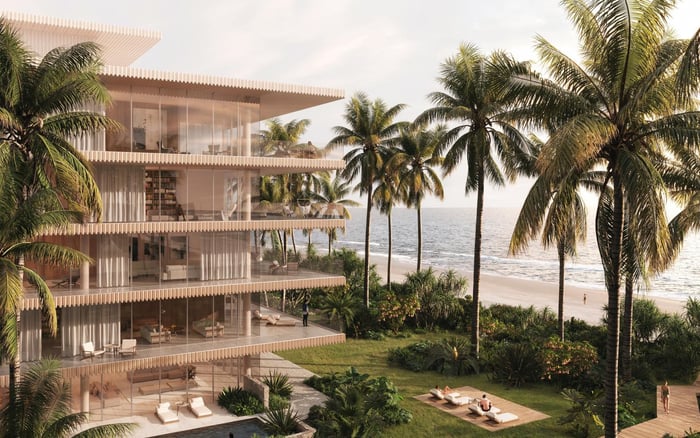
Planned at 1350 South Ocean Boulevard, Waldorf Astoria Residences Pompano Beach comprises 92 private oceanfront residences. Its standalone residential designation provides an important starting point: hotel-brand service without an attached operating hotel.
The proposed program includes approximately 35,000 square feet of indoor and outdoor amenities described as private to residents, together with 24/7 concierge service. The building is also described as having no restaurant or bar open to the public. Those distinctions narrow the types of outside traffic to investigate, but they do not eliminate invited guests, staff, vendors or deliveries.
Each residence is planned with private elevator access and a private entry foyer. Confirm how that arrangement is implemented for the selected home, including floor permissions, visitor authorization and service access. Private elevator access does not necessarily mean an elevator serves only one residence.
For buyers also considering The Ritz-Carlton Residences® Pompano Beach, carry the same questions into a separate document review. Do not assume Waldorf Astoria’s stated hotel, dining or amenity arrangements apply to another branded address.
Request circulation plans that distinguish owners, invited guests, staff, vendors, deliveries and retail customers where applicable. Follow each route through parking, arrival areas, elevators and amenities. The objective is to identify where routes intersect and which controls govern those intersections-not simply to count entrances.
For owners, examine the full journey from parking or drop-off to the residence. For invited guests, establish where registration occurs, how authorization is granted and whether elevator access is limited to the intended destination.
For staff and vendors, ask whether service circulation is separate, where access is checked and how entry to a residence is approved. For deliveries, clarify the intended receiving location and whether couriers remain outside residential circulation. At Banyan Tree, assess the retail-customer route independently rather than presuming it overlaps with owners’ spaces.
Finally, test the proposed arrangements against ordinary household routines: arriving with luggage, receiving a grocery delivery or welcoming several dinner guests. These scenarios make an abstract access plan more tangible than a broad assurance of discretion.
Before committing, request current condominium documents, applicable rules, unit-specific plans and written clarification of unresolved access policies. Have counsel review the provisions that matter to your intended use, particularly amenity eligibility, guest privileges and leasing restrictions.
Neither hotel branding nor standalone residential status establishes minimum lease terms or prohibits short-term rentals. Rental rules deserve a separate review; they cannot be inferred from the absence of hotel rooms. Ask how permitted occupants and their guests would receive access credentials.
Treat both projects’ amenity programs and operating arrangements as proposed and subject to confirmation. The available distinctions do not establish that one address will be quieter, more private in every circumstance or stronger on resale. A sound decision rests on documented permissions and a circulation plan that suits the household-not an absolute promise of privacy.
For a discreet conversation about comparing South Florida residences, connect with MILLION.
If branded residences are on your mind — as a home or as an allocation — we would be glad to share what we are seeing, privately.
Begin a quiet conversationIt is presented as a luxury residential development with hotel-caliber wellness amenities and services, rather than a conventional hotel tower.
The planned development is standalone residential, with no attached hotel or hotel guest inventory.
Approximately 6,400 square feet of planned retail introduce a public-facing use. Buyers should verify entrance separation without assuming retail customers can enter residential spaces.
Direct elevator entry is specified for most residences, not all. Confirm the arrangement for the particular unit being considered.
Public spa access, outside memberships and day passes are not established. Buyers should obtain written clarification of eligibility and visitor routes.
Each residence is marketed with private elevator access and a private entry foyer. Buyers should confirm elevator configuration, floor permissions and guest authorization.
The building is described as having no restaurant or bar open to the public. Confirm the current proposed arrangements in the relevant documents.
No rental restriction can be inferred from that designation alone. Minimum lease terms and permitted rental activity require an independent document review.
No. Benefits across Banyan Group’s wider hospitality network are distinct from any on-site accommodation arrangements.
Trace owner, invited-guest, staff, vendor and delivery routes, plus retail-customer routes where applicable. Review their intersections and access controls through parking, arrivals, elevators and amenities.