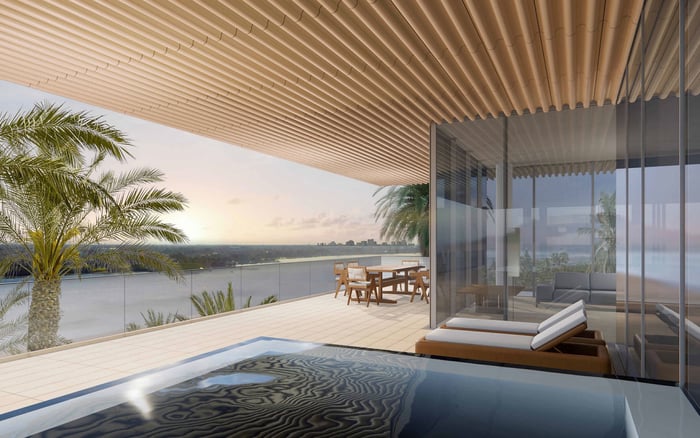
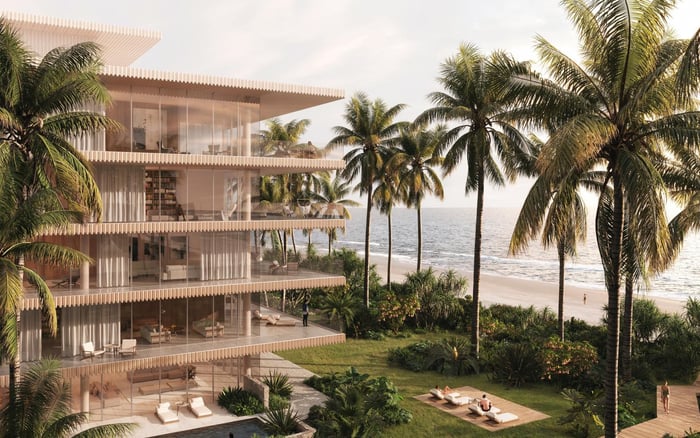
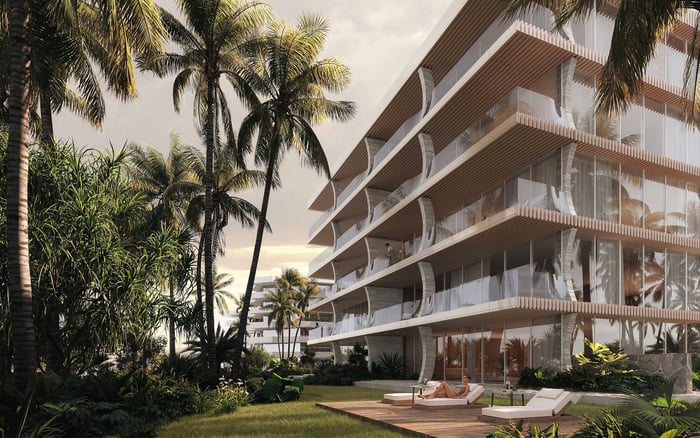
A Palm Beach view premium should be tested against every parcel in the sightline, its controlling jurisdiction, lawful building envelope, coastal constraints, and any recorded protections before closing.
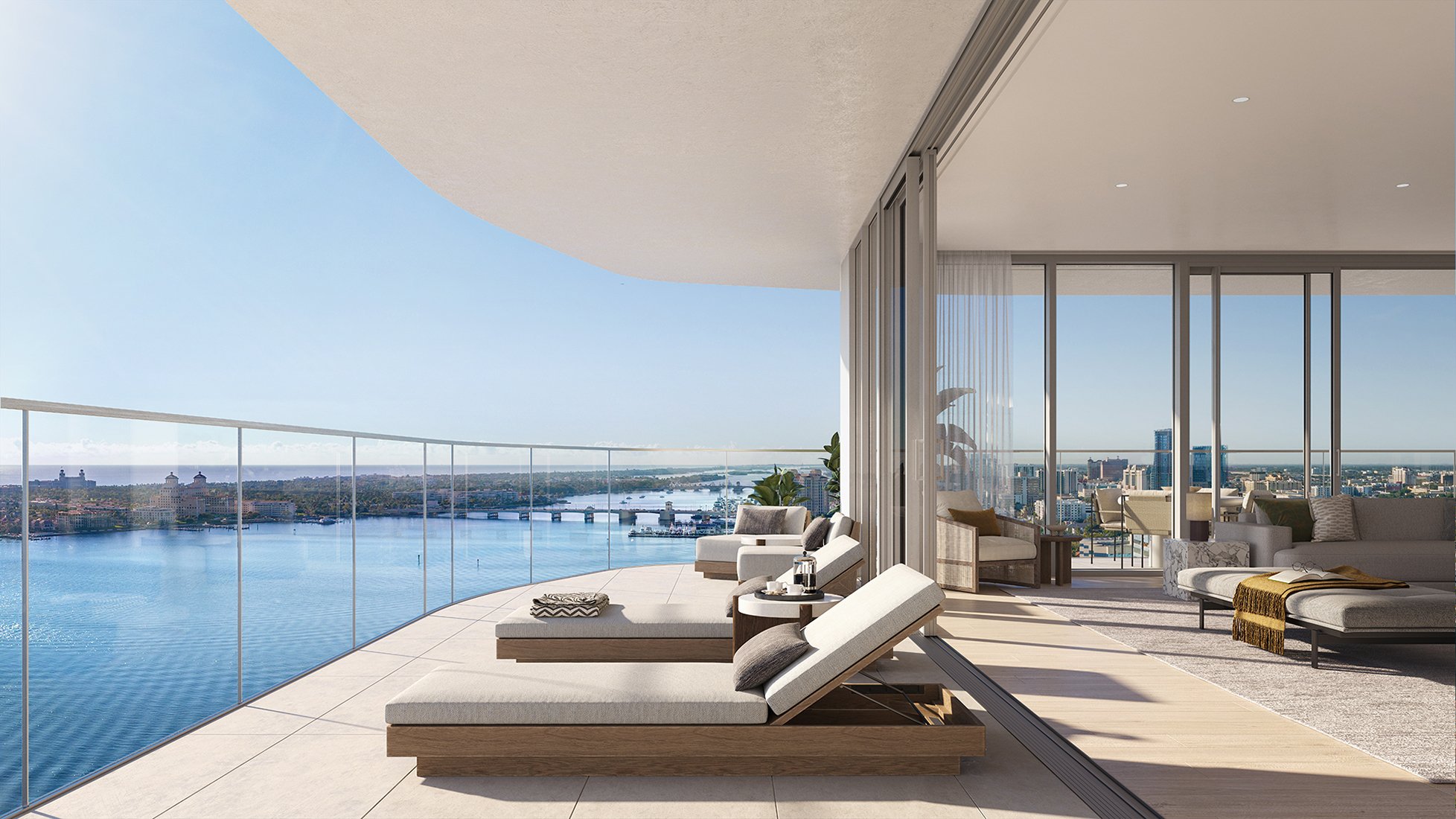
In a full-service Palm Beach tower, the panorama may account for a meaningful share of a residence's appeal and price. Yet an uninterrupted ocean, Intracoastal, skyline, or garden outlook at contract signing is not necessarily the same as a legally protected view. Buyers should ask qualified counsel whether a recorded easement, covenant, or comparable restriction preserves the sightline rather than relying on current conditions or assumptions about neighboring land.
That distinction matters whether a buyer is considering Palm Beach Residences or evaluating a waterview residence across the water. The due-diligence question is not merely, “What can I see today?” It is, “What could lawfully occupy every parcel within this residence's direct and diagonal view cone?”
The durable view premium is the one tested against lawful future envelopes.
This Buyer's Guide analysis is not a substitute for legal, architectural, surveying, or tax advice. It is a framework for directing those professionals toward risks that can affect enjoyment, privacy, natural light, and eventual resale.
Begin with parcel identifiers, ownership, and jurisdiction for every lot intersecting views from the principal rooms, terraces, amenity spaces, and likely furniture positions. Directly adjacent land is only the beginning. A diagonal parcel can interrupt a long water corridor, while a site across a road or canal can alter a skyline composition that appears open today.
The buyer's team should verify parcel boundaries, regulatory overlays, and governing authorities. Land that appears to form part of a single corridor may be controlled by different South Florida jurisdictions, each with its own rules for height, setbacks, density, buffers, and uses.
Classify each relevant parcel by its current condition, such as vacant land, surface parking, older low-rise construction, or a building that may use less than its permitted envelope. These sites merit heightened attention. The existing structure is not necessarily the risk ceiling; the lawful future envelope is the more useful test.
Investigate pending demolition permits, lot combinations, rezonings, variances, special exceptions, and site-plan applications. For neighboring condominium or cooperative buildings, available records concerning major building obligations may also help the buyer's advisers evaluate possible future scenarios without assuming that redevelopment will occur.
A zoning label is not enough. For each parcel, ask the appropriate professionals to confirm applicable height limits, story limits, floor-area restrictions, density, lot coverage, setbacks, and allowable uses. The team should also identify how the controlling jurisdiction measures height and which rules govern the parcel.
Required elevations and other regulatory datums can affect the apparent height of a future building. Ask whether parking podiums, mechanical levels, rooftop structures, elevated foundations, or architectural features may project above the principal occupied floors.
A land-use attorney and architect can translate the applicable rules into a straightforward maximum-envelope massing study. It should be overlaid on photographs or measured sightlines from the residence itself, not solely on staged imagery. Buyers comparing established full-service buildings with newer options along South Flagler should apply the same parcel-by-parcel standard rather than assume that water frontage preserves openness.
Oceanfront development may involve additional layers of review. The buyer's team should identify the coastal, flood, dune, setback, and permitting constraints that apply to each relevant parcel and determine how they affect a realistic building envelope.
The practical conclusion should not be that a neighboring parcel is undevelopable merely because coastal controls apply. Buyers should establish where relevant regulatory lines and natural features cross the parcel, then investigate existing permits, prior approvals, variances, and other property-specific conditions with qualified professionals.
Generalized mapping or setback descriptions may be incomplete for a particular site. Even work that does not threaten an upper-floor panorama can matter to lower floors: landscaping, walls, fences, and buffers may alter garden-level or amenity-deck sightlines.
Ask the seller and association to identify the document supporting any claim of a protected view. A recorded view easement or restrictive covenant is materially different from confidence based on today's neighboring buildings. Deeds may contain restrictions that constrain future development, but counsel should review those documents for scope, duration, enforceability, and beneficiaries.
The purchase agreement, offering materials, and association disclosures deserve equal scrutiny. Determine whether they address future views, neighboring construction, vibration, dust, noise, or obstruction. A verbal assurance should not carry the same weight as a recorded and enforceable property right.
This discipline applies across the Palm Beach luxury corridor. Prospective owners considering South Flagler House West Palm Beach or Mandarin Oriental Residences, West Palm Beach should identify the controlling rules for every parcel, even when the broader setting feels visually cohesive. Only parcel-specific review can establish which constraints apply.
A prudent valuation should consider more than an all-or-nothing obstruction. Model several plausible lawful outcomes: preservation of the existing view, partial interruption at one edge, loss of a diagonal water corridor, added rooftop equipment, or a taller visual profile. Then assess the effect from the living room, primary suite, terrace seating, and both standing and seated eye levels.
The buyer can separate the residence's value into components such as service, building quality, floor plan, privacy, location, and view. The central question is what portion of the premium remains defensible once plausible neighboring envelopes are introduced. A resilient purchase should still feel compelling if one element of the panorama changes.
Before closing, request written work product from the relevant specialists: a parcel map, zoning summary, coastal-constraint review, title and covenant analysis, pending-application search, and massing illustration. Reconfirm material findings before the applicable contingency period expires because applications and ownership positions can change.
For discreet guidance on Palm Beach and South Florida residences, connect with MILLION.
If branded residences are on your mind — as a home or as an allocation — we would be glad to share what we are seeing, privately.
Begin a quiet conversationNot necessarily. Qualified counsel should confirm whether an enforceable recorded easement, covenant, or similar restriction protects the sightline.
Review every parcel within the residence's direct and diagonal view cone, including sites across roads, canals, or other open spaces.
Their current condition may not represent their lawful development potential. Buyers should evaluate a plausible future envelope rather than only the structure visible at closing.
Ask qualified professionals to confirm applicable height and story limits, density, floor-area restrictions, setbacks, lot coverage, permitted uses, and height-measurement rules.
It may. Podiums, required elevations, mechanical areas, rooftop structures, and architectural features should be included in the massing review when applicable.
No. Coastal constraints should be evaluated alongside parcel-specific permits, approvals, variances, and development rules.
Request the recorded document supporting the claim and have counsel review its scope, duration, enforceability, and beneficiaries.
They may address future views, neighboring construction, noise, dust, vibration, or obstruction. Buyers should understand those provisions before closing.
Model plausible lawful neighboring envelopes and assess partial-obstruction scenarios from important rooms, terraces, and seated eye levels.
A local land-use attorney, architect, surveyor, title professional, and coastal specialist can address complementary parts of the review.