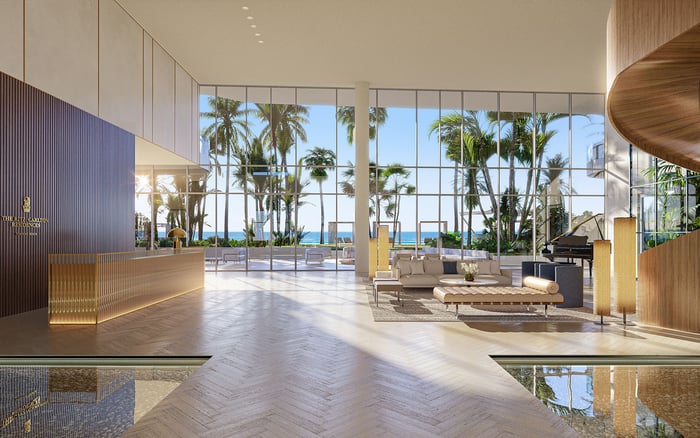
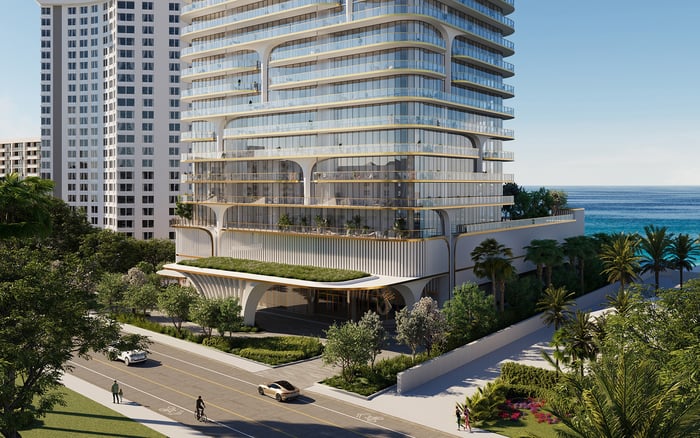
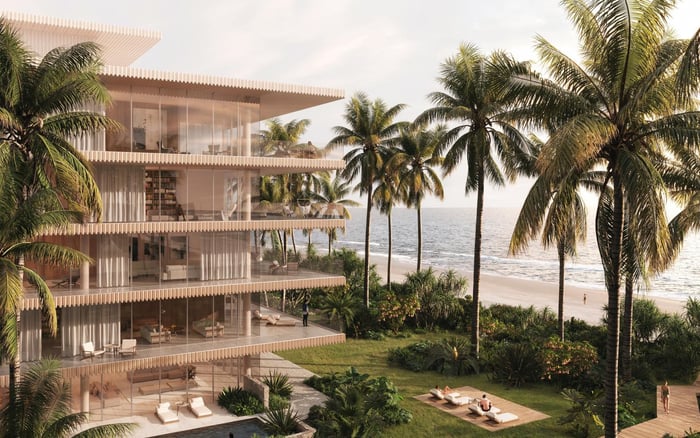
Mandarin Oriental’s planned West Palm Beach offering describes absent-owner support more explicitly, but neither project has a verified storm-response advantage. For buyers, the meaningful comparison lies in written inspection protocols, access permissions, and emergency repair authority.
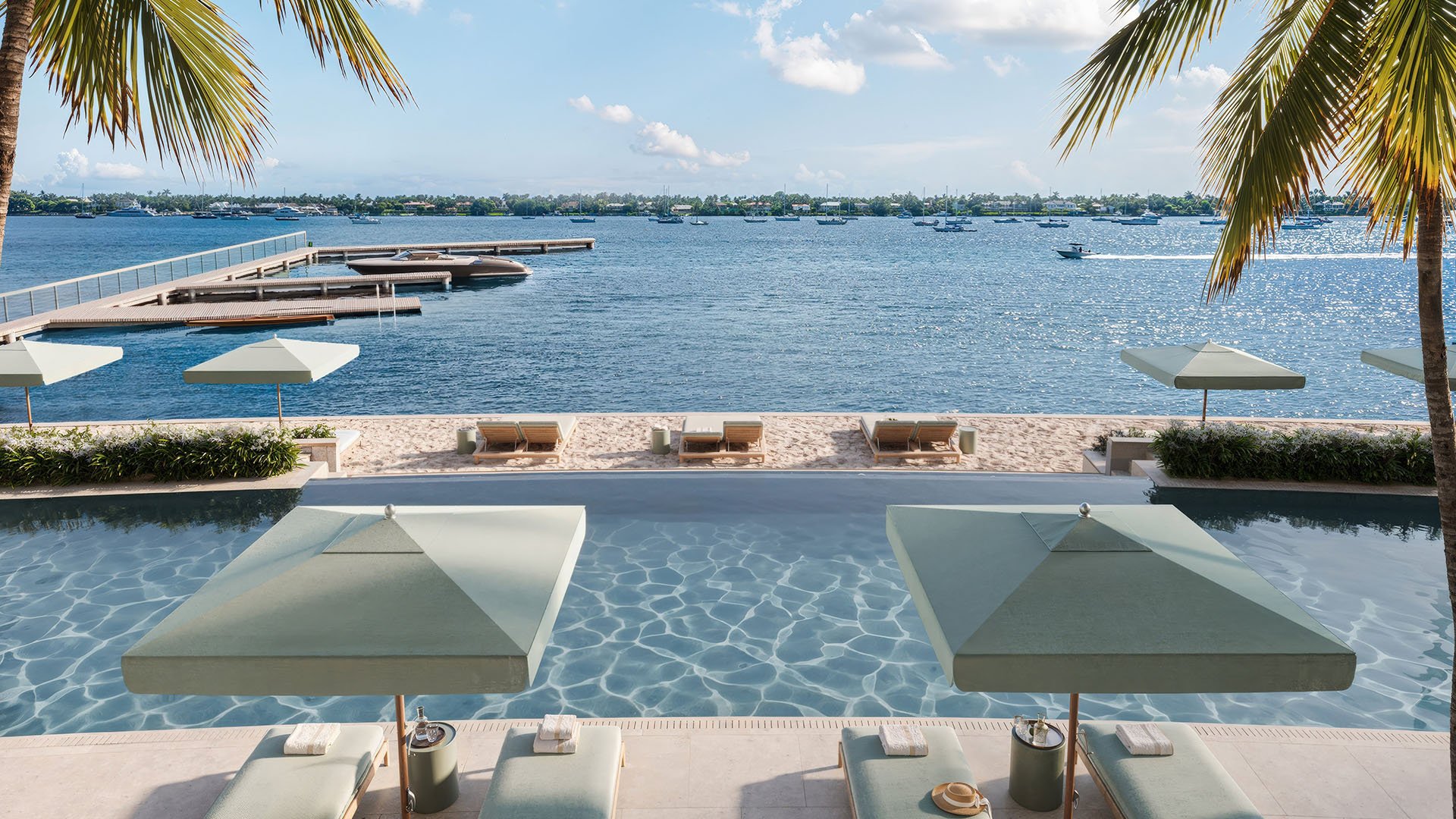
For a seasonal owner, residential luxury includes the confidence to leave. After a storm, that confidence depends less on the concierge greeting than on a precise sequence: who enters the residence, what they inspect, how they communicate, and who can authorize immediate work when the owner is unavailable.
Mandarin Oriental Residences, West Palm Beach and Waldorf Astoria Residences Pompano Beach invite comparison, but not a declaration of operational superiority. Mandarin Oriental’s planned services describe absent-owner care more explicitly. Neither project has a verified record establishing faster post-storm inspections, contractor arrivals, or repairs. A documentation advantage is not a performance advantage.
The buyer’s task is to translate hospitality language into written responsibilities. That means distinguishing everyday assistance from emergency authority-and a commitment to respond from a commitment to complete an inspection within a defined period.
Planned for 5400 N. Flagler Drive along the Intracoastal Waterway, Mandarin Oriental Residences, West Palm Beach expressly includes rapid response, repair-request handling, and artisan recommendations in its planned property-management offering. Pre-arrival services and “away from home” maintenance make the proposition particularly relevant to owners who travel frequently or occupy their residences seasonally.
These are useful starting points: functions that matter when an owner cannot assess a residence in person. They do not, however, establish a guaranteed post-hurricane inspection deadline, a fixed vendor-arrival time, or management’s authority to approve emergency spending inside an individual unit.
The planned offering also includes 24/7 concierge, valet, and security. Continuous staffing should not be read as an unconditional storm-response deadline. Buyers should clarify who receives an incident report, who coordinates access, and who has authority to commission work.
Mandarin Oriental remains an upcoming residence. Its service proposition is therefore a planned offering, not evidence of completed resident storm recovery. That distinction warrants particular attention before contractual commitments.
At 1350 South Ocean Boulevard, Waldorf Astoria Residences Pompano Beach is positioned as a boutique-style oceanfront property. Its January 2026 top-off is a construction milestone, not evidence that resident operations or emergency procedures have been tested.
A publicly defined post-storm inspection sequence-with assigned responsibility, start times, and absent-owner notification procedures-has not been established. Nor has a storm-specific vendor-mobilization standard covering approved contractors, backup providers, response targets, or emergency work-order authority.
That disclosure gap should prompt questions, not a conclusion that the services are unavailable. Detailed protocols may exist in private management documents. Buyers should request them and distinguish proposed procedures from adopted responsibilities.
The same questions belong in any comparison involving The Ritz-Carlton Residences® Pompano Beach. A recognizable hospitality name is no substitute for project-specific access rules and written response terms. Equivalent storm capabilities should not be assumed across brands or buildings.
Start with a written storm plan that separates pre-storm preparation from post-storm inspection. Ask whether lock-up is available, what it covers, who requests it, and when requests must be authorized. Establish whether an absent owner must enroll in a separate service or provide standing instructions.
For the inspection itself, seek clarity on four points:
Activation: Is inspection automatic after a defined event, or must the owner request it?
Access: Who may enter, under what authorization, and subject to which safety restrictions?
Scope: Does the visit include moisture checks and a defined water-intrusion escalation procedure?
Communication: When should the owner receive photographs, findings, and the next action?
Ask management to distinguish an acknowledgment target from an inspection target. Confirmation that a request was received does not establish that someone has entered the residence. Likewise, a visual check should not be assumed to include moisture testing unless that scope is expressly agreed.
The plan should explain how inspection timing is handled when roads, elevators, utilities, or communications are disrupted. A useful commitment defines both its intended timing and the conditions that may prevent access.
Away-from-home maintenance is a valuable promise, but its boundaries matter. At Mandarin Oriental, buyers should establish whether the planned service is included in regular fees, separately billed, confined to routine maintenance, or dependent on owner preauthorization. At Waldorf Astoria, request the same written definition of any available absent-owner arrangement.
The essential question is what happens when management identifies a problem and cannot reach the owner. Ask whether a designated representative can approve work, whether standing authorization is available, and how any spending limit is documented. Separate authorization for temporary protective work from approval for permanent repairs; do not assume one covers both.
This discipline also applies when considering Forté on Flagler West Palm Beach. Use the same written questionnaire across a shortlist so that differences in service descriptions do not obscure differences in responsibility.
An artisan recommendation identifies someone to call. Repair-request handling suggests coordination. Neither phrase, by itself, guarantees that a contractor has accepted an assignment or reserved capacity following a storm.
Ask whether the operating plan names approved contractors and backup providers, and whether response targets are contractual or aspirational. Clarify who issues the work order, who controls unit access, who approves the scope, and who pays the invoice. For an absent owner, these details determine how much intervention remains necessary from afar.
Request the escalation procedure if the first provider is unavailable. Written terms should also distinguish responsibility for common-area work from work inside a residence. No verified basis supports a comparison between the two projects on vendor speed, emergency repair costs, or recovery outcomes.
Mandarin Oriental’s planned housekeeping, in-residence dining, personal training, private marina access, and wellness amenities frame an appealing daily experience. Waldorf Astoria’s boutique oceanfront positioning offers a different residential setting. Neither lifestyle proposition answers the operational questions on its own.
For now, Mandarin Oriental offers more explicit language on planned absent-owner support. Waldorf Astoria requires further clarification of those functions. The defensible preference is for the residence whose written terms best match the owner’s travel patterns, access permissions, communication expectations, and tolerance for delegated spending-not an unsupported ranking of storm performance.
For a discreet evaluation of South Florida residences and the service commitments that matter to your ownership, connect with MILLION.
If branded residences are on your mind — as a home or as an allocation — we would be glad to share what we are seeing, privately.
Begin a quiet conversationMandarin Oriental’s planned offering expressly includes pre-arrival services and away-from-home maintenance. This is a documentation advantage, not proof of superior storm response.
Its planned service description does not specify a guaranteed post-hurricane inspection deadline. Buyers should request written timing and access conditions.
No. Mandarin Oriental’s listed 24/7 concierge, valet, and security do not establish a contractor-arrival time or repair deadline.
It establishes a construction milestone. It does not demonstrate completed resident operations or tested storm-response procedures.
The absence of a publicly defined inspection sequence or vendor-mobilization standard does not establish that no storm plan exists. Private management documents may contain protocols, so buyers should request them.
Mandarin Oriental is planned for 5400 N. Flagler Drive in West Palm Beach along the Intracoastal Waterway. Waldorf Astoria’s residential address is 1350 South Ocean Boulevard in Pompano Beach.
Confirm whether inspections are automatic or request-only, who can enter, and what the inspection covers. Request notification targets, photographs, and a water-intrusion escalation procedure.
Its fee treatment and full scope are not established here. Buyers should confirm separate charges, routine-work limitations, and preauthorization requirements.
Ask about approved and backup vendors, response targets, work-order authority, and unit-access arrangements. Confirm spending limits and billing responsibility before authorizing work.
No verified inspection times, vendor-response statistics, or recovery outcomes establish a speed advantage for either project. Compare written commitments rather than assuming performance from the brand.