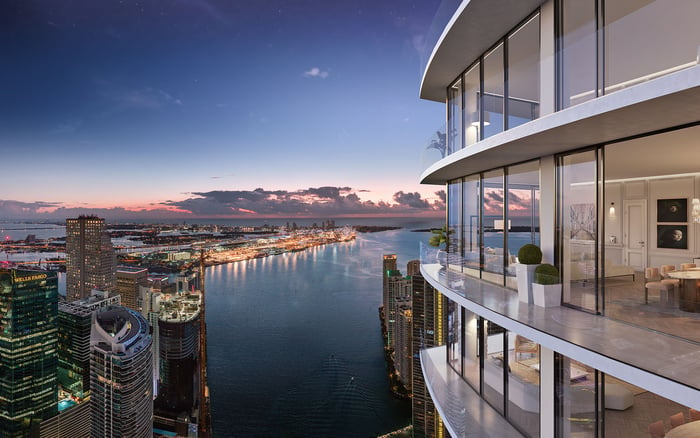
For buyers comparing Baccarat Residences Brickell and The Ritz-Carlton Residences® Miami Beach, privacy deserves a review beyond the brand promise. Entrances, elevator permissions, parking, common areas and waterside access are the details to establish before choosing a residence.
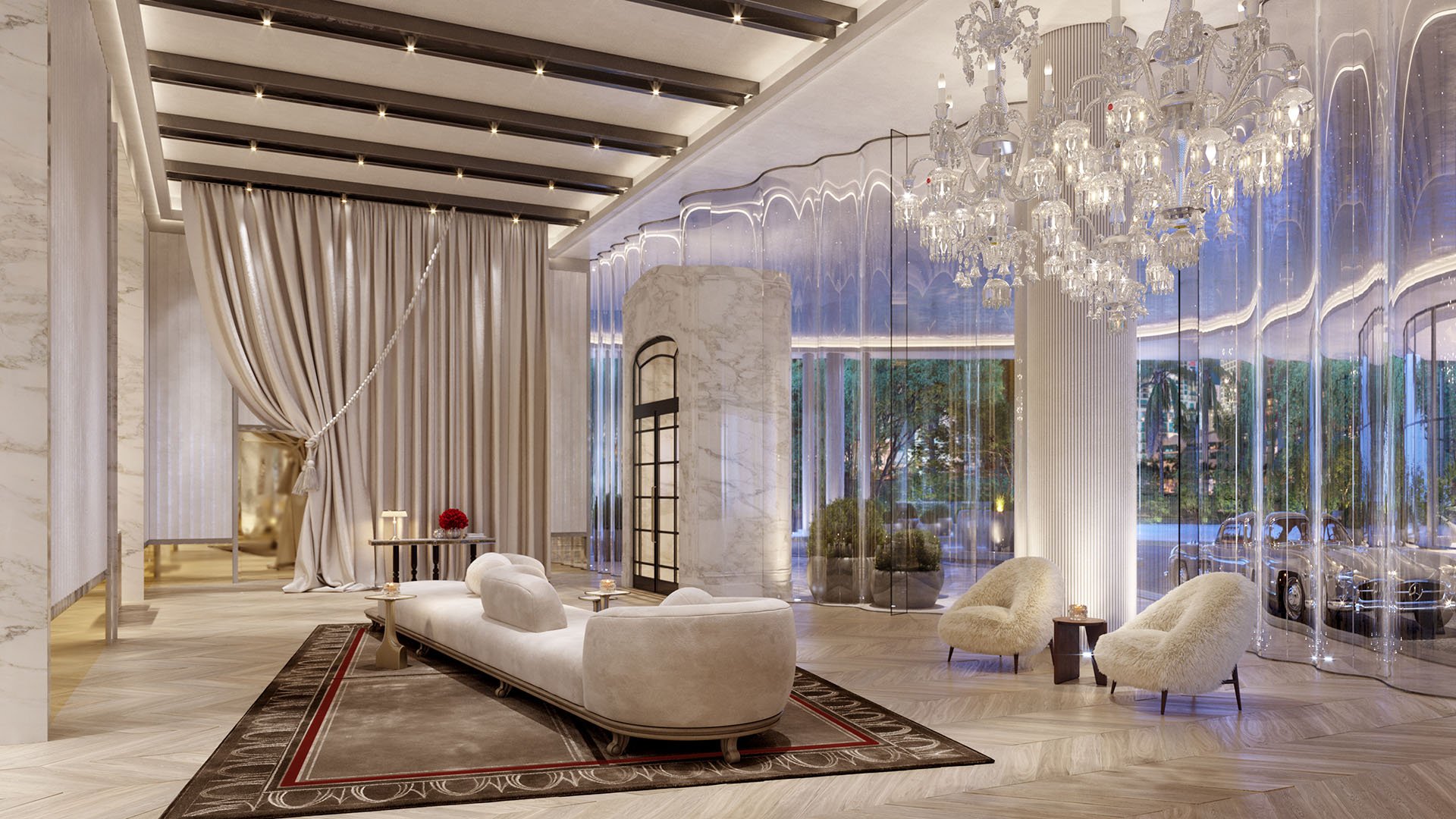
The appeal of a hospitality-led residence is clear: attentive service, considered surroundings and the sense that everyday needs have been anticipated. For a buyer who values discretion, however, the decisive question is less visible. Who can move through the property, by which route, and with whose permission?
For those considering Baccarat Residences Brickell and The Ritz-Carlton Residences® Miami Beach, hospitality language should not be confused with hotel occupancy. That language does not establish that hotel guests share either building’s residential circulation. Nor does a promise of privacy, on its own, establish the controls that protect an owner’s daily routine.
The useful comparison is not which name sounds more exclusive, but how clearly each property can document the boundary between residential life and everyone else’s access. Privacy is as much an operational arrangement as an architectural one.
Baccarat pairs a luxury-destination experience with the privacy of an exclusive condominium. That is an appealing statement of intent, but it should be tested against the layout and applicable rules, not treated as an access guarantee.
The wider development includes a component identified as Tower 3, the hotel and residences, on Brickell Avenue. Buyers should therefore avoid assuming that the entire development has no hotel component. Equally, that designation does not establish shared circulation with the residence under consideration.
Begin by requesting a current site plan identifying the relevant residential tower and any hotel use. Ask whether entrances, arrival courts, valet operations, garages, amenities or service routes are shared. Where a connection exists, establish what separates the uses and who is authorized to cross that boundary.
This is a scope question before it is a security question. A buyer needs to understand precisely what belongs to the condominium, what belongs to another component and where access rights overlap, if at all. Branding alone answers none of those questions.
Baccarat’s planned entrance lobby features grand, high ceilings and leads directly to the residential elevator banks. The specified arrangement is three banks of double private elevators to each residence. These are meaningful design details, but neither explains visitor credentialing, floor permissions or service-elevator policies.
During a plan review or walkthrough, trace separate journeys for an owner, an invited guest and a delivery. Where is a visitor registered? Must the owner approve access each time? Is permission limited to the destination floor? What happens when a visitor arrives before the owner responds?
Then examine the household’s service requirements. Ask how domestic staff, contractors and recurring providers receive access, whether permissions expire and which routes are designated for their use. The objective is not to make service cumbersome, but to prevent convenience from becoming an undefined exception to residential privacy.
If Cipriani Residences Brickell is also on the shortlist, ask the same questions there. A consistent review is more useful than a comparison of private-elevator terminology.
Baccarat’s stated amenities include permanent museum-quality art installations throughout its public spaces and high-speed internet in all public areas. Neither phrase should be read as permission for unrestricted general-public entry. In condominium language, public areas can mean common spaces rather than spaces open to everyone.
The practical task is to establish who may use each space. Request a marked plan distinguishing owner areas, resident-guest areas and any spaces accessible to other authorized users. Ask whether those categories change for private events or other permitted activities.
For buyers concerned about visibility, photography and filming rules deserve attention alongside the architecture. Ask whether commercial filming is permitted, who approves it and what protections apply to residents passing through common areas. An art-filled lobby may be visually memorable; the relevant privacy question is who may enter and what they may do there.
Baccarat’s stated parking offerings include 24-hour complimentary valet service and optional self-parking in assigned spaces within a covered, secured garage. These describe arrival choices, not a complete system of access separation.
Ask where an owner’s vehicle is received, where visitors wait and how garage users reach the residential elevators. Confirm whether any wider-development users share a driveway, queue or parking route. If self-parking is preferred, establish how access is credentialed and whether visitors can enter the same parking zone.
For a household returning with children, luggage or purchases, privacy matters throughout the arrival sequence-not only after reaching the lobby. Request clarity on vehicle retrieval and visitor pickup as well. Departure deserves the same scrutiny as arrival.
The service promise at The Ritz-Carlton Residences® Miami Beach pairs hotel-level service with peace and privacy. That comparison describes a service experience. It does not establish hotel occupancy or shared hotel-guest access within the residential property.
Ask management to define the authorized users of the lobby, amenities and service routes in writing. Review visitor registration, amenity guest allowances and delivery procedures individually, rather than accepting a general assurance of discretion.
Buyers also considering The Perigon Miami Beach can use this framework without assuming that the properties have equivalent operating models. Apply consistent questions, then let the documented answers distinguish the residences.
The on-site private marina at The Ritz-Carlton Residences® Miami Beach adds a waterside arrival route to consider. The specified maximum boat length is 40 feet, a limit buyers should verify before relying on it. Surprise Lake bridge restrictions also warrant review when assessing practical access by water.
For privacy purposes, ask who may enter the marina, how boating guests are registered and whether waterside arrivals pass through a controlled residential threshold. Confirm the permissions applicable to captains, crew and marine-service providers. The word private should not be assumed to resolve every category of access.
Before committing, request current plans, applicable governing documents and written operating policies. Distinguish existing procedures from proposed arrangements, and seek clarification wherever a verbal assurance is broader than the documentation. The strongest privacy proposition is not the most emphatic promise. It is a clearly defined system that fits the way an owner intends to live.
For a discreet perspective on selecting a South Florida residence, explore MILLION.
If branded residences are on your mind — as a home or as an allocation — we would be glad to share what we are seeing, privately.
Begin a quiet conversationNo. A hospitality service promise does not establish hotel occupancy or shared circulation; buyers should confirm authorized users and access routes separately.
No. Tower 3 is identified as containing hotel and residential uses, so buyers should confirm the current scope and any connections to their residential tower.
The specified arrangement is three banks of double private elevators to each residence. That wording does not establish guest credentials, floor permissions or service-elevator policies.
The wording does not establish unrestricted entry. Public areas can mean condominium common spaces, whose permitted users should be confirmed in the applicable rules.
Baccarat’s stated offerings include 24-hour complimentary valet and optional self-parking in assigned spaces within a covered, secured garage. Buyers should separately confirm access controls and any shared arrival routes.
Hospitality branding does not establish shared hotel-guest circulation. Buyers should request current plans and written access policies rather than infer occupancy from the service promise.
The on-site private marina introduces a waterside arrival route. Buyers should establish how boating guests, captains, crew and service providers are authorized to reach residential areas.
The specified maximum boat length is 40 feet, which should be verified before reliance. Surprise Lake bridge restrictions also need review for the intended vessel.
Request written rules covering visitor registration, floor permissions, deliveries, service routes and amenity guests. Photography, filming and marina access should also be addressed where relevant.
Trace owner, guest and service-provider journeys against current plans and written policies. Compare the documented access boundaries rather than relying on branding or general promises of discretion.