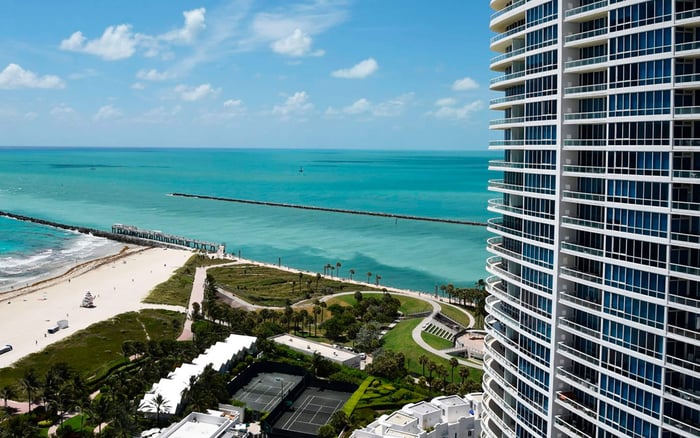
In South of Fifth, waterfront prestige and practical boating access are separate considerations. Buyers should verify the legal basis of any slip, its transfer conditions, vessel restrictions, operating costs, and the clearances governing intended routes before assigning value to a residence’s boating proposition.
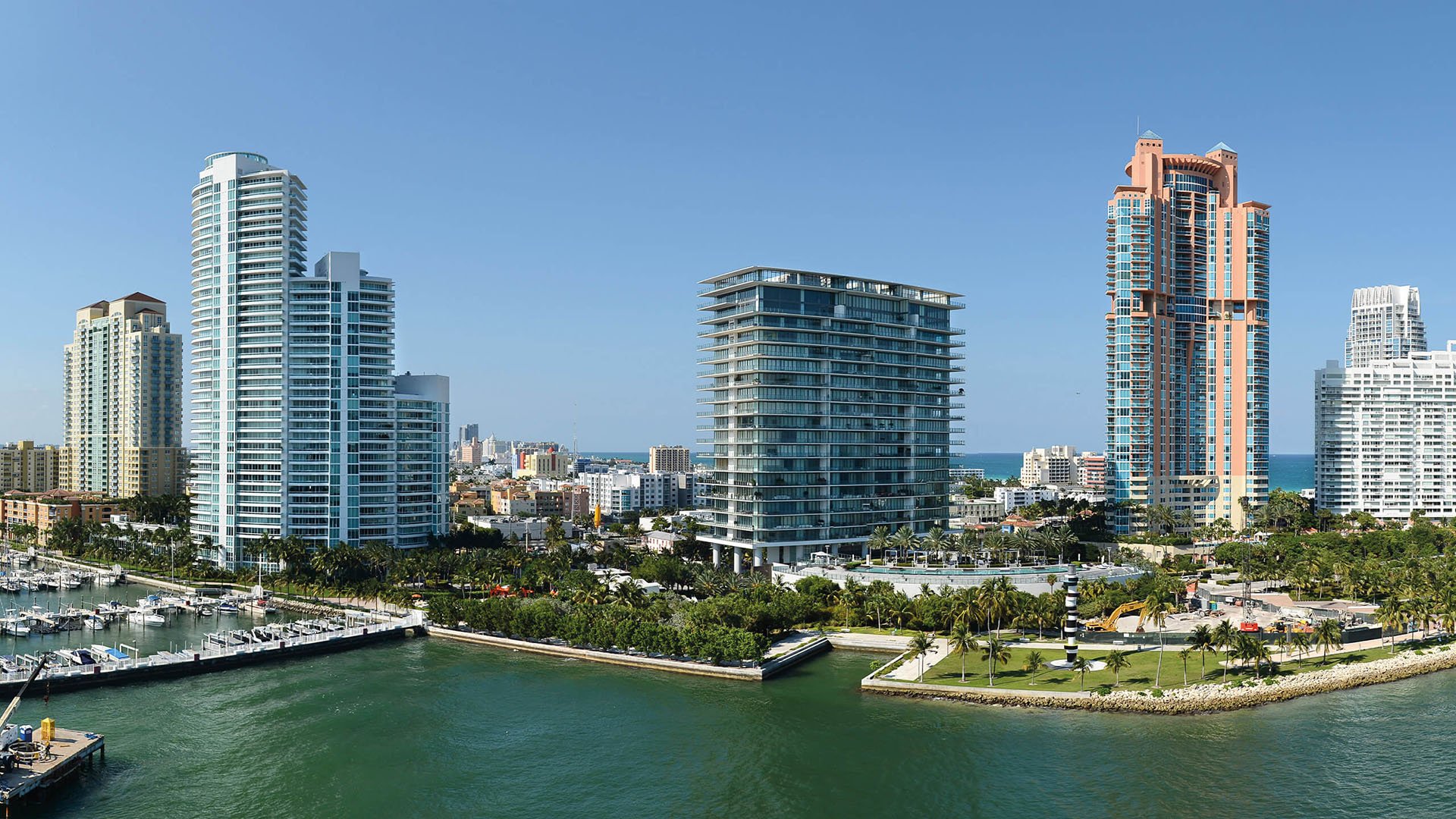
South of Fifth offers a rare convergence of ocean, bay, marina, beach, and city life. Yet for a buyer who owns, charters, or expects to acquire a vessel, location alone does not establish a usable boating right. Waterfront prestige, proximity to a marina, advertised boat docking, and an assignable slip are legally and operationally distinct propositions.
That distinction is essential when comparing Apogee South Beach with Continuum on South Beach. Continuum, at 100 South Pointe Drive, is presented as luxury oceanfront living at Miami Beach’s southernmost point-not as an integrated marina condominium. Apogee’s boating appeal is often associated with the nearby 400-slip Miami Beach Marina rather than a marina identified as part of the condominium itself.
For MILLION’s Buyer's Guides audience, the central question is not whether the water appears close. It is whether a specific residence conveys a documented, transferable, vessel-compatible right suited to the owner’s intended use.
Terms such as “boat docking” and “marina access” may describe anything from proximity or an amenity to a separate agreement. They should never substitute for the underlying documents. Counsel should determine whether the claimed slip is deeded, separately titled, leased, licensed, or held through another contractual arrangement.
The review should identify the parties to the agreement, its term, renewal provisions, termination rights, fees, insurance requirements, and permitted vessel dimensions. It should also establish whether the condominium association, marina operator, or another body retains approval rights. A waiting list, occupancy condition, usage rule, or vessel qualification can materially diminish the convenience implied by a sales description.
A slip that works for the seller may not automatically follow the residence. Buyers should obtain written confirmation of whether the interest transfers with the unit, can be assigned separately, or requires a new application and approval. If the right is leased or licensed, the agreement should be reviewed for expiration, revocation, renewal, and change-of-control provisions.
The purchase contract can make satisfactory review of the slip documentation a closing condition. It can also require evidence of current fees, assessments, insurance obligations, vessel-size limits, and any availability queue. If a separately titled interest is involved, the closing team should confirm that the correct interest, approvals, and transfer instruments are included.
This discipline is especially important when buyers are also considering nearby lifestyle-oriented residences such as Five Park Miami Beach or The Ritz-Carlton Residences® South Beach. Each residence-marina relationship must be assessed through its own documents, never inferred from the neighborhood or another property’s structure.
Physical fit at the dock is only the first test. The intended route must accommodate the vessel’s actual air draft, beam, draft, and operating profile. Air draft should account for antennas and other equipment under real operating conditions, not mast height alone.
The MacArthur Causeway Bridges are fixed spans at Atlantic Intracoastal Waterway mile marker 1088.8, with a published vertical clearance of 65 feet and horizontal clearance of 90 feet. Because the spans are fixed, a vessel exceeding the available clearance cannot request an opening; it requires a compatible route.
Although 65 feet is commonly cited as a minimum fixed-bridge benchmark on the Atlantic ICW, it is not universal. The Julia Tuttle Bridge is a significant Miami exception, with a stated clearance of approximately 56 feet. Buyers should therefore avoid applying one headline number to every itinerary.
Clearance is not a static abstraction. Before navigation, the captain should evaluate current water levels, official charts, notices to mariners, and current marina or bridge guidance. A route that appears viable based on a published figure may demand a more conservative operating margin.
Bridge and channel restrictions can affect the quality of access even when dimensional clearance is sufficient. Miami Beach rules establish slow-speed requirements near certain bridge spans, including the MacArthur Causeway crossing of the East Channel where specified clearance thresholds apply.
A Slow Speed Minimum Wake area was also proposed for Meloy Channel, including waters south of the MacArthur Causeway Bridge adjacent to Miami Beach Marina. Because the notice described a proposal, buyers and captains should verify the current regulatory status rather than assume the restriction remains unchanged. For large or frequently used vessels, transit time and maneuvering constraints belong in the lifestyle analysis.
The most effective diligence package combines real-estate documents with a captain’s route review. It should include the recorded condominium materials, slip instrument, marina rules, transfer approvals, fee schedules, insurance requirements, vessel specifications, and a route plan for expected destinations.
Waterfront ownership can be exceptionally rewarding when the legal right, physical berth, and navigational route align. The objective is not to discount proximity to Miami Beach Marina, but to value it accurately. A beautiful residence and a capable vessel become a coherent proposition only when access is documented, transferable, and operationally realistic.
Does buying at Apogee automatically include a boat slip? Proximity to the nearby marina is not proof of an included slip. Verify the specific residence’s documents and any separate marina agreement.
Is Continuum an integrated marina condominium? Continuum is presented as an oceanfront development at Miami Beach’s southernmost point. Any boat-docking claim still requires review of its precise legal arrangement.
What forms can a slip right take? It may be deeded, separately titled, leased, licensed, or governed by another contract. Each form carries distinct control and transfer implications.
Can a seller transfer a slip with the residence? Not necessarily. Assignment may be restricted, documented separately, or subject to marina or association approval.
What costs should a buyer request? Request current fees, assessments, utilities, insurance obligations, and any documented transfer or application charges.
What vessel limits should be confirmed? Confirm permitted length, beam, draft, air draft, and any marina-specific operating or insurance requirements.
What is the MacArthur Causeway vertical clearance? The fixed spans have a published vertical clearance of 65 feet. Current conditions and an appropriate safety margin still require review.
Can the MacArthur Causeway bridge open for a taller vessel? No. The spans are fixed, so a vessel exceeding the available clearance must use a compatible route.
Why does the Julia Tuttle Bridge matter? Its stated clearance is approximately 56 feet, making it an important exception to the commonly cited 65-foot ICW benchmark.
Should current wake restrictions be checked before closing? Yes. Confirm current rules for intended channels and bridge approaches, particularly where earlier materials described proposed restrictions.
If you'd like a private walkthrough and a curated shortlist, connect with MILLION.
If branded residences are on your mind — as a home or as an allocation — we would be glad to share what we are seeing, privately.
Begin a quiet conversation