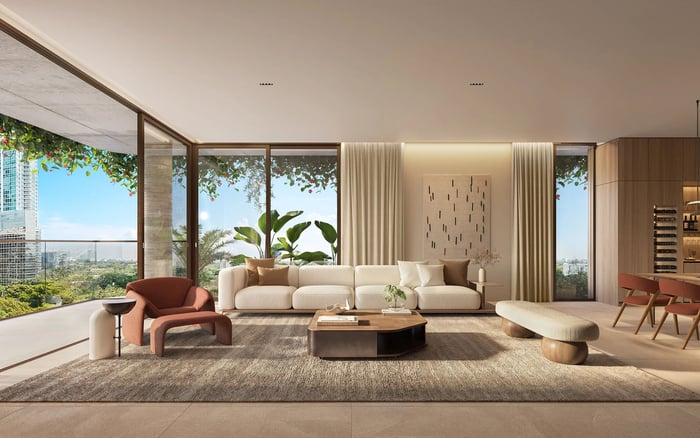
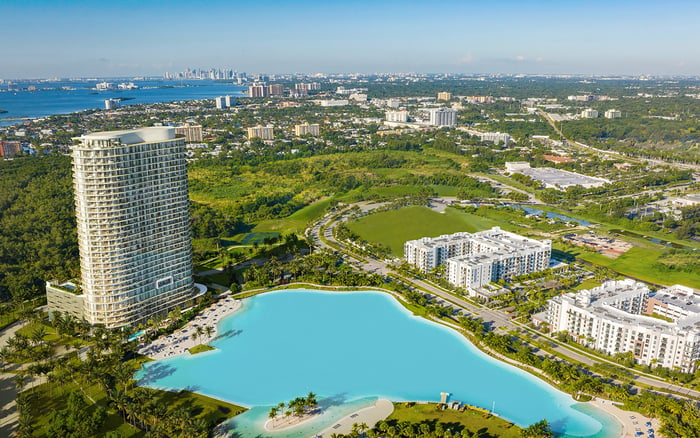
South Florida luxury buyers are increasingly evaluating private advisor meeting rooms as part of the residence experience, not as a decorative amenity but as a practical layer for wealth, legal, tax, philanthropic, and family-office conversations.

For South Florida’s most discerning buyers, the amenity conversation is moving beyond the obvious. Pools, spas, fitness studios, wine rooms, and cinematic arrivals still matter, but they no longer tell the whole story. Increasingly, the question is more private: where can a buyer sit with counsel, review a trust structure, speak with a tax advisor, meet a family-office principal, or hold a confidential conversation without turning the residence itself into a conference room?
That is why advisor meeting rooms are becoming a meaningful 2026 filter. They are not simply business centers with better chairs. At the highest end of the market, they signal discretion, operational ease, and the ability to keep important conversations inside a controlled residential environment. For buyers who move between South Florida, New York, Europe, Latin America, and other financial centers, the building is no longer only a place to live. It is also a private base for decision-making.
The shift is subtle, but practical. A residence may offer spectacular views, a generous balcony, and resort-level service, yet still feel incomplete if every strategic meeting must happen at a club, hotel, attorney’s office, or dining table. The advisor room closes that gap.
Luxury buyers are becoming more precise about how a building supports real life. The question is not merely whether there is a lounge. It is whether the building offers a quiet, reservable, well-composed room that feels appropriate for serious conversation. Is it visually discreet? Is it separated from high-traffic amenity areas? Does it feel like a private salon rather than a shared workspace? Can multiple generations sit comfortably around the same table?
These questions matter because the South Florida buyer profile has evolved. Many are not simply purchasing a vacation home. They are relocating part of their family rhythm, tax planning rhythm, philanthropic calendar, or investment review process. In that context, a meeting room becomes infrastructure. It helps the property function as a polished extension of the owner’s private life.
This is especially relevant in buildings and neighborhoods where residents are likely to blend leisure, remote work, capital decisions, and family governance. A buyer may want the waterfront lifestyle, but also wants the option to meet privately before a flight, after a school visit, between charitable events, or during seasonal stays. The most refined buildings understand that privacy is not only about where one sleeps. It is also about where one speaks.
A decade ago, many buyers treated meeting spaces as peripheral. If a building had a conference room, it was a convenience. If not, few considered it decisive. Today, among a certain class of buyer, the absence of a proper advisory room can signal a broader mismatch. It may suggest that the building is designed more for display than for the daily realities of complex households.
That does not mean every buyer needs a boardroom. In fact, the best spaces avoid a corporate feeling. The ideal advisor room feels residential, calm, and discreet. It has enough formality for attorneys, accountants, trustees, art advisors, philanthropic consultants, insurance specialists, and family members, but enough warmth to belong inside a luxury property.
This is where the 2026 filter becomes useful. Buyers are not only comparing square footage or views. They are asking whether a building supports the way wealth is actually managed. A property can be beautiful and still be operationally thin. Conversely, a building with thoughtful private rooms can feel more complete because it recognizes that serious buyers often need serious spaces.
South Florida is particularly suited to this conversation because its luxury market is not one-dimensional. Brickell offers a financial and urban rhythm. Aventura draws buyers who value access, retail, boating proximity, and family convenience. Coastal enclaves appeal to those who want privacy and a slower residential cadence. Palm Beach and West Palm Beach add another layer of seasonal society, philanthropy, finance, and legacy ownership.
Across these settings, advisor rooms serve different purposes. In an urban tower, the space may support deal review, legal coordination, or cross-border planning. In a beachside residence, it may allow an owner to keep private matters outside the living room while guests or family enjoy the home. In a family-oriented market, it may become the place where education planning, estate matters, and property decisions are discussed with calm and discretion.
Buyers also use shorthand when organizing their searches. Terms such as Brickell, Aventura, investment, new-construction, and second-home may begin as simple categories, but they often point to deeper lifestyle and planning priorities. The meeting room sits at the intersection of those priorities. It is both a residential amenity and a signal that the building understands a more sophisticated owner profile.
The difference between a useful advisor room and a decorative one is execution. Privacy comes first. A room placed directly beside a loud lounge or children’s area may photograph well but perform poorly. Sound control, thoughtful circulation, and an understated arrival sequence all matter.
Scale is equally important. A room should not feel cavernous, but it must allow several people to sit with documents, devices, and personal space. Lighting should be flattering but functional. Materials should feel calm rather than theatrical. The best rooms have a sense of permanence, as if they were designed for consequential conversations from the beginning.
Technology should be present but not dominant. Buyers may want video capability, secure connectivity, presentation options, and easy scheduling, but the room should not feel like a co-working suite. At the luxury end, technology is most successful when it disappears into the design.
Service also matters. A meeting room gains value when it is supported by a staff culture that understands discretion. The ability to reserve the space smoothly, welcome a guest properly, provide water or coffee without ceremony, and preserve privacy after the meeting can matter as much as the room itself.
A buyer who cares about advisor rooms today is likely thinking beyond the first season of ownership. The room may not be the headline feature in a listing, but it can influence how future buyers perceive the building’s sophistication. Properties that anticipate the needs of high-net-worth households often age more gracefully than properties built around trend-driven amenities alone.
This does not mean every building must offer the same program. Some residences will prioritize wellness. Others will emphasize boating, beach access, art, hospitality, or family amenities. The point is that advisor rooms are becoming part of the premium checklist for buyers who need a home base, not just a beautiful apartment.
For resale, the value is partly psychological. A prospective buyer walking through a well-designed private meeting room may immediately understand that the building is calibrated for serious ownership. It says the developer considered what happens after the sunset photograph, after the dinner party, and after the closing. It recognizes the quieter routines that define how affluent households actually live.
The smartest approach is to test the room mentally before giving it weight. Would you use it for a conversation with counsel? Would you be comfortable inviting an advisor who normally meets in a private office? Could adult children, trustees, or business partners sit there without the setting feeling awkward? If the answer is yes, the room may be more than an amenity. It may be a functional extension of the residence.
Buyers should also consider frequency. Someone who visits South Florida only for short holidays may value the feature less than someone who spends long seasons in the region. A family with multiple properties, advisors, entities, and cross-generational planning needs may see it as highly practical.
Finally, buyers should ask whether the amenity aligns with the building’s overall identity. A refined advisor room in an otherwise loud, transient environment may feel out of place. A quiet, well-managed building with a polished private room may feel coherent. The amenity is strongest when it is part of a broader culture of discretion.
Why are advisor meeting rooms becoming important to luxury buyers? They give residents a private, composed setting for legal, financial, family, and planning conversations without using the residence itself.
Is an advisor room the same as a business center? Not at the luxury level. The strongest rooms feel residential, discreet, and suitable for confidential conversations rather than casual work sessions.
Which buyers benefit most from this amenity? Buyers with family offices, multiple advisors, estate planning needs, philanthropic commitments, or complex property decisions may find it especially useful.
Does every South Florida luxury building need one? No. It matters most when the building is positioned for owners who value privacy, seasonal living, and advisory access.
Can a meeting room influence resale perception? Yes, when it signals that the building was designed for sophisticated ownership and not only for visual amenities.
What should buyers look for during a tour? Look for privacy, acoustics, comfortable scale, understated design, easy reservation, and a service culture that respects discretion.
Should the room feel corporate? Ideally, no. The best advisor rooms feel calm, elegant, and residential while still supporting serious conversations.
Is this trend only relevant in Brickell? No. Brickell may make the use case obvious, but the need can appear in coastal, family-oriented, and seasonal luxury markets as well.
How often should a buyer expect to use it? Usage depends on lifestyle. Even occasional use can be valuable if the conversations are sensitive or involve multiple advisors.
Is this a deciding factor or a secondary amenity? For some buyers it is secondary, but for those managing complex households or assets, it can become a meaningful 2026 filter.
For a tailored shortlist and next-step guidance, connect with MILLION.
If branded residences are on your mind — as a home or as an allocation — we would be glad to share what we are seeing, privately.
Begin a quiet conversation