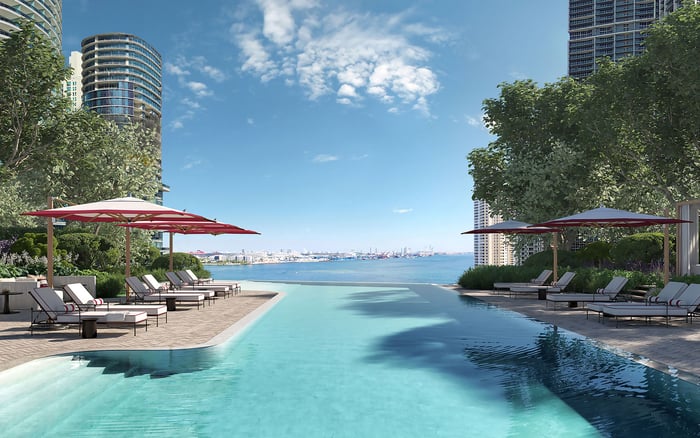
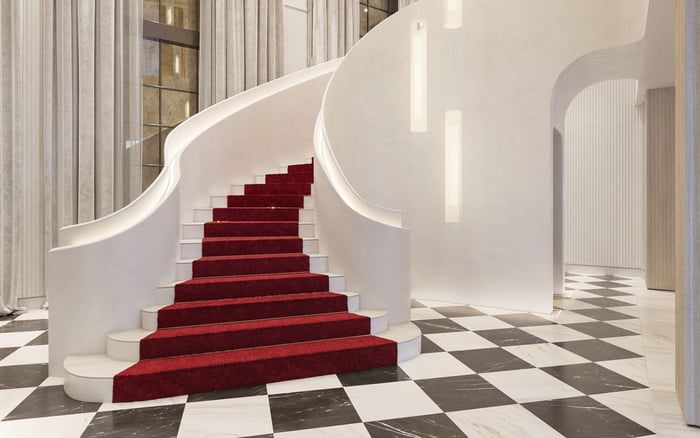
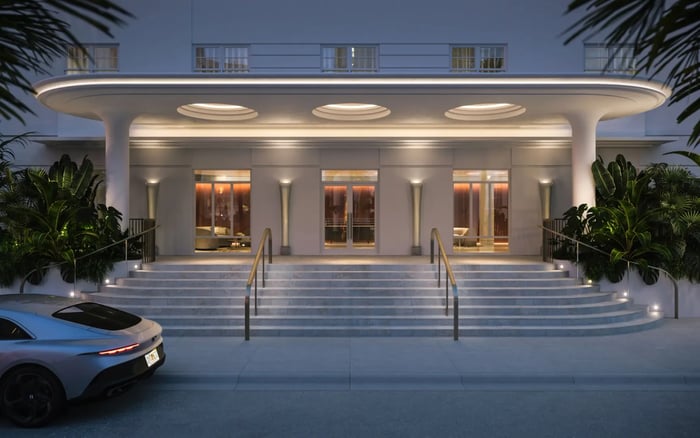
Brickell’s appeal lies in a refined compromise: resort-caliber ease, strong urban rhythm, and a more private residential arrival than many buyers associate with the beach.
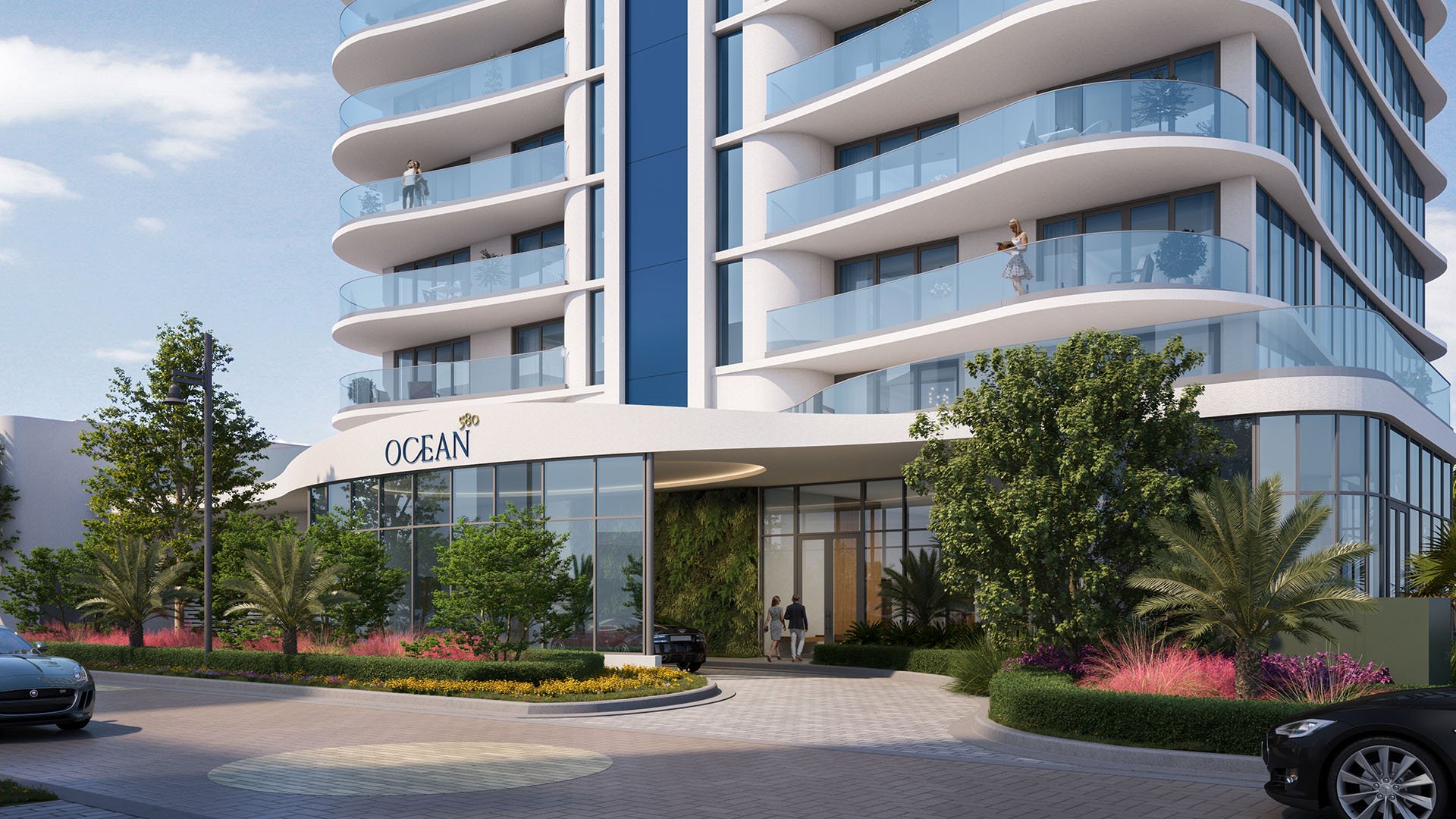
For a certain South Florida buyer, the dream is not necessarily a lobby that feels like a stage. It is not always a velvet-rope arrival, a hotel crowd, or a public room designed to be photographed. Increasingly, the more compelling luxury is quieter: a residence that delivers the ease people associate with beach living while preserving the privacy, rhythm, and restraint of an urban home.
That is where Brickell becomes especially persuasive. The neighborhood speaks to buyers who want the practical side of resort life: attentive staff, polished amenity decks, wellness spaces, water views, valet ease, and the sense that daily needs are close at hand. What they may not want is the constant social performance that can come with highly visible resort corridors.
The distinction is subtle but important. Beach service is often imagined as sand, towels, cabanas, and a martini at sunset. For the Brickell buyer, it can mean something more residential: the ability to leave a meeting, return home, change floors, and arrive at a pool deck or lounge that feels composed rather than theatrical. The privilege is not being seen. The privilege is not having to think about logistics.
When sophisticated buyers ask for beach service, they are not always asking for literal oceanfront living. They are asking for frictionless leisure. They want a residence that makes downtime feel prepared for them: a pool that is cared for, seating that is arranged, staff that understands discretion, elevators that do not feel chaotic, and outdoor spaces that allow a sense of escape.
In Brickell, that experience tends to be interpreted through a residential lens. The service proposition is not about turning the home into a hotel. It is about making the building feel responsive. The best version is calm, consistent, and nearly invisible. A buyer should feel that the residence supports the day without taking possession of it.
This is the difference between amenity and atmosphere. Many buildings can offer amenities. Fewer can make them feel private, intuitive, and appropriate for daily use. The Brickell buyer often values the latter. They want the leisure component, but they want it without an audience.
In luxury real estate, the lobby is no longer just a design statement. It is a lifestyle filter. It tells a buyer how the building handles arrival, guests, staff, privacy, and social energy. A dramatic lobby can be beautiful, but it can also create the feeling of a constant event.
For some owners, that energy is the point. For others, it becomes exhausting. They do not want to pass through a semi-public scene every time they come home. They do not want a residence where the lobby feels like a branded lounge, a nightlife prelude, or a destination in itself.
Brickell appeals because it can offer a different mood. The neighborhood has urban momentum, but the ideal residential experience is still controlled at the building threshold. Buyers who are sensitive to privacy often study lobby volume, seating configuration, front-desk posture, valet choreography, and how visitors move through the property. These details matter because they shape the emotional experience of ownership.
A successful Brickell lobby should feel secure and elegant, not performative. It should support residents, not entertain the city.
The classic Miami Beach proposition is powerful: immediate ocean identity, a resort cadence, and the emotional pull of the shoreline. For many buyers, that remains unmatched. But it also comes with a particular type of visibility. The beach can bring foot traffic, seasonal intensity, and an atmosphere that may feel more public than private.
Brickell offers a different equation. It trades sand at the door for urban control. The buyer gains a daily pattern that can include restaurants, professional proximity, wellness, skyline views, and Biscayne Bay atmosphere, without relying on a resort environment for a sense of occasion. The appeal is not that Brickell imitates the beach. It is that it extracts the most useful parts of resort living and places them inside a city routine.
In practical search language, the buyer may start with Brickell, compare it with Miami Beach, ask about beach access, insist on a pool, protect water views, and consider a second home that does not feel transient. But the true decision is more nuanced than a checklist. It is about whether the owner wants the home to feel like a retreat, a stage, or a private operating base.
For buyers who travel often, entertain selectively, and prefer discretion, Brickell can feel especially efficient. It allows a residence to be polished without becoming loud. It allows service to be present without turning every arrival into a public moment.
The Brickell buyer seeking beach-style service without lobby theater is often highly intentional. They may already understand South Florida’s coastal options and are not choosing Brickell by default. They are choosing it because the daily experience feels more aligned with how they live.
They may want a primary home that functions elegantly during a demanding workweek. They may want a pied-à-terre that is easy to lock and leave. They may want to host a small dinner, take a meeting nearby, use the wellness spaces, and return upstairs without crossing a resort crowd. In each case, the draw is the same: a building that behaves like a residence first.
This buyer is usually less impressed by spectacle than by consistency. They look at staffing, maintenance, sound separation, elevator experience, garage and valet flow, and whether the amenity spaces can be used without feeling crowded. They are not simply buying views or finishes. They are buying friction reduction.
That is why Brickell’s best luxury addresses must be judged by more than renderings. A polished image can suggest serenity, but the lived reality depends on how the building is managed, how residents circulate, and whether the service culture is designed for privacy.
A buyer should begin with the arrival sequence. Is the porte cochere calm? Does valet feel organized? Is the lobby scaled for residents, or does it feel like a public hospitality room? Are seating areas positioned for privacy, or do they encourage lingering and visibility?
Next, study the amenity plan. A good pool deck is not only about size or view. It is about comfort, service, shade, sound, furniture placement, and whether the space can absorb daily use gracefully. Wellness areas should feel accessible, not ornamental. Lounges should support actual living, not simply photograph well.
Elevator experience matters more than many buyers expect. The transition from lobby to residence should feel fluid and secure. If a building has multiple user groups, guest patterns, or shared hospitality elements, buyers should understand how those groups are separated and managed.
Finally, consider temperament. Some buildings are designed to impress visitors. Others are designed to serve owners. Neither is inherently superior, but they create very different lives. For the buyer who wants beach service without lobby theater, the second category is usually the better fit.
Brickell’s most compelling promise is not that it replaces the beach. It is that it gives certain buyers permission to redefine what coastal luxury means. The residence can still feel connected to water, leisure, wellness, and hospitality, but it does not have to surrender to the social volume of a resort setting.
In this sense, Brickell appeals to the buyer who values control. Control of arrival. Control of privacy. Control of when to be social and when to disappear. The right building makes life smoother without making it louder.
That is a sophisticated form of luxury, and it is increasingly relevant in a market where many buyers have already experienced the grand lobby, the crowded amenity deck, and the branded spectacle. What they may want next is not less service. It is better-calibrated service.
Does Brickell offer the same lifestyle as living directly on the beach? No. Brickell offers a more urban version of leisure, with residential service and water-oriented atmosphere rather than immediate sand at the door.
Why do some luxury buyers avoid highly theatrical lobbies? They may prefer privacy, quieter arrivals, and a building experience that feels residential rather than performative.
What should buyers look for in a Brickell amenity deck? Look for comfort, service quality, shade, seating layout, acoustic control, and whether the space feels usable on ordinary days.
Is Brickell better for primary residences or second homes? It can work for both, especially when the buyer values convenience, security, and a lock-and-leave lifestyle.
How important is valet flow in this type of purchase? Very important. Arrival and departure are daily experiences, and poor flow can diminish even a beautifully designed building.
Can a Brickell residence still feel resort-like? Yes, but the strongest fit for this buyer is resort-like ease expressed through discreet residential service.
Should buyers prioritize views or service? Ideally both, but service quality often has a greater effect on daily satisfaction than a view alone.
What is the main trade-off compared with Miami Beach? Buyers typically trade immediate beach identity for urban convenience, privacy, and a more controlled residential rhythm.
Are branded residences always more theatrical? Not necessarily. The key is how the building manages arrival, amenities, guests, and resident privacy.
What is the best way to shortlist comparable options for touring? Start with location fit, delivery status, and daily lifestyle priorities, then compare stacks and elevations to validate views and privacy.
For a tailored shortlist and next-step guidance, connect with MILLION.
If branded residences are on your mind — as a home or as an allocation — we would be glad to share what we are seeing, privately.
Begin a quiet conversation