Biophilic design is moving from decorative greenery to a serious luxury framework in South Florida, where shade, airflow, material resilience, privacy, and outdoor living increasingly shape how premium homes are evaluated.
Biophilic design is no longer simply a luxury vocabulary of green walls, sculptural planters, and photogenic courtyards. In South Florida, it is becoming a practical standard because the best residences must mediate light, heat, humidity, privacy, water, and the desire to live outdoors without sacrificing interior comfort.
At its best, biophilic design is not about adding nature as decoration. It is about shaping daily life around natural cues: filtered daylight, shaded thresholds, breezeways, planting that softens hard architecture, water that calms rather than overwhelms, and materials that feel grounded in place. For luxury buyers, that distinction matters. A residence can look lush and still perform poorly. The more compelling home is one where landscape, architecture, and interior planning operate as one quiet system.
South Florida gives this idea particular urgency. The region’s appeal is inseparable from its climate and coastline, yet that same environment demands discipline. Sun exposure must be managed. Outdoor rooms must feel usable. Glass, stone, wood, and metal must be selected with care. Planting should create atmosphere while respecting maintenance, sightlines, and long-term durability.
Luxury buyers increasingly evaluate a residence through the rhythm of the day. Morning light in a primary suite, the transition from kitchen to outdoor dining, the softness of a shaded arrival, and the privacy of a planted edge can shape how a home feels more powerfully than a single grand gesture.
In Brickell, the conversation is often vertical: how a high-rise residence frames light, sky, water, and skyline without making the interior feel exposed or overheated. In lower-density enclaves, the focus may shift toward courtyards, garden rooms, and deeper connections between entertaining spaces and landscape. Oceanfront settings add another layer, where views are central but comfort depends on glare control, wind awareness, and the ability to create protected outdoor moments.
This is why biophilic design has become a buyer filter rather than a stylistic preference. It touches the way people work from home, host family, recover after travel, exercise, dine, and rest. A beautiful view remains powerful, but a view paired with shade, air, sound, texture, and privacy becomes livable luxury.
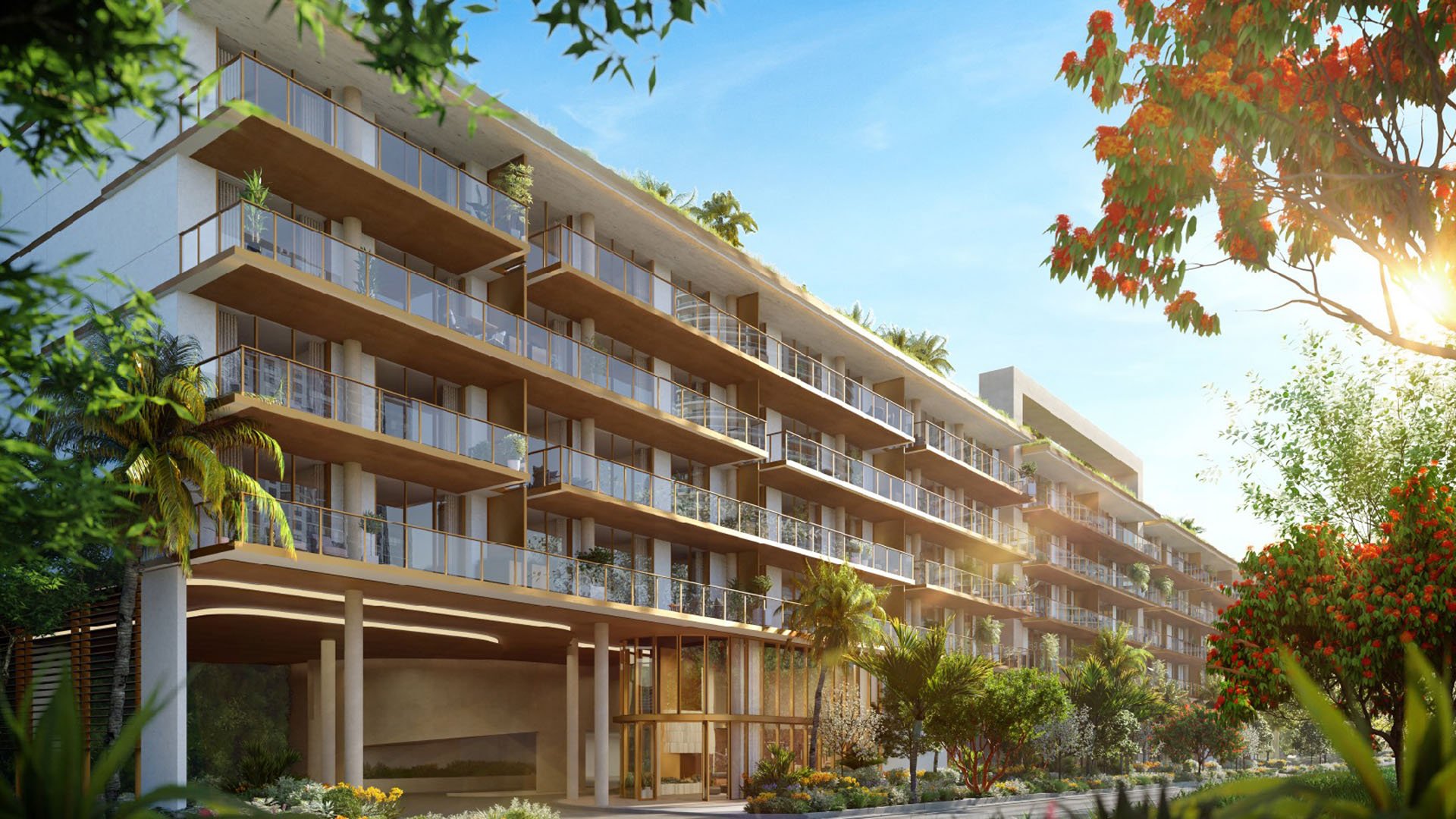
The word balcony can suggest a simple exterior ledge, but in premium South Florida real estate, the sharper question is how that outdoor space functions. Is there enough depth to sit comfortably? Does the orientation allow use beyond a narrow window of the day? Does the railing protect the view without making the space feel exposed? Can planting be integrated without turning maintenance into a burden?
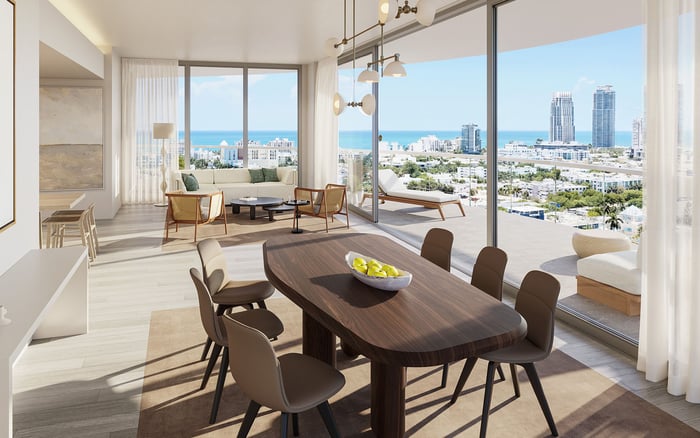
Biophilic performance also appears in less obvious places. A foyer with natural light can change the first impression of a home. A powder room with stone, shadow, and controlled greenery can feel more composed. A kitchen that opens to an outdoor dining space can make entertaining feel less formal and more fluid. Even corridors matter when they capture light or frame a planted moment rather than functioning as purely transitional space.
For buyers, the practical test is simple: nature should improve comfort, not complicate it. Planting should feel intentional. Outdoor rooms should be planned, not leftover. Materials should age gracefully. The strongest residences make the connection to nature feel effortless, even when the design work behind that calm is highly considered.
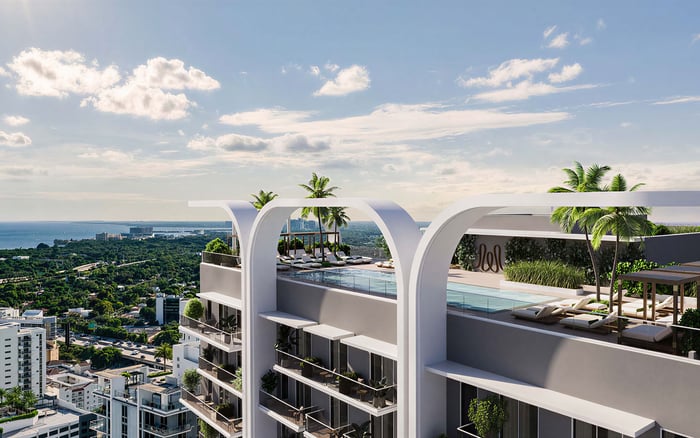
A terrace is often where the promise of South Florida living becomes real. It can be a quiet breakfast space, a shaded lounge, an outdoor dining room, or a private garden in the sky. The most successful terraces are not judged by size alone. Proportion, shade, privacy, wind protection, and adjacency to interior rooms matter just as much.
A generous terrace that is difficult to furnish or too exposed may be less valuable in daily life than a more modest outdoor room with careful orientation and a clear purpose. Buyers should consider how furniture can be placed, whether circulation feels natural, and whether the terrace supports multiple moods: morning coffee, evening cocktails, family dining, or solitary reading.
Biophilic design also changes the emotional register of a terrace. Planters can soften architecture, create privacy, and shape views. Water elements can provide sound and calm when used with restraint. Natural textures can make a new residence feel less sterile. The result is a more layered version of luxury, one that invites use rather than mere admiration.
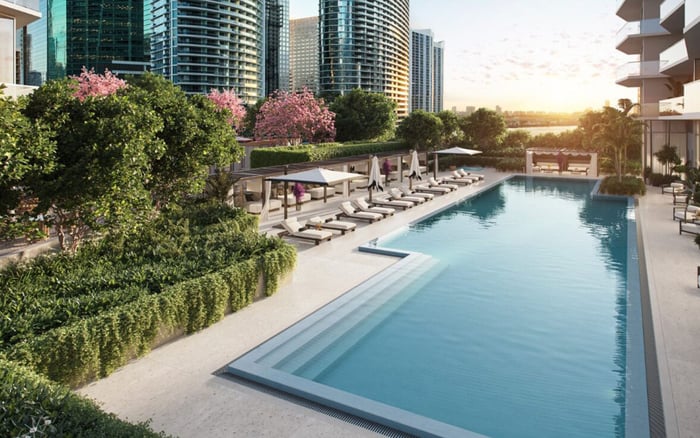
The pool has long been central to South Florida luxury, but biophilic thinking reframes it. Instead of treating the pool as a trophy feature, the more sophisticated approach considers its relationship to shade, lounging, planting, light reflection, and indoor sightlines. A pool that looks dramatic from a great room may still need privacy and comfort to become part of daily life.
Wellness is often discussed as an amenity category, but in the best homes it begins with atmosphere. Natural light that does not feel harsh, cross-ventilation where possible, acoustic softness, garden views, and calm material palettes all contribute to a sense of restoration. A spa room or fitness area becomes more persuasive when connected to daylight, planting, or an outdoor cooldown space.
The practical advantage is that these choices serve both lifestyle and longevity. Buyers are not merely asking for more amenities. They are asking whether a residence will feel good to inhabit over time. Biophilic design answers that question by making comfort tangible.
Investment value in luxury real estate is never determined by one feature alone. Still, a home that feels better day after day carries a persuasive advantage. Biophilic design can support that advantage when it is deeply integrated rather than superficially applied.
The most resilient design choices are those that remain relevant across changing tastes. Natural light, usable outdoor space, shaded entries, thoughtful planting, durable materials, and a coherent indoor-outdoor plan are not trend-dependent in the same way as a color palette or a branded finish. They speak to livability, which is often what separates a visually impressive residence from a genuinely desirable one.
Buyers should be attentive to maintenance. A lush concept that demands constant intervention may not be practical for a seasonal owner. A minimalist plan with no softness may feel underdeveloped in a tropical setting. The best solution is balance: enough nature to create atmosphere, enough restraint to preserve ease.
Begin with orientation. Notice where the sun enters, when glare appears, and whether outdoor spaces feel comfortable at different times of day. Then consider transitions. The strongest residences allow movement from indoors to outdoors without a jarring change in scale, temperature, or privacy.
Next, study materiality. Stone, wood, plaster, glass, and metal should be selected not only for appearance, but for how they respond to the local environment. Texture matters. So does upkeep. A luxury residence should not require constant correction to maintain its intended atmosphere.
Finally, ask whether the landscape is integrated into the architecture or merely placed around it. A planted edge that protects a dining area, a courtyard that brings light into the center of a home, or a terrace garden that frames a view can all be meaningful. The goal is not to live in a greenhouse. The goal is to make nature part of the residence’s intelligence.
What is biophilic design in luxury real estate? It is an approach that deliberately connects architecture and interiors to natural light, air, planting, water, texture, and outdoor living.
Why is it especially relevant in South Florida? The region’s climate and outdoor lifestyle make shade, ventilation, privacy, and material durability central to comfort.
Is biophilic design just about adding plants? No. Planting can be part of it, but the larger value comes from how landscape, light, layout, and materials work together.
Does a larger terrace automatically mean better outdoor living? Not necessarily. A smaller terrace with shade, privacy, and strong proportions can be more usable than a larger exposed space.
How should buyers judge a balcony? Look at depth, orientation, privacy, furnishability, wind exposure, and how naturally it connects to the interior.
Can biophilic design work in high-rise residences? Yes. It can appear through daylight planning, view framing, planted terraces, natural materials, and calmer transitions between rooms.
What role does water play in biophilic design? Water can create visual calm and sound, but it should be integrated with restraint and practical maintenance in mind.
Is this design approach mainly about wellness? Wellness is part of the appeal, but the broader value is livability: comfort, atmosphere, privacy, and daily ease.
Can biophilic features support long-term desirability? They can, especially when they improve everyday use rather than functioning as decorative add-ons.
What is the best way to shortlist comparable options for touring? Start with location fit, delivery status, and daily lifestyle priorities, then compare stacks and elevations to validate views and privacy.
To compare the best-fit options with clarity, connect with MILLION.
If branded residences are on your mind — as a home or as an allocation — we would be glad to share what we are seeing, privately.
Begin a quiet conversation