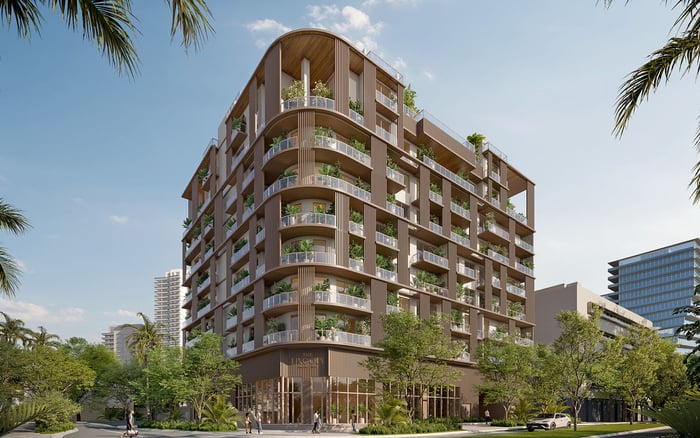
For collectors buying in Coconut Grove, the decisive luxury may be invisible: suitable storage, controllable light, dependable climate systems, secure access, and workable delivery routes.
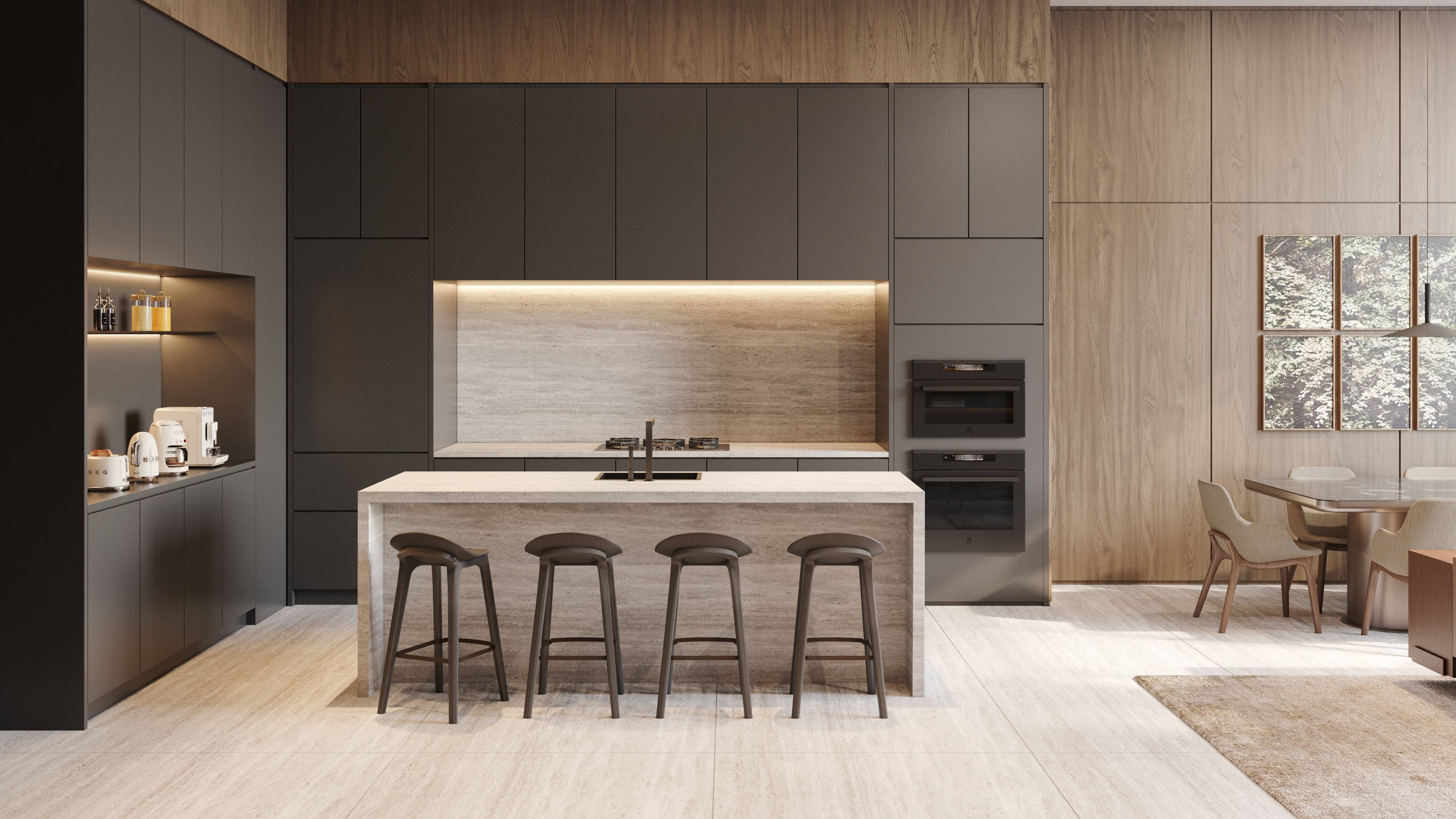
In Coconut Grove, a beautifully finished residence can make an immediate impression. For a serious collector, however, stone, millwork, and decorative lighting may be secondary to less visible considerations: Where can art wait before installation? How does a crate reach the residence? Can daylight be managed room by room? What do the mechanical systems actually serve, and how are specialist vendors admitted?
Those questions are particularly important in a neighborhood where housing ranges from older cottages and Mediterranean Revival homes to glass-walled estates and contemporary condominiums. Exposure, glazing, mechanical systems, and storage configurations can vary materially. For Coconut Grove buyers, Design & Architecture should be evaluated alongside the operational framework that supports a collection.
“Ample storage” and “dedicated storage” are useful starting points, but neither phrase confirms that a space is suitable for art. Buyers should establish its location, dimensions, access route, security conditions, permitted use, and whether environmental control extends to that area. A separate room can be more practical than residual closet space, but its value depends on what it can accommodate and how it functions.
At Opus Coconut Grove, features include dedicated storage units, semi-private elevators, bike storage, 24-hour security, valet, and concierge service. Together, they suggest attention to circulation and operations. They do not, by themselves, confirm art-grade humidity management, UV control, elevator capacity, or loading procedures-all of which require independent verification.
An art-focused inspection should go beyond counting windows. Buyers can map the intended position of significant works against each room’s orientation, glazing, window treatments, electrical plan, and lighting controls. Large expanses of glass may be visually compelling, but the display plan must still account for how light enters and changes throughout the residence.
Climate review deserves the same precision. Ask which areas are conditioned, whether storage shares the residence’s system, how controls are zoned, and what happens during maintenance or an interruption. Amenity language is not a mechanical specification. Appropriate performance requirements should instead be established with qualified art and building professionals for the particular collection.
The most revealing due-diligence exercise may be a simulated delivery. Begin at the vehicle arrival point, then trace the route through loading, security, elevators, corridors, doorways, and the final installation area. Confirm dimensions, weight restrictions, reservation requirements, protective measures, approved working hours, insurance documentation, and staff coordination.
Semi-private elevator access can reduce transitions between common circulation and the home, but buyers should still verify cab and door dimensions. Concierge and valet operations may help coordinate installers and specialist vendors, while 24-hour security can be relevant to custody. These services are valuable only when their procedures align with the collection’s needs.
Coconut Grove developments increasingly include storage and service infrastructure as part of luxury. Arbor Coconut Grove includes ample storage, plus 24-hour concierge and valet service. The combination makes storage capacity and vendor coordination visible considerations, though buyers still need property-specific answers.
At Park Grove Coconut Grove, wine-tasting rooms with private wine storage illustrate how space for a valuable collection can be integrated into an amenity program. The lesson for art buyers is not that wine storage and art storage are interchangeable. Rather, collection care can be designed as infrastructure instead of improvised after closing.
Substantial private storage can also influence market presentation. At least one local luxury residence has highlighted an 8-by-19-foot storage room alongside two garage spaces. Size matters, but suitability still depends on access, conditions, security, and permitted use.
A disciplined review should include plans and written building information rather than rely on a walkthrough alone. Measure the complete delivery path and identify where a crate might need to turn, pause, or transfer. Ask whether elevators are shared, how service access is booked, and who supervises arrival and departure.
Inside the residence, coordinate the collection plan with glazing, shades, lighting circuits, wall construction, mechanical zoning, and storage. Confirm whether any proposed alteration requires building approval. If works will rotate, consider where packing materials, pedestals, tools, or temporarily deinstalled pieces can be kept without consuming principal living space.
This practical perspective belongs in Buyer's Guides: visible luxury can be changed, while circulation constraints and building operations may be harder to adapt. The strongest offer is informed by both the residence and the route valuable property must travel through it.
For a serious buyer, collection readiness is not a single amenity. It is the alignment of storage, controllable light, mechanical planning, secure custody, and predictable access. Finishes frame the experience; infrastructure determines whether the residence can support it with discretion.
Does dedicated storage mean it is suitable for art? No. Buyers should verify its location, dimensions, environmental conditions, security, access, and permitted use.
Why do elevator details matter to collectors? Cab size, door dimensions, weight limits, and reservation rules can determine whether crated work reaches the residence as planned.
Is a semi-private elevator enough for art delivery? Not necessarily. It may simplify circulation, but capacity, protection rules, and loading access still require confirmation.
What should buyers examine about natural light? Review orientation, glazing, window treatments, room use, and the proposed placement of individual works.
Do amenity lists confirm art-grade climate control? No. General amenity descriptions do not establish humidity performance, zoning, monitoring, or backup procedures.
How can concierge service help with a collection? Concierge staff may coordinate access for installers and specialist vendors, subject to the building’s actual procedures.
Why is valet relevant to art logistics? Valet operations can influence vehicle arrival, staging, and coordination at the property entrance.
Should buyers inspect off-residence storage personally? Yes. Both the space and the full route to it should be measured and reviewed before buyers rely on it.
Can private wine storage be treated as art storage? No. It illustrates collection-oriented planning, but art requires its own professional assessment and specifications.
When should an art adviser or specialist join the purchase process? Ideally, before final due diligence ends, so collection requirements can be compared with plans, systems, and building rules.
For a tailored shortlist and next-step guidance, connect with MILLION.
If branded residences are on your mind — as a home or as an allocation — we would be glad to share what we are seeing, privately.
Begin a quiet conversation