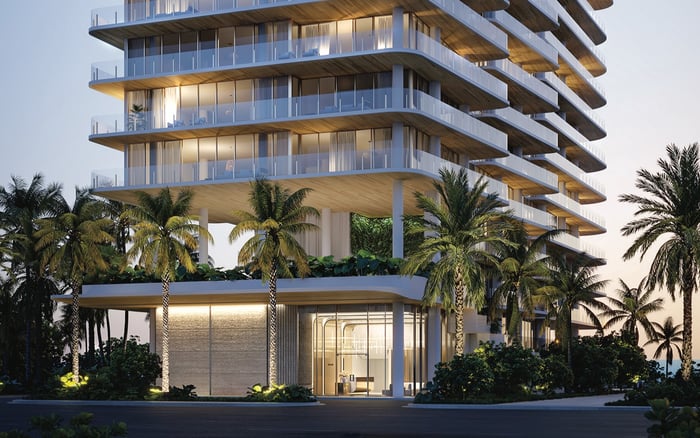
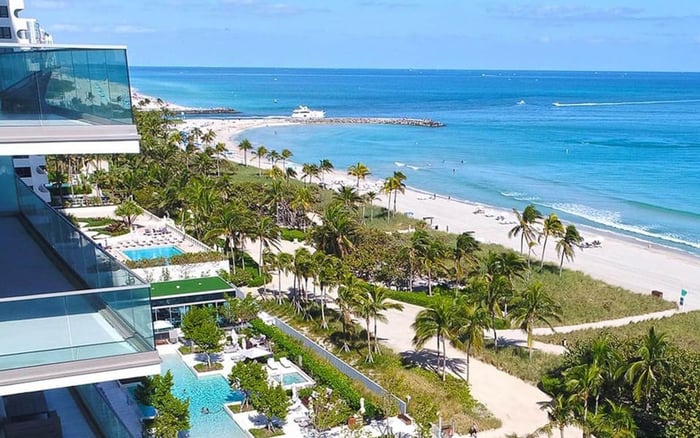
A Bal Harbour purchase deserves a flood review that reaches beyond the map. Match property-level elevation records to garage systems, association obligations, evacuation procedures, and a separately funded temporary-housing plan.

In Bal Harbour, the most revealing ownership questions may begin far below the terrace. A purchase review should connect the residence to the garage, the equipment serving the building, the procedures for leaving it, and the arrangements for living elsewhere if necessary. The objective is not simply to identify flood exposure. It is to understand which potential expenses belong to the association, which could fall to the owner, and which remain unresolved.
Most of Bal Harbour, though not necessarily every property, is designated a Special Flood Hazard Area. Address-specific research is therefore essential, but a flood-zone designation alone cannot establish a condominium’s equipment condition, financial preparedness, or insurance coverage.
For a buyer considering Oceana Bal Harbour, the starting point is a property-specific file, not an assumption based on the neighborhood. Apply that standard to every candidate: map, elevations, operating records, financial obligations, and a household continuity plan. No individual building’s condition should be inferred from the area designation.
Begin with the exact property address and the effective flood map. Address-search tools allow property-level review, while county mapping can show the surrounding flood-zone context. Keep a dated copy in the purchase file and ask the professional reviewing the property to confirm the applicable designation and any location-specific revisions.
Review preliminary maps separately. They are available for inspection but are not interchangeable with effective maps. Any comparison should clearly distinguish the information governing the current review from a preliminary scenario.
The local flood map identifies areas susceptible to the 100-year flood and establishes minimum construction elevations. It does not establish where a particular garage slab sits, whether equipment has been relocated, or what an association has budgeted for replacement. Those questions require building documentation, not a broader neighborhood label.
Treat mapping as the first layer of due diligence, not a complete ownership-cost forecast.
Request the property’s elevation certificate, relevant plans, and available elevation documentation. Ask a qualified professional to compare them with garage slabs, entrances, and critical equipment locations, using a consistent elevation reference. The practical question is whether the documents describe the building as it exists and identify the systems on which daily use depends.
For Rivage Bal Harbour, as for any prospective purchase, request documentation appropriate to the property’s stage and distinguish planned provisions from completed, inspected installations. A proposal and an operating record answer different questions.
The equipment review should establish the locations of pumps, electrical components, generator-related equipment, and other essential systems, where applicable. Request inspection findings, flood-loss records, pump-maintenance logs, generator-test records, and capital plans. Have the reviewer identify unresolved discrepancies among drawings, physical conditions, and maintenance records.
Then connect each finding to a financial question. Is work recommended? Has it been priced? Is funding identified? Who would authorize it? An equipment location becomes useful to a buyer when paired with condition, responsibility, and a documented plan-not treated as an isolated technical detail.
Do not assume that a shared garage produces a predictable shared bill. Responsibility for equipment, deductibles, reserve funding, and possible special assessments should be established through the governing documents and applicable insurance policies.
Ask counsel and the insurance adviser to reconcile those documents with the association’s budget and capital plan. The review should distinguish routine maintenance, planned replacement, insured damage, and expenses that may remain uncovered. Each category needs a clear explanation of who pays and under what circumstances.
A concise purchase worksheet can record the relevant system, documented condition, proposed work, available funding, potential owner obligation, and unresolved questions. Leave uncertain amounts open rather than replacing them with reassuring estimates.
If the search extends to Ocean House Surfside, carry the same questions into that review, but obtain separate property and local mapping information. Compare documented obligations rather than assuming that another coastal address has the same exposure or operating arrangements.
Bal Harbour is designated Storm Surge Zone B, an area at risk from storm surge associated with Category 2 and stronger storms. That designation serves a different purpose from the property’s flood-zone classification. Neither should substitute for current evacuation instructions.
When an evacuation order is issued, consult the current evacuation-orders map to determine whether departure is required. Identify a safe route to higher ground in advance. Countywide evacuation-route and zone maps are general-reference materials, not assurances that a chosen route will remain available or that a journey will take a particular time.
Ask management for written vehicle-removal, evacuation, mobility-assistance, shutdown, and re-entry procedures. Clarify who communicates instructions, how an absent owner receives them, and who can assist household members who need support. A second-home plan should also specify who is authorized to act locally.
Plan for water, gas, and electricity to be shut off before flooding where safe to do so. Confirm responsibilities in advance rather than improvising or interfering with shared systems. Do not base the purchase analysis on an assumed bridge bottleneck or a promised evacuation travel time.
Temporary accommodation deserves its own budget and insurance review. Do not assume that flood insurance or the association’s master policy pays relocation costs. Obtain written confirmation of any applicable additional-living-expense or loss-of-use provisions, including triggering conditions, exclusions, limits, duration, and documentation requirements.
Identify an alternate accommodation option before it is needed. Ask about cancellation terms, pet policies, accessibility, parking, and the practical requirements of working or managing family commitments away from home. Treat availability and pricing as matters to confirm, not guarantees.
Build a scenario budget for accommodation, transport, storage, and other anticipated household expenses. Separate amounts an insurer has confirmed from those that may need to be self-funded. Immediate spending capacity and eventual reimbursement are distinct planning questions.
Before committing, assemble the effective map information, elevation review, equipment records, association cost allocation, evacuation procedures, and temporary-housing plan into one decision file. Identify who must resolve each outstanding question and which answers could affect the purchase decision.
The strongest outcome is not a promise of uninterrupted living. It is a clear understanding of the property’s documented conditions, the household’s responsibilities, and the financial flexibility required if ordinary routines are interrupted.
For a discreet perspective on your next coastal residence, explore MILLION.
If branded residences are on your mind — as a home or as an allocation — we would be glad to share what we are seeing, privately.
Begin a quiet conversationMost of Bal Harbour is designated a Special Flood Hazard Area, but that does not establish the designation for every property. Review the exact address and any applicable map revisions.
No. Review preliminary maps separately and confirm which effective map and location-specific revisions apply to the property.
No. Garage condition, equipment locations, and maintenance require property-specific documentation and a qualified review.
Request elevation documentation, relevant plans, inspection findings, flood-loss records, pump-maintenance logs, generator-test records, and capital plans where applicable.
Responsibility must be established through the association’s governing documents and applicable insurance policies. Review deductibles, reserve funding, and potential owner obligations rather than assuming a fixed allocation.
No. Storm-surge evacuation guidance and property flood-zone mapping serve different purposes and should be reviewed separately.
Consult the current evacuation-orders map when an order is issued and follow current instructions. General-reference route maps do not guarantee route availability or travel times.
Confirm communication arrangements, vehicle-removal procedures, shutdown responsibilities, and re-entry requirements. Identify an authorized local contact and any necessary mobility assistance in advance.
No such payment should be assumed. Obtain written insurer confirmation of any applicable additional-living-expense or loss-of-use coverage, including conditions, limits, and exclusions.
Include anticipated accommodation, transport, storage, and household expenses. Distinguish confirmed insurance benefits from costs that may require immediate self-funding.