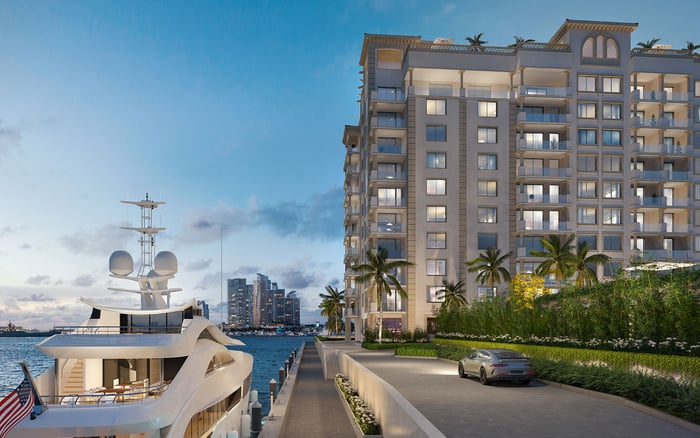
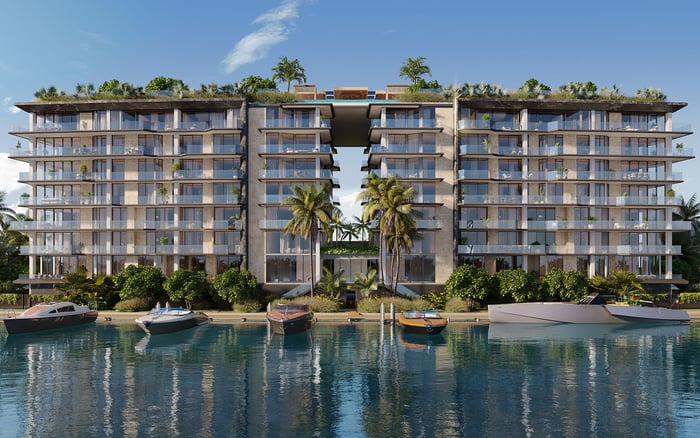
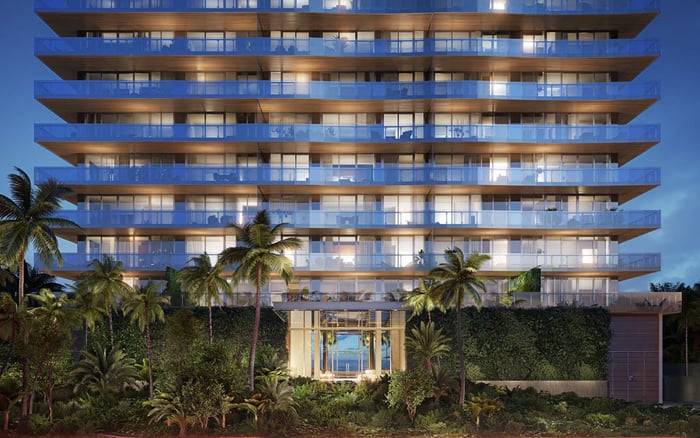
A buyer-oriented look at how three waterfront residential settings frame the rise of club-adjacent living in South Florida.
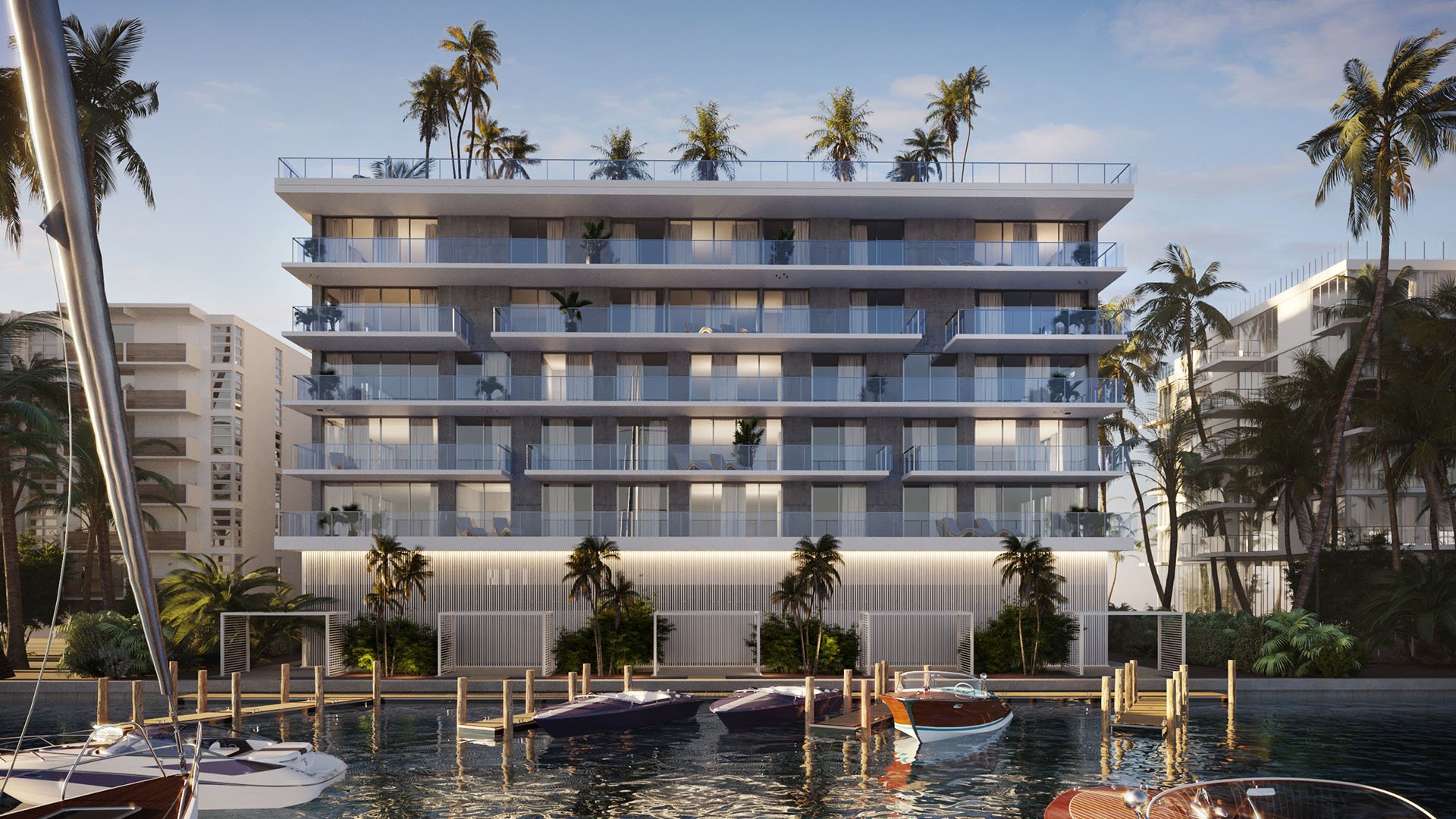
Club-adjacent living has become one of the more nuanced conversations in South Florida luxury real estate. It is not simply about living beside a private club, nor is it defined by amenity counts, restaurant names, marina proximity, or a gym with polished finishes. At the upper end of the market, the idea is more refined: a residence should support the rituals of a private-club life without making daily living feel programmed.
That distinction matters. The most sophisticated buyers often seek adjacency rather than constant participation. They want a home near the water, wellness, social settings, dining, boating culture, and established neighborhood rhythms, while still preserving the discretion of a private residence. This is where projects such as Continuum Club & Residences North Bay Village, Origin Bay Harbor Islands, and Vita at Grove Isle enter the conversation.
Each speaks to a different version of the same buyer instinct. One is drawn to the increasingly watched waterfront setting of North Bay Village. Another prefers the restrained residential fabric of Bay Harbor Islands. A third looks toward Grove Isle and the broader Coconut Grove sensibility, where privacy, landscape, and old-Miami texture remain part of the value proposition.
For many luxury buyers, the word club now functions less as a fixed institution and more as a lifestyle structure. It suggests ease of arrival, a layered social environment, wellness that feels integrated rather than ornamental, and spaces that can shift from quiet mornings to evening entertaining without losing composure.
Lifestyle is the lens, but privacy is the filter. A residence can offer access to a desirable setting and still feel calm, protected, and self-contained. This is particularly important in South Florida, where waterfront scarcity, seasonal use, and full-time relocation patterns have made convenience more valuable than spectacle. Buyers are not only asking what a building offers. They are asking how the building allows them to live.
Club-adjacent living also acknowledges a reality of modern luxury: the best experiences often happen just outside the front door. A marina, a protected island setting, a low-key restaurant circuit, a walkable village fabric, or proximity to established social geography can be as valuable as any interior amenity. The residence becomes the private anchor, while the surrounding district supplies the broader rhythm.
Continuum Club & Residences North Bay Village fits into the discussion through the lens of transformation. North Bay Village occupies a waterfront position that has increasingly drawn attention from buyers looking between Miami Beach, the mainland, and the bay. It offers a different tempo from the more established luxury corridors, which is part of its appeal.
The club-adjacent question here is not only about amenities. It is about whether a residence can capture the feeling of a private waterfront address while participating in a district still being redefined. For some buyers, that is precisely the point. They are looking for the next expression of bayfront living rather than a finished narrative.
Waterfront access, skyline orientation, and the sense of being between major lifestyle centers all contribute to the appeal. A buyer considering Continuum Club & Residences North Bay Village is likely weighing not just the building, but the broader idea of North Bay Village as a more connected, more residential alternative to the obvious beachfront address.
Origin Bay Harbor Islands belongs to a different branch of the club-adjacent conversation. Bay Harbor Islands has long appealed to buyers who want proximity to Bal Harbour and Miami Beach without living directly in the most visible luxury corridors. The area’s value is often tied to restraint, scale, and a quieter residential cadence.
That makes Origin Bay Harbor Islands especially relevant for buyers who interpret club-adjacent living through discretion. The emphasis is less on being seen and more on being well placed. In this context, adjacency may mean access to dining, shopping, coastal life, and waterfront settings, while maintaining a home environment that feels composed and residential.
Bay Harbor Islands also illustrates why boutique living remains powerful in South Florida. Not every buyer wants a tower that behaves like a resort. Some want a building that feels personal, legible, and anchored to a neighborhood. In that sense, Origin Bay Harbor Islands supports a form of luxury that is social by proximity, not by performance.
Vita at Grove Isle brings the conversation into one of Miami’s most distinctive residential contexts. Grove Isle is associated with separation, water, and a sense of arrival, while Coconut Grove remains one of the region’s most layered lifestyle districts. Together, they create a compelling version of club-adjacent living: close enough to culture and dining, removed enough to feel private.
For buyers considering Vita at Grove Isle, the appeal is likely less about trend and more about atmosphere. Coconut Grove has a different language from glassier urban districts. It is greener, more residential, and more rooted in a long-standing Miami identity. That texture matters to buyers who want their residence to feel connected to place rather than merely inserted into a market cycle.
The Grove Isle setting also reframes the concept of waterfront living. Here, water is not only a view category. It is part of the psychological value of the address. The sense of crossing into a more private environment can be as important as the amenities themselves.
The best way to compare these projects is not by forcing them into a single hierarchy. Buyers should begin with use pattern instead. Is the residence intended as a primary home, a seasonal base, or a long-term hold in a location with evolving appeal? Is the buyer seeking social access, neighborhood discretion, or island privacy?
Continuum Club & Residences North Bay Village may speak to buyers who want to participate in a waterfront district with momentum. Origin Bay Harbor Islands may appeal to those who favor boutique scale and an understated residential environment. Vita at Grove Isle may resonate with buyers who place privacy, landscape, and Coconut Grove identity at the center of the decision.
The most important question is not which project is most club-like. It is which project best aligns with the buyer’s preferred relationship to the club idea. Some want energy nearby. Some want services close at hand. Others want the feeling of being able to step away from Miami while remaining firmly inside it.
A sophisticated buyer should look beyond the language of amenities and study daily life. Arrival sequence, privacy, neighborhood fit, waterfront orientation, and the transition between public and private space all matter. A residence can have an impressive amenity program and still feel misaligned if the surrounding context does not support the owner’s routine.
Service expectations should also be calibrated carefully. Club-adjacent living is strongest when service feels intuitive, not theatrical. The goal is to remove friction from the day without turning home into a stage. That is a difficult balance, and it is one of the reasons this category is drawing more serious buyer attention.
In South Florida’s upper market, the next phase of luxury is less about excess and more about orchestration. The residence, the neighborhood, the water, and the social fabric must work together. When they do, club-adjacent living becomes less a marketing phrase and more a durable way to live.
What does club-adjacent living mean in South Florida? It means living near the rhythms of private-club life while preserving the privacy and autonomy of a residence.
Is club-adjacent living the same as living in a private club? No. It usually describes proximity, lifestyle alignment, or amenity character rather than guaranteed club membership.
Why is Continuum Club & Residences North Bay Village relevant to this trend? It places North Bay Village within the broader discussion around bayfront living, social access, and evolving waterfront neighborhoods.
How does Origin Bay Harbor Islands fit the category? It reflects a quieter, boutique interpretation of luxury near established coastal and residential amenities.
Why is Vita at Grove Isle part of the conversation? It connects island-style privacy with the established lifestyle identity of Coconut Grove.
Should buyers compare these projects only by amenities? No. Context, privacy, arrival, neighborhood rhythm, and long-term livability are equally important.
Is waterfront positioning central to club-adjacent living? Often, yes. Water can reinforce privacy, atmosphere, and the sense of a composed residential retreat.
Does Coconut Grove appeal to full-time residents or seasonal buyers? It can appeal to both, particularly buyers who value greenery, neighborhood character, and residential depth.
What should a buyer ask before choosing among these projects? Ask how the location supports daily routines, social preferences, privacy needs, and long-term ownership goals.
Is club-adjacent living likely to remain important? Yes. As buyers prioritize discretion and ease, residences near refined lifestyle ecosystems should remain compelling.
For a tailored shortlist and next-step guidance, connect with MILLION.
If branded residences are on your mind — as a home or as an allocation — we would be glad to share what we are seeing, privately.
Begin a quiet conversation