A discreet guide for Palm Beach buyers weighing the ease of a pied-à-terre against the space, autonomy, and obligations of a private house.

For the Palm Beach buyer, choosing a pied-à-terre over a house is rarely a compromise. More often, it is a decision about rhythm. How often will you be in residence? Who will prepare the home before arrival? How much space will you truly use? And, perhaps most important, do you want a property that expands your life or one that quietly supports it?
A house offers autonomy, scale, and the emotional gravity of a private address. A pied-à-terre offers something different: immediacy. It can be closed with confidence, opened with little ceremony, and used intensely for a few days or a season without the same operational weight. For many Palm Beach buyers, that distinction is decisive.
The strongest purchase begins with candor. If your Florida life is built around short stays, social weekends, family holidays, wellness routines, or meetings that pull you in and out of town, a serviced residence may be the more elegant answer. If your vision requires gardens, staff quarters, deep entertaining infrastructure, and full domestic control, a house may still be the better instrument.
The easiest mistake is to compare a condominium and a house room by room. That rarely captures the real value. A pied-à-terre should be judged by how effortlessly it performs when you are away, and how comfortably it receives you when you return.
Begin with the calendar. Count how many nights you expect to sleep in Palm Beach in a typical year. Then separate those nights into quiet stays, family visits, entertaining weeks, and working days. A buyer who comes alone or as a couple may value a refined primary suite, gracious terrace, secure parking, and strong building services more than extra bedrooms. A buyer who expects children, grandchildren, or guests should think carefully about secondary suites, acoustic separation, elevator access, and storage.
Second-home ownership also rewards discipline. The property should not demand a full day of adjustments every time you arrive. Air conditioning, deliveries, cleaning, linens, car access, and routine maintenance should feel orderly before the first glass is poured.
The phrase lock-and-leave is overused, but in Palm Beach it remains one of the clearest advantages of the pied-à-terre model. A well-chosen residence can reduce the friction of ownership while preserving the pleasures of place.
That begins with building operations. Buyers should ask how access is managed, how packages are handled, how vendors are approved, and whether management is accustomed to absent owners. The quality of these quiet systems matters as much as the visible amenities. A beautiful lobby loses force if a simple delivery becomes complicated.
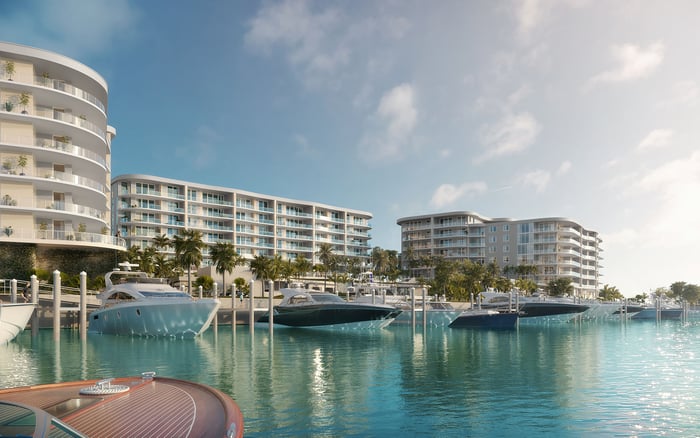
For buyers considering residences across the Palm Beach and West Palm Beach orbit, projects such as Palm Beach Residences can be part of a broader conversation about convenience, service, and the type of ownership experience that feels appropriate for seasonal living. The link between location and service should be studied carefully. A residence may be beautiful, but it must also be easy to live in selectively.
House buyers often assume privacy belongs to land. In practice, privacy is also created by circulation, sound control, elevator design, lobby culture, staff discretion, and the number of moments in which an owner must interact with others.
A pied-à-terre can feel private when arrival is efficient, parking is intuitive, corridors are calm, and the residence itself has clear separation between sleeping, entertaining, and service zones. Conversely, a large residence can feel exposed if elevators open awkwardly, terraces overlook neighboring spaces, or building rules create too many touchpoints.
When touring, arrive as you would in real life. Pull into the building, park, move through the lobby, enter the elevator, and unlock the residence. Then imagine doing it after a late flight, with guests, or with luggage. The answer is often clear before you reach the living room.
A house remains compelling for buyers who want full control. You can shape the environment, schedule work on your terms, keep larger collections, host more expansively, and avoid the layered governance of association living. For those who expect long stays or see Palm Beach as a primary domestic base, that freedom can be essential.
The tradeoff is operational intensity. Landscaping, exterior maintenance, security, staffing, repairs, storm preparation, and insurance coordination all require attention. Some buyers enjoy that level of control. Others discover that the most luxurious choice is the one with fewer moving parts.
Waterfront houses, in particular, can have a romance that is difficult to replicate. Waterfront living also tends to intensify maintenance considerations, so the buyer should weigh the view against the responsibility that comes with exposure, weather, and upkeep.
The elegance of a pied-à-terre depends on rules that match your intended use. Before falling in love with a floor plan, review the governing documents. Pay close attention to leasing restrictions, guest policies, pet rules, renovation procedures, move-in requirements, parking rights, storage assignments, and approval processes for vendors or domestic staff.
For some buyers, the critical issue is flexibility. Can family members use the residence when the owner is away? How are long guest stays treated? Are service providers permitted to enter without the owner present? Are there blackout periods or approval timelines that could affect renovation plans?
Any Palm Beach condominium may draw attention because of its address, but every purchaser should still evaluate the practical documents as closely as the architecture. In the pied-à-terre category, rules are not background material. They are part of the product.
Small inconveniences become large when a home is used intermittently. Storage is one of the first. A true pied-à-terre should accommodate seasonal clothing, luggage, sporting gear, entertaining pieces, and the ordinary objects that make arrival feel personal. Without that capacity, every visit begins with logistics.
Parking deserves the same scrutiny. Consider the number of cars, valet procedures, guest parking, charging needs if relevant, and how easily a driver or assistant can manage arrivals. Ask whether parking rights are assigned, deeded, licensed, or otherwise limited by building policy.
The most appealing pied-à-terre is not always the largest. It is the one that makes daily actions feel composed: coffee in the morning, a walk out the door, a guest arriving without confusion, dinner at home without a service puzzle, and departure without a checklist that follows you back north.
Many buyers now view West Palm Beach as part of the practical ownership conversation, particularly when the goal is a refined residence that supports frequent travel and easy access to services. The decision is not simply Palm Beach versus elsewhere. It is about the balance between address, building quality, lifestyle preferences, and the amount of space or service a buyer wants.
A buyer weighing Mr. C Residences West Palm Beach may be thinking differently from a buyer focused exclusively on an estate. The same is true for someone considering Alba West Palm Beach or The Ritz-Carlton Residences® West Palm Beach. Each inquiry should begin with the buyer’s pattern of use rather than a reflexive preference for more land.
Lifestyle is the point. A pied-à-terre should make dinners, appointments, workouts, errands, and departures feel simple. If the residence lowers the effort required to enjoy Palm Beach, it may deliver more real value than a larger home that remains underused.
A Palm Beach pied-à-terre purchase should include a close review of monthly carrying costs, reserves, insurance structure, potential assessments, building staffing, maintenance history, and renovation rules. These items may not be glamorous, but they determine whether the property remains easy to own.
Buyers should also test the floor plan for real entertaining. Where do guests place bags and coats? Can breakfast happen without disturbing someone sleeping late? Is there a powder room that protects the privacy of bedroom areas? Is the terrace usable for the way you actually live, or is it simply photogenic?
Finally, think about exit. A highly personal house may require a very specific future buyer. A well-located, well-managed pied-à-terre with rational proportions can appeal to a broader audience of seasonal owners, although resale is never guaranteed and should be evaluated with current market context at the time of purchase.
The pied-à-terre is best suited to the buyer who values precision over scale. You want to arrive, live well, host selectively, leave easily, and know the property is being watched. You may already own larger homes elsewhere. You may prefer to invest in service, design, and location rather than rooms that sit unused.
It is also ideal for the buyer testing a longer relationship with Palm Beach. A residence can provide a graceful foothold without immediately taking on the full ecosystem of house ownership. Over time, some buyers graduate to houses. Others realize the pied-à-terre was not a stepping stone at all, but the correct long-term format.
The right answer is not universal. It is personal, operational, and deeply tied to how you want Palm Beach to function in your life.
Is a pied-à-terre better than a house in Palm Beach? It is better for buyers who prioritize ease, service, and intermittent use. A house is stronger for buyers who need full control, more space, and longer stays.
What should I review before buying a condominium as a second home? Review association rules, carrying costs, reserves, insurance structure, parking, storage, guest policies, pet rules, and renovation procedures.
How important is building management? It is central to the ownership experience. For absent owners, responsive management can be as valuable as a view or amenity package.
Should I buy more bedrooms than I need? Only if your guest pattern justifies it. Unused rooms add cost, while a more efficient plan may deliver a better daily experience.
Can family use my pied-à-terre when I am away? That depends on the building’s governing documents. Confirm guest and family-use policies before signing a contract.
Is storage a serious issue for seasonal buyers? Yes. Luggage, clothing, sporting equipment, and entertaining pieces all need a place to live between visits.
Do pied-à-terre buyers need to consider resale? Yes. Floor plan quality, building governance, location, and carrying costs can all influence future appeal.
When does a Palm Beach house make more sense? A house may be preferable for long stays, larger households, extensive entertaining, gardens, pets, staff, or buyers who want complete control.
Are West Palm Beach residences relevant to Palm Beach buyers? They can be, especially for buyers who value convenience, newer residential formats, and access to services while staying near the Palm Beach lifestyle.
What is the best way to shortlist comparable options for touring? Start with location fit, delivery status, and daily lifestyle priorities, then compare stacks and elevations to validate views and privacy.
For a tailored shortlist and next-step guidance, connect with MILLION.
If branded residences are on your mind — as a home or as an allocation — we would be glad to share what we are seeing, privately.
Begin a quiet conversation