For Toronto buyers considering Bay Harbor Islands, event-week convenience depends less on headline mileage than on disciplined routing. The Broad Causeway, shifting boat-show venues, Miami Beach congestion and realistic airport windows all shape how a second home should be operated.
For a Toronto buyer, Bay Harbor Islands can feel immediately legible: a discreet waterfront setting, a compact residential rhythm and proximity to Bal Harbour, Surfside and Miami Beach. Yet convenience here is measured by more than distance. It depends on how efficiently a household crosses the island's principal mainland connection, adapts to major-event congestion and coordinates an airport transfer around a fixed departure time.
Bay Harbor Islands' main mainland route is the Broad Causeway, which runs from Kane Concourse to NE 123rd Street in North Miami. That geography establishes a clear operating principle for ownership. On ordinary days, the route is straightforward. During major weekends, the household should treat the causeway as the first segment of every itinerary, not as an invisible prelude to the drive.
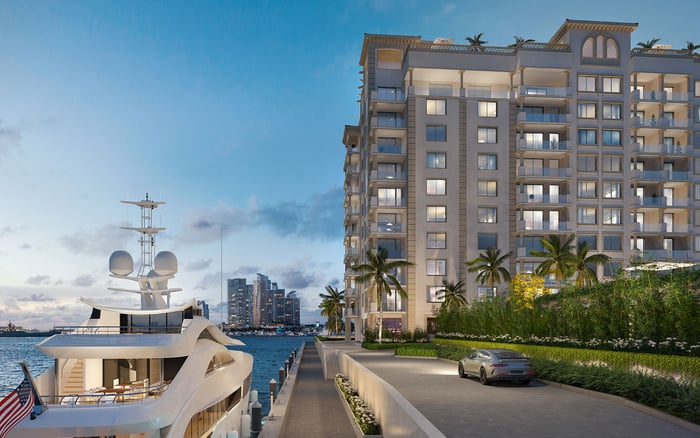
This distinction matters for buyers comparing residences such as Bay Harbor Towers and Onda Bay Harbor. The relevant luxury is not a promise that traffic will disappear. It is the ability to establish a calm, repeatable departure protocol from a residential base removed from the busiest event districts.
In Bay Harbor Islands, mobility is best managed as a household service rather than a last-minute errand.
F1 weekends raise the standard of planning, even when no defensible fixed travel time can be assigned. A Toronto owner accustomed to scheduling around flights, reservations and professional commitments should not treat a normal map estimate as an event-day guarantee. The practical response is qualitative: confirm the destination and credential requirements, monitor live routing and preserve flexibility around departure and pickup.
A private driver should receive the day's sequence in advance, including the preferred departure point at the residence, the passenger's required arrival window and a communication protocol should the route change. The return deserves equal attention. A pickup point that seems obvious earlier in the day may become less suitable as traffic controls and demand evolve.
For a second-home owner, the residence manager or concierge should coordinate directly with the driver rather than leave route decisions to the passenger at the curb. This is where lifestyle and service intersect. The objective is not simply to own near Miami's major occasions, but to move through them without allowing transport uncertainty to dominate the day.
The boat show requires a different mental model because it can be distributed across several destinations. In 2026, the official footprint encompassed four locations: Miami Beach Convention Center, Pride Park, Miami Beach Yacht Collection and Sailor's Cove. The first three were in Miami Beach; Sailor's Cove was at IGY Yacht Haven Grande Miami on Watson Island.
These are not interchangeable drop-offs. The Convention Center sits at 1901 Convention Center Drive, Pride Park at 1809 Meridian Avenue and the Miami Beach Yacht Collection along the 4700 block of Collins Avenue, on Indian Creek north of the Fontainebleau. A guest viewing yachts on Collins Avenue before continuing to Watson Island is undertaking a multi-site itinerary, not making a single neighborhood visit.
Congestion increases around the Convention Center, Collins Avenue and surrounding roads during the show. Slow-moving traffic can affect the Julia Tuttle and MacArthur causeways, while traffic plans may include restrictions or closures around Convention Center Drive and 19th Street. Special operations at the East Venetian Causeway drawbridge add another variable between Miami Beach and the mainland.
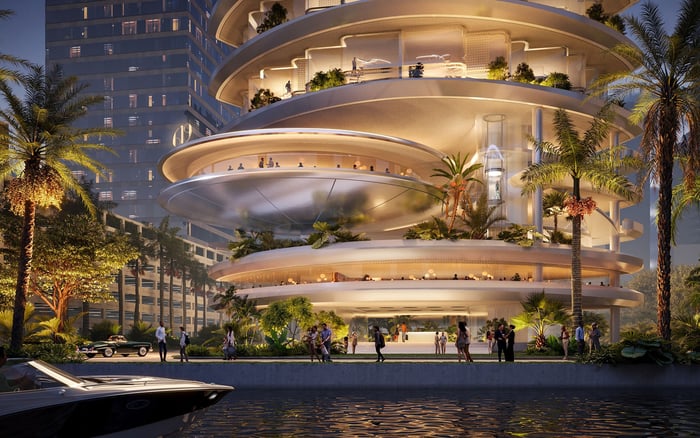
For buyers drawn to a boating-oriented residence such as La Maré Bay Harbor Islands, this is a useful distinction. A waterfront home and a marina-centered weekend can be naturally compatible, but a polished schedule still depends on identifying the exact show venue before the vehicle leaves Bay Harbor Islands.
Boat-show geography changes. The 2025 edition listed six official locations, including Venetian Marina & Yacht Club; the 2024 edition also used six sites, including Herald Plaza in Downtown Miami. The correct driver brief therefore begins with the map for the relevant year, not last season's routine.
A well-run household should give the chauffeur each venue name in sequence rather than simply writing “boat show.” Drop-off and pickup instructions should be separated, since a suitable arrival point may not remain the best collection point later. If lunch, a yacht appointment and an evening engagement occupy different parts of Miami Beach or Watson Island, each should be treated as a distinct movement.
Bridge operations also deserve attention. During the referenced show schedule, the 63rd Street Bridge did not open for marine traffic from 7:10 to 9:55 a.m. or from 4:05 to 6:59 p.m., reducing road interruptions during those periods. That detail can help a driver interpret conditions, but it should not replace live traffic checks or the official event map.
Miami International Airport is commonly framed as approximately 25 to 40 minutes by car from the Surfside and Bay Harbor area. That is a planning range, not a boarding strategy. A Toronto-bound traveler must add the time required to leave the residence, cross the Broad Causeway, manage terminal access and complete the airline's preflight requirements.
The discipline is to work backward from the airline's requirements rather than forward from the home's estimated drive time. Event traffic, weather, luggage, traveling companions and driver positioning can each affect the appropriate departure. A household with frequent travel to Canada may also benefit from recording preferred terminal instructions and keeping the driver's contact details consistent across stays.
As a broader benchmark, Bay Harbor Islands is approximately 12.6 road miles from Downtown Miami, with a baseline drive near 19 minutes. For everyday planning, Downtown or Brickell is more conservatively treated as roughly 20 to 35 minutes, depending on traffic. The difference illustrates why buyers should distinguish a baseline from an operating window.
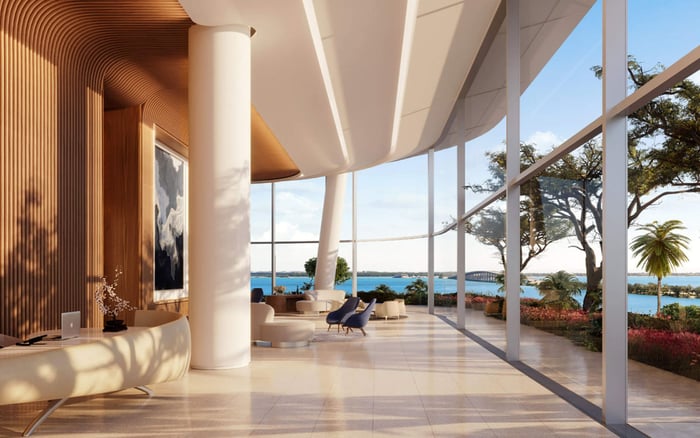
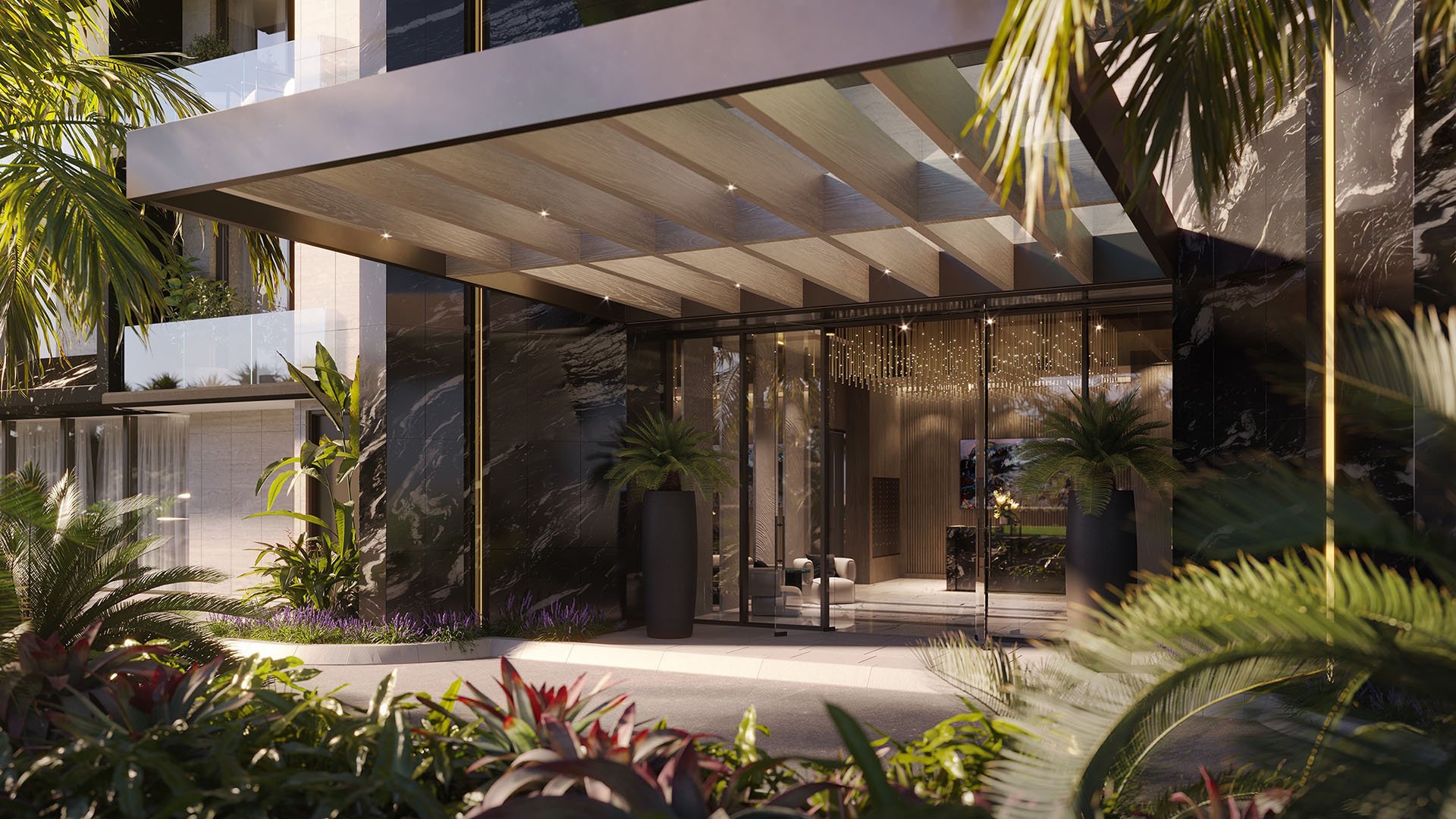
Properties should be evaluated not only for architecture and water views, but also for how arrivals are handled. Ask where a chauffeur can wait, how guests are announced, how luggage moves from vehicle to residence and who communicates when an owner is delayed. These operational details are especially relevant for buyers considering wellness-led options such as The Well Bay Harbor Islands.
For readers using buyer's guides to compare South Florida addresses, Bay Harbor Islands offers a composed answer to a specific preference: residential separation from the event core without surrendering access to it. Miami Beach remains close enough to be part of the routine, while the Broad Causeway makes the first decision of every drive unusually clear.
The most successful ownership plan is simple: use normal travel times only as context, verify each event's current footprint, brief the driver by destination and preserve greater flexibility when an arrival is consequential. That approach keeps Formula 1, the boat show and airport days in their proper place-part of the pleasure of a Miami residence, not a test of improvisation.
For discreet guidance on selecting and operating a South Florida residence, connect with MILLION.
If branded residences are on your mind — as a home or as an allocation — we would be glad to share what we are seeing, privately.
Begin a quiet conversationThe Broad Causeway connects Kane Concourse with NE 123rd Street in North Miami and is the principal mainland route.
The baseline is about 19 minutes across approximately 12.6 road miles, although actual traffic can extend the trip.
A practical local range is roughly 20 to 35 minutes, depending on traffic.
The Surfside and Bay Harbor area is commonly framed as about 25 to 40 minutes from MIA by car. Flight-day planning should include additional time beyond the drive.
No fixed event-day time is supported. Owners should use live routing, confirm access requirements and maintain a flexible arrival buffer.
The four locations were Miami Beach Convention Center, Pride Park, Miami Beach Yacht Collection and Sailor's Cove.
No. Sailor's Cove was at IGY Yacht Haven Grande Miami on Watson Island, separate from the Miami Beach sites.
The show can span Convention Center, Collins Avenue and Watson Island destinations, each requiring a distinct route and drop-off plan.
No. The official locations have changed across editions, so owners should consult the map for the relevant year.
Review chauffeur waiting arrangements, guest arrival procedures, luggage handling and communication between the building team and driver.