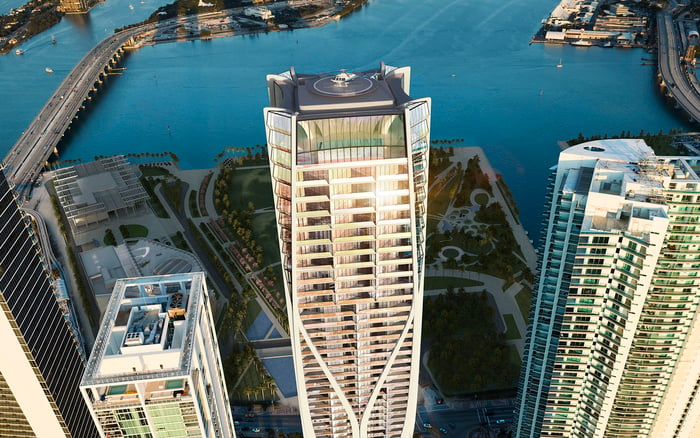
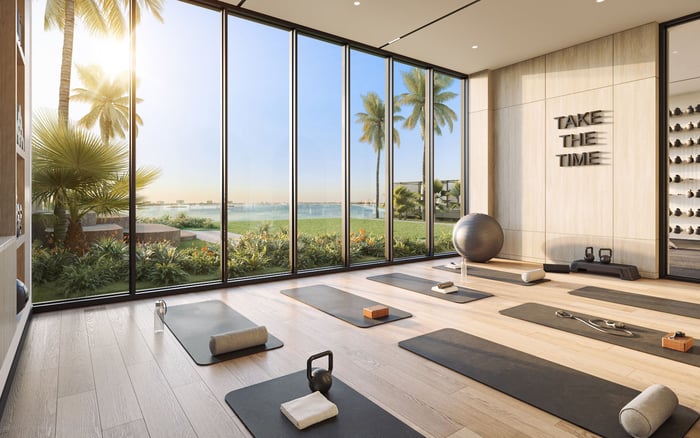
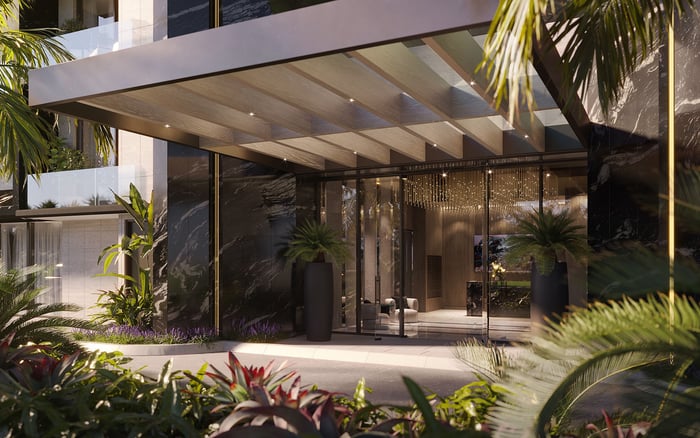
Miami Art Week turns building operations into a visible measure of luxury. Buyers can use periods of concentrated arrivals and citywide movement to assess privacy, service quality, and the practical choreography of shared spaces.
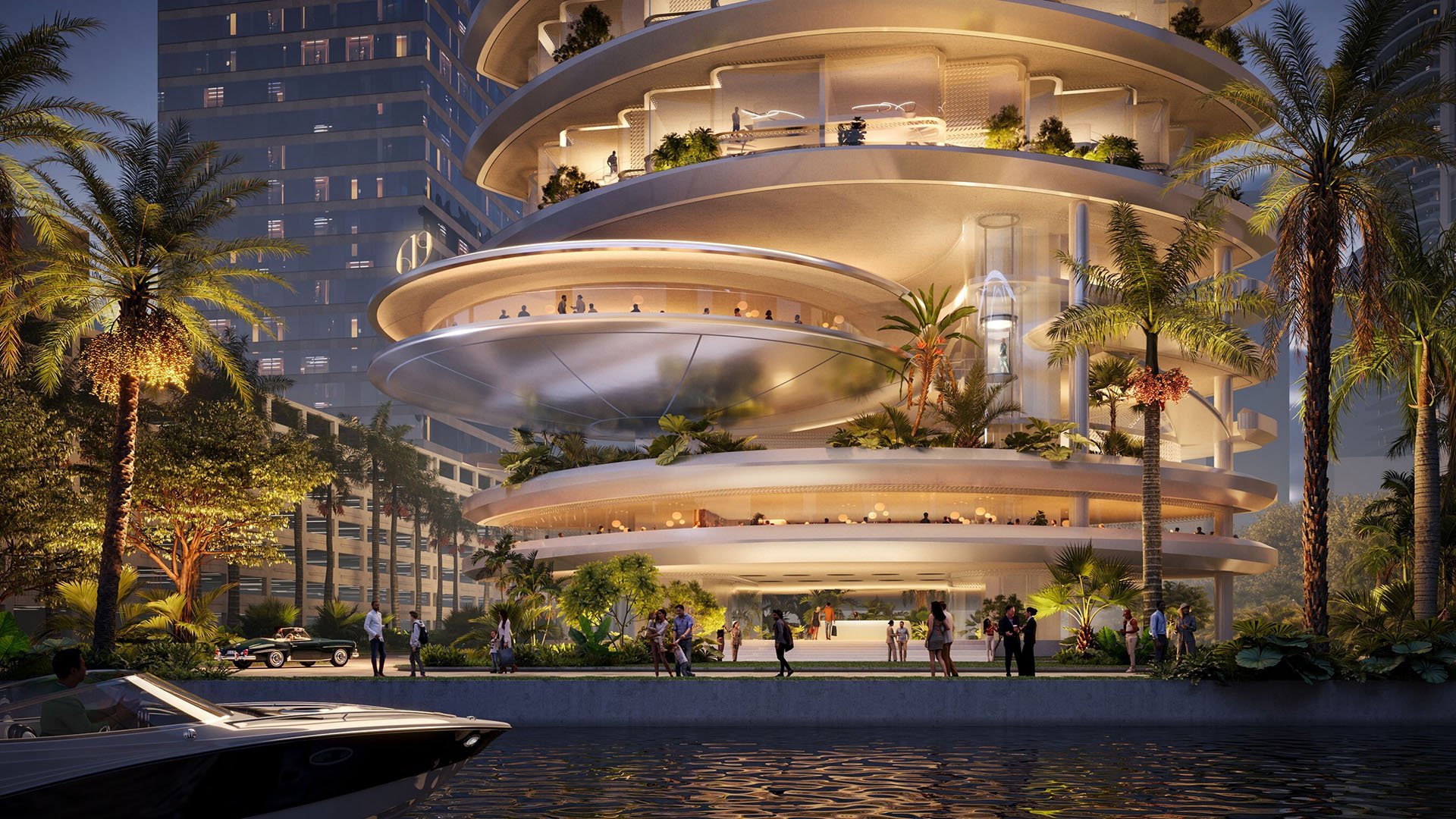
Miami Art Week extends across Miami Beach and other South Florida cultural districts through exhibitions, previews, dinners, pop-ups, and private gatherings. The resulting movement brings neighborhood access, pedestrian flow, transportation, and curbside activity into unusually sharp focus.
For a luxury buyer, that intensity changes the viewing lens. Stone, millwork, lighting, and views still matter, but so does the choreography beyond the entrance. A residence may feel serene on an ordinary afternoon. Art Week poses a more revealing question: can it preserve that composure when arrivals, drivers, deliveries, credentials, and departing guests converge within narrow windows?
Art Week makes operational grace as visible as architectural finish.
The question applies across property types, from branded residences with hospitality-oriented identities to discreet waterfront buildings. A beautifully resolved lobby succeeds fully only when its circulation supports privacy, intuitive movement, and calm service under pressure.
During Art Week, controlled access may involve advance registration, guest lists, invitations, or distinct access periods. In this environment, preregistration can feel like part of the guest experience rather than merely a security intervention.
Buyers can apply the same logic to residential due diligence. The issue is not whether a building admits visitors, but whether it can receive expected guests graciously while identifying who is authorized to proceed. A polished protocol should be effortless for a resident, clear to a guest, and structured enough to prevent the lobby from becoming an improvised holding area.
When touring Setai Residences Miami Beach or considering other Miami Beach addresses, a buyer might ask how names are submitted, where credentials are checked, and what happens when several households host concurrently. These are evaluation questions, not claims about a particular property’s procedures. Building-level practices should be confirmed directly through management and current governing documents.
Art Week’s mix of open programming and private gatherings can make credential checks more conspicuous. In a residence, good security is not necessarily about creating a forbidding atmosphere. It is about making distinctions accurately: resident versus visitor, expected guest versus walk-in, and private gathering versus ordinary building traffic.
The strongest buyer questions focus on process. Is there a defined visitor check-in point? Can staff verify a guest without obstructing a resident’s route? Is waiting space positioned so people do not gather at elevator thresholds? How are vendors, event personnel, and deliveries directed? What is the escalation path when a name is absent from a list?
These questions matter when comparing a culturally connected urban location through The Residences at 1428 Brickell or the gallery-oriented context surrounding Kempinski Residences Miami Design District. These residences provide starting points for evaluating their respective settings, while actual access and security protocols require property-specific verification.
Art Week is shaped by movement among fairs, exhibitions, and related activities. That citywide pattern has a residential parallel: circulation is not simply a corridor diagram, but a sequence of decisions from curb to residence.
During busy periods, buyers should observe whether drop-off activity remains orderly and whether the path from vehicle to lobby is immediately legible. Inside, the most telling points are often transitions: reception, guest waiting areas, elevator banks, amenity entrances, service routes, and any public-facing hospitality space. Conflicting paths can make even a generous lobby feel compressed. Clear routes can help a smaller setting retain its composure.
The distinction becomes especially meaningful in waterfront properties, where residents may value both ceremonial arrival and seclusion. Buyers need not expect complete separation at every point. They should look for a coherent hierarchy that protects resident movement while allowing legitimate guests to be welcomed without confusion.
Living near major programming can provide convenient access to Miami’s concentrated cultural calendar. The trade-off is that event schedules may place additional pressure on surrounding streets, entrances, and public-facing areas. Proximity should therefore be evaluated as both a lifestyle benefit and an operational condition.
A buyer considering Rivage Bal Harbour can use the broader enclave context to frame questions about event-week arrivals and guest processing without assuming a specific building policy. The same discipline applies in Surfside, Downtown Miami, Brickell, and other South Florida districts affected by cultural programming. Convenience has value, but its residential quality depends on how successfully a property absorbs peak demand.
Private gatherings, hospitality events, or branded activations can introduce a different circulation pattern from ordinary residential use. For any property that permits unusual programming, planning involves more than décor and invitation design.
A prudent buyer should ask whether private events can affect normal access to amenities, guest parking, loading, elevators, or common rooms. It is also useful to understand who approves such uses, how residents are notified, and whether an event route intersects with everyday circulation. None of these questions presumes that a building hosts public activations. Instead, they help establish whether governance is clear if unusual programming occurs.
The most useful inspection is quiet and specific. Where feasible, arrive near a busy event window and observe the curb, reception desk, waiting zones, and elevator approach. Notice whether signage clarifies movement without overtaking the interior. Ask how staff distinguishes residents, registered guests, service providers, and event attendees.
Then review the less visible framework. Confirm guest-registration rules, amenity reservation procedures, private-event permissions, staffing expectations, and relevant resident notices through current property documents or management. Security procedures may not be fully visible during a tour, so assumptions based on branding, location, or lobby appearance are inadequate.
Art Week does not provide a formal score for residential performance. It offers a practical observation window for considering whether architecture, staffing, access control, and hospitality operate as one system. For an ultra-premium buyer, the ultimate luxury is not an empty lobby. It is a building that can welcome the right people, guide them discreetly, and preserve the resident’s sense of ease.
Explore South Florida residences with operational quality in mind through MILLION.
If branded residences are on your mind — as a home or as an allocation — we would be glad to share what we are seeing, privately.
Begin a quiet conversationConcentrated events and visitor movement can make entrances, staffing, guest processing, and shared-area circulation more visible than during an ordinary tour.
No. Preregistration can support both controlled access and a smoother welcome when it is clearly communicated and efficiently managed.
Ask how names are submitted, where visitors wait, how credentials are verified, and what occurs when a guest is not on the expected list.
Observe the sequence from curb to lobby and elevators, paying attention to waiting areas, amenity entrances, service routes, and potential crossing points.
Proximity can improve cultural access, but it may also place pressure on streets, drop-off zones, entrances, and public-facing areas during busy periods.
It distinguishes residents, expected visitors, vendors, and other arrivals accurately without creating unnecessary delay or a theatrical atmosphere.
Depending on the property, private events may affect amenity access, loading, parking, elevators, or common-area circulation.
Buyers should ask management and review current governing documents and other property-specific materials rather than relying on branding or appearances.
Look for orderly drop-off activity, a legible path to reception, suitable waiting space, and minimal conflict between resident, guest, and service movement.
No. It offers a practical observation window, but buyers must assess operations through direct visits, current documents, and management confirmation.