The Village at Coral Gables offers a low-rise, courtyard-oriented alternative to South Florida’s seasonal resort model, with architectural continuity and everyday urban context at the center of its full-time appeal.
South Florida luxury is often defined by ocean views, resort amenities and the ease of a lock-and-leave condominium. A primary home demands a different standard. It must support ordinary weekdays as convincingly as holiday weekends, accommodating work, school, healthcare, travel and the quieter rituals that turn an address into a home.
The Village at Coral Gables enters that conversation as a low-rise residential enclave rather than an oceanfront high-rise. Its case for year-round living rests less on beachfront spectacle than on architectural character, neighborhood integration and access to the infrastructure of daily life. For the right buyer, that distinction is not a compromise. It is the point.
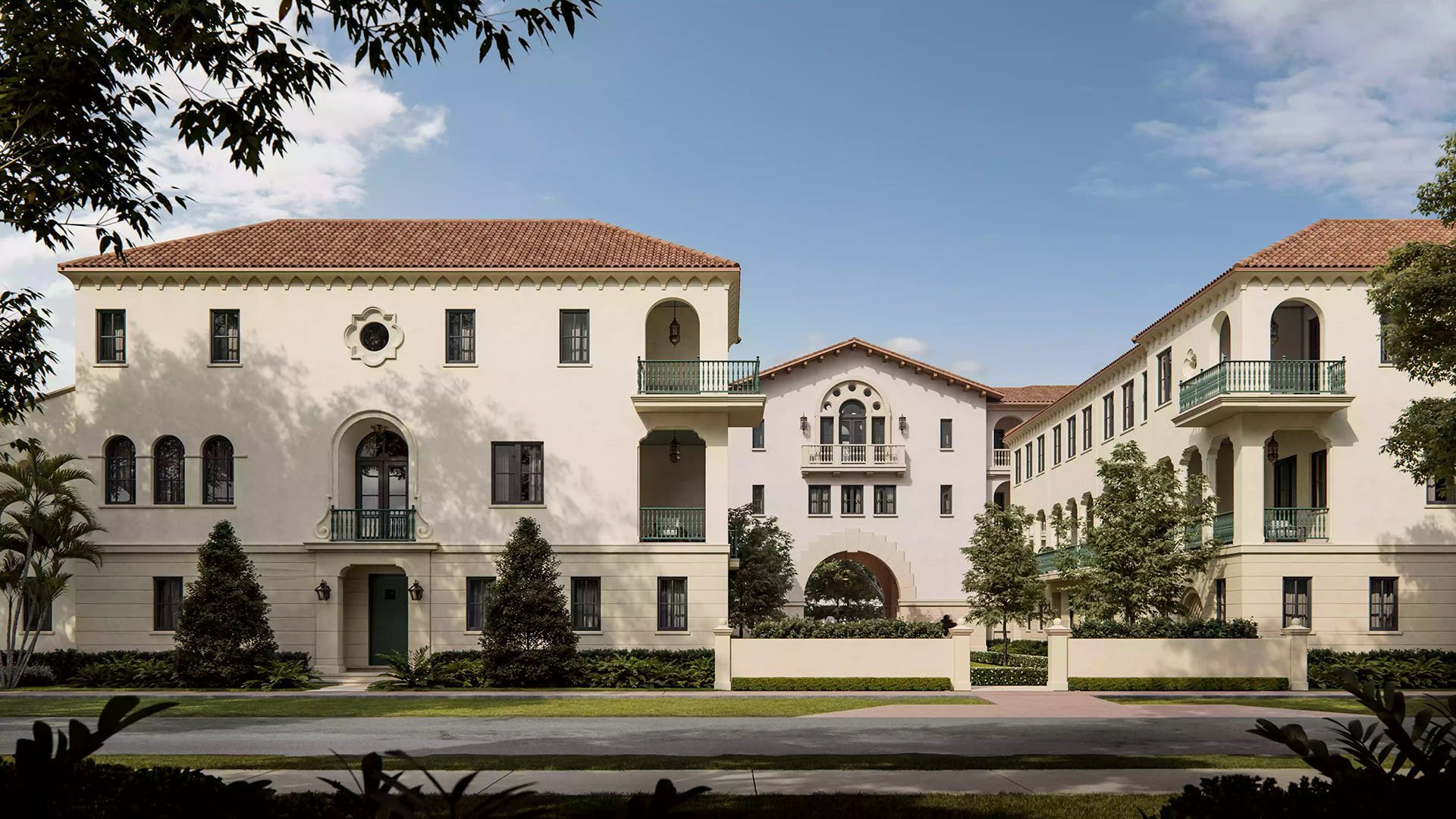
The development draws on the Mediterranean design language of historic Coral Gables, with Spanish Revival influences intended to relate visually to the established surroundings. Here, design and architecture serve a practical purpose: the homes are conceived as part of a recognizable neighborhood vocabulary rather than as an isolated vertical statement.
A courtyard-oriented plan further reinforces the residential atmosphere. Courtyards can shape arrival, circulation and the transition between shared and private space in a way that differs from the elevator-led experience of a tower. Buyers considering a townhouse or another low-rise format may find that spatial rhythm more familiar and domestic.
Scale is equally consequential. A low-rise enclave may suit residents who prefer a closer relationship with the neighborhood and do not equate luxury exclusively with elevation. It is a distinct proposition from seasonal ownership centered on a self-contained resort environment.
The development’s urban context is one of its principal advantages for primary-residence buyers. Access to schools matters for households planning around education, while healthcare access supports year-round occupancy for families and older residents. Each household should weigh these considerations against its specific institutions, schedules and transportation preferences.
Professionals may place greater weight on proximity to employment centers than seasonal buyers do. Frequent travelers may similarly value airport access while maintaining Coral Gables as a stable home base. None of these factors is glamorous in isolation, but together they determine whether a residence functions elegantly throughout the year.
This is where lifestyle becomes operational rather than decorative. The useful question is not simply whether an address feels luxurious upon arrival, but whether its location and residential format reduce friction across recurring routines.
The strongest match is a buyer who values architectural continuity, neighborhood integration and practical access over direct beachfront positioning. That may include families establishing a long-term base, professionals with regular work patterns, frequent flyers who still want a settled local identity, or older residents factoring healthcare into their year-round plans.
A preference for low-rise living also matters. Buyers who favor the privacy and services of a tall condominium may reach a different conclusion. Those drawn to courtyards, residential scale and a visually cohesive setting are more likely to understand The Village at Coral Gables on its own terms.
The decision should also reflect actual occupancy. A residence used for brief winter stays can prioritize immediacy, views and ease of departure. A primary home must absorb deliveries, appointments, study, work and changing household needs without making daily life feel temporary.
Within Coral Gables, buyers can compare the village concept with Cora Merrick Park and Ponce Park Coral Gables to determine which residential format best reflects their priorities. The aim is not to identify a universal winner, but to clarify preferences around scale, setting and routine.
A broader search might include Arbor Coconut Grove for another neighborhood-oriented frame, or 2200 Brickell when testing the appeal of a different urban context. These comparisons help distinguish a genuine preference for Coral Gables from a broader desire for low-rise South Florida living.
The essential discipline is to compare homes according to intended use. A seasonal address and a primary residence can both be exceptional, but they solve different problems.
Before proceeding, buyers should map a representative month rather than an ideal weekend. Consider school journeys, healthcare appointments, work travel, airport trips, guest patterns and the amount of time expected at home. Then determine whether a courtyard-oriented, neighborhood-integrated enclave supports those routines better than a beachfront tower.
Review the specific residence, its relationship to shared spaces and the ownership documents with qualified advisers. Pricing, floor plans, timing and detailed amenities should be confirmed for the opportunity under consideration. Florida homestead or tax-residency questions require separate legal and tax advice; general eligibility should not be treated as a project attribute.
The Village makes the most sense as a primary residence when its defining qualities are also the buyer’s daily priorities. For households seeking architectural character and an embedded urban setting, the absence of an oceanfront resort identity may sharpen, rather than weaken, the proposition.
Is The Village at Coral Gables an oceanfront high-rise? No. It is conceived as a low-rise residential enclave rather than an oceanfront tower.
What architectural language informs the project? Its design draws on Mediterranean traditions and Spanish Revival influences associated with historic Coral Gables.
Why does the courtyard plan matter? The courtyard-oriented plan is intended to create a more residential atmosphere and a distinct low-rise experience.
Who may prefer this format to a tower? Buyers who value neighborhood scale, architectural continuity and a less vertical style of living may find it appealing.
Why are schools relevant to the decision? School access can materially shape everyday routines for households evaluating the property as a full-time home.
Does healthcare access support year-round living? Yes. Healthcare access is an important practical consideration for families and older residents planning full-time occupancy.
Can the location work for professionals? Proximity to employment centers can make regular commuting more practical, depending on each resident’s destination and schedule.
What does airport access add? It can support frequent travel while allowing residents to maintain Coral Gables as an established home base.
Is this primarily a beachfront lifestyle choice? No. Its strongest appeal lies in architectural character, neighborhood integration and daily infrastructure rather than beachfront positioning.
Should buyers treat homestead status as a project benefit? No. Eligibility depends on personal circumstances and applicable rules, so buyers should obtain independent legal and tax advice.
If you'd like a private walkthrough and a curated shortlist, connect with MILLION.
If branded residences are on your mind — as a home or as an allocation — we would be glad to share what we are seeing, privately.
Begin a quiet conversation