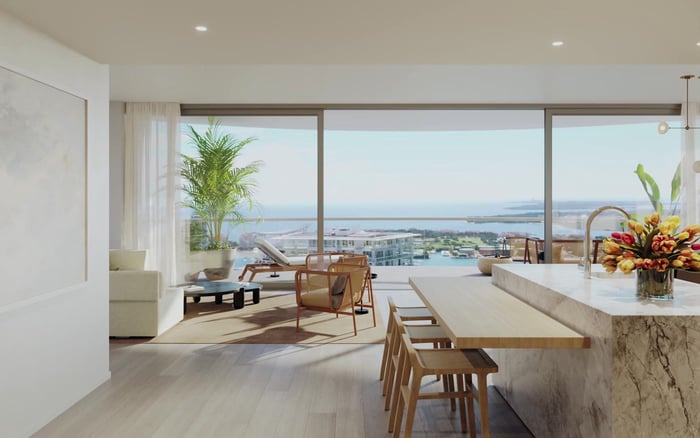
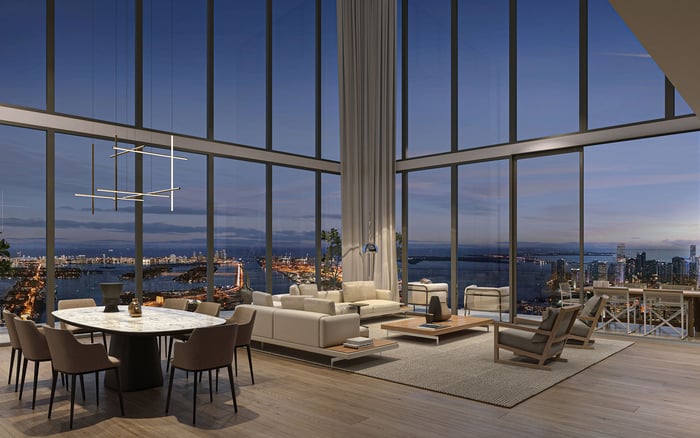
A buyer-focused look at how storm preparation can elevate a South Florida penthouse from seasonal escape to full-time primary residence.
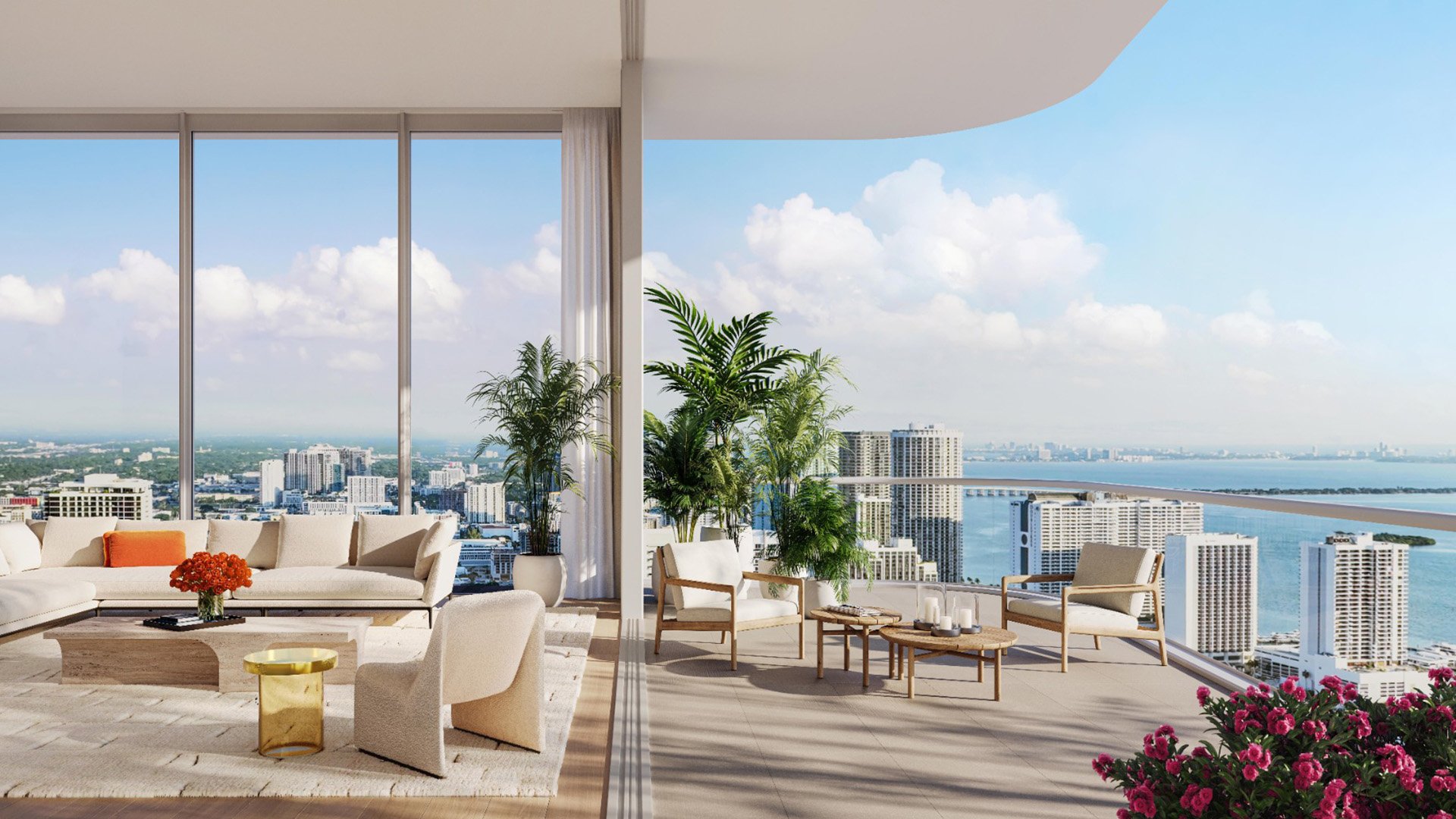
In South Florida, the penthouse has long been judged by altitude, horizon line, ceiling height, privacy, and sense of arrival. Those qualities still matter. Yet for a buyer considering a true full-time residence, the conversation has become more exacting. The question is no longer simply whether the home is beautiful on a clear winter afternoon. It is whether the home remains calm, functional, and dignified when weather becomes the main character.
Storm preparation now belongs inside the luxury brief because it reveals how a residence actually lives. A seasonal owner may tolerate inconvenience, postponed travel, or a temporary relocation. A full-time owner requires something more rigorous: continuity. That means confidence in the envelope, vertical transportation, building staff protocols, parking strategy, storage plan, and the ability to resume daily life without the residence feeling improvised.
For the penthouse buyer, storm readiness is less about anxiety than control. It is the ability to preserve routines, protect collections, secure outdoor living areas, and rely on building systems without theatrical effort. In that sense, resilience is not separate from luxury. It is one of its quietest expressions.
The shift from second-home mindset to primary-residence mindset changes the evaluation of every detail. A weekend apartment can be chosen for drama. A full-time residence must also be chosen for logistics. In a penthouse, where exposure is part of the appeal, buyers are increasingly attentive to how the building manages weather without compromising elegance.
The most sophisticated owners ask practical questions early. How quickly can outdoor furnishings be secured? Where do planters, sculptural pieces, and loose terrace elements go when winds rise? Are service corridors intuitive? Is there enough interior storage for the objects that make outdoor life beautiful in ordinary weather? The answers reveal whether a home has been designed for real use or merely staged for a sales moment.
There is also an emotional dimension. A primary residence must reduce friction. Owners want to feel that the home has a plan before a storm arrives, rather than forcing the household to invent one. The difference is subtle, but it changes the experience of ownership.
Storm preparation begins with the enclosure. Buyers should study doors, windows, glazing systems, seals, drainage, and thresholds with the same seriousness they bring to stone selection or kitchen millwork. In a high-floor residence, the exterior envelope is not an abstract technical matter. It is the boundary between panoramic exposure and private composure.
The best penthouse experience depends on quiet confidence. Openings should feel substantial. Terrace doors should operate with precision. Water management should be legible rather than hidden behind vague assurances. Mechanical rooms, roof conditions, and common-area protections deserve attention, even when they are not glamorous. A building that treats these elements carefully can make daily life feel effortless.
Buyers should also distinguish between visual solidity and operational readiness. A residence can look impressive yet still raise questions about service access, maintenance habits, or how quickly exterior elements can be secured. Luxury due diligence now includes asking how the building behaves, not merely how it presents.
Outdoor space is one of the great privileges of South Florida penthouse living. A terrace can become a private garden in the sky, a dining room above the water, or a quiet morning retreat. A balcony can frame a view that becomes part of the daily rhythm of the home. Yet every piece of outdoor space must have a storm plan.
For full-time residents, the issue is not whether outdoor areas can be used. It is whether they can be reset quickly and gracefully. Furniture weight, fastening strategies, drainage, lighting, planters, outdoor kitchens, and shade structures all affect how the residence responds to weather. The most refined homes make preparedness feel integrated, not punitive.
This is where design discipline matters. The fewer loose elements required to create atmosphere, the easier the space is to protect. Built-in features, durable materials, and thoughtful storage can preserve the romance of outdoor living while reducing last-minute disruption. A penthouse that can transition from entertaining mode to protected mode without chaos has a meaningful advantage.
A full-time penthouse is also a vertical home, and vertical living depends on systems. Elevators, garage access, lobby procedures, service pathways, communications, and backup power shape the resident experience before and after severe weather. These are not merely engineering topics. They determine whether the home continues to support normal life.
Buyers should ask how the building prioritizes essential functions. They should understand what remains operational, what may be limited, and how residents are informed. A graceful building does not leave owners guessing. It communicates clearly and makes its hierarchy of services understandable.
Inside the residence, private routines matter as much as building systems. Refrigeration, lighting, charging, climate control, and secure storage all contribute to composure. The goal is not to create a fortress. It is to create a home that feels civilized even when outside conditions are unsettled.
South Florida buyers often begin with geography: oceanfront, bayfront, urban core, island setting, golf-adjacent enclave, or a quieter residential pocket. Each setting has a different lifestyle promise. A Miami Beach address may emphasize proximity to sand, dining, and cultural rhythm, while other markets may prioritize marina access, privacy, or a more residential pace.
Yet location alone is not a storm-preparation strategy. Management quality can be just as consequential. A well-run building sets expectations, trains staff, communicates early, maintains critical systems, and treats preparedness as a recurring responsibility. For full-time residents, this can matter as much as a dramatic arrival sequence.
The strongest luxury buildings make their operational competence feel invisible. Residents do not experience constant instruction or alarm. They experience order. That order is especially valuable to owners who travel frequently, maintain valuable interiors, or rely on staff coordination across multiple homes.
The best questions are practical and specific. How is outdoor furniture secured? What storage is available for terrace items? How does the building communicate storm procedures? What systems are prioritized if power is interrupted? How are elevators handled? What is the resident expectation before departure or travel? How often are procedures reviewed?
Buyers should also understand the relationship between private responsibility and building responsibility. Some tasks belong to the owner. Others belong to management. The cleaner that division is, the better the residence will feel in practice.
Finally, buyers should walk the property with an eye for transitions: garage to elevator, elevator to private foyer, terrace to interior, service entry to utility spaces. Storm readiness is often visible in these thresholds. When they feel intuitive, protected, and well considered, the residence begins to read as a true year-round home.
The most compelling penthouse is not the one that talks loudest. It is the one that lets its owner live beautifully with fewer interruptions. Storm preparation supports that promise. It protects the view, the art, the outdoor rooms, the routines, and the sense of ease that makes full-time living desirable.
For South Florida’s luxury buyer, resilience is becoming part of taste. It is not a compromise with beauty. It is a refinement of it. When a penthouse is prepared with intelligence, it stops feeling like a seasonal indulgence and begins to feel like a permanent address.
Why does storm preparation matter more for a penthouse than a seasonal condo? A full-time penthouse must support daily routines before, during, and after severe weather. Seasonal owners may accept more disruption than primary residents.
What should buyers examine first in a storm-ready penthouse? Begin with the building envelope, terrace plan, power strategy, elevator protocols, and management procedures. These shape the real ownership experience.
Is a large terrace a liability during storm season? Not necessarily. It becomes more manageable when furnishings, planters, lighting, and storage are planned with quick protection in mind.
How should a balcony be evaluated for full-time living? Buyers should look at drainage, door quality, threshold design, and how easily loose items can be removed or secured when needed.
Do high-floor residences require different questions? Yes. Exposure, elevator dependence, window systems, and service access become especially important at greater height.
Can a second home become a primary residence without renovation? Sometimes, but buyers should reassess storage, systems, outdoor furniture, technology, and household routines before making the transition.
Why is building management so important? Management turns preparedness from a private burden into an organized process. Clear communication and maintained systems reduce uncertainty.
Does oceanfront living change the due diligence process? It can. Buyers should be especially attentive to exterior exposure, access, building protocols, and how outdoor areas are secured.
What should a Miami Beach buyer prioritize? A Miami Beach buyer should balance lifestyle appeal with building operations, parking access, staff communication, and year-round service continuity.
What makes a penthouse feel ready for full-time residence? It feels ready when beauty and logistics work together. The home should protect privacy, routines, outdoor space, and daily comfort with minimal friction.
For a confidential assessment and a building-by-building shortlist, connect with MILLION.
If branded residences are on your mind — as a home or as an allocation — we would be glad to share what we are seeing, privately.
Begin a quiet conversation