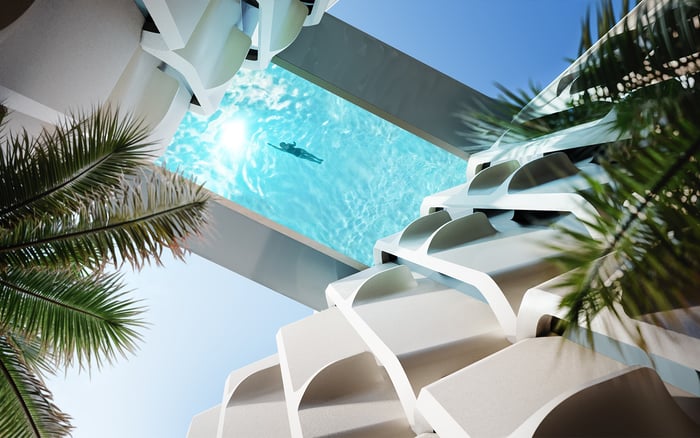
For collectors considering Surfside, the decisive due-diligence questions extend beyond residence dimensions to the complete path an artwork must travel from truck to wall.
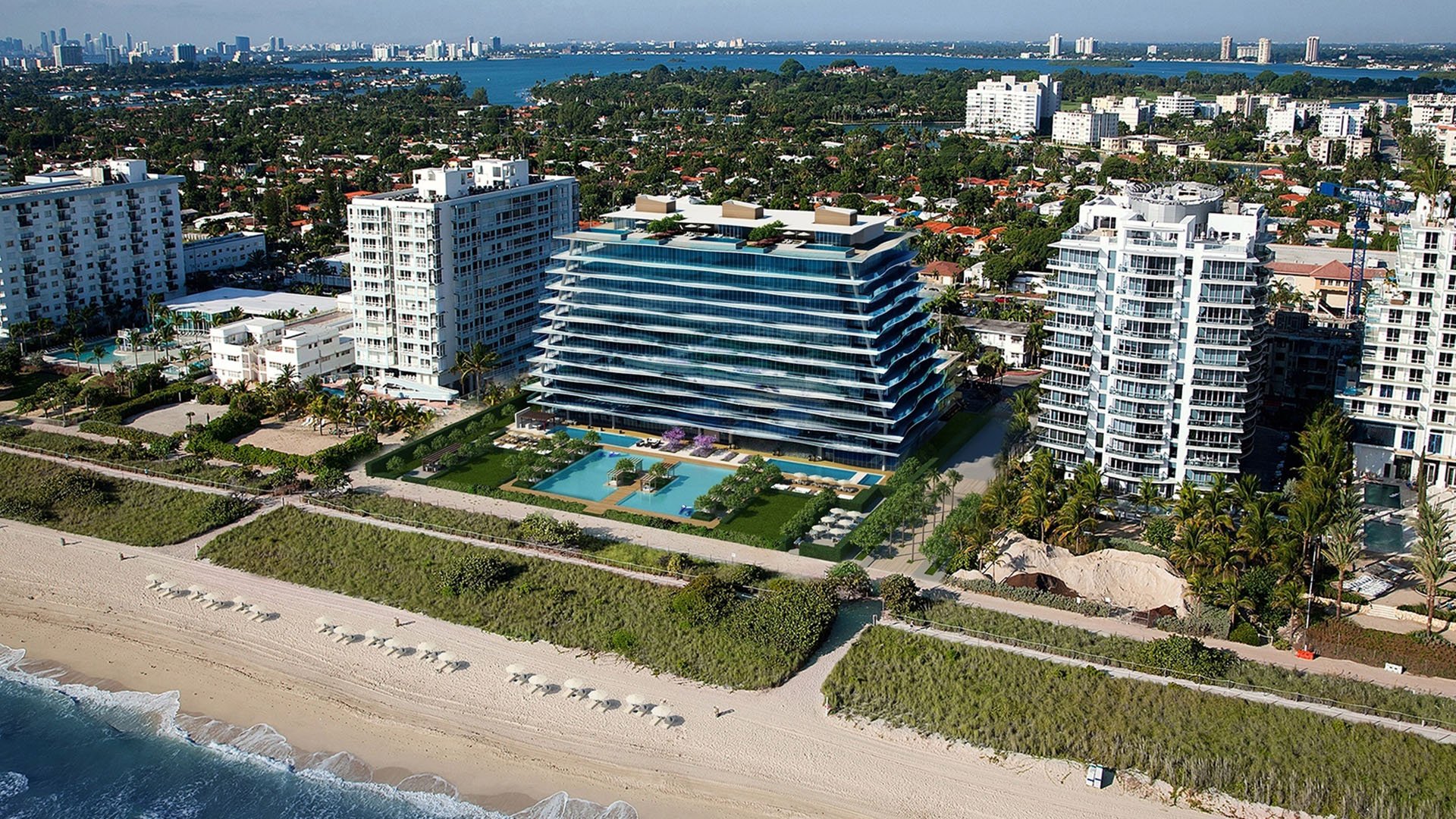
For a Silicon Valley collector buying in Surfside, operational diligence often resembles systems design. The residence may offer the right proportions, privacy, and oceanfront setting, yet a collection reaches those rooms through an entirely different architecture: loading area, service entrance, freight elevator, corridors, turns, thresholds, and installation zone.
That distinction matters when considering buildings such as Arte Surfside or Ocean House Surfside. A collector should not infer service capabilities from a building's residential presentation. Current rules, measured clearances, reservation procedures, and environmental conditions must be reviewed for the specific property and artwork.
The essential shift is from asking whether a residence can display a work to determining whether the building can receive it safely, compliantly, and on schedule.
Surfside defines a loading space as an area within the main building or on the same lot measuring at least 12 feet wide, 30 feet deep, and 14½ feet high. Its loading schedule lists one loading space for a multifamily building with 20,000 to 100,000 square feet of floor area.
Those figures establish a municipal planning baseline. They do not confirm that an oversized crate can pass through service doors, enter a freight-elevator cab, clear the elevator opening, negotiate corridor corners, or cross the residence threshold. Nor do they establish how much usable space remains once wall protection, elevator padding, door hardware, and other operational constraints are in place.
Before committing to a major work, commission a continuous crate-route survey. At The Delmore Surfside, as at any condominium under consideration, the buyer's team should obtain building-specific measurements rather than rely on assumptions drawn from plans, renderings, or code minimums.
Some South Florida condominium rules prohibit freight and furniture in passenger elevators, requiring use of the freight elevator. Across Miami high-rises, moves commonly receive assigned elevator windows-often during weekday daytime hours and subject to hard time limits. Management may also require advance coordination and a certificate of insurance before granting access.
Other tower protocols illustrate the operational pressure clearly. Deliveries move through the loading dock, which functions as an in-transit area rather than storage. Materials must continue toward their destination rather than being staged in corridors or mechanical spaces. One such weekday business-hours window runs from 8 a.m. to 6 p.m.; one-trip deliveries during that period are first-come, first-served and limited to 30 minutes at the dock. Evenings, overnight periods, and weekends are identified as preferable for extended freight use.
These are useful high-rise benchmarks, not universal Surfside rules. The governing documents and current management procedures for the chosen building control the delivery. For a collector, the freight reservation is not an administrative afterthought. It determines crew size, vehicle arrival, unpacking sequence, rigging readiness, and contingency planning.
South Florida heat and humidity can damage canvas, paper, wood, and photographic works when exposure occurs in uncontrolled conditions. Regional fine-art movers address that risk with climate-controlled cargo areas; some also use air-ride suspension to reduce vibration. Yet the quality of the truck does not resolve what happens after its doors open.
Continuity is the critical issue. Buyers evaluating Fendi Château Residences Surfside or The Surf Club Four Seasons Surfside should ask how long a crated work may wait at the dock, whether service areas are conditioned, and whether the elevator window aligns with the vehicle's arrival. Surfside requires central air conditioning for trash rooms, but that provision does not establish art-grade conditions in docks, service corridors, elevators, or storage areas.
When a residence or building is not ready, temperature- and humidity-stable warehousing can protect works between pickup and final delivery. The phrase climate-controlled still requires an operational definition: temperature and humidity stability, security, backup systems, monitoring, and maximum exposure during transfers should all be confirmed.
A collector's pre-closing file should include current move-in and delivery procedures, freight-cab dimensions, door clearances, weight limits, corridor widths, turning radii, and residence-entry measurements. It should also identify permitted hours, reservation lead times, deposits, protective-padding standards, approved vendors, insurance requirements, and rules for installers or riggers.
Pair that building file with an artwork-specific schedule detailing packed dimensions, weight, orientation restrictions, acclimatization needs, installation hardware, and the crew required at each handoff. If a work cannot be staged at the dock, the crate, elevator, installer, and receiving room must be ready in one coordinated sequence.
The most valuable contingency may be a prearranged climate-stable holding facility. It allows the transporter to divert the work if the freight elevator becomes unavailable, the delivery window contracts, or the residence is not ready. For a second-home owner, that plan also reduces dependence on the buyer's physical presence.
The result is discreet operational control. In Surfside, a collection move succeeds when municipal access, association rules, environmental protection, and installation logistics operate as one integrated system.
Does Surfside's loading-space requirement guarantee access for a large crate? No. The municipal dimensions do not establish elevator, corridor, turning, or residence-entry clearance.
Can art use a passenger elevator? Building rules vary, but some condominium regulations require freight and furniture to use the freight elevator.
When should freight-elevator rules be requested? Request the current procedures before closing, then reconfirm them before scheduling any collection delivery.
Will management require a certificate of insurance? It may. High-rise management commonly requires advance mover coordination and insurance documentation before granting elevator access.
Can a crate wait in the loading dock? Do not assume so. Some tower rules treat the dock as an in-transit area, not a storage or staging space.
Are freight deliveries always permitted on weekends? No universal rule applies. Obtain the building's approved hours and reservation terms in writing.
Is an air-conditioned building automatically safe for art transit? No. Conditioned residential space does not prove art-grade conditions along the dock, elevator, or service route.
What should climate-controlled transport include? Verify stable temperature and humidity, monitoring, security, backup systems, and limits on uncontrolled exposure.
What happens if the residence cannot receive the work? Use secure, temperature- and humidity-stable warehousing until the building and installation team are ready.
What is the most important pre-purchase measurement? There is no single measurement. Confirm the complete packed route from the vehicle position to the final installation point.
If you'd like a private walkthrough and a curated shortlist, connect with MILLION.
If branded residences are on your mind — as a home or as an allocation — we would be glad to share what we are seeing, privately.
Begin a quiet conversation