A buyer-focused guide to the written service commitments, humidity-monitoring protocols, equipment responsibilities, and cooling resilience to clarify before purchasing at The Delmore Surfside.
At The Delmore Surfside, the buyer conversation should extend beyond architecture and interiors to a quieter measure of luxury: what happens when cooling stops after midnight or humidity rises while an owner is away. These are questions of service, responsibility, and the practical protection of a residence.
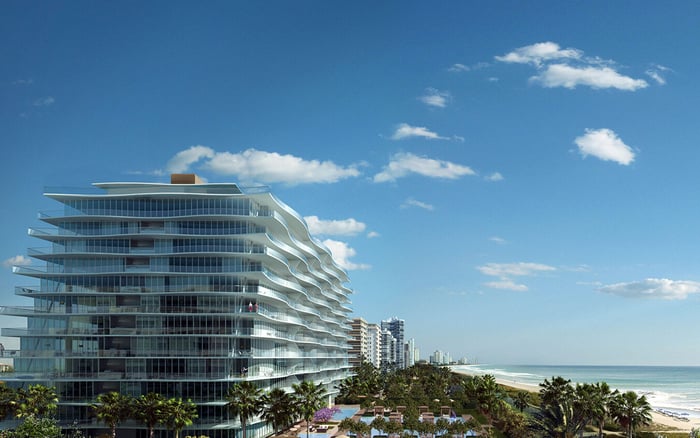
Planned for 8777 Collins Avenue, Surfside, Florida 33154, the development comprises 37 residences in a planned 12-story building, with completion targeted for 2029. Its oceanfront residences are marketed with architecture by Zaha Hadid Architects and interiors by Hirsch Bedner Associates. That design pedigree does not establish the mechanical configuration, emergency-response standard, or humidity-monitoring protocol.
The distinction matters. Publicly disclosed information identifies central cooling but does not establish manufacturers, models, zoning, reserve capacity, or independent air-handler arrangements. After-hours coverage, humidity alarms, and cooling redundancy require written clarification. Undisclosed details are diligence questions-not proof that those capabilities will be absent.
Start with the documents governing the purchase and the building's eventual operation. Ask counsel to identify HVAC, humidity-control, and emergency-service commitments in the purchase agreement, declaration, warranties, and management agreement. Which obligations bind the developer, which belong to the association, and which depend on a vendor contract that may change?
The most useful question is precise: if cooling fails overnight, what written obligation requires someone to respond, and what does that response include? A commitment to answer a telephone call is not a commitment to dispatch a qualified technician. Arrival, diagnosis, temporary mitigation, and restoration should each be addressed separately.
Counsel should also map equipment ownership. Determine whether each relevant component belongs to the residence, is a limited common element, or is a common element. Then establish who pays for emergency attendance, parts, replacement, and temporary measures. Ask how responsibility is resolved when the cause of a failure is initially unclear.
Ask management for the live emergency contact, proposed engineering staffing schedule, contracted HVAC vendor, and overnight and weekend escalation chain. Public information does not establish 24/7 engineering coverage, an on-call contractor, or a guaranteed response time at The Delmore.
Request a written distinction between acknowledgment and arrival. Who receives the first call? Who assesses its urgency? What maximum arrival time, if any, is contractually committed? Who can authorize an emergency expense when the owner cannot be reached?
A practical scenario tests the answers: cooling fails late on a weekend, the residence is unoccupied, and the primary technician is unavailable. Ask management to describe the alternative dispatch path, entry authorization, temporary response, and owner updates through closure.
For buyers also considering Arte Surfside, the same questions provide a consistent comparison framework. Compare written responsibilities and service procedures rather than assuming a luxury address implies a particular engineering arrangement.
Discuss humidity monitoring as a complete operating procedure, not simply the presence of a sensor. Request the proposed sensor locations, calibration schedule, testing method, alarm thresholds, and duration of an elevated reading before escalation. Ask whether readings are continuously monitored and who receives notifications.
The general mold-prevention benchmark is indoor relative humidity below 60%. That is not a confirmed alarm setting for The Delmore. Neither 60% nor 65% should be treated as the project's threshold without written confirmation. Ask whether the system distinguishes a brief fluctuation from a sustained condition requiring intervention.
A notification is not a resolution. Clarify who must acknowledge an alarm, when an unanswered alert escalates to another person, and what evidence is required to close the incident. Can owners obtain humidity readings, response records, and confirmation that conditions returned to the agreed operating range?
If supplementary dehumidification becomes necessary to keep humidity below 60%, have the central air-conditioning system examined rather than assuming the additional appliance resolves the issue. Moisture from cooking and showering should also be vented outdoors. Ask how the residence's ventilation and humidity-control arrangements address those needs.
For an owner who travels frequently, the central question is whether monitoring and response continue without an occupant present. Ask whether participation is automatic or optional, what access authorization is required, and whether notifications can reach both the owner and a designated representative.
Clarify who holds access credentials, what happens when permission cannot be obtained, and how an intervention is documented. Request a defined process for reviewing settings before an extended absence and checking the residence after an incident.
When weighing Ocean House Surfside alongside The Delmore, apply the same absence-management checklist. This is a comparison of questions to ask, not a claim that either property offers a verified monitoring service.
The phrase central cooling does not establish backup capacity. Ask for mechanical schedules and a clear description of how the proposed system performs if its largest cooling component fails. What capacity remains available, which residences or common areas remain served, and what operational limitations follow?
Public information does not verify N+1 capacity, standby chillers, redundant pumps or controls, or HVAC emergency-power coverage. Request identification of single points of failure across equipment, distribution, and controls. Distinguish spare equipment from the remaining system's ability to deliver cooling.
Emergency power requires its own schedule. Confirm precisely which residence and common-area cooling, dehumidification, pumps, controls, and leak-detection loads remain operational during an outage. Ask for the stated operating conditions and duration rather than accepting a general assurance that the building has backup power.
Before delivery, request commissioning and balancing records, controls sequences, warranties, preventive-maintenance schedules, and spare-parts inventories. Ask for water-intrusion and HVAC emergency protocols, along with a clear allocation of responsibility for training management and maintaining service records.
A LEED Silver design objective does not confirm achieved certification or establish an after-hours service guarantee or redundant cooling arrangement. Keep sustainability objectives, mechanical performance, and management obligations separate in the diligence file.
Buyers considering Fendi Château Residences Surfside can use the same document-centered approach without presuming equivalent systems. The objective is not to demand identical equipment across properties, but to understand each residence's service obligations, remaining failure risks, and ownership costs.
At The Delmore, the strongest next step is a coordinated written response from counsel and management, supported by the relevant technical schedules and governing documents. Where plans remain preliminary, ask when final information will be available and how changes will be communicated before closing.
For a discreet perspective on South Florida residential ownership, explore MILLION.
If branded residences are on your mind — as a home or as an allocation — we would be glad to share what we are seeing, privately.
Begin a quiet conversationThe Delmore is located at 8777 Collins Avenue, Surfside, Florida 33154.
The development comprises 37 residences in a planned 12-story building.
Completion is targeted for 2029. That target should not be treated as a guaranteed delivery date.
Publicly disclosed information does not establish 24/7 engineering coverage, an on-call HVAC contractor, or a guaranteed after-hours response time. Ask management for written staffing and dispatch commitments.
Counsel should review the purchase agreement, declaration, warranties, and management agreement for enforceable obligations. Equipment ownership and responsibility for emergency service, repairs, and replacement should also be clarified.
No. The central-cooling description does not establish equipment configuration, reserve capacity, or independent air-handler arrangements.
No. Below 60% is a general indoor humidity benchmark for mold prevention, not a confirmed project alarm setting.
Request sensor locations, calibration and testing procedures, thresholds, escalation timing, notification recipients, and acknowledgment and closure rules.
Publicly disclosed information does not verify HVAC emergency-power coverage. Request a schedule identifying exactly which cooling, dehumidification, pump, control, and leak-detection loads remain operational.
Confirm whether monitoring continues during absences, who receives alerts, and what entry authorization applies. Ask whether humidity readings and incident records will be available to the owner.