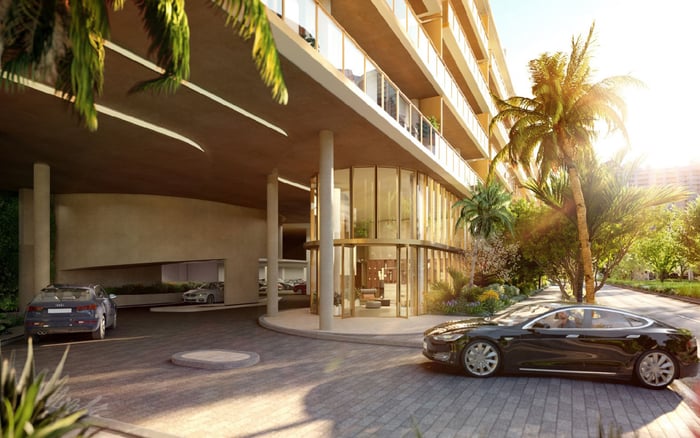
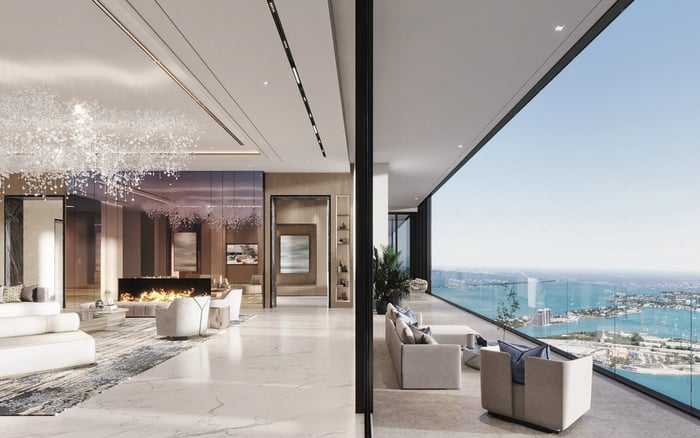
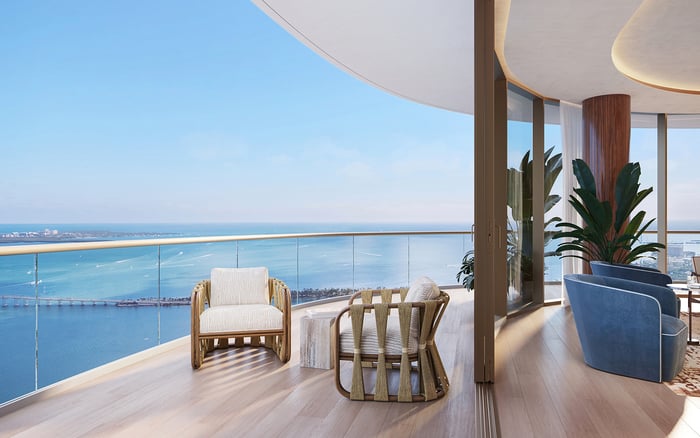
For Frankfurt buyers, a Downtown Miami condominium review should move from the residence's floor level to the building's address-level flood designation, elevation records, and insurance architecture. The central distinction is between protection for the condominium structure and protection for the owner's interiors, contents, and potential assessments.
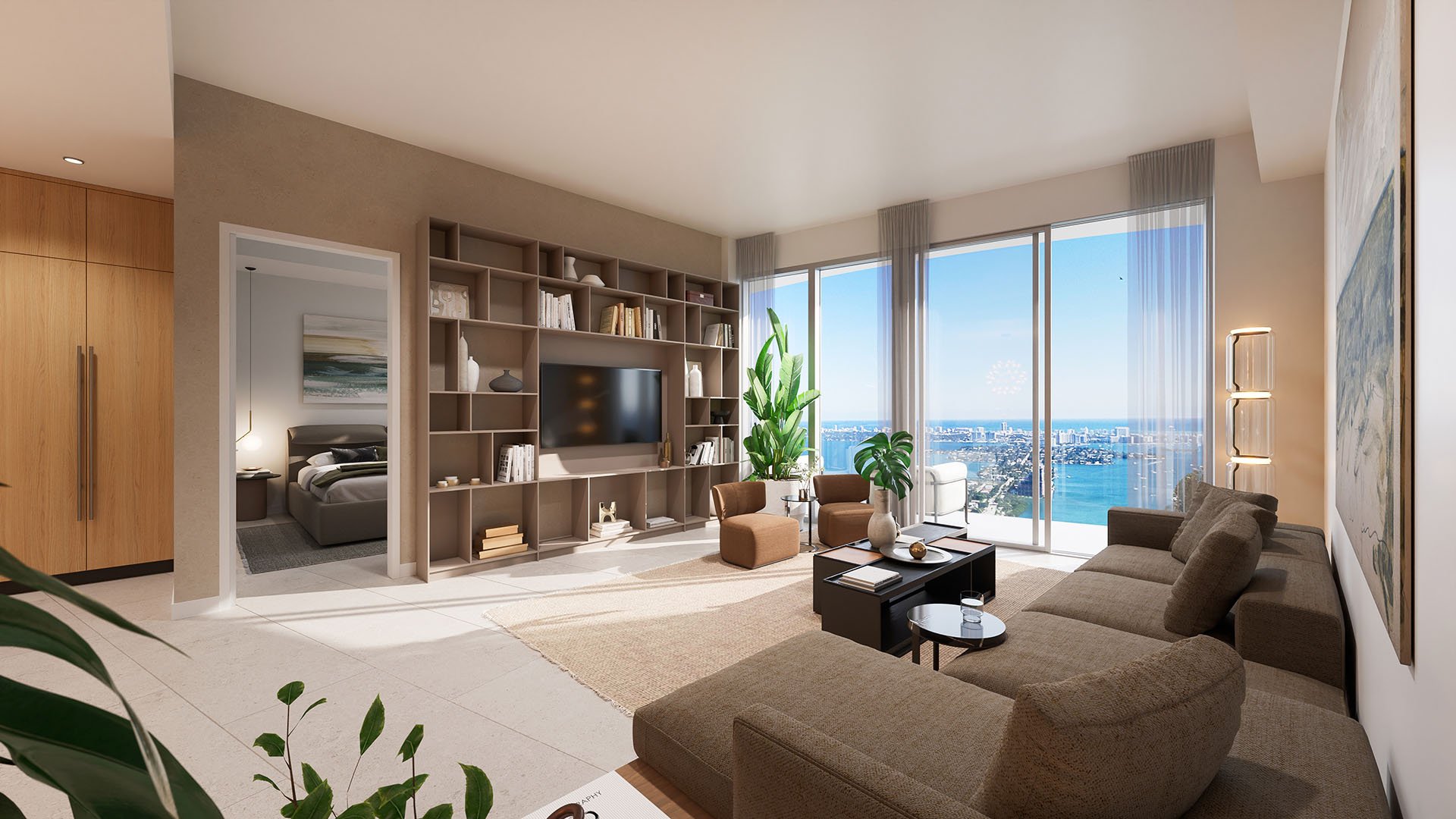
For a Frankfurt buyer considering Downtown Miami, flood diligence begins below the residence itself. An upper-floor view may feel comfortably removed from street level, but lenders and insurers assess the condominium building at its exact address. The mapped designation-not a broad impression of Downtown or neighboring Brickell-sets the first line of inquiry.
That begins with confirming whether the property lies in Zone AE, VE, or X. AE and VE are Special Flood Hazard Areas associated with at least a 1% annual probability of flooding. If financing is federally backed, a building in either zone will generally trigger mandatory flood insurance. A high-floor residence does not remove that requirement because the obligation follows the building's location.
Zone X warrants equal care. Although it sits outside the mapped Special Flood Hazard Area, it should not be interpreted as a guarantee of no flood risk. Detailed zones may show a Base Flood Elevation, or BFE, while Zone X generally does not display that measurement. The absence of a displayed BFE changes the review; it does not end it.
The condominium's address governs the first insurance question, not the height of the residence.
In Zone AE, BFE is the benchmark against which the structure's elevation is considered. An Elevation Certificate shows how the building compares with its mapped flood zone and is required for new construction and substantial improvements. For a buyer, it turns an abstract map category into a building-specific record for review with insurance and technical advisers.
The next question is freeboard: elevation above BFE. Florida flood provisions generally require buildings in flood-hazard areas to reach at least BFE plus one foot. Within a Special Flood Hazard Area, Miami-Dade applies the stricter of one foot above BFE or the minimum freeboard required under the applicable building code. The local framework also contemplates as much as four additional feet beyond the one-foot requirement, allowing up to five feet above BFE in the specified circumstances.
Additional freeboard can support resilience and may help control long-term insurance costs, but it does not cancel mandatory coverage rules in AE or VE. Buyers should request the actual Elevation Certificate, identify the lowest relevant building elevation, compare it with BFE, and document the resulting freeboard. A verbal assurance that a tower is elevated is no substitute for those figures.
The vocabulary also matters. BFE is a mapped flood benchmark. City rules may separately use “base elevation,” potentially derived from the county flood criteria map or the crown of the adjacent road. The two terms should not be treated as interchangeable when reviewing design or permitting documents.
A luxury shortlist might span Aston Martin Residences Downtown Miami, One Thousand Museum Downtown Miami, Casa Bella by B&B Italia Downtown Miami, and Waldorf Astoria Residences Downtown Miami. Their presence within the same search area does not establish a shared flood zone, elevation profile, insurance structure, or financing outcome. Each address requires its own file.
The same principle applies when comparing newer construction with resale inventory or extending the search into Brickell. Building age can shape the available records and applicable design standards, but it is not a proxy for mapped exposure. Likewise, the unit's floor number says little about the association's master flood obligation. A disciplined comparison examines address-level mapping, the Elevation Certificate, the relevant elevation benchmark, and the current insurance declarations for each building.
For a Frankfurt-based purchaser reviewing documents remotely, sequence matters. Request the flood designation and elevation materials early enough for an insurance adviser and lender to reconcile them. Translation or distance should never compress the time available to understand a deductible, exclusion, or required owner-side policy before a contingency expires.
A condominium master property policy is not an all-inclusive policy for the private residence. Florida condominium coverage excludes personal property and specified unit components that can represent a substantial share of a luxury interior: floor, wall, and ceiling coverings; appliances; interior electrical fixtures; built-in cabinets; countertops; water heaters; filters; and window treatments.
That is why “covered by the building” is too imprecise. Labels such as “walls-in” or “bare walls” are also insufficient on their own. The operative boundary emerges from the declaration, bylaws, policy forms, schedules, and applicable coverage rules. A buyer should align those documents with a detailed inventory of finishes and improvements within the proposed residence.
Owner-side HO-6 coverage can address applicable interior finishes, improvements, personal property, and liability. A standard HO-6 policy, however, excludes flood losses and should not be confused with contents flood coverage. The two policies answer different questions, and a sophisticated insurance program may require both.
The association's Residential Condominium Building Association Policy, commonly called an RCBAP, principally protects the condominium building and common elements rather than the owner's personal property. Even when an RCBAP is in place, separate unit-owner flood protection may be needed for contents and interior improvements outside the association policy.
Review the master property and master flood declarations for limits, valuation basis, deductibles, and exclusions. These provisions matter not only because a loss may be partly uncovered, but also because an association-level shortfall or deductible can create potential assessment exposure for owners. Loss-assessment protection should therefore be considered alongside HO-6 and unit-owner flood quotes.
For a highly finished residence, the interior schedule deserves particular scrutiny. Flooring, cabinetry, countertops, appliances, built-ins, and window treatments may be visually integral to the home while remaining outside the master policy. Their replacement values should form part of the owner's coverage discussion rather than be inferred from the purchase price or association documents.
A practical closing sequence is straightforward: verify the exact flood zone; obtain the Elevation Certificate; compare the lowest relevant elevation with BFE and documented freeboard; then examine the association's property and flood declarations. Before the inspection or financing contingency expires, request pricing for HO-6 coverage, unit-owner flood coverage, and loss-assessment protection.
This approach does not reduce a Downtown purchase to a flood map. It preserves the qualities that attracted the buyer while integrating elevation, insurance, and private-interior exposure into a coherent ownership plan. For discreet guidance on selecting and evaluating a South Florida residence, connect with MILLION.
If branded residences are on your mind — as a home or as an allocation — we would be glad to share what we are seeing, privately.
Begin a quiet conversationNo. When the condominium building is in Zone AE or VE, the lender's requirement generally follows the building location rather than the residence's floor.
Nearby towers can have different mapped designations, elevation records, and insurance implications. Neighborhood-level assumptions are not sufficiently precise.
Base Flood Elevation, or BFE, is the mapped benchmark used in Zone AE to evaluate construction elevation and flood exposure.
It shows how a structure's elevation compares with the mapped flood zone. Buyers can use it to assess the lowest relevant elevation and documented freeboard.
Freeboard is additional elevation above BFE. It can improve resilience and may influence long-term insurance cost, but it does not remove mandatory coverage rules.
No. Zone X is outside the mapped Special Flood Hazard Area, but residual exposure and building elevation still merit review.
Excluded items can include personal property, coverings, appliances, electrical fixtures, built-in cabinets, countertops, water heaters, filters, and window treatments.
Not by itself. Standard HO-6 coverage excludes flood losses, so separate unit-owner flood coverage may be appropriate.
An RCBAP principally protects the condominium building and common elements. It does not function as complete protection for an owner's personal property.
Review the master property and flood declarations, including limits, valuation basis, deductibles, and exclusions, then obtain HO-6, flood, and loss-assessment quotes.