
A buyer-focused guide to separating advertised services from documented access rights at St. Regis® Residences Brickell, with practical questions about maintenance closures, seasonal reservations, private-residence occupancy, and service costs.
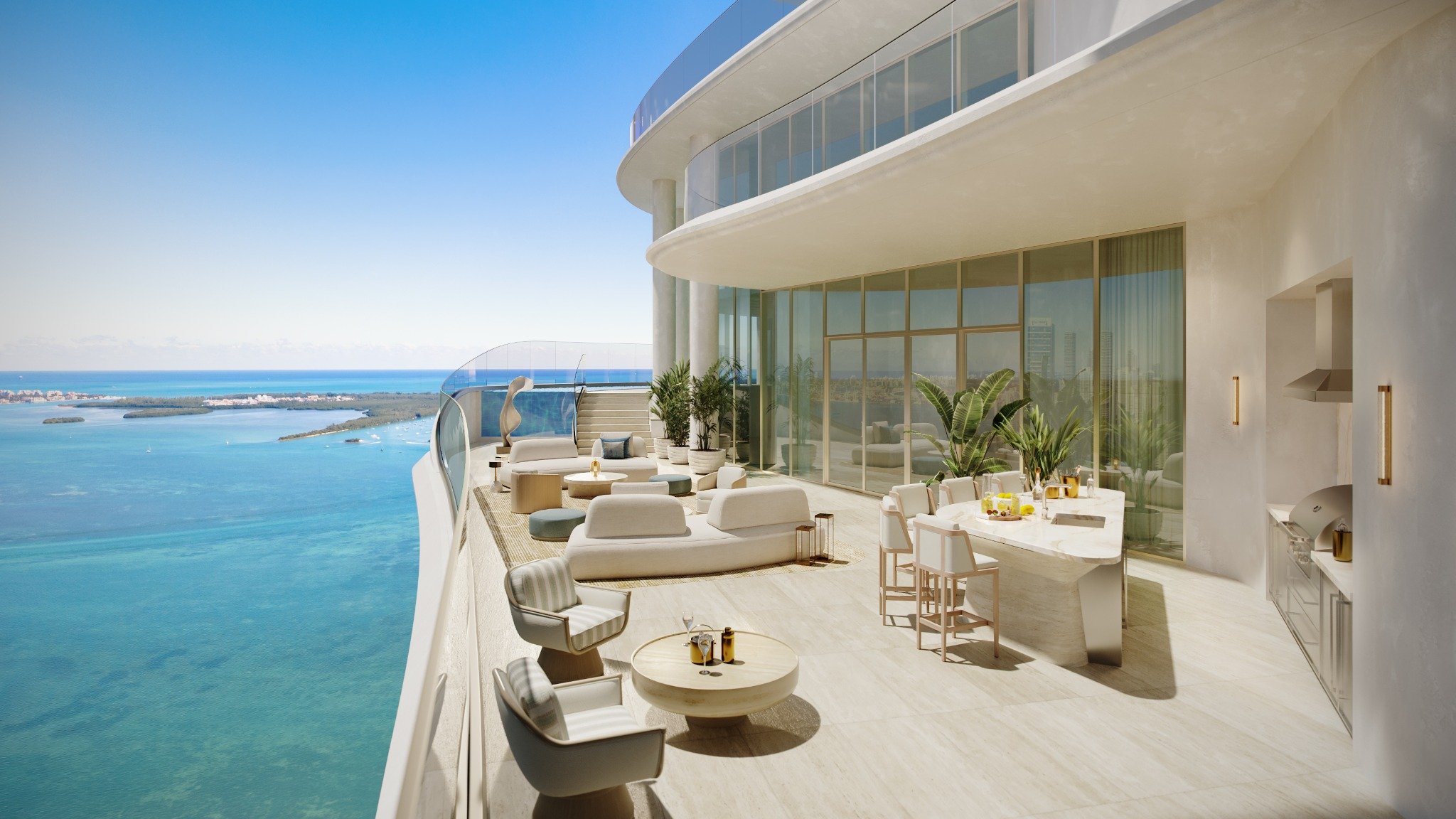
At St. Regis® Residences Brickell, the appeal is a private home paired with advertised butler and concierge services. For a buyer planning seasonal stays, family visits, or time on the water, however, the essential question is not simply what is offered. It is what the purchase documents establish about access, availability, and cost.
No annual maintenance blackout calendar, peak-season reservation priorities, or requirement to reserve dates to occupy your own residence is publicly established. These are three distinct subjects. The absence of public rules is not evidence that restrictions exist.
The advertised residential offering includes a 48-story tower with 149 residences, including penthouses and sky villas, and homes ranging from two to seven bedrooms with private elevators or entry foyers. Evaluate that offering separately from the operating terms of each advertised service and amenity.
Start with the identity of the real estate being purchased. The advertised project address is 1809 Brickell Avenue, Miami, Florida 33129, with 1801 Brickell Avenue used as an alternative marketing address. Have counsel reconcile the legal condominium address, parcel, and unit description in the purchase documents rather than treating either marketing address as conclusive.
Request the declaration, bylaws, current rules, budget, and relevant management and service agreements. Request the applicable marina and beach-club access agreements separately. Ask which documents are final, which provisions may change, and who has authority to make those changes.
For each benefit material to your decision, seek a written answer identifying the governing provision, the responsible party, and any additional charge. A service description is not a documented obligation to provide that service on your preferred dates.
No recurring annual closure or specific maintenance blackout date is publicly established. The next step is to request any planned closure schedule-not to assume an annual shutdown exists.
Ask management to distinguish work affecting an individual amenity from work that could affect access to a residence. A temporarily unavailable shared facility and an interruption to private-home access have very different implications for a purchaser.
Your written inquiry should cover:
Any planned maintenance periods and the areas affected.
Whether work could affect residence access or advertised services.
Required advance notice and how owners receive updates.
Who may change the schedule and under what circumstances.
Any contractual remedies or alternatives for extended disruption.
If no schedule has been established, ask how future closures will be communicated and governed. For a buyer with fixed travel dates, that procedure may matter as much as the initial calendar. Do not assume compensation, substitute facilities, or assessment credits unless the relevant documents provide them.
The advertised service offering includes housekeeping and in-residence dining, but individual charges and availability conditions are not established. Booking windows, holiday priority, and guaranteed availability for limited-capacity amenities and services are not publicly established either.
First, identify which offerings, if any, require reservations. Then request the advance-booking window, owner priority, guest limits, cancellation charges, holiday restrictions, and any limits on repeat reservations. Ask whether management can change a confirmed booking and what happens if a requested service cannot be delivered.
An owners’ or residents-only app is advertised. Its existence establishes neither residence-booking rights nor reservation priority. Ask what the app is intended to manage and where its procedures are documented.
For buyers also considering Cipriani Residences Brickell, use the same written questions as a comparison framework. This does not presume shared policies; it allows you to compare answers on equivalent terms.
A residence calendar can mean several things: an amenity booking schedule, a service appointment diary, or a system governing occupancy. Establish which meaning, if any, applies before discussing priority or allocation.
No requirement for owners to reserve dates to occupy their own residences is publicly established, nor is a formal residence-calendar allocation formula. Lottery, rotation, operator-use, and rental-inventory arrangements should not be treated as project features.
Ask directly whether any calendar governs private-residence occupancy or only shared amenities and services. If a rental or operator-use arrangement is relevant to your particular purchase, request its terms separately and have counsel examine any effect on personal use. Do not import hotel, fractional-ownership, or rental-program assumptions into the analysis.
Describe your intended stay in writing: arrival, departure, visitors, and desired services. Request separate answers for home access and each supporting service. This keeps a reservation discussion from obscuring the rights you are buying.
A private marina is advertised, but slip allocation, waitlists, usage fees, and guaranteed availability for every owner are not established. If boating is central to the purchase, request the marina agreement before assigning value to an assumed slip entitlement.
Ask whether access involves an assigned right, a reservation, or another arrangement. Request any applicable allocation rules, fees, guest provisions, and maintenance restrictions. These are verification questions, not confirmed marina policies.
Exclusive beach-club access is also advertised. That description does not establish unlimited visits, guest privileges, transferability, or exemption from blackouts. Request the access agreement and clarify reservation requirements, charges, capacity limits, and the circumstances in which access may be changed or suspended.
Keep these inquiries distinct from residential occupancy. A limitation on an external amenity, if one applies, should not be described as a blackout on use of the home.
Which services and amenity rights are included in regular assessments, and which are separately billed, is not established in the advertised offering. Structure your purchase review to distinguish the residence itself, assessment-funded offerings, optional services, and access governed by separate agreements.
When weighing Una Residences Brickell alongside this purchase, compare the documents supporting your intended lifestyle rather than assuming equivalent access from amenity descriptions. Request written fee schedules and availability terms wherever a benefit materially influences your decision.
The strongest conclusion is neither that blackouts exist nor that access is unrestricted. It is that maintenance procedures, booking rules, occupancy rights, and costs each deserve a distinct written answer. A well-considered purchase aligns the home you want with the terms that support how you intend to use it.
For a discreet perspective on your South Florida residential search, explore MILLION.
If branded residences are on your mind — as a home or as an allocation — we would be glad to share what we are seeing, privately.
Begin a quiet conversationNo annual maintenance blackout calendar is established in the public materials. Request any planned closure schedule and the procedures governing future maintenance.
The public materials do not establish such a requirement. Verify private-residence occupancy rights separately from shared amenity reservations.
Guaranteed availability, holiday priority, and peak-season booking windows are not established. Request written terms for any offering that requires reservations.
No residence-booking rights or reservation priority are established through the advertised app. Ask which services it manages and what rules apply.
The advertised offering includes St. Regis butler service, concierge services, housekeeping, and in-residence dining. Individual charges and availability conditions require verification.
A private marina is marketed, but guaranteed slip availability for every owner is not established. Verify allocation, waitlists, and fees in the applicable agreement.
Exclusive beach-club access is advertised, but unlimited access, guest privileges, transferability, and blackout exemptions are not established. Request the governing access terms.
The marketing does not establish which offerings are assessment-funded and which are separately billed. Request the budget, service agreements, and applicable fee schedules.
The project is presented at 1809 Brickell Avenue, Miami, Florida 33129, while an alternative marketing address is 1801 Brickell Avenue. Have counsel reconcile the legal address, parcel, and unit description.
No formal allocation formula is established in the public materials. Do not assume lottery, rotation, operator-use, or rental-inventory arrangements apply.

.jpg&width=700&height=438&fit=cover)