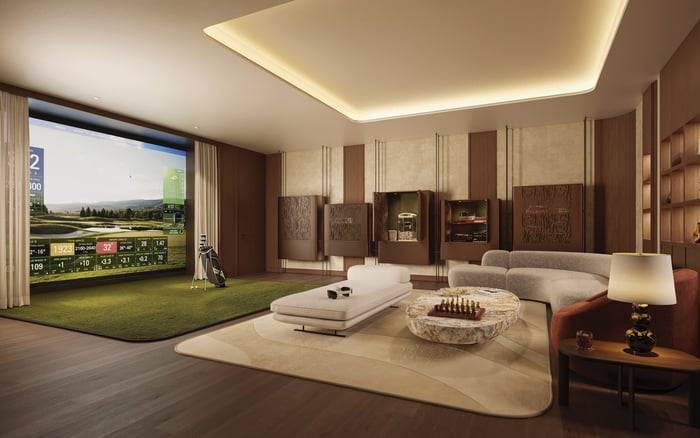
2200 Brickell pairs a conventional condominium structure with a low-rise South Brickell setting. For discerning buyers, however, finish quality and ownership restrictions should not substitute for unit-specific acoustic diligence.
.jpg)
At 2200 Brickell, the ownership proposition begins with a consequential distinction. The five-story, 105-residence development is structured as a standard residential condominium-not a timeshare, fractional-ownership project, or hotel-condominium. Individual residences do not permit short-term rentals, reinforcing an orientation toward primary and secondary-home ownership rather than a revolving population of transient guests.
That structure gives buyers a clear framework for evaluating the property. Ownership is tied to a private residence within a condominium association, together with the rights, obligations, rules, common expenses, and alteration controls established by the governing documents. It does not, however, promise silence. A stable occupancy model may reduce one form of unpredictability, but acoustic privacy ultimately depends on physical construction, unit location, neighboring uses, resident behavior, and enforcement.
The setting adds to the appeal. Positioned on South Brickell’s Millionaire’s Row near the Rickenbacker Causeway, 2200 Brickell offers a boutique counterpoint to the vertical scale commonly associated with Brickell. Its program encompasses one- to four-bedroom residences, penthouses, ground-level Garden Villas, and an approximately one-acre rooftop amenity level. Architecture is by Revuelta Architecture International, interiors are by ODA New York, and the development was co-developed by Aria Development Group, Largo, and Place Projects. A $77 million construction loan was secured from Bank OZK.
Luxury finishes shape perception, but tested assemblies determine acoustic privacy.
Stone, millwork, fixtures, lighting, and carefully resolved interiors are immediately visible. Acoustic performance is not. Sound isolation depends on complete wall, floor-ceiling, façade, door, and mechanical-system assemblies-including their installation and the junctions where components meet.
A handsome finish schedule cannot establish whether conversation travels through a demising wall, footsteps transfer through a slab, corridor activity enters beneath a door, or mechanical equipment produces tonal noise in a bedroom. Plumbing chases, elevator adjacencies, service spaces, glazing, penetrations, and flanking paths can all shape the lived result.
The same principle should guide purchasers considering taller alternatives such as Una Residences Brickell or The Residences at 1428 Brickell. Building height, branding, and interior specifications remain distinct from measured performance inside a particular residence. In a serious buyer’s guide to new-construction purchases, acoustic diligence belongs beside legal review, inspection, and financial analysis.
Florida Building Code Section 1207.2 establishes a minimum airborne-sound rating of STC 50 for laboratory-tested multifamily assemblies or NNIC 45 when field tested. Section 1207.3 establishes a minimum impact-sound rating of IIC 50 in laboratory testing or AIIC 45 in field testing for applicable floor-ceiling assemblies.
The distinction between laboratory and field values is central. A laboratory rating describes an assembly tested under controlled conditions. A field test evaluates completed construction, including the actual junctions, penetrations, workmanship, and potential flanking paths within the building. The lower permitted field ratings underscore that a specified laboratory assembly does not prove identical performance in an occupied residence.
For luxury-oriented privacy, STC 50 and IIC 50 are better understood as code floors than aspirational benchmarks. Reference wall targets include STC 57 for very good isolation and STC 60 or higher for premium residential privacy. For floor-ceiling systems, IIC 55 is characterized as acceptable, IIC 60 as strong, and IIC 65 or higher as appropriate for acoustically sensitive luxury occupants.
These figures are reference points, not claims about 2200 Brickell. Unit-by-unit STC, IIC, NNIC, or AIIC results are not provided in the project details available to buyers. Purchasers should request the specified assemblies and any available laboratory or field results, then determine whether the documented performance aligns with their own tolerance for sound.
The declaration, condominium rules, alteration policies, and flooring standards warrant separate review. Miami associations may adopt requirements stricter than the building-code minimum, particularly when owners replace flooring with tile, stone, or another hard surface. Rules may specify approved underlayments, minimum sound ratings, professional installation requirements, or documentation before work begins.
These provisions matter because future alterations can affect impact-noise transmission. Yet flooring rules are not a comprehensive acoustic warranty. They do not necessarily establish the performance of demising walls, structural slabs, entrance doors, corridors, façades, plumbing, elevators, or mechanical equipment. Buyers should also examine complaint procedures, enforcement powers, remediation obligations, and the allocation of responsibility when an alteration causes a disturbance.
Current documents should be obtained directly during diligence because rental restrictions, flooring criteria, and association rules can be amended. Buyers comparing ownership cultures across the neighborhood, including St. Regis® Residences Brickell, should apply the same discipline to every project rather than assume that premium market positioning produces uniform rules.
A five-story format does not eliminate neighbor noise. Shared walls, slabs, corridors, doors, façades, and building systems remain potential transmission paths. Orientation and adjacency can also cause two otherwise similar plans to perform differently. A bedroom beside an elevator, service room, corridor, or another residence’s living area presents a different risk profile from one bordered by quieter uses.
The most direct approach is independent field testing of the completed residence, subject to access and professional guidance. The scope should distinguish airborne sound through walls from impact noise through floor-ceiling assemblies. Exterior traffic, corridor leakage, plumbing operation, elevators, and mechanical equipment should be considered independently rather than compressed into a single impression of whether the home seems quiet.
A practical review can combine four layers:
Request architectural details for demising walls, slabs, ceilings, doors, glazing, and relevant mechanical assemblies.
Obtain available laboratory specifications and completed-building field results, keeping the rating systems distinct.
Map every bedroom and principal living space against neighboring residences, corridors, elevators, service areas, plumbing, and equipment.
Commission appropriate field measurements and conduct listening visits under representative operating conditions where feasible.
This is not an argument against 2200 Brickell’s low-rise concept. It is the diligence required to judge the concept on the quality most difficult to photograph. For a residence intended to support long stays, privacy is not merely an amenity. It is part of daily ownership value.
The ownership model at 2200 Brickell offers clarity: conventional condominium ownership, a limited residence count, and no unit-level short-term rentals. The design proposition is equally legible, with varied residence types and a substantial rooftop amenity program in South Brickell. Neither point, however, answers the acoustic question.
A discerning purchaser should treat finish quality, legal structure, association governance, and sound performance as four related but independent reviews. The decisive evidence is not how quiet a presentation appears, but how the relevant assemblies and completed residence perform against the buyer’s chosen standard.
For discreet guidance on South Florida’s most considered residences, connect with MILLION.
If branded residences are on your mind — as a home or as an allocation — we would be glad to share what we are seeing, privately.
Begin a quiet conversation2200 Brickell is structured as a standard residential condominium, not a timeshare, fractional-ownership project, or hotel-condominium.
Unit-level short-term rentals are not permitted, supporting an ownership profile oriented toward primary and second-home residents.
The development is planned as a five-story condominium with 105 residences.
No. Shared walls, slabs, corridors, doors, façades, plumbing, and mechanical systems can transmit sound regardless of building height.
STC concerns airborne-sound isolation through assemblies such as walls, while field performance may be evaluated using NNIC.
IIC concerns impact-sound performance in floor-ceiling assemblies, with AIIC used for field-tested conditions.
The stated laboratory minimums are STC 50 for airborne sound and IIC 50 for impact sound, with field alternatives of NNIC 45 and AIIC 45.
Laboratory ratings describe controlled assembly tests, while completed residences include real junctions, penetrations, workmanship, and flanking paths.
No. They may regulate underlayments and sound ratings, but do not guarantee walls, slabs, corridors, façades, plumbing, elevators, or mechanical noise.
Request assembly details and available test results, review unit adjacencies and association rules, and consider independent field testing of the completed residence.