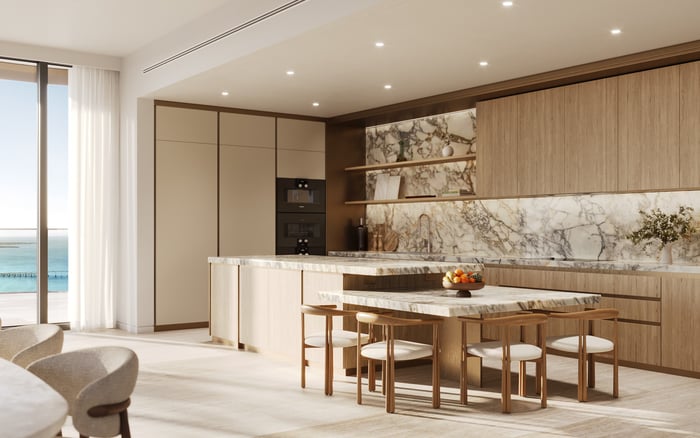
A buyer-focused examination of the balcony, waterproofing, corrosion-control, façade-access, and reserve documents that matter when evaluating long-term ownership at 1428 Brickell.

For buyers considering The Residences at 1428 Brickell, consequential due diligence may center on details that are not readily visible during a presentation. The review should address salt-air exposure, wind-driven rain, terrace penetrations, slab edges, rail anchors, waterproofing transitions, inspection access, and the documents governing future maintenance.
This framework does not identify a defect at the project. It outlines questions buyers can use to assess durability and understand how exterior maintenance may affect long-term ownership costs.
A buyer should ask how the structural and envelope designs address moisture, chlorides, reinforcing steel, anchors, concrete edges, coatings, and protective systems. The answers should come from project-specific drawings, specifications, testing records, warranties, and maintenance manuals rather than assumptions.
That distinction also matters when comparing the project with St. Regis® Residences Brickell. A long-term model can separate exterior inspections, sealant renewal, membrane work, concrete restoration, access equipment, coatings, and possible reinforcement-related work instead of grouping every obligation under one general façade allowance.
Buyers should request documents identifying whether balcony slabs use post-tensioning, conventional reinforcement, or another specified system. The technical review can then address concrete cover, edge reinforcement, anchor protection, crack-control provisions, and the treatment of locations where water could enter.
Slab-edge drawings should clarify geometry, drip details, waterproofing tie-ins, and reinforcement protection. Guardrail documents should show how posts and anchors connect to the structure, which materials are specified, and how the design treats waterproofing around attachment points and contact between different metals.
These are document-review questions, not conclusions about existing conditions. An independent structural or building-envelope engineer should determine whether the available details are complete and internally coordinated.
Buyers should not assume that a visible terrace finish is the complete waterproofing system. Request waterproofing shop drawings and specifications that identify each layer of the assembly and show continuity at door thresholds, façade connections, slab edges, drains, scuppers, railings, planters, and utility or equipment penetrations.
Drainage deserves a separate review. The documents should identify design slope, drainage points, scupper configuration, drip edges, and the intended route for water leaving the terrace. Buyers should also ask how the design handles transitions where several trades meet.
The same review discipline can inform comparisons with Una Residences Brickell and 2200 Brickell. The relevant question is not whether projects look alike, but whether each technical package clearly explains how exterior assemblies manage water and support future maintenance.
Ask whether balcony waterproofing will be tested before finishes conceal it. If testing is planned, request records identifying the area tested, the result, any corrective work, and confirmation of retesting where applicable.
Quality-control documents may also address substrate preparation, manufacturer inspections, third-party reviews, installation measurements, and repair logs. Any warranty should be reviewed together with its exclusions, maintenance conditions, responsible parties, claim procedure, and relationship to the condominium documents.
Where a terrace includes utilities, equipment, or built-in features, buyers should ask how supports and penetrations interface with the waterproofing. The review should also consider whether future inspection, sealant renewal, or membrane work can occur without disproportionate removal of finishes.
A façade-maintenance review should identify exterior materials, framing, fasteners, coatings, sealants, cleaning requirements, inspection access, and anticipated component-renewal assumptions. Buyers should ask which access systems are contemplated and how technicians would reach exterior components safely for inspection or work.
These questions should be tied to the maintenance manuals, warranty requirements, condominium budget, and reserve assumptions. Distinct exterior systems may require distinct inspection methods, contractors, schedules, and cost lines.
The proposed budget and reserve materials should be reviewed for assumptions addressing terrace waterproofing, railing and anchor work, façade sealants, slab edges, coatings, access equipment, and other exterior components identified in the project documents. Routine inspection, sealant replacement, recoating, membrane replacement, and concrete work should remain visible as separate scopes when the governing materials treat them separately.
Before closing, a buyer can retain an independent structural or building-envelope engineer to review structural drawings, waterproofing specifications, shop drawings, warranties, maintenance manuals, testing records, condominium documents, and reserve assumptions. Legal and financial advisers can separately assess contractual obligations, budget treatment, and the allocation of future costs.
Is salt-air corrosion an identified defect at 1428 Brickell? No defect is identified here. Salt-air exposure is presented as a due-diligence topic requiring project-specific verification.
What should buyers ask about the balcony slabs? Ask for the specified reinforcement system, concrete-cover requirements, edge details, anchor protection, and crack-control provisions.
Does a terrace finish establish how the area is waterproofed? Not necessarily. Buyers should request drawings and specifications identifying the complete waterproofing assembly.
Why do balcony thresholds matter? Thresholds are transition points between terrace, door, façade, and interior assemblies, so their detailing should be reviewed for continuity.
Should waterproofing be tested before finishes are installed? Buyers should ask whether testing is planned and whether results, corrective work, and retesting will be documented.
What drainage details deserve review? Review slope, drains, scuppers, drip edges, and the documented route for water leaving the terrace.
Why review guardrail attachments? The attachment details can clarify anchor materials, structural connections, waterproofing transitions, and treatment of different metals.
What should a façade-access review cover? It should identify how exterior components can be reached for inspection, cleaning, sealant work, coating work, and replacement.
Which reserve categories should buyers look for? Look for clearly identified assumptions covering membranes, railings, anchors, sealants, slab edges, coatings, access systems, and other documented exterior components.
Who should review the technical package? An independent structural or building-envelope engineer can review relevant drawings, specifications, warranties, testing records, maintenance materials, and reserve assumptions.
For a confidential assessment and a building-by-building shortlist, connect with MILLION.
If branded residences are on your mind — as a home or as an allocation — we would be glad to share what we are seeing, privately.
Begin a quiet conversation