A considered terrace plan begins with residence-specific documents, written furnishing approvals, and a practical storm protocol. For buyers at The Residences at 1428 Brickell, the essential distinction is between confirmed county obligations and building rules that must be established before installation.

An exceptional terrace should feel effortless in daily use. Achieving that ease at The Residences at 1428 Brickell begins with decisions less visible than upholstery or stone: where water must travel, what may remain outdoors, and who will act when severe weather approaches.
Terrace-use and outdoor-furniture rules are not established in the available public information. Purchasers should consult the purchase agreement and offering documents to determine what is included with a residence. Displayed fixtures, finishes, and decorative items should not be treated as included unless those documents specify them.
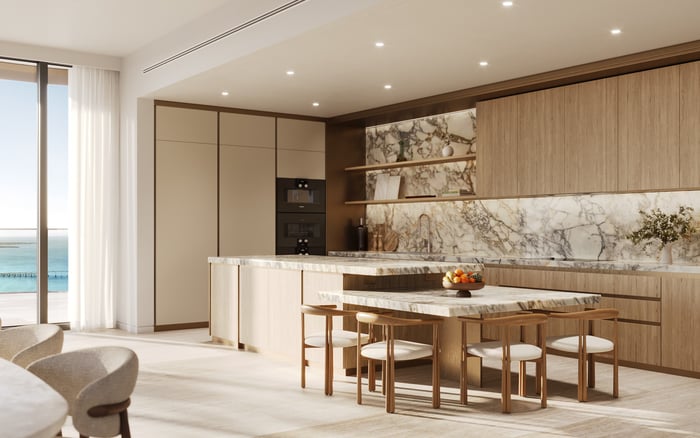
For a buyer, the distinction matters. A beautifully composed image is not a furnishing approval, and an outdoor installation shown in marketing is not permission to reproduce it. Before commissioning a terrace scheme, assemble the residence-specific inclusions, applicable building requirements, and written responses to the proposed layout. Make these the designer's brief-not paperwork to resolve after orders are placed.
Drain locations, required clearances, overflow routes, and waterproofing details should be established for the particular residence. They cannot be inferred from a photograph or a neighboring floor plan. The available public information does not establish those specifications for 1428 Brickell.
Request drainage and waterproofing drawings, then ask the appropriate building representative to identify areas that must remain accessible and unobstructed. Obtain written placement guidance for furniture, rugs, planters, and cabinets. Let drainage requirements shape the composition before selecting pieces that may be difficult to reposition.
A useful design submission would show each item's footprint alongside confirmed drainage points and access zones. Ask who is responsible for inspecting or maintaining those areas, what an owner may safely clean, and whom to contact if water does not drain as expected. These are recommended diligence steps, not verified building procedures.
Do not improvise a numerical clearance. A generous-looking gap is no substitute for a project-specific requirement.
Translate the design concept into an itemized schedule. For each piece, record dimensions, weight, material, intended position, and whether installation involves an attachment. Submit the schedule for written review before committing to bespoke production.
Ask specifically about rugs, planters, umbrellas, grills, heaters, cabinets, and screens. Establish whether the building restricts any category, imposes dimensional or weight limits, or requires approval of appearance and placement. Neither permission nor prohibition should be assumed for these items at 1428 Brickell.
Apply the same discipline when evaluating Una Residences Brickell: make the approval process part of the comparison without transferring one property's rules to another.
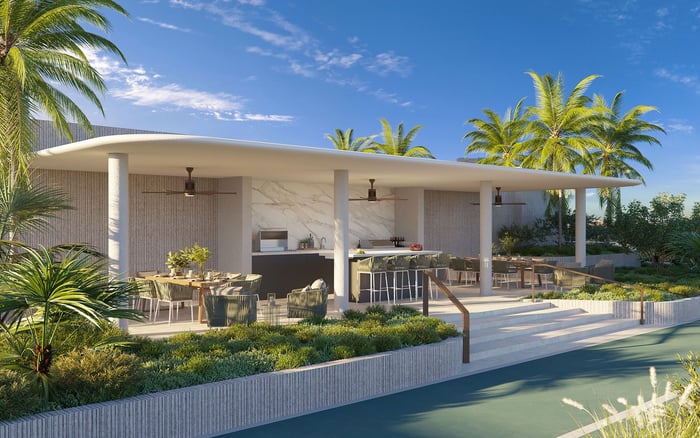
For the 1428 residence, request confirmation of any proposed outdoor cooking installation in the purchase documents. Do not turn a summer-kitchen description into a promise for every home. Separate what is included at delivery from what an owner wishes to add, then resolve approvals for those additions before installation.
Storm-securement obligations and attachment permissions are different questions. Under county rules, bracing, bundling, or fastening loose objects to a fixed structure sufficiently to prevent them from becoming windborne is a recognized securement method. That does not give an owner permission to drill into a slab, railing, parapet, façade, or waterproofing.
Before a designer or installer proposes anchors, ask whether attachments are permitted at all, which approvals would be needed, and what technical details must be submitted. Do not select an anchoring solution and assume approval will follow.
The alternative deserves equal attention: can the proposed pieces be moved inside, and where would they go? Assess a furniture package as both an outdoor arrangement and a manageable storm-preparation task. If a piece requires special handling, resolve the handling plan before purchase. This is a practical procurement recommendation, not a verified restriction on furniture size or weight at the building.
County rules require best efforts to secure, appropriately brace, or store loose objects in exposed outdoor locations when an applicable severe-weather advisory is in effect. The relevant triggers are a tropical-storm warning, hurricane watch, or hurricane warning affecting Miami-Dade County.
Outdoor chairs and tables are expressly included. The covered objects also encompass bicycles, toys, gardening supplies, household items, debris, and similar materials that could become windborne. A preparation plan should address the full terrace inventory, not just the largest furnishings.
Moving loose objects inside a building, where practicable, is a recognized method. Bracing, bundling, or fastening them to a fixed structure sufficiently to prevent windborne movement is another, subject to obtaining any necessary permission for the proposed installation.
These county requirements do not establish 1428 Brickell's removal deadlines or operating procedures. Ask whether the building requires earlier action, who communicates instructions, and how completion should be confirmed. Arrange help in advance rather than waiting for an advisory.
Hurricane season runs from June 1 through November 30. For an owner who travels frequently, preparation should include a named person authorized and able to act when the residence is unoccupied.
Request written answers on removal responsibilities, storage arrangements, fees, access authorization, and any available storm-removal service. Do not assume staff will move privately owned furnishings, storage is provided, or a service can be arranged at short notice. Establish those details directly.
Buyers also considering Cipriani Residences Brickell can use the same questions to compare ownership logistics, while keeping every service commitment property-specific.
For the chosen residence, create a concise inventory identifying each object, its approved storm destination or securement method, and the responsible person. Ask how access and instructions should be coordinated if the owner cannot be reached. The value lies in removing ambiguity before a time-sensitive decision is required.
The strongest preparation package brings together three elements: a layout informed by confirmed drainage requirements, written guidance on furnishings and attachments, and an executable storm plan. Review them as a coordinated whole rather than as unrelated approvals.
Before delivery, reconcile the final furniture schedule with the written responses. Revisit any substitution that changes dimensions, weight, placement, or handling. Keep the relevant documents accessible to the owner, designer, and designated representative so the installed arrangement and operating plan remain aligned.
Luxury here is not simply the freedom to furnish beautifully. It is the confidence that the terrace has been considered for ordinary use, an owner's absence, and the moments when weather requires decisive action.
For a considered approach to South Florida luxury ownership, explore MILLION.
If branded residences are on your mind — as a home or as an allocation — we would be glad to share what we are seeing, privately.
Begin a quiet conversationThe available public information does not establish terrace-use or outdoor-furniture rules. Obtain the applicable requirements and written guidance before furnishing.
Do not assume they are included. The purchase agreement and offering documents determine the residence's inclusions.
Request residence-specific drainage and waterproofing drawings, overflow routes, required clearances, and written placement guidance. Confirm maintenance responsibilities as well.
The public information discussed here does not establish a numerical clearance for 1428 Brickell. Obtain a project-specific answer before finalizing the layout.
Ask about furniture dimensions and weights, rugs, planters, umbrellas, grills, heaters, cabinets, screens, and proposed anchors. Do not assume these categories are either permitted or prohibited.
The relevant triggers are a tropical-storm warning, hurricane watch, or hurricane warning affecting Miami-Dade County. The county requires best efforts to secure, appropriately brace, or store exposed loose objects.
Yes. Chairs and tables are expressly included, along with other loose objects and materials that could become windborne.
No. Recognition of fastening as a securement method does not establish permission to drill into slabs, railings, parapets, façades, or waterproofing.
No. Confirm any available service, deadlines, responsibilities, storage, fees, and absent-owner access arrangements in writing.
Hurricane season runs from June 1 through November 30. Establish the residence's preparation plan and responsible contacts before action is needed.