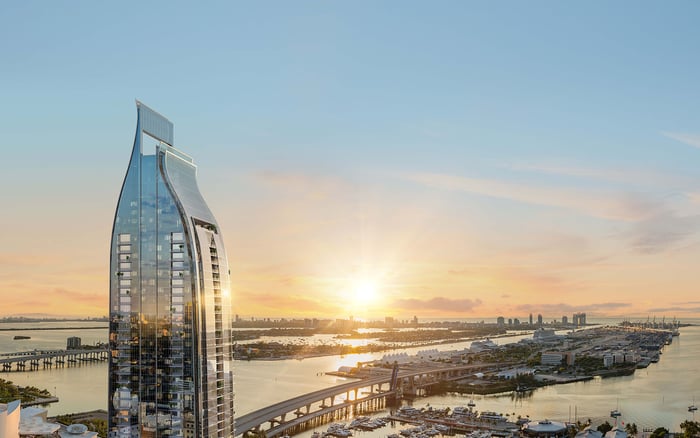
At One Thousand Museum, long-term comfort depends on more than generous interiors and attentive service. Buyers should verify complete accessible routes, elevator assignments, caregiver permissions, equipment deliveries, and the right to adapt a residence before committing.

A residence intended for long-term ownership should accommodate more than the household’s needs on closing day. Recovery after surgery, visiting relatives with limited mobility, or a rotating caregiver team can change how a familiar home functions. At One Thousand Museum Downtown Miami, the question is not simply whether the building offers attentive service, but whether its physical routes and operating rules support those circumstances.
The address is 1000 Biscayne Boulevard, Downtown Miami. Valet parking, concierge access, secure residential elevators, and 24-hour security are among the described services. Neither individually nor together do they establish clinical assistance or comprehensive accessibility. Long-term suitability depends on continuity between arrival, residence, amenities, and the people who may help a resident use them.
The private porte cochère is described as being on NE 10th Street, at the building’s southern boundary, with valet and doorman reception. Parking is described as occupying floors two through seven. Treat that configuration as a starting point for an on-site route test, not confirmation of how every arrival works today.
Begin with the vehicle the household would actually use. Verify clearance for an accessible van, space to deploy a ramp or lift, and whether unloading can proceed without rushing. Then trace the path through the lobby, into the appropriate elevator, and through the residence entrance. Check slopes, thresholds, door clearances, turning space, control reach, and places to pause.
Ask separately whether self-parking is permitted and how a caregiver retrieves a vehicle. Valet availability does not resolve questions about overnight privileges, recurring charges, or after-hours departures. Request the applicable written rules and fee schedule before incorporating parking into a care budget.
Residential elevator access is described as secure, with destination-entry technology. Request a practical demonstration: can an authorized caregiver reach the residence independently, accompany the resident, and enter when the resident cannot answer a call?
Do not assume there is a dedicated service elevator or a fully separated loading route. Establish which elevators serve residences, deliveries, upper-level amenities, and emergency transport. Ask management to demonstrate the equipment route rather than relying on a nominal elevator count.
For a hospital bed or other large equipment, obtain cabin dimensions, clear door openings, load capacity, and measurements of turns between loading and the apartment. Confirm reservation windows, protection requirements, and any restrictions on urgent deliveries. A generous room has limited practical value if necessary equipment cannot reach it.
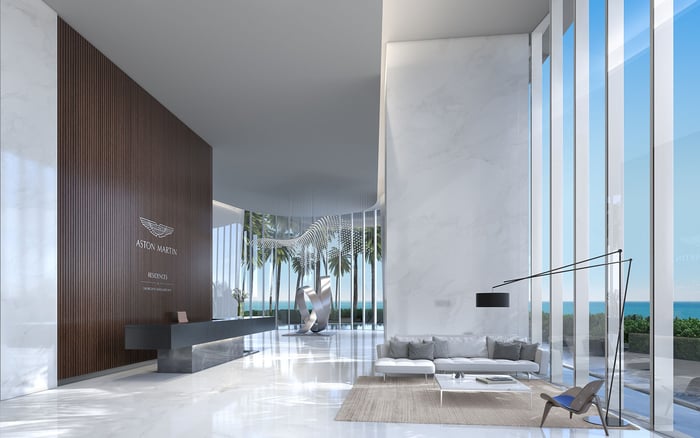
For buyers also considering Aston Martin Residences Downtown Miami, apply the same route-and-permissions checklist. Base the comparison on demonstrated access, not assumptions about what a luxury address provides.
A caregiver’s visit is not necessarily equivalent to an ordinary guest arrival. Ask management how recurring care personnel are classified and what authorization each person requires. A household using several shifts needs a workable procedure for substitutions, late arrivals, and changes in agency personnel.
The written response should address credentials, after-hours admission, overnight stays, passenger-elevator accompaniment, parking, and outside therapists. Clarify who may approve an unexpected replacement when the resident is unavailable. Establish whether access permissions expire and how they are withdrawn when an engagement ends.
Keep hospitality and care responsibilities distinct. Concierge and security services do not establish prescription handling, transfer assistance, medical staffing, or training for disability-related emergencies. If the household requires hands-on assistance, define who supplies it and how that person reaches the home. Privacy should coexist with dependable access, not make everyday support uncertain.
Residence formats include townhouses, half-floor homes, full-floor homes, and a two-story duplex penthouse. Sharing an address does not make their internal accessibility interchangeable. Inspect the actual layout under consideration with the resident’s equipment and likely support needs in mind.
Continue the arrival test through the bedroom and bathroom. Measure door openings and turning areas, examine shower thresholds, and assess the space needed beside a bed or toilet for assistance. In a multilevel residence, establish whether essential daily functions can remain on one level if stairs become impractical.
Before relying on future alterations, review approval requirements for widened doors, grab bars, bathroom changes, stair lifts, or an internal elevator. Have qualified advisers assess feasibility and applicable requirements. Do not make a possible adaptation a purchase assumption until both the physical work and the approval process are understood.
The Aquatic Center and Sky Lounge occupy the tower’s upper portion, making vertical access central to their regular use. Described wellness facilities include a fitness center, private spa treatment rooms, steam room, sauna, plunge pools, a relaxation lounge, and an indoor infinity-edge pool.
Inspect these destinations independently of the apartment tour. Check deck transitions, accessible toilets, handrails, treatment-room access, and pool-transfer equipment. Ask whether a caregiver or outside therapist may accompany the resident and whether reservations affect that arrangement. Amenity area alone cannot establish elevator wait times or ease of use.
If the search extends to Brickell and Una Residences Brickell, retain the same questions. A useful comparison measures the amenities a household can comfortably use, not simply those presented during a showing.
Ask which elevators have backup power, which destinations they serve during an outage, and what happens when an elevator is unavailable. Request the procedure for ambulance crews to enter the building and reach the residence. Residents unable to use stairs should understand the building’s evacuation-assistance arrangements without assuming staff can provide physical transfers.
The rooftop helipad requires particular caution. In January 2019, FAA and other necessary approvals were pending; that historical status establishes neither current authorization nor medical-transport availability. Described security-escorted circulation through a heli-lounge also does not establish wheelchair or stretcher compatibility. Do not build an emergency plan around it without current, specific confirmation.
Similarly, verify any house-car or beach-club transportation service before relying on it. Current availability, wheelchair accommodation, and permission for medical-appointment trips are separate questions.
Before committing, assemble a measured route assessment, current caregiver and parking rules, equipment-delivery procedures, emergency arrangements, and modification guidance. Resolve important uncertainties with management and appropriate advisers rather than relying on informal assurances.
The strongest long-term fit is a residence whose privacy, service, and practical access work together. For discreet guidance on evaluating South Florida residences for lasting usability, connect with MILLION.
If branded residences are on your mind — as a home or as an allocation — we would be glad to share what we are seeing, privately.
Begin a quiet conversationOne Thousand Museum is at 1000 Biscayne Boulevard, Downtown Miami, FL 33132.
No. Individual arrival routes, amenities, residence layouts, and applicable accessibility requirements need separate assessment.
Check accessible-van clearance, ramp or lift deployment space, and the continuous route from unloading to the residence. Confirm current arrangements at the NE 10th Street arrival.
Valet service does not establish caregiver fees, overnight privileges, or self-parking permission. Obtain the current parking rules and charges in writing.
A dedicated service elevator is not established. Ask management which elevator and loading route accommodate deliveries, large equipment, and emergency transport.
Confirm individual credentials, substitutions, after-hours admission, overnight stays, and permission to accompany the resident in passenger elevators. Clarify who can authorize access when the resident is unavailable.
No such assistance is established by the security offering. Households should separately arrange any clinical support or hands-on transfers they require.
Check accessible routes, deck transitions, toilets, handrails, treatment-room access, and pool-transfer equipment. Also confirm caregiver and outside-therapist admission rules.
Not without current, specific confirmation. Historical pending-approval language and described helipad circulation do not establish current authorization, medical availability, or stretcher-compatible access.
Potential changes require unit-specific feasibility review and confirmation of applicable approvals. Do not assume widened doors, bathroom alterations, stair lifts, or internal elevators will be permitted or practical.