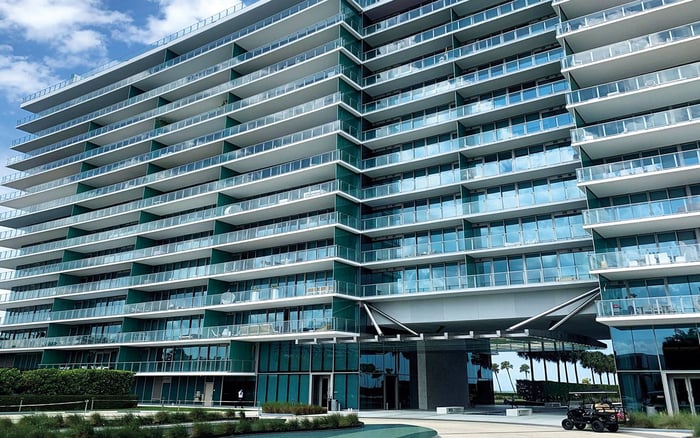
For an Ocean House Surfside purchase, dispute-resolution language deserves the same scrutiny as the residence itself. Verify which claims are covered, who controls arbitration, where proceedings must occur, and how the complete document package fits together.

Boutique scale can make a residence feel personal. The legal architecture of a purchase deserves equally close attention. For a buyer considering Ocean House Surfside, that means a review extending beyond the residence to the documents governing the transaction.
Arbitration, venue, and forum-selection clauses address distinct questions: how a disagreement must proceed, where it must be heard, and which forum the parties have agreed to use. Treat these as questions to resolve through the actual purchase package, not as established features of Ocean House Surfside’s terms.
The objective is not to anticipate conflict at every turn. It is to understand the procedure before a deposit disagreement, warranty issue, or other claim makes it consequential. This checklist is a starting point for review with counsel, not a determination of the project’s contract terms or legal advice.
Arbitration does not describe a single process. For an Ocean House Surfside purchase, ask counsel to distinguish any applicable statutory condominium dispute-resolution process from private arbitration provisions in the transaction documents. Do not assume that a process for internal condominium disputes also governs a purchase-contract or developer claim.
Private contractual arbitration requires its own review. Check whether the agreement calls for mediation first and whether unsuccessful mediation leads to binding arbitration or permits litigation. The presence of the word Arbitration alone does not answer those questions.
Ask counsel to identify the applicable procedure for each likely category of disagreement and confirm current law. Neither statutory condominium arbitration nor private binding arbitration should be treated as universally applicable.
A clause’s reach may be established well before the paragraph describing a hearing. Examine definitions and cross-references, not merely the section headed Arbitration. Ask whether the definition of Dispute addresses contract, warranty, tort, statutory, or community-related claims.
Ask which parties are included, whether affiliates are covered, and which categories, if any, are excluded. Do not presume that giving a claim a different label places it outside arbitration; have counsel assess the wording and the claim’s connection to the agreement.
For a buyer also considering The Delmore Surfside, the useful comparison is document-specific: examine each transaction’s covered claims and procedural obligations independently. A shared Surfside setting establishes nothing about shared contract terms.
Notice provisions deserve their own place on the review checklist. Determine whether written notice is required before commencing a proceeding and whether the agreement gives either party a right to elect arbitration.
These are provisions to look for, not established Ocean House Surfside deadlines or rights. The distinction matters: a procedure both sides must follow is different from a choice one side controls.
Have counsel identify the notice recipient, permitted delivery method, required contents, and any waiting period. Then determine whether mediation must precede arbitration or litigation and who can trigger each step. Ask whether the election is reciprocal, unilateral, or subject to conditions. A concise written sequence is more useful than a general assurance that the contract contains standard dispute language.
A governing-law provision identifies the law selected for the dispute. A venue provision addresses location. A forum-selection provision addresses the forum in which proceedings must be brought. These provisions may overlap, but they are not interchangeable.
Check whether location requirements apply to mediation and arbitration as well as litigation. Do not assume the property’s location determines where every proceeding must occur.
Ask counsel whether a clause merely permits a forum or requires its exclusive use, whether it is enforceable in the circumstances, and how it interacts with arbitration language. Precise wording deserves attention before a disagreement arises.
If your search extends to Bal Harbour and Rivage Bal Harbour, apply the same questions to that transaction’s documents. A residence’s location is no substitute for reading the agreed location and forum for a dispute.
Request the complete purchase agreement and every incorporated document, including applicable addenda, warranty materials, and condominium governing documents. Ask counsel to distinguish procedures for internal condominium disputes from those governing the purchase itself.
Compare any arbitration rules and governing arbitration statutes identified across the package. If provisions differ, do not assume they cancel each other out. Have counsel explain how they operate together, including any language establishing priority between documents.
Language access also belongs in this review. Arrange translation and legal explanation before signing rather than relying on unfamiliar language as a way to avoid an obligation later.
Review dispute procedures and cancellation rights separately. Do not assume a general description of condominium cancellation rights supplies the deadline for your particular Ocean House Surfside transaction.
Have counsel confirm the applicable cancellation right, the event that starts the period, and the required method of exercising it. Preserve the agreement, delivery records, and document acknowledgments so the timeline can be evaluated against the actual transaction.
Keep that analysis separate from any contractual notice or mediation requirement. A waiting period for one procedure should not be assumed to determine the deadline for another.
Before signing, ask for a short written summary covering the claims included, notice obligations, mediation sequence, arbitration election rights, applicable rules, governing law, and required hearing location. Have counsel distinguish any statutory process from the contract’s private procedure.
If a disagreement has already arisen, obtain advice before choosing a forum or taking procedural steps. Ask counsel to assess whether an arbitration agreement is valid, whether the claim falls within its scope, and whether any arbitration rights have been waived. Those questions require review of the documents and circumstances, not assumptions based on the project’s positioning.
For a discerning buyer, the goal is clarity: knowing what was agreed, which route applies, and where a claim belongs.
Explore South Florida residences with a document-conscious perspective at MILLION.
If branded residences are on your mind — as a home or as an allocation — we would be glad to share what we are seeing, privately.
Begin a quiet conversationThe article does not establish that requirement. Have counsel review the actual purchase agreement and incorporated documents to determine whether arbitration applies and whether it is binding.
Do not assume it covers every purchase-contract or developer claim. Ask counsel to confirm current law and the process applicable to the particular disagreement.
Check whether mediation is required first and what happens if it fails. Have counsel confirm whether the next step is binding arbitration or whether litigation is available.
It helps determine which claims the procedure covers. Review its wording and cross-references with counsel rather than relying only on the arbitration heading.
Review the election language in the actual agreement. Ask counsel whether the right is reciprocal, unilateral, or subject to conditions.
No project-specific notice deadline is established here. Verify the period, recipient, delivery method, and required contents in the transaction documents with counsel.
Governing law identifies the law selected for a dispute, while venue addresses location. Check whether location requirements cover mediation and arbitration as well as litigation.
Ask counsel whether it permits a forum or requires its exclusive use. Counsel should also assess enforceability and how the clause interacts with arbitration language.
Do not assume the provisions cancel each other out. Have counsel review the complete package and explain any language establishing priority between documents.
Do not assume they follow the same timeline. Have counsel separately confirm any cancellation right, its triggering event, and the required method of exercising it.