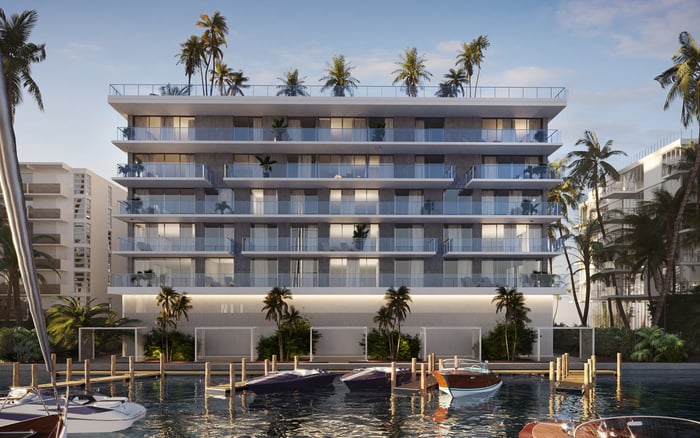
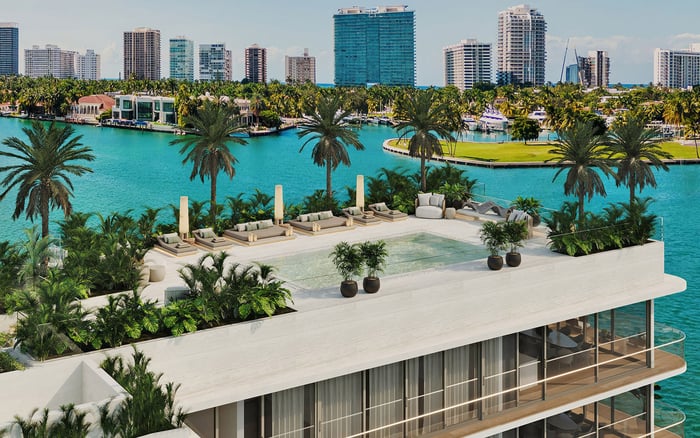
For buyers considering Mila Bay Harbor Islands, design and financial diligence deserve equal attention. Review reserve assumptions, governance powers, insurance exposure and the full ownership budget before treating exceptional finishes as evidence of a well-funded association.

An exceptional interior answers one question: how a residence might feel to inhabit. It does not explain how the building will fund major repairs, who can authorize spending or what owners may be asked to contribute later. For buyers considering Mila Bay Harbor Islands, those questions deserve the same attention as the floor plan and finish selections.
This is a diligence framework, not a finding that Mila has inadequate reserves, opaque governance, unusually low dues or pending assessments. None of those conditions should be presumed. The purpose is to establish what the documents demonstrate before allowing design appeal to shape financial judgment.
Evaluate luxury ownership on two separate tracks: the quality of the private residence and the clarity of the shared obligations. Trophy finishes cannot substitute for documented funding and decision-making authority.
Association reserves are savings earmarked for future capital expenditures and major repairs, separate from operating funds. They are intended to reduce reliance on special assessments for major common-property expenses-not to guarantee that an assessment will never occur.
A reserve study estimates the money needed for future major repairs and replacement of common areas. It draws on visual inspections and estimates of component life and replacement costs. These are assumptions to examine, not assurances that every future expense has been captured precisely.
Request the current study, its preparation date and any updates following applicable milestone or recertification inspections. Compare its recommended funding schedule with the association’s budget and actual reserve-account statements, where available.
Ask which components are covered, when expenditures are anticipated and how replacement costs were estimated. Request a breakdown of restricted funds; do not assume every dollar in association accounts is available for every repair. A balance is meaningful only in relation to the obligations it is intended to meet.
Transparent governance begins with documents that define authority. Request Mila’s declaration, bylaws, board spending and assessment powers, owner voting thresholds and financial-reporting provisions. Have Florida condominium counsel explain how those provisions work together, rather than treating each document as an isolated formality.
The practical questions are straightforward. Which expenditures can the board authorize? When is an owner vote required? How are financial decisions communicated? What framework governs developer-to-owner turnover, and what responsibilities accompany that transition?
The objective is not to demand owner approval for every operational decision. It is to understand the boundary between delegated management and obligations that may materially affect an owner’s finances.
Apply the same questions if Alana Bay Harbor Islands is also on your shortlist. This is a consistent review standard, not a suggestion that either project has a governance problem. Compare the clarity of the documents before drawing conclusions about the quality of oversight.
Where operating history is unavailable, the review necessarily relies more heavily on projections. Request the proposed operating budget, reserve schedule, engineering assumptions and insurance estimates. Distinguish forecasts from figures that, if any, reflect money collected or expenses already incurred.
A proposed reserve contribution is not an existing reserve balance. An estimated insurance expense is not evidence of what the association will ultimately pay. Ask what supports each material assumption and how the proposed budget would respond if costs differ.
For a buyer also evaluating Bay Harbor Towers, apply the same distinction wherever figures are prospective. Monthly dues alone cannot establish whether two budgets cover equivalent obligations. Compare their scope, reserve provisions and supporting assumptions before deciding which represents better value.
Where an association has an operating history, request current and prior-year budgets alongside actual financial statements. Examine differences between planned and actual spending, particularly where a variance changes the funding picture.
Obtain reserve-account statements and reconcile them with the financial statements and reserve schedule. Request explanations for material discrepancies. An unfavorable variance should not be assumed to prove mismanagement, nor a favorable one to prove efficiency.
Request applicable milestone or recertification engineering documentation, subsequent follow-up findings and compliance or recertification certificates from the relevant authorities. Read the physical-condition findings alongside the funding plan: identifying work and setting aside money for it are distinct steps.
Establish Mila’s specific inspection deadlines and reserve obligations through project documents and Florida legal review. A general condominium checklist is not a project-specific determination of what is legally required or when.
The acquisition price is only the starting point. Build an ownership model that includes association dues, insurance, property taxes, reserve contributions, maintenance, applicable service fees and potential special assessments. Keep recurring expenses separate from contingent capital needs so the model remains clear.
Avoid double-counting. If reserve contributions or services are already included in dues, do not add them again as independent charges. Clarify what the association pays and what remains the owner’s responsibility.
Insurance warrants a separate review. Examine the assumptions supporting the association’s insurance expense and assess the buyer’s own insurance exposure with an appropriate adviser. Test how different costs would affect the ownership budget without presenting hypothetical increases as forecasts.
If the search extends to Bal Harbour and Rivage Bal Harbour, retain the same financial framework. The objective is not to rank projects by the lowest advertised carrying cost. It is to understand what each figure includes and how firmly it is supported.
Financial diligence should be paired with a careful review of association rules. Rental restrictions, pet policies, parking and storage rights, amenity access, and any applicable marina or dockage terms can influence whether a residence suits the intended use.
Request the governing language behind each relevant right. If parking, storage or a service is important to the purchase, clarify its allocation, restrictions and associated charges rather than relying on a general description.
Before committing, assemble a coherent file: governing documents, budgets, available financial statements, reserve evidence, applicable engineering documentation and written explanations of material uncertainties. Have legal and financial advisers identify unresolved issues while there is still an opportunity to address them.
A considered purchase does not dismiss beautiful finishes. It appreciates them without asking them to prove anything about reserves, governance or future costs.
For a discreet conversation about evaluating South Florida residences beyond their finishes, connect with MILLION.
If branded residences are on your mind — as a home or as an allocation — we would be glad to share what we are seeing, privately.
Begin a quiet conversationNo. It sets out pre-purchase diligence questions and does not establish inadequate reserves, opaque governance, unusually low dues or pending assessments at Mila.
Reserves are savings earmarked for future capital expenditures and major repairs, separate from operating funds.
No. Reserve funding is intended to reduce reliance on special assessments for major common-property expenses, not eliminate every possible assessment.
A reserve study estimates future major repair and replacement needs using visual inspections and assumptions about component life and replacement costs. Buyers should examine its date, scope and funding assumptions.
Request the declaration, bylaws, spending and assessment powers, voting thresholds, financial-reporting provisions and developer-to-owner turnover framework. Florida condominium counsel can explain their implications.
Request the proposed budget, reserve schedule, engineering assumptions and insurance estimates. Distinguish forecasts from actual account balances, collected contributions and incurred expenses.
Review current and prior-year budgets, actual financial statements, reserve-account statements and a breakdown of restricted funds. Reconcile material differences and request explanations.
No. Applicable deadlines and reserve obligations should be established through project documents and Florida legal review, alongside relevant engineering and compliance documentation.
Check whether reserve contributions, services or other expenses are already included in association dues. Add only separate owner obligations when building the recurring-cost model.
Review rental restrictions, pet policies, parking and storage rights, amenity access, and any applicable marina or dockage terms. Confirm the governing language and related charges for rights important to your purchase.