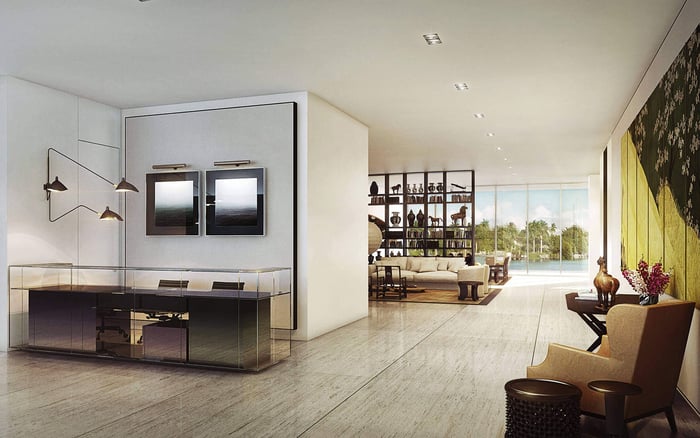
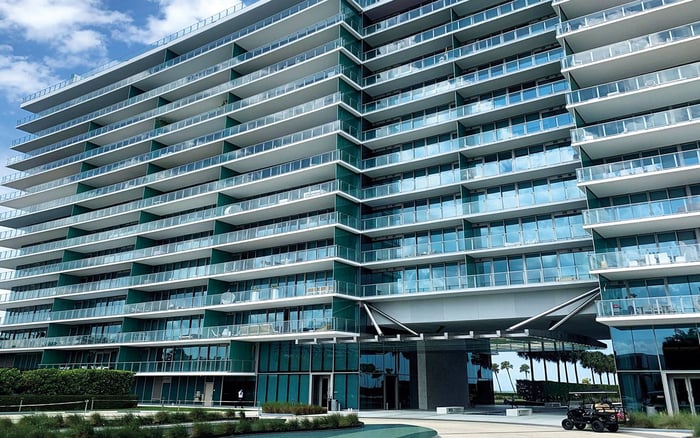
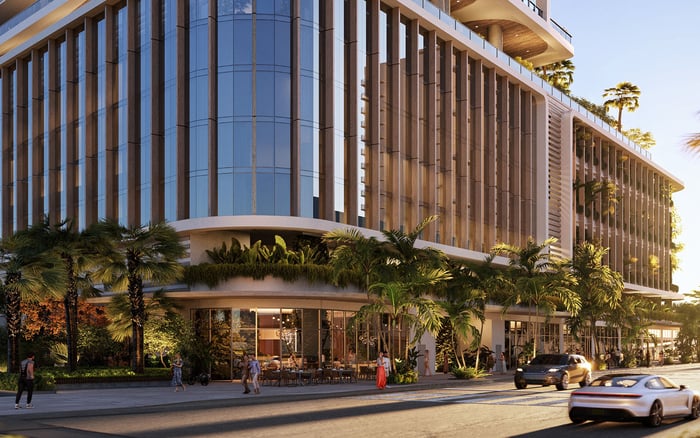
At 2200 Brickell, Miami’s major event calendars matter less for crowds at the property than for the timing and choreography of airport transfers, beach itineraries, marina visits, guest arrivals, and discreet drop-offs.
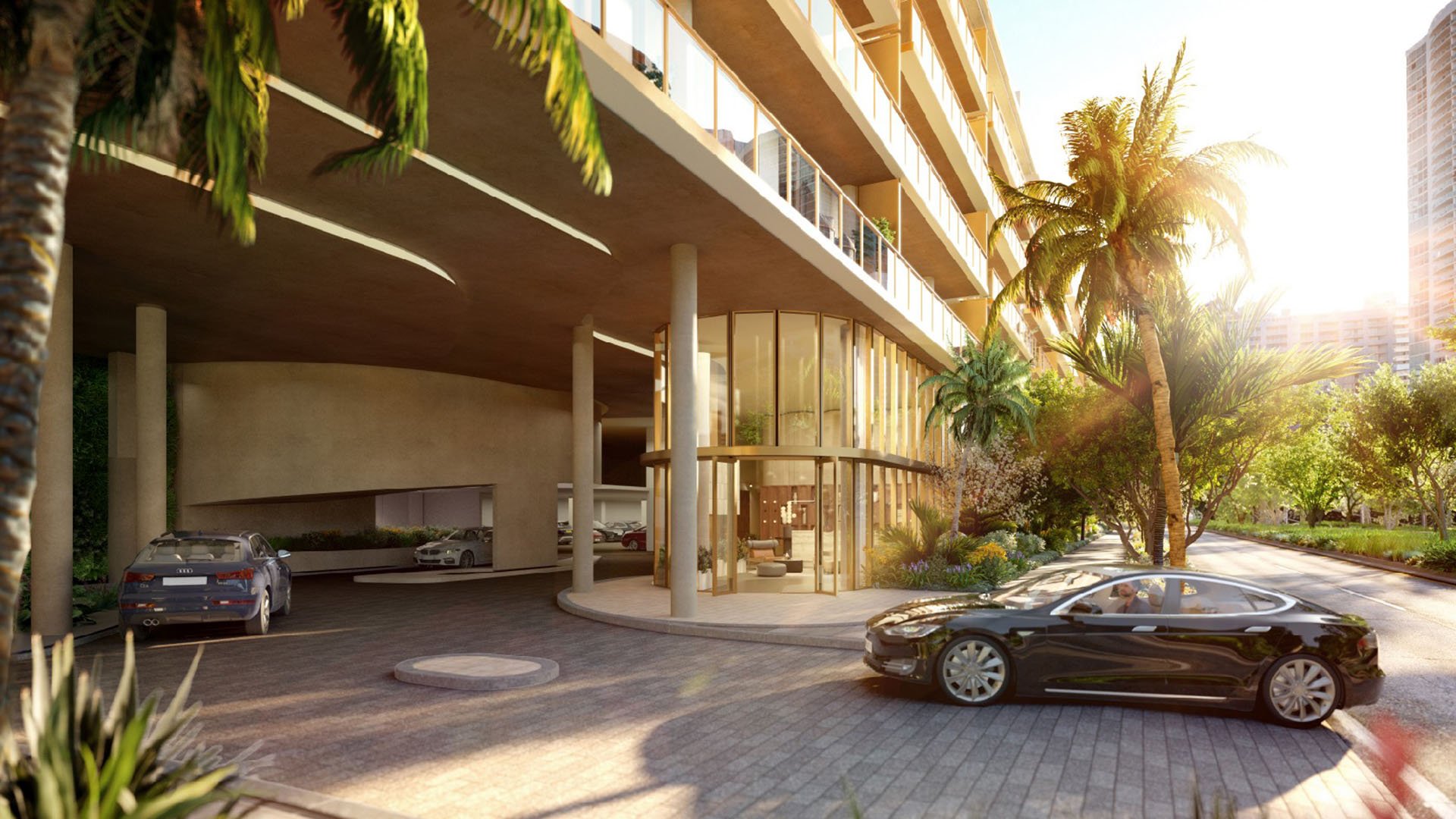
At 2200 Brickell, the pertinent event-week question is not whether Formula 1 spectators, Art Week guests, or Boat Show visitors will gather outside the residence. These events take place elsewhere. What matters is how their calendars reshape movement across Miami-affecting airport pickups, chauffeured departures, marina transfers, dinners, and the precise moment a guest reaches the building.
The address is 2200 Brickell Avenue, in a quieter section of Brickell. This low-rise boutique project comprises 105 residences, including garden villas. Its proximity to I-95 and US-1 may help drivers avoid some central neighborhood congestion, but convenient access does not eliminate regional pressure during signature weeks.
Normal-traffic estimates place downtown at roughly seven minutes, Key Biscayne and Wynwood at about 15 minutes, and Miami Beach and Miami International Airport at around 20 minutes. Treat those figures as orientation, not event-week promises. The actual itinerary should be governed by a current closure map, session schedule, flight time, and destination-specific buffer.
At 2200 Brickell, privacy during major events is largely an exercise in arrival choreography.
Before committing to a purchase or planning a seasonal stay, ask how the property manages a sequence of private cars, hired drivers, deliveries, and invited guests during high-demand periods. Confirm the designated vehicle approach, drop-off point, garage-entry procedure, guest authorization process, and instructions for drivers who arrive early.
The most discreet plan minimizes curbside indecision and unnecessary waiting. Assign each guest a driver and arrival window, circulate exact approach instructions in advance, and establish where a car should hold if timing changes. If several guests are expected, stagger their arrivals rather than creating a single conspicuous cluster. Owners comparing South Brickell options, including Una Residences Brickell, should evaluate these operational details alongside architecture and amenities.
Also verify who receives real-time updates when a flight, dinner, or event session runs late. Privacy is protected not only by physical design but also by disciplined communication among the resident, household staff, driver, and building team.
The Miami Grand Prix is staged at the Miami International Autodrome around Hard Rock Stadium in Miami Gardens, not in Brickell. Direct closures are therefore well north of the residence. Even so, spectators moving among Brickell, Miami Beach, and Miami Gardens can increase pressure on I-95 and other north-south routes.
The 2025 calendar illustrates why the main-race date alone is insufficient for planning: the race was scheduled for Sunday, May 4, while traffic restrictions began Thursday, May 1. Previous event plans have included affected roads near the stadium such as NW 199th Street, NW 27th Avenue, and Florida’s Turnpike access ramps.
For each F1 weekend, verify all official dates, session hours, and the full closure period before booking flights or drivers. Travelers arriving from Broward or farther north should be especially cautious during daytime race-day hours, when stadium-area congestion can be severe. Early-morning or late-evening positioning may be preferable, subject to that year’s schedule.
For privacy, do not leave guests to improvise a route while in transit. Give the chauffeur a primary approach, a contingency route, and clear instructions for a delayed arrival. Treat the F1 calendar as a multiday mobility event, not a single Sunday appointment.
Art Week typically places its greatest traffic strain on Miami Beach during weekday afternoons, with congestion intensifying toward the weekend. Mainland-to-beach routes demand particular attention when a guest’s itinerary combines fairs, beach hotels, dinners, and a Brickell residence.
A practical strategy is to bring arriving guests to 2200 Brickell through mainland corridors first, then arrange a separate transfer to Miami Beach. This approach can prevent a flight arrival or residence check-in from becoming entangled with causeway delays. It also allows luggage, credentials, and schedule changes to be handled privately before the social program begins.
Buyers who divide their time between Brickell and beachside settings such as Five Park Miami Beach will recognize that the transfer itself becomes part of the day’s planning. Special free transportation is offered within Miami Beach during Art Week, reflecting the scale of visitor movement, but it does not replace a tailored mainland arrival strategy.
When circulating instructions, use the official event name appropriate to the guest’s destination. Art Basel may appear as shorthand in personal calendars, yet the essential details remain the specific venue, appointment time, pickup point, and return plan.
The Miami International Boat Show’s in-water venue is Miami Marine Stadium Park and Basin on Virginia Key, at 3501 Rickenbacker Causeway. Recent schedules have placed the event in mid-February, generally from Wednesday through Sunday, with daytime hours around 10 a.m. to 6 p.m. Exact annual dates and hours still require confirmation.
The Rickenbacker Causeway is the sole road connection to Virginia Key and Key Biscayne, making it the central transportation constraint. Traffic may back up in both directions during operating hours, while the toll plaza and limited venue parking can add delays.
On show days, schedule Key Biscayne, marina, and Virginia Key movements before approximately 10 a.m. or after the evening departure surge when feasible. A buyer considering island living at Oceana Key Biscayne faces a different access equation, but the same calendar should inform transfers originating at 2200 Brickell.
For owners receiving yacht guests, verify whether the first meeting point should be the residence, a marina, or the venue. Avoid compressing an airport arrival, residence check-in, and in-water appointment into one unbuffered movement. Separate legs create clearer accountability and fewer public waiting periods.
Several weeks before each major event, reconfirm official dates, preliminary restrictions, final closure maps, session or operating hours, and likely departure surges. Then align those details with flight manifests, restaurant bookings, marina appointments, and household staffing.
Ask the residence team to confirm current guest-entry and vehicle protocols rather than relying on instructions saved from a prior season. Give every driver the destination, permitted approach, arrival window, passenger contact, and holding instructions. For multiple guests, preserve discretion through staggered timing and direct communication.
Finally, distinguish between a normal drive-time estimate and an event transfer plan. The first describes geographic convenience. The second accounts for the calendar, route, hour, access procedure, and privacy expectations that shape the actual experience.
For discreet guidance on 2200 Brickell and South Florida property selection, consult MILLION.
If branded residences are on your mind — as a home or as an allocation — we would be glad to share what we are seeing, privately.
Begin a quiet conversationNo. It is held around Hard Rock Stadium in Miami Gardens, although event travel can increase pressure on I-95 and other north-south routes.
Restrictions may begin before the main race. In 2025, the Sunday, May 4 race was preceded by traffic restrictions beginning Thursday, May 1.
Race-day daytime hours can bring severe stadium-area congestion. Early-morning or late-evening arrivals may be preferable, subject to the current schedule.
Arrive at 2200 Brickell through mainland corridors first, then make a separate transfer to Miami Beach. This reduces exposure to causeway delays during check-in.
Traffic is typically greatest on weekday afternoons and becomes more intense toward the weekend.
It is at Miami Marine Stadium Park and Basin on Virginia Key, at 3501 Rickenbacker Causeway.
It is the sole road connection to Virginia Key and Key Biscayne, making it the principal traffic bottleneck.
Key Biscayne, marina, and Virginia Key trips are best planned before approximately 10 a.m. or after the evening departure surge when feasible.
Use staggered guest arrivals, preassigned drivers, precise drop-off instructions, and holding plans that prevent unnecessary lobby or curbside waiting.
They should be treated only as orientation. Actual transfers need buffers based on current closure maps, operating hours, routes, and expected surges.